

Brake pads are small but essential parts of a car’s braking system. They create the friction needed to slow the vehicle when you press the brake pedal. But where are the brake pads on a car?
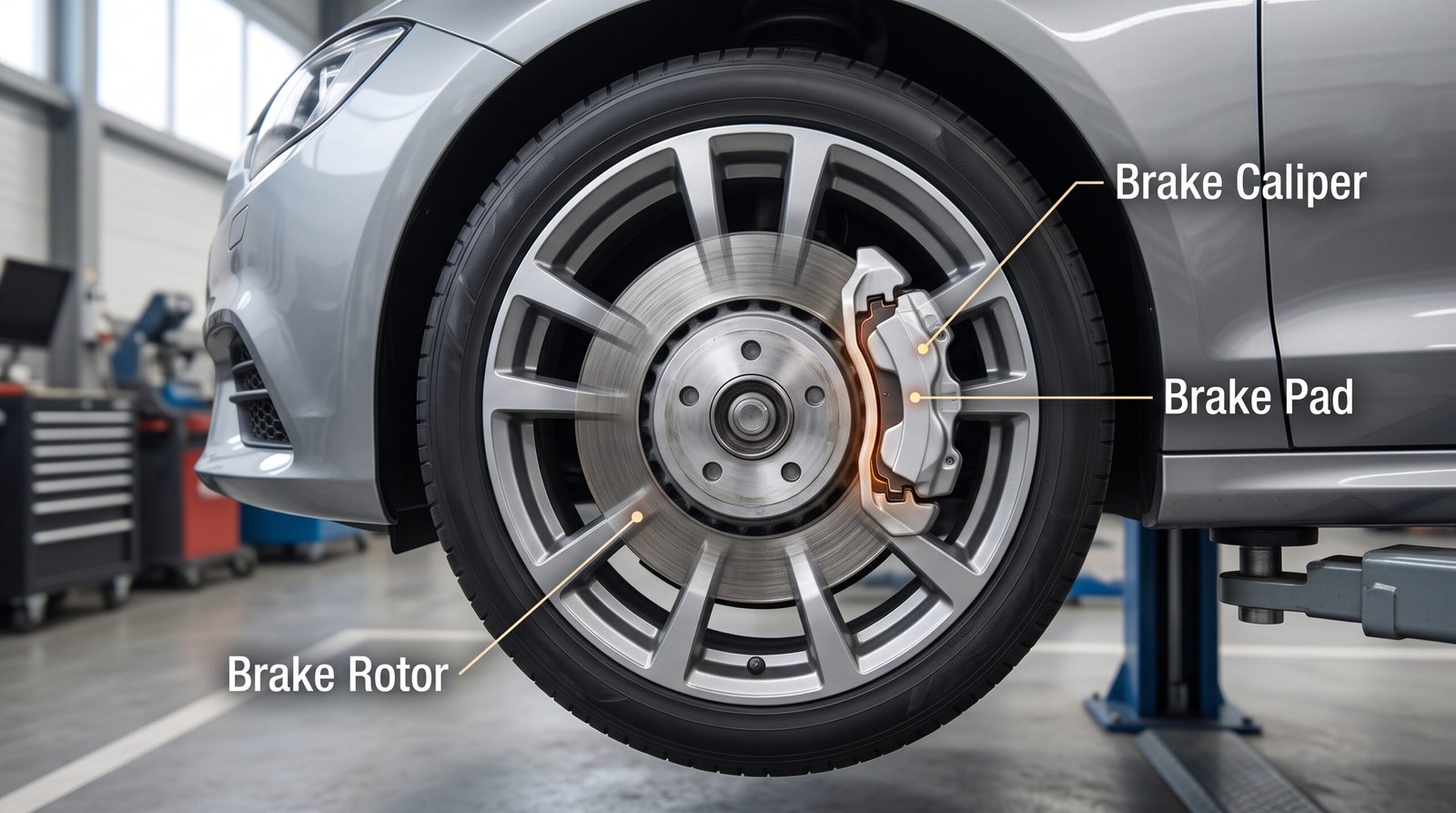
In most cars with disc brakes, the brake pads are located inside the brake caliper, directly beside the brake rotor or disc. The rotor is the flat, round metal disc that spins with the wheel. When you press the brake pedal, the caliper pushes the brake pads against both sides of the rotating rotor. Friction between the pads and rotor slows the wheel.
Most modern cars have disc brakes on the front wheels. Many also use disc brakes at the rear, although some vehicles have rear drum brakes instead.
Knowing where are the brake pads on a car can help you understand your vehicle, recognize brake problems, and know what a mechanic is inspecting. You may even be able to see part of a brake pad through the openings in an alloy wheel.
This guide explains the location, appearance, operation, wear signs, inspection process, and replacement considerations in simple terms.
Where Are the Brake Pads on a Car?
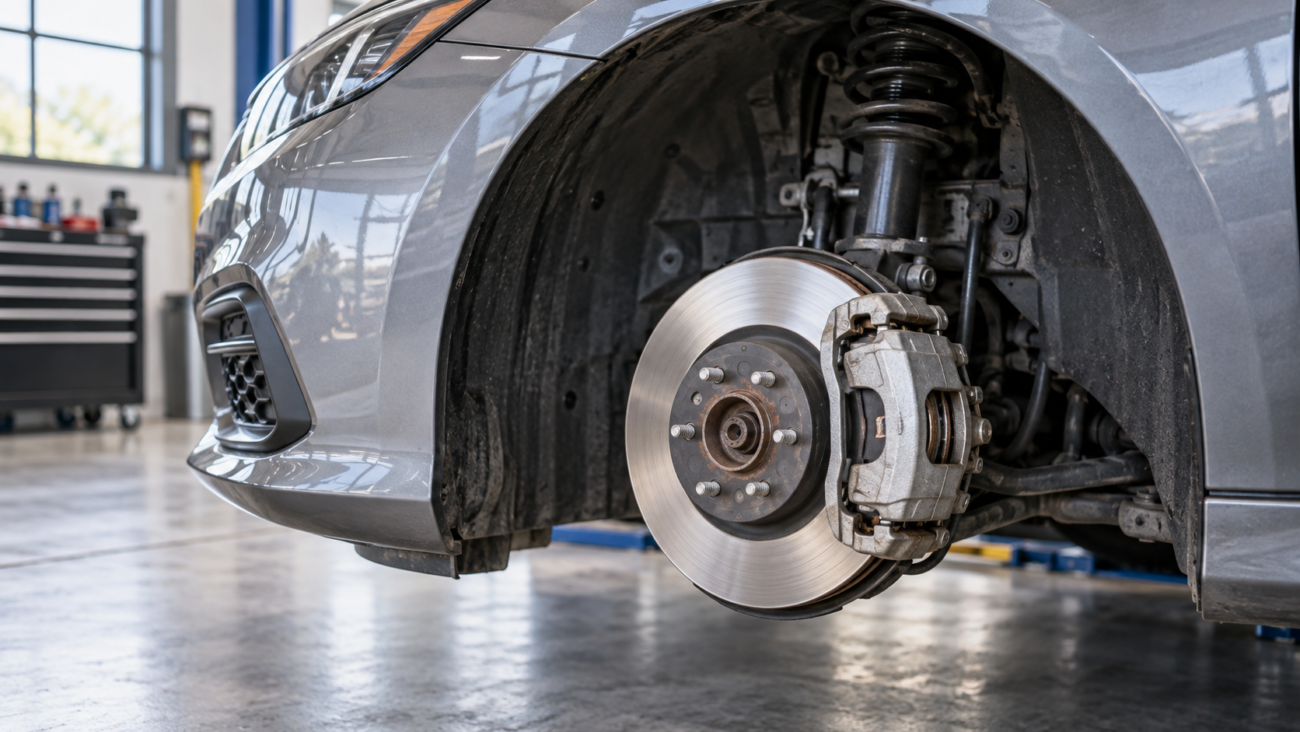
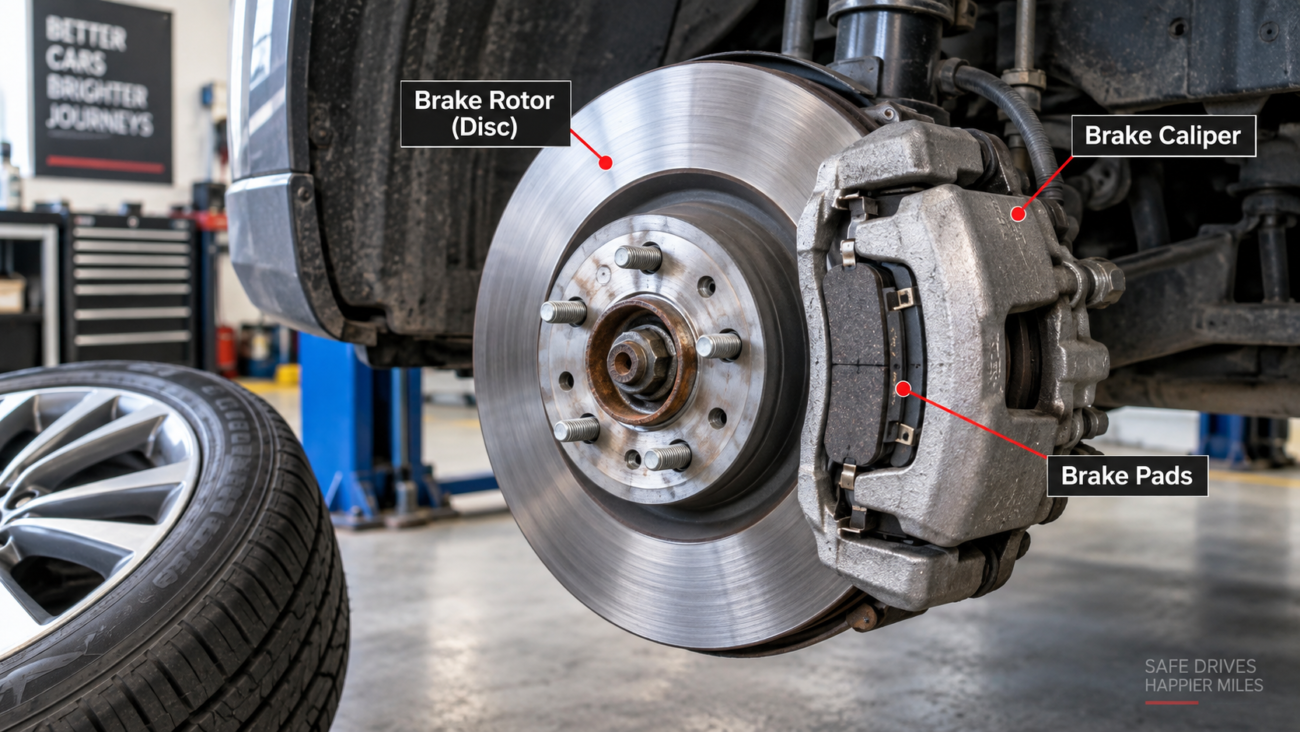
If you are wondering where are the brake pads on a car, start by looking behind the wheel. On a vehicle with disc brakes, the brake assembly includes three main components:
- Brake rotor: The metal disc that rotates with the wheel.
- Brake caliper: The housing that sits around the edge of the rotor.
- Brake pads: Friction components positioned inside the caliper.
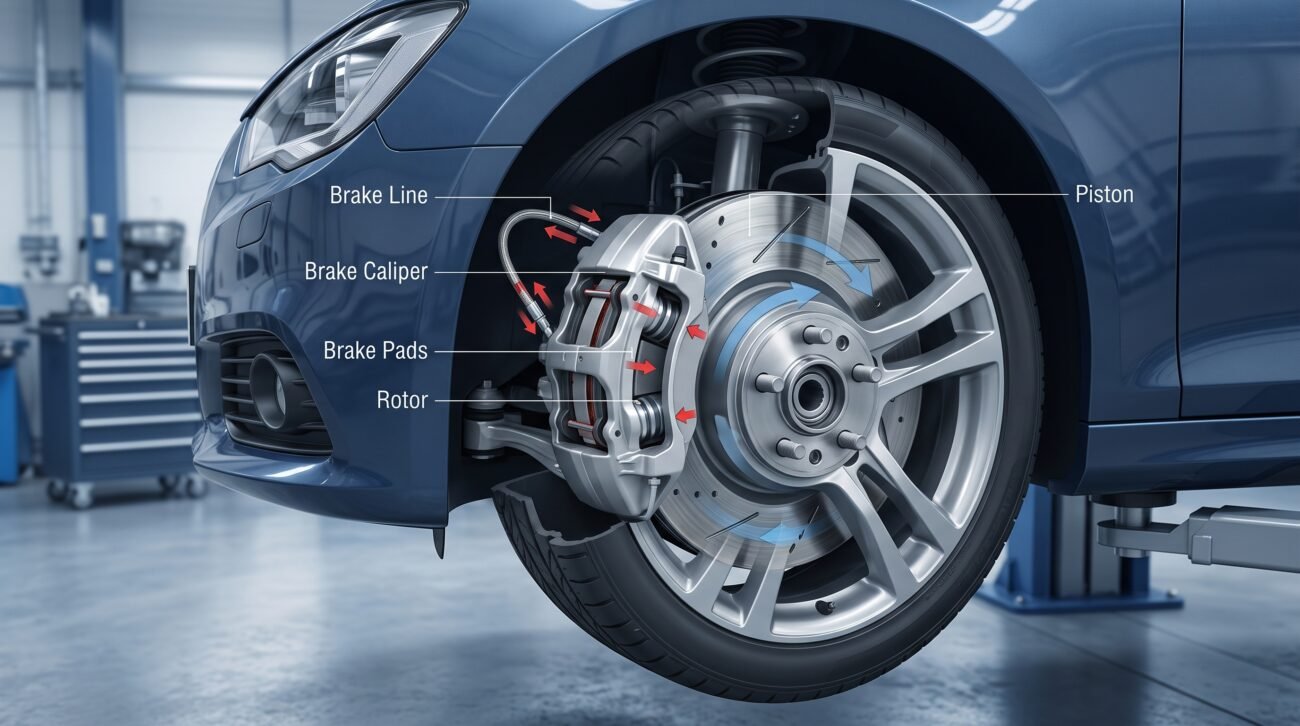
The pads sit on opposite sides of the rotor. They do not normally touch the rotor while the car is moving freely. When you apply the brakes, hydraulic pressure moves the caliper piston. The piston pushes the brake pad toward the rotor. The other pad is also brought into contact with the opposite side.
This creates friction between the stationary pads and the spinning rotor. That friction converts some of the vehicle’s kinetic energy into heat, reducing the wheel’s rotation and helping slow the car.
So, the simplest answer to where are the brake pads on a car is: they are inside the brake caliper, positioned on either side of the brake rotor.
On many vehicles, you will find brake pads on the front wheels and the rear wheels if the vehicle uses four-wheel disc brakes. However, the exact braking setup varies by make, model, year, and trim level.
Where Are Front Brake Pads Located?
Front brake pads are located behind the front wheels. More precisely, they sit inside the front brake calipers around the front brake rotors.
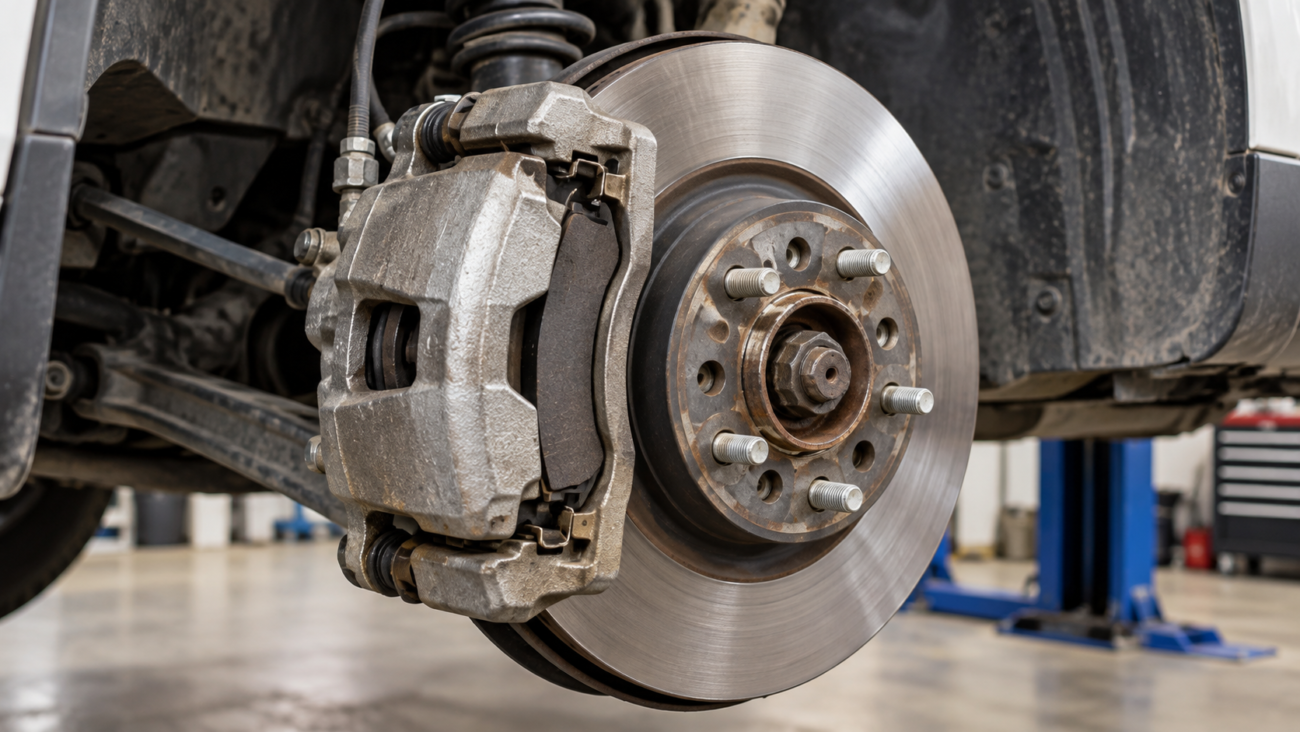
If you look at a front wheel from the side, you may see a large metal disc behind it. That is usually the brake rotor. A larger housing around part of the rotor is the caliper. The brake pads are fitted inside that caliper.
Understanding where are the brake pads on a car becomes easier when you picture the parts as a sandwich:
Brake pad → rotor → brake pad
The caliper holds this arrangement in place and applies force when you brake.
Front brakes often handle a large share of the braking work because braking causes the vehicle’s weight to shift toward the front. The front brake system is therefore commonly designed to handle substantial heat and braking force.
However, this does not mean the rear brakes are unimportant. All parts of the braking system need to work correctly for safe and balanced braking.
Where Are Rear Brake Pads Located?
Rear brake pads are found near the rear wheels on vehicles equipped with rear disc brakes. They are positioned inside the rear brake calipers and sit next to the rear brake rotors.
The basic layout is similar to the front:
Rear caliper → brake pad → rotor → brake pad
However, not every car has rear disc brakes.
Some vehicles use rear drum brakes. A drum brake uses brake shoes rather than disc brake pads. The shoes sit inside a brake drum and press outward against its inner surface when the brakes are applied.
This difference is important when learning where are the brake pads on a car. If your vehicle has rear drum brakes, you will not find conventional disc brake pads at the rear wheels.
Rear Disc Brakes vs. Rear Drum Brakes
You can often identify the type of rear brake by looking behind the wheel.
A disc brake has a visible flat rotor and caliper.
A drum brake generally has a rounded drum-shaped housing instead of an exposed rotor and caliper.
The easiest way to be certain is to check your vehicle’s owner’s manual or ask a qualified mechanic.
What Do Brake Pads Look Like?
Brake pads are not always easy to recognize because much of each pad is hidden inside the caliper.
A typical brake pad has a metal backing plate with a layer of friction material attached to it. The friction material is the part designed to contact the brake rotor.
Brake pads come in different shapes and sizes. Their exact design depends on the vehicle and braking system.
How to Identify a Brake Pad
If you are trying to determine where are the brake pads on a car, look for the following arrangement:
- Find the brake rotor behind the wheel.
- Find the caliper wrapped around part of the rotor.
- Look inside the caliper near the rotor.
- The relatively flat components on each side of the rotor are the brake pads.
The friction material is usually thicker than the metal backing plate. As the brakes are used, the friction material gradually becomes thinner.
Some brake pads also have wear indicators. Depending on the vehicle, this may be a small metal tab or an electronic wear sensor.
Do not confuse the brake pad with the rotor. The pad is designed to wear down. The rotor is a separate component that rotates with the wheel and can also wear or become damaged over time.
Brake Pads vs. Brake Rotors
Brake pads and brake rotors work together, but they have different jobs.
| Component | Main job | Moves with the wheel? |
|---|---|---|
| Brake pad | Creates friction against the rotor | No |
| Brake rotor | Provides the surface for the pads | Yes |
| Brake caliper | Holds and moves the pads | No |
The rotor is attached to the wheel hub and spins as the wheel turns. The brake pads remain stationary in the caliper.
When you press the brake pedal, the pads clamp against the rotor. The resulting friction reduces the rotor’s speed, which reduces the wheel’s speed.
That is why knowing where are the brake pads on a car also means understanding their relationship with the rotor and caliper.
How Do Brake Pads Work?
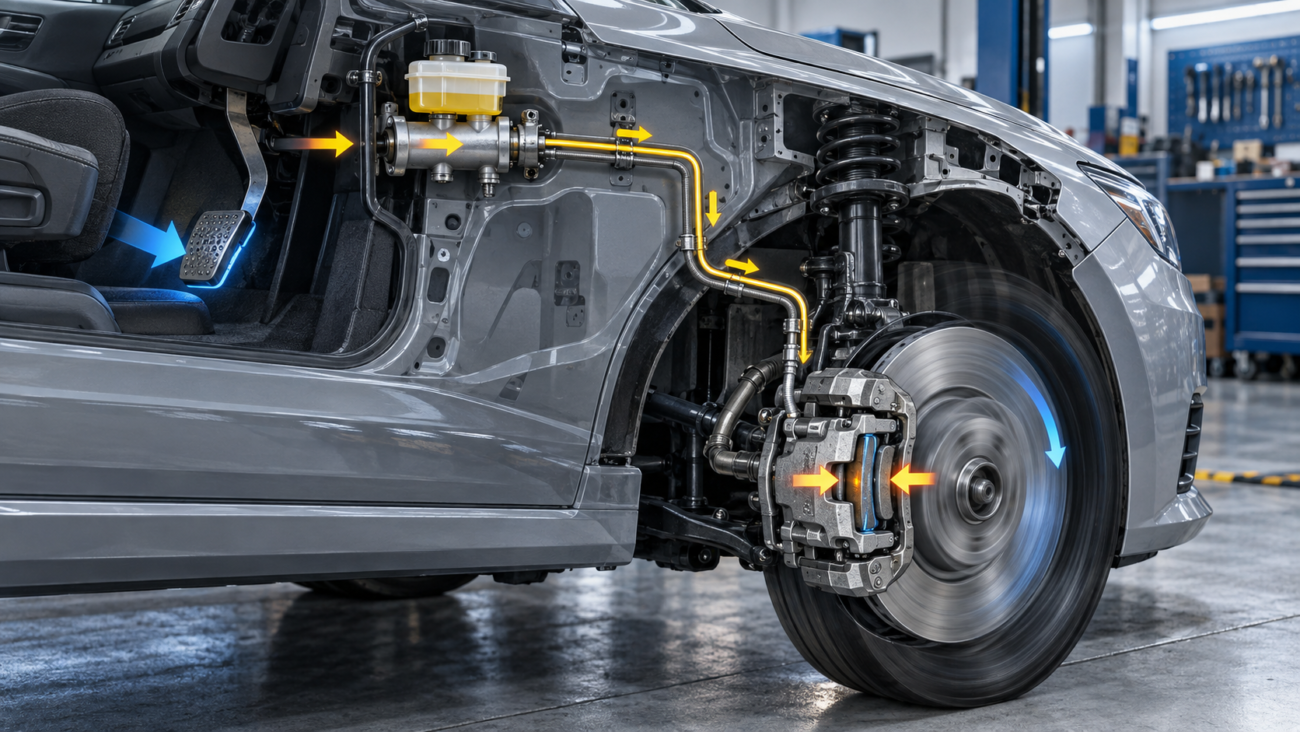
Brake pads are part of a larger hydraulic braking system. Pressing the pedal starts a chain of events that transfers your foot’s force to the wheels.
What Happens When You Press the Brake Pedal?
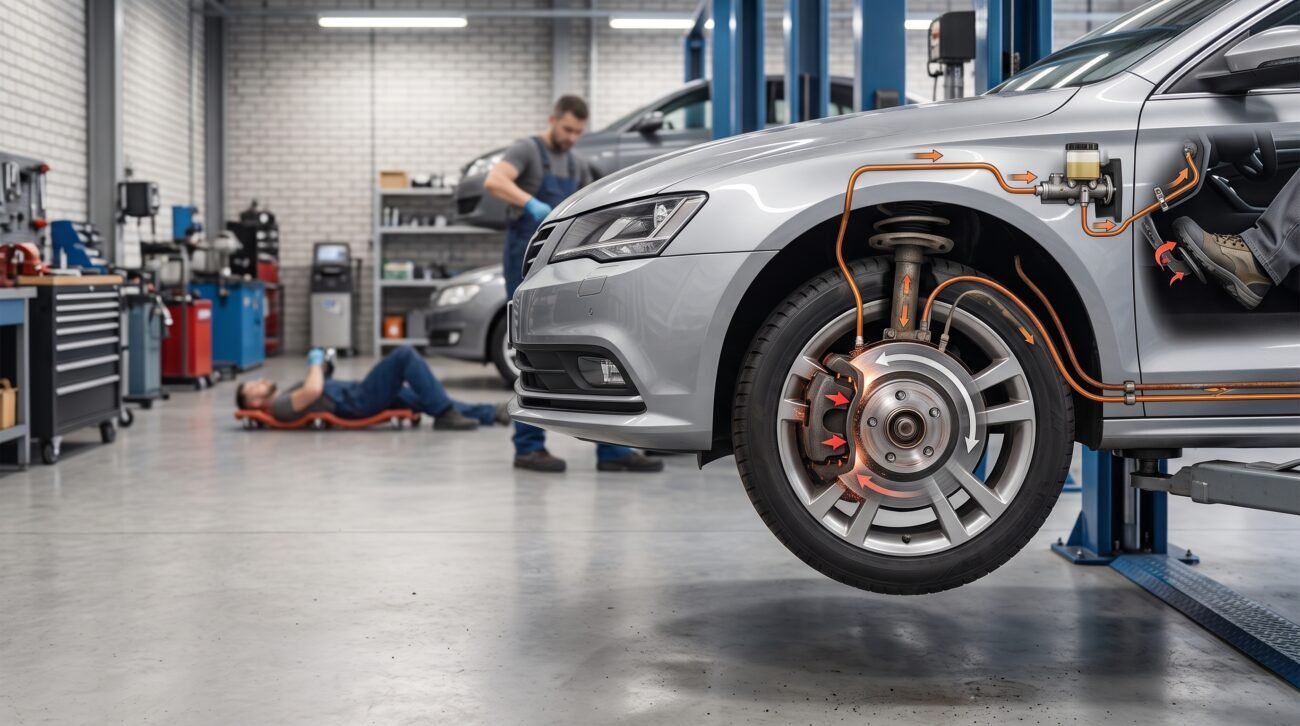
Here is a simplified sequence:
Step 1: You press the brake pedal.
Your foot applies force to the brake pedal.
Step 2: The master cylinder creates hydraulic pressure.
The brake pedal operates the master cylinder. The master cylinder pressurizes brake fluid.
Step 3: Brake fluid travels through the brake lines.
Hydraulic pressure moves through the brake system toward the brake calipers.
Step 4: The caliper applies force to the pads.
The caliper piston moves the brake pad toward the rotor. The brake assembly also causes the pad on the opposite side to clamp the rotor.
Step 5: The pads create friction.
The brake pads press against the rotating rotor.
Step 6: The wheel slows down.
Friction reduces the rotation of the rotor and wheel, helping the vehicle slow or stop.
This explains exactly why the answer to where are the brake pads on a car matters. Their position next to the rotor allows them to convert hydraulic force into friction at the wheel.
Modern vehicles may also have systems such as ABS that control brake pressure to help prevent wheel lock during hard braking. ABS does not replace the basic function of the brake pads.
Why Do Brake Pads Wear Out?
Brake pads are designed to wear. Every time the pads press against the rotor, friction removes a small amount of friction material.
Several factors can affect how quickly they wear.
Driving Style
Frequent hard braking can generate more heat and increase pad wear. Smooth, controlled braking can reduce unnecessary stress on the braking system.
Traffic
Stop-and-go city traffic requires frequent braking. This can lead to more brake use than steady highway driving.
Road Conditions
Hilly roads, heavy traffic, and repeated downhill braking can increase brake temperatures and wear.
Vehicle Weight
A heavier vehicle generally requires more braking energy to slow down. The vehicle’s design determines the appropriate brake components for that load.
Brake Design
Different vehicles use different pad materials, rotor sizes, caliper designs, and braking systems. This means brake pad life can vary considerably between vehicles.
How Can You See the Brake Pads on a Car?
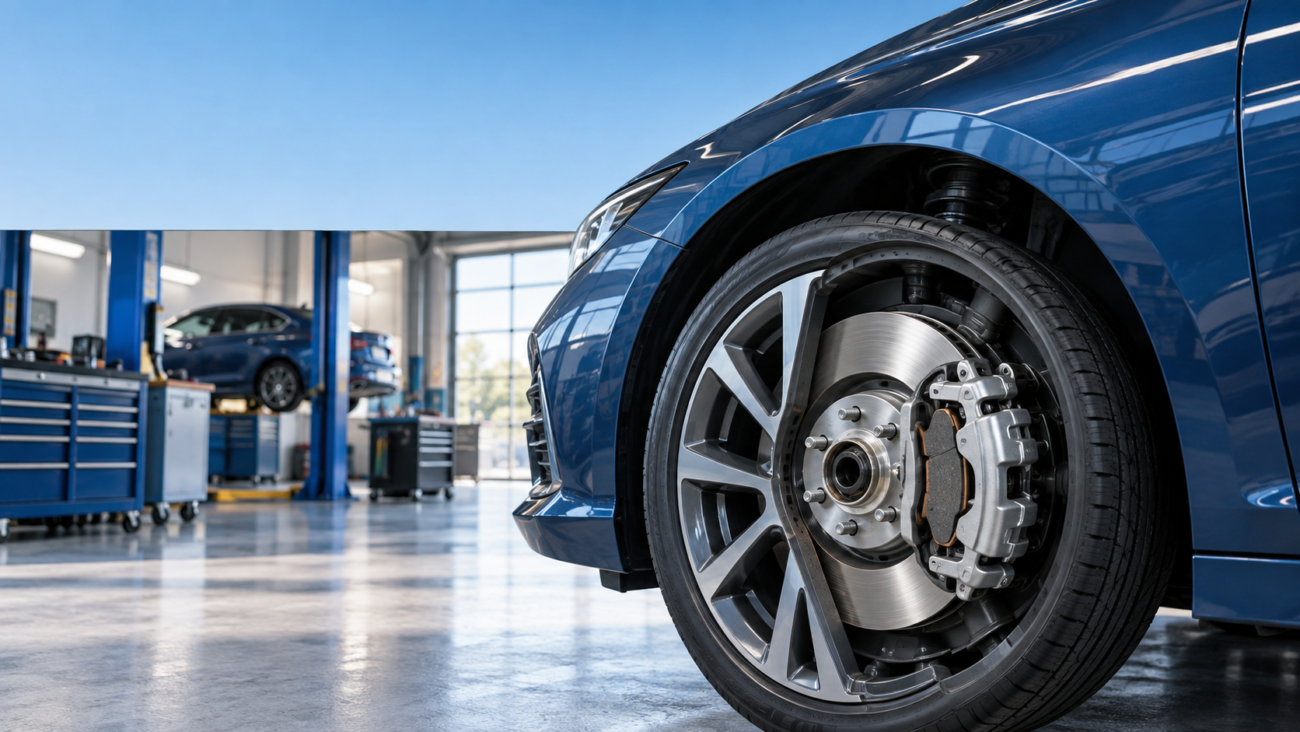
You may be able to inspect part of a brake pad without removing the wheel, but visibility depends on the wheel design and brake assembly.
Looking Through the Wheel
Some alloy wheels have large openings that let you see the brake rotor and caliper.
If you look carefully, you may see a thin layer of friction material between the caliper and rotor.
However, it can be difficult to accurately judge pad thickness from this angle. The visible portion may not show the complete condition of the pad.
If you are checking where are the brake pads on a car, remember that the pad is inside the caliper rather than sitting on the outside of the rotor.
Never place your fingers into a moving or recently operated brake assembly.
Removing the Wheel
Removing the wheel can provide a much clearer view of the brake components.
With the wheel removed, a trained person can inspect the pads, rotor, caliper, and related components more closely.
However, removing a wheel means the vehicle must be properly lifted and supported. A vehicle should never be supported only by a jack while someone works underneath or around it.
If you are not familiar with vehicle lifting and brake systems, having a qualified mechanic perform the inspection is the safer choice.
Signs Your Brake Pads Need Replacing
Knowing where are the brake pads on a car is useful, but knowing when they may need attention is even more important.
Brake pads can show several warning signs when they are worn or when another brake problem is developing.
Squealing or Grinding Sounds
A high-pitched squeal during braking can sometimes come from a brake pad wear indicator or vibration. However, squealing can have several causes.
A grinding sound is more concerning. It may indicate that the friction material is severely worn or that another brake component has a problem.
Grinding brakes should not be ignored. Have the braking system inspected promptly.
Brake Warning Light
Some vehicles have a brake pad wear sensor that can trigger a dashboard warning when the pads reach a certain wear level.
However, a brake warning light does not always mean the pads are worn. Depending on the vehicle, it may indicate a problem with brake fluid level, the parking brake, ABS, or another part of the braking system.
Always check the owner’s manual for the meaning of a particular warning light.
Reduced Braking Performance
A change in braking performance deserves attention.
Possible signs include:
- The vehicle takes longer to slow down.
- The brake pedal feels different from normal.
- The vehicle pulls to one side during braking.
- Braking feels uneven.
- The pedal feels unusually soft or spongy.
- You notice vibration or pulsation during braking.
These symptoms do not automatically mean the brake pads are the cause. Problems with rotors, calipers, brake fluid, tires, suspension, or other components can create similar symptoms.
Thin Brake Pad Material
One of the clearest signs of pad wear is reduced friction material thickness.
Brake pads are designed with a specific amount of friction material. As that material becomes thinner, the pad approaches the end of its service life.
A mechanic can measure pad thickness during a brake inspection and compare it with the vehicle manufacturer’s service recommendations.
If you are unsure where are the brake pads on a car, do not attempt to judge their condition based only on a quick look through the wheel. A professional inspection can provide a more reliable assessment.
How Long Do Brake Pads Last?
There is no single mileage number that applies to every brake pad.
Some pads may last many thousands of miles, while others may require replacement sooner. The actual service life depends on the vehicle, brake design, driving conditions, driving habits, pad material, and other factors.
For example, a vehicle used mostly in heavy city traffic may use its brakes more often than one that spends much of its time on open highways.
Frequent stops, steep roads, heavy loads, and aggressive braking can increase wear.
The best approach is to follow the vehicle manufacturer’s maintenance guidance and have the brakes inspected at appropriate service intervals.
Instead of asking only how many miles brake pads last, ask whether the pads still have sufficient friction material and whether the complete brake system is operating correctly.
Front vs. Rear Brake Pads
Front and rear brake pads perform the same basic job, but they are not necessarily identical.
Front brake pads are installed in the front calipers beside the front rotors. Rear brake pads are installed in the rear calipers beside the rear rotors on vehicles with rear disc brakes.
Their size, shape, thickness, and material can differ.
Why Front Pads May Wear Differently
During braking, weight transfers toward the front of the vehicle. Because of the vehicle’s brake-force distribution and design, the front brakes often handle a significant portion of braking work.
That can cause front pads to wear at a different rate from rear pads.
However, modern vehicles use carefully designed braking systems, and wear patterns vary by model.
Why Replacement Timing Differs
You should not assume that front and rear pads need replacement at the same time.
One axle may have considerably more remaining friction material than the other.
A proper brake inspection checks each wheel or axle as appropriate rather than replacing parts simply because a certain mileage has been reached.
What About Rear Drum Brakes?
If your car has rear drum brakes, it does not use conventional rear disc brake pads.
Instead, brake shoes press against the inside of a rotating drum.
This is why the answer to where are the brake pads on a car depends partly on the vehicle’s brake design.
A vehicle with front disc brakes and rear drum brakes has disc brake pads at the front but brake shoes at the rear.
Can You Replace Brake Pads Yourself?
Brake pad replacement is a common automotive repair, but it is still a safety-critical job.
The exact process varies between vehicles. Some cars also have electronic parking brakes or other systems that require special procedures.
Basic Brake Pad Replacement Process
A typical disc brake pad replacement involves steps such as:
- Secure the vehicle.
Park on a stable surface and use the correct safety procedures. - Lift and support the vehicle properly.
Use equipment rated for the vehicle and appropriate support points. - Remove the wheel.
This provides access to the brake assembly. - Inspect the brake components.
Check the pads, rotor, caliper, and related parts. - Access the caliper.
The appropriate fasteners are removed according to the vehicle’s service procedure. - Remove the old pads.
The worn pads are taken out of the caliper. - Install the correct replacement pads.
The new pads must match the vehicle and be installed in the correct orientation. - Check the other components.
Rotor condition, caliper movement, and other relevant parts should be assessed. - Reassemble everything correctly.
Fasteners must be tightened according to the manufacturer’s specifications. - Check brake operation.
The braking system must be operated and tested safely before normal driving.
Some vehicles require additional steps. For example, rear brakes with electronic parking brakes may need a specific service mode or procedure.
When to Use a Professional
Consider professional brake service if:
- You have never worked on brakes before.
- You do not have proper lifting and support equipment.
- You are unsure which parts need replacement.
- The rotor is damaged or badly worn.
- The caliper appears damaged or seized.
- The brake pedal feels abnormal.
- The vehicle pulls strongly while braking.
- You hear severe grinding.
- A brake warning or ABS warning light is on.
- You are unsure whether your vehicle has disc or drum brakes.
Brake components are directly related to vehicle safety. If something does not feel right after brake work, the vehicle should not be treated as safe simply because new pads were installed.
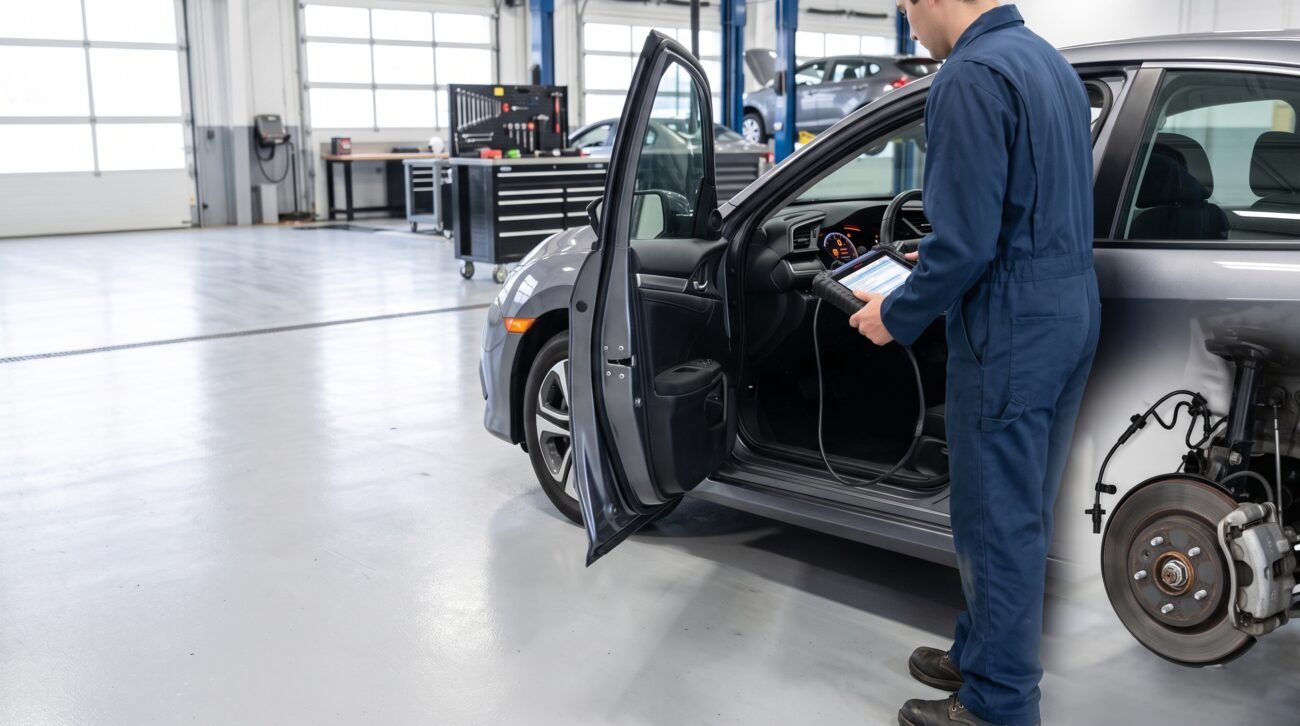
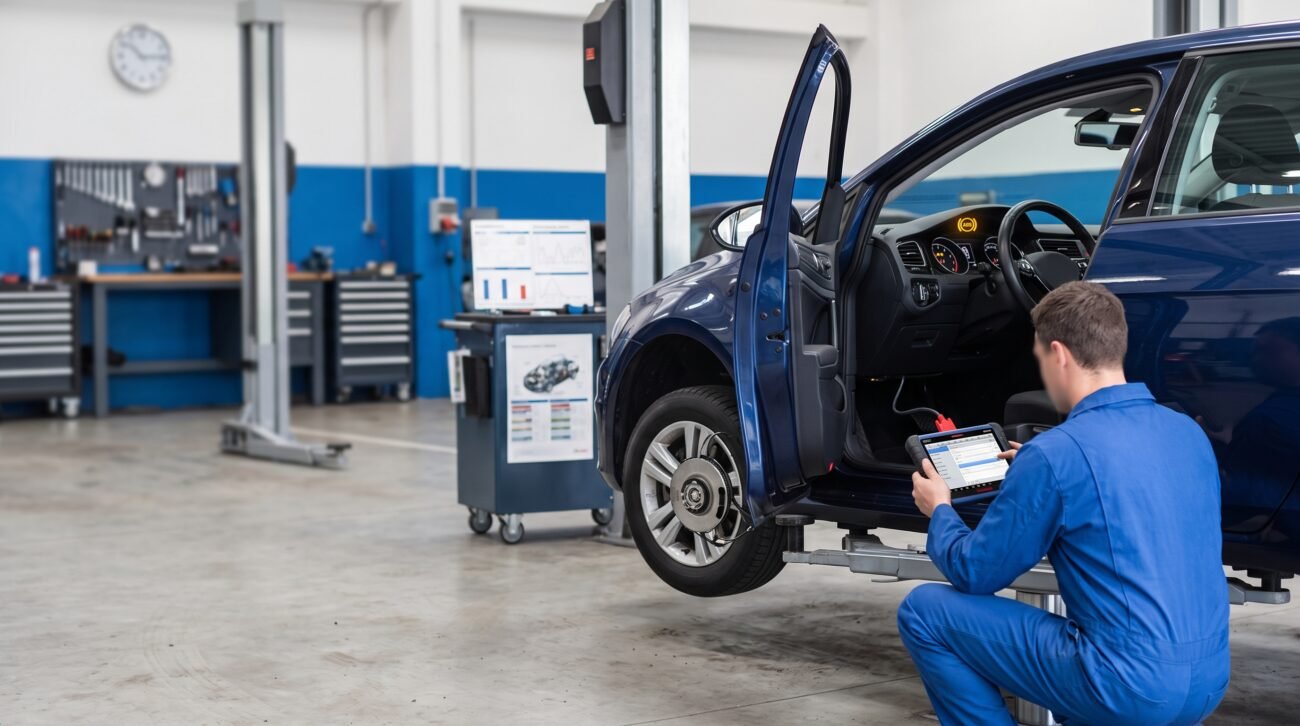
Brake Pad Inspection: What a Mechanic Checks
A complete brake inspection is about more than finding where are the brake pads on a car.
A mechanic may check:
- Remaining pad friction material
- Inner and outer pad wear
- Rotor surface and thickness
- Caliper condition
- Caliper piston operation
- Brake hardware
- Brake hoses and lines
- Brake fluid condition and level
- Parking brake operation
- ABS-related components when necessary
Uneven pad wear can provide useful clues. For example, if one pad is much thinner than its partner, the caliper or related hardware may need further inspection.
Replacing only the worn pad without addressing the underlying issue may not solve the problem.
Why Uneven Brake Pad Wear Matters
Brake pads on the same axle should generally wear in a reasonably consistent manner, although some difference can occur.
Significant uneven wear can indicate a problem with caliper movement, pad hardware, lubrication of appropriate contact points, or another part of the braking system.
For example, if the inner pad is much thinner than the outer pad, the caliper may not be operating correctly.
This is another reason that simply knowing where are the brake pads on a car is not enough to diagnose brake problems. The complete brake assembly needs to be evaluated.
Brake Pads and Brake Safety
Brake pads are wear components, which means they gradually lose friction material during normal use.
That does not mean you should wait until they are completely worn before checking them.
Regular inspections can help identify wear before it becomes a more serious problem.
If you notice a major change in braking behavior, unusual grinding, or a brake warning indicator, arrange for an inspection as soon as practical.
Avoid assuming that a brake noise is harmless just because the car still stops.
How to Choose the Correct Brake Pads
If replacement is necessary, the pads must match the vehicle and braking system.
Brake pads are not universal.
The correct parts depend on factors such as:
- Vehicle make
- Model
- Model year
- Engine or powertrain
- Trim level
- Brake package
- Front or rear axle
Some vehicles have multiple brake configurations for the same model year.
Use the vehicle manufacturer’s specifications or a reliable parts catalog to confirm compatibility.
A qualified mechanic can also identify the correct components.
Common Mistakes When Checking Brake Pads
Understanding where are the brake pads on a car can prevent several common mistakes.
Mistake 1: Confusing the Rotor With the Pad
The large round metal disc is the rotor. The pad is the friction component held by the caliper.
Mistake 2: Assuming Every Wheel Has Pads
Some vehicles use rear drum brakes instead of rear disc brakes.
Mistake 3: Judging Pad Wear From Noise Alone
Noise can have multiple causes. A quiet brake is not necessarily a healthy brake, and a noisy brake is not automatically caused by worn pads.
Mistake 4: Looking at Only One Pad
The inner and outer pads can wear differently. A proper inspection considers both.
Mistake 5: Ignoring the Caliper
If a caliper has a problem, replacing pads alone may not correct the underlying issue.
Mistake 6: Ignoring Warning Lights
A brake or ABS warning light can have different causes. It should be investigated rather than dismissed.
FAQ
Do brake pads go on the front or back?
Brake pads can be found on the front, rear, or both axles, depending on the car’s braking system. Most modern cars have disc brakes on the front wheels, so they use front brake pads. Many cars also have disc brakes on the rear wheels, which means they have rear brake pads too. Some vehicles use drum brakes on the rear instead of brake pads. Front brake pads often wear faster because the front brakes handle more of the car’s stopping force. To know exactly where your car has brake pads, check the owner’s manual or inspect the brake system.
Are the brakes on the left or right in a car?
The brake pedal is usually located in the same general position for both left-hand-drive and right-hand-drive cars. In cars with an automatic transmission, the brake pedal is normally to the left of the accelerator. In a manual car, the brake pedal is in the middle, between the clutch and accelerator. The brake system itself is connected to wheels on both the left and right sides. So, brakes are not only on one side of the car. Each axle may have braking components on both sides, allowing the vehicle to slow down evenly and safely when you press the brake pedal.
How can I tell if brake pads are worn?
You can often notice worn brake pads through several warning signs. A common sign is a squealing or grinding sound when braking. You may also notice that the car takes longer to stop or that the brake pedal feels different. Some vehicles have a brake-pad wear indicator that makes a noise when the pads become thin. You can also inspect the brake pads through the wheel if they are visible. If the friction material looks very thin, the pads may need replacement. If you hear grinding, feel unusual vibrations, or have weak braking, have the brake system checked by a qualified mechanic.
How are brake pads held in place?
Brake pads are held inside a brake caliper, which sits around the brake rotor. Depending on the brake design, the pads may rest in special caliper brackets, clips, or pad-retaining hardware. These components keep the pads correctly positioned while still allowing them to move slightly as the brakes are applied. When you press the brake pedal, hydraulic pressure moves the caliper piston. The piston pushes the brake pad against the rotating rotor. Friction between the pad and rotor slows the wheel. Proper clips and hardware are important because they help prevent unwanted movement, noise, and uneven brake-pad wear.
Conclusion
So, where are the brake pads on a car? On vehicles with disc brakes, they are located inside the brake calipers, directly beside the brake rotors. There is typically one pad on each side of the rotor.
When you press the brake pedal, hydraulic pressure activates the caliper. The caliper pushes the brake pads against the spinning rotor, creating friction that slows the wheel and helps bring the car to a stop.
Front and rear brake setups can differ. Many vehicles use disc brakes at all four wheels, while others use front disc brakes and rear drum brakes. Rear drum systems use brake shoes instead of conventional brake pads.
Knowing where are the brake pads on a car makes it easier to understand your braking system and recognize what a mechanic is inspecting. If you notice grinding, unusual braking behavior, thin pad material, or a brake warning light, have the braking system inspected promptly.
Regular brake inspections and timely maintenance help keep the braking system working as intended.




One thought on “Where Are the Brake Pads on a Car? Easy Guide”