

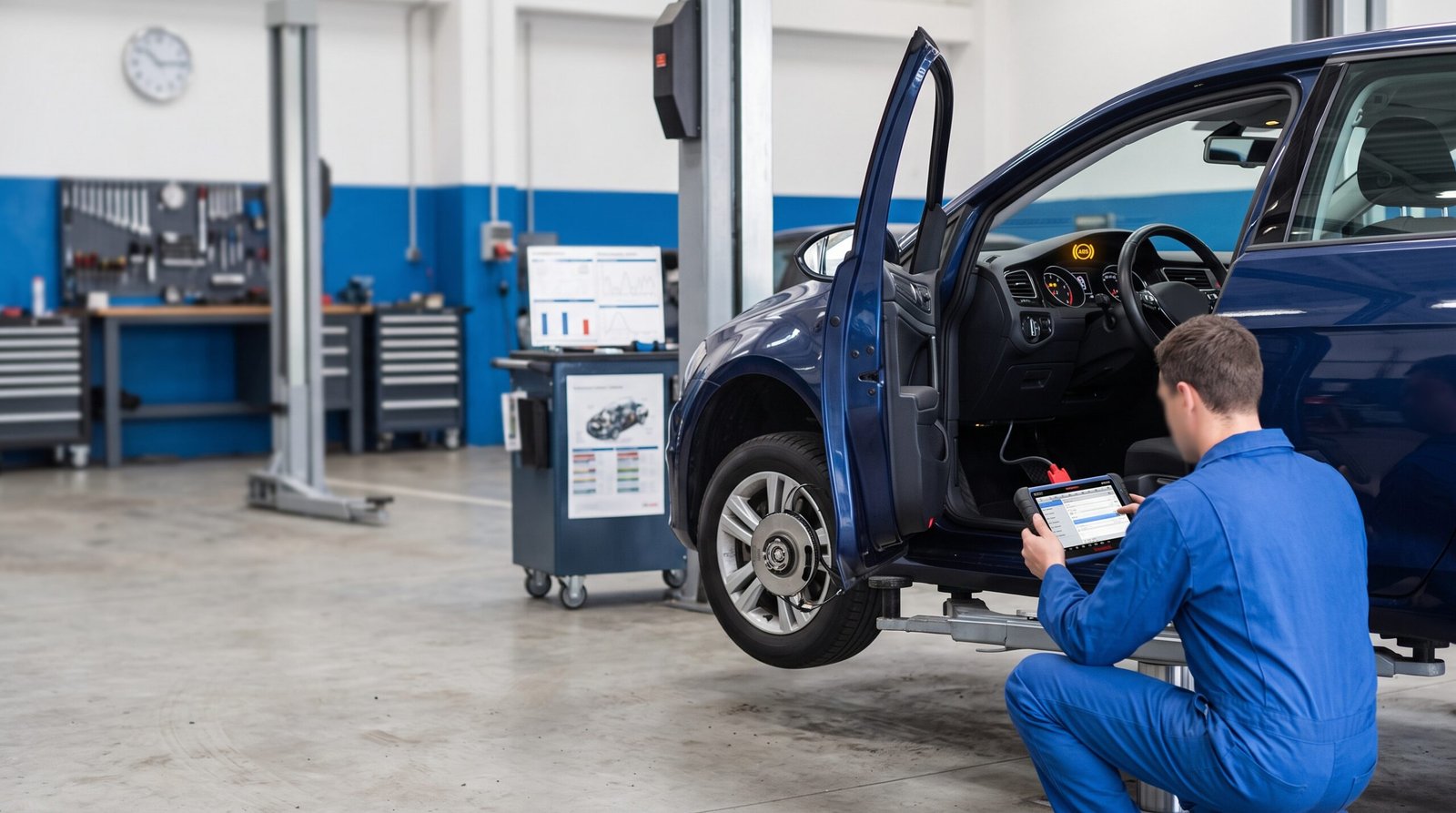
The ABS (Anti-lock Braking System) is an important safety system in modern vehicles. It helps prevent the wheels from locking during hard braking, allowing the driver to maintain better steering control.
When the ABS warning light appears on the dashboard, it usually means the vehicle has detected a problem in the ABS system. In some cases, the warning light may remain on after a temporary fault or after a repair. This can make drivers wonder how to reset ABS brake system warnings.
The safest approach is not to simply erase the warning light. First, find out why the ABS light came on. A reset can clear a stored fault after the problem has been repaired, but it does not repair a damaged sensor, broken wire, low brake fluid level, faulty ABS module, or other mechanical or electrical problem.
In general, the process involves checking the brake system, inspecting ABS sensors and wiring, scanning for diagnostic trouble codes, repairing the cause, and then clearing the stored ABS codes. Some vehicles may also turn the light off automatically after the fault is corrected and the vehicle completes a self-check.
This guide explains how to reset ABS brake system warnings with and without a scanner, what common ABS codes mean, and when you should stop driving and have the vehicle inspected.
What Is the ABS Brake System?
The Anti-lock Braking System is an electronic safety system designed to help prevent the wheels from locking when you brake hard.
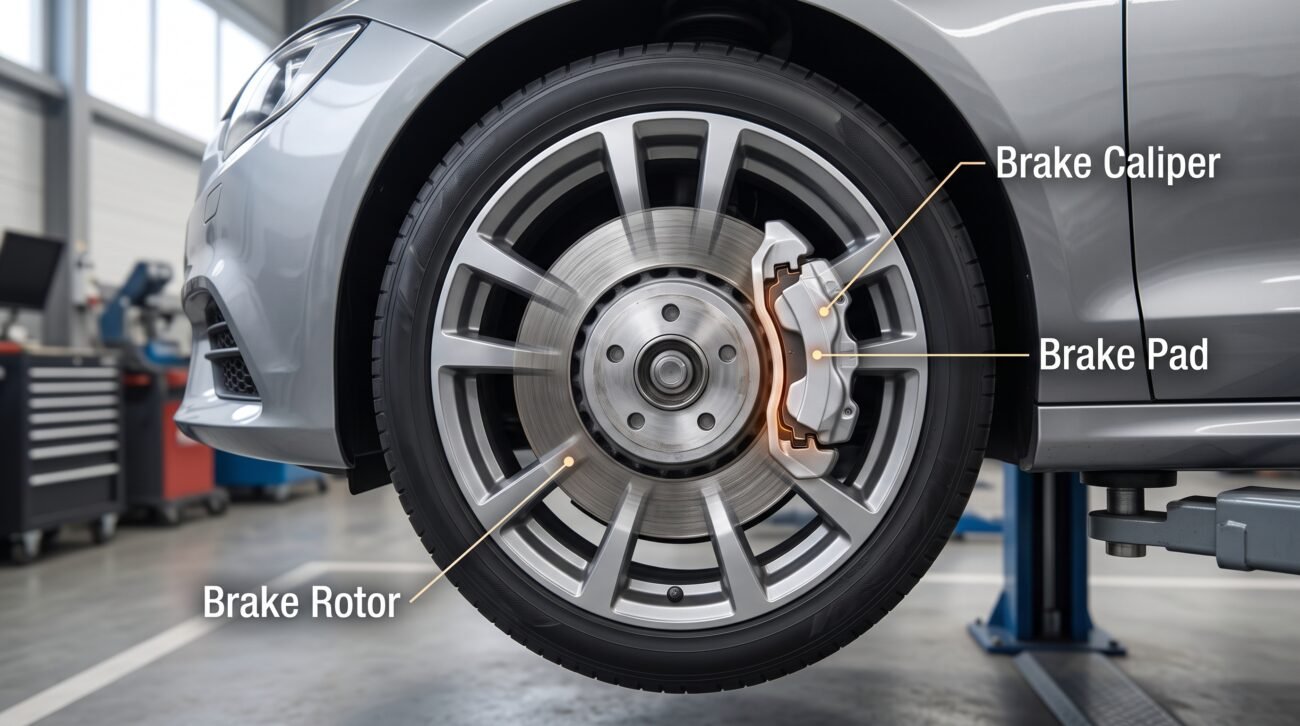
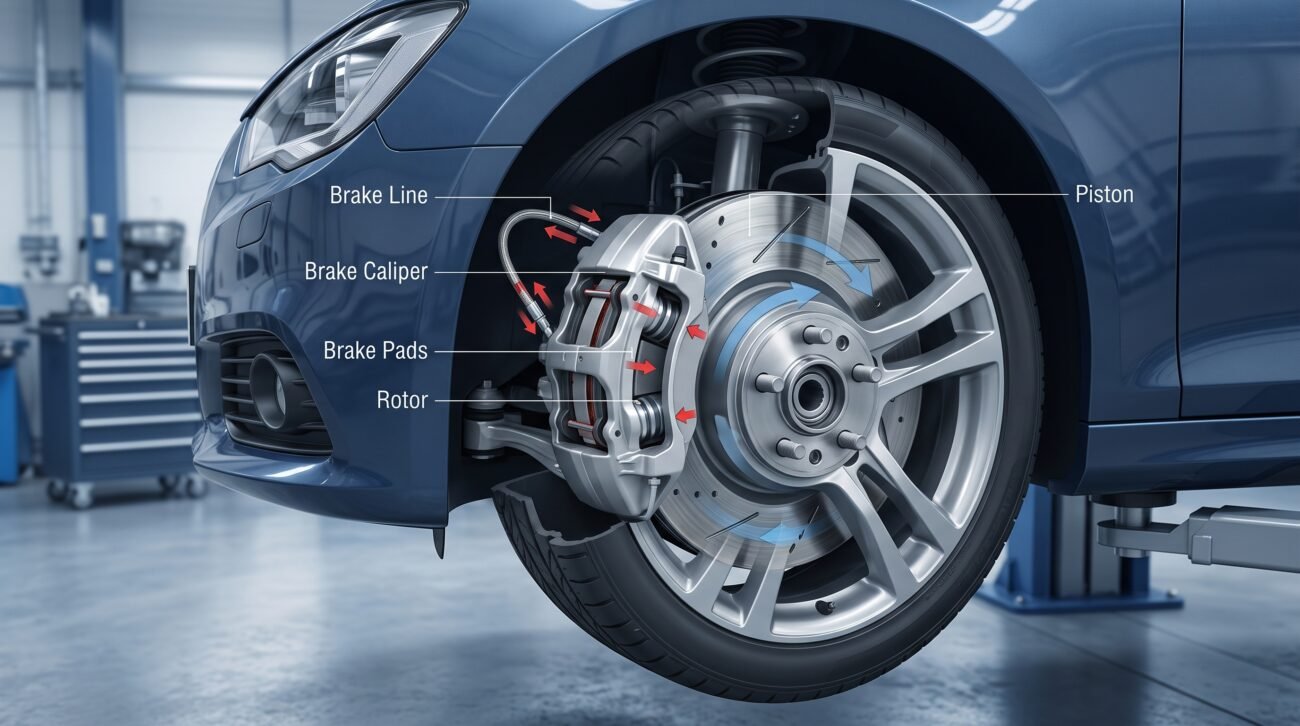
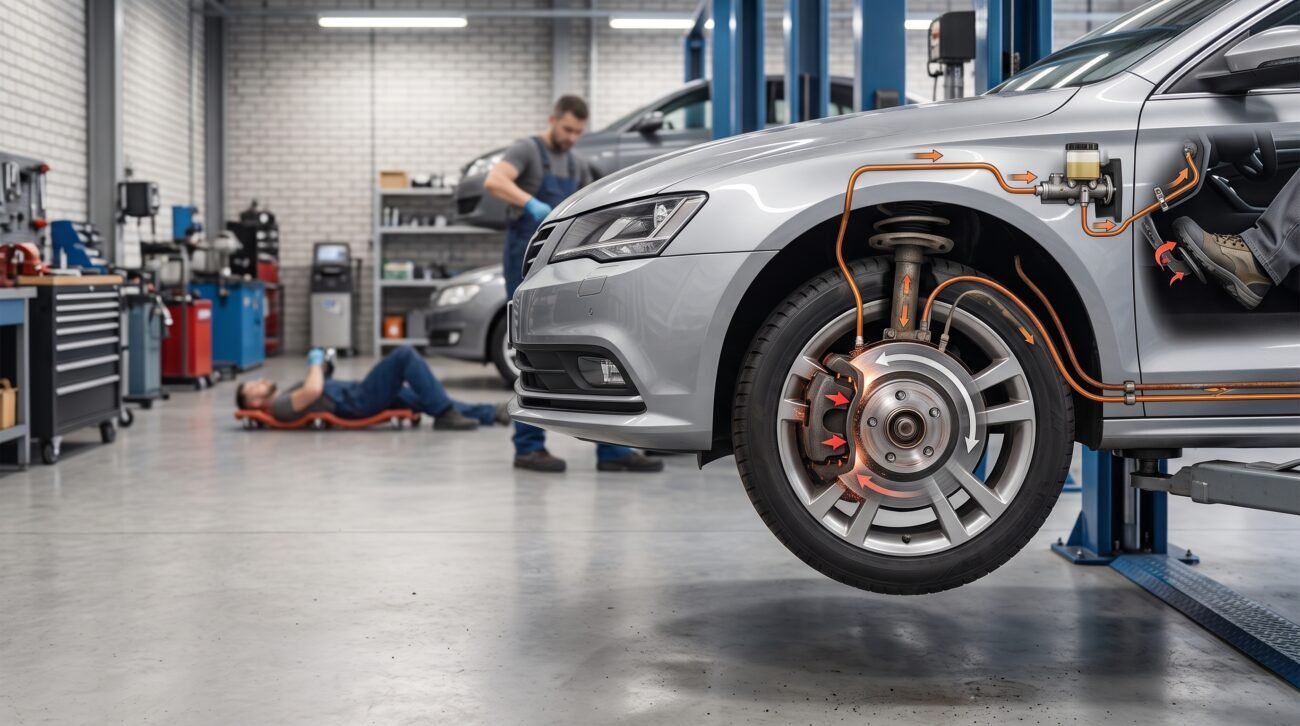
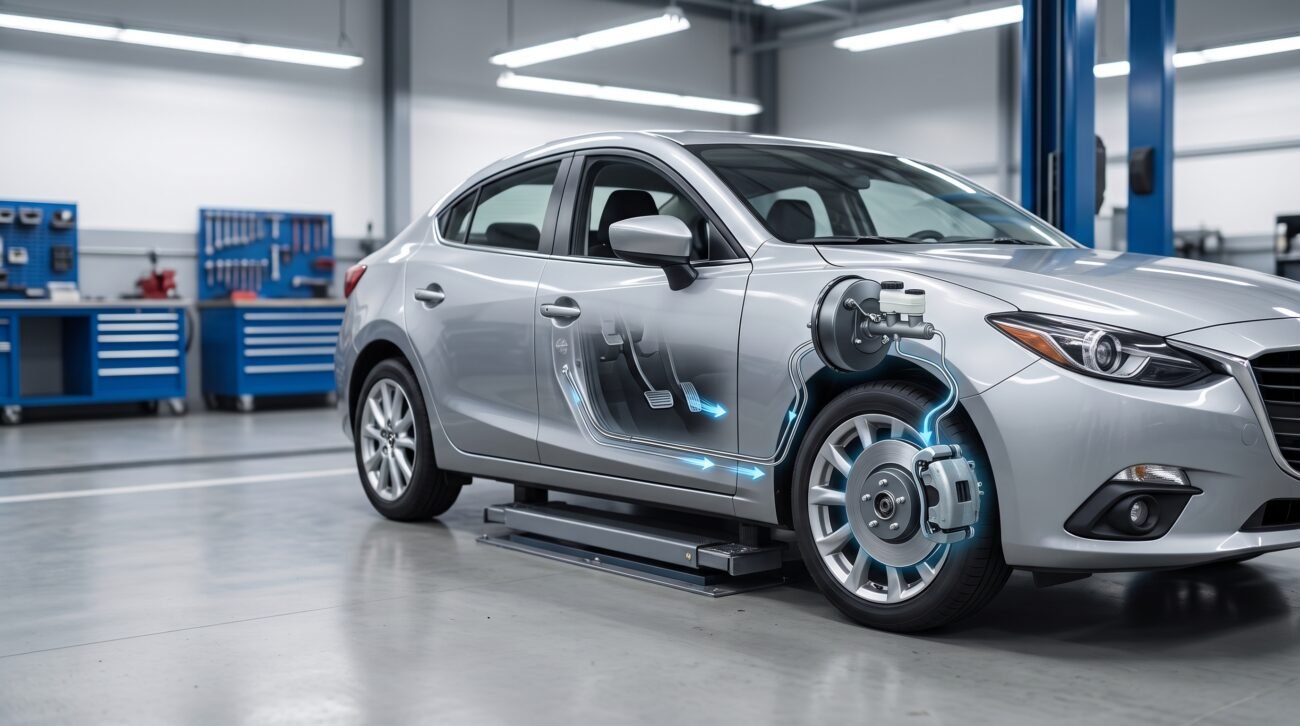
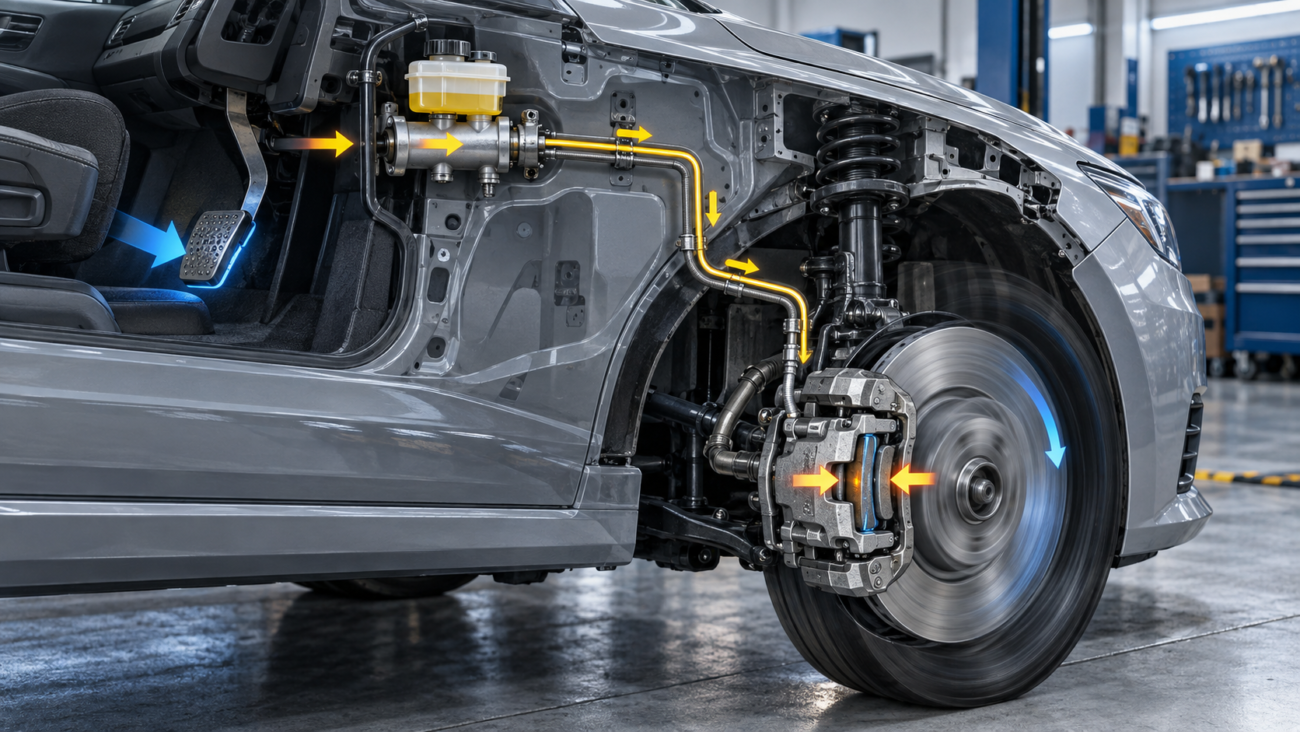
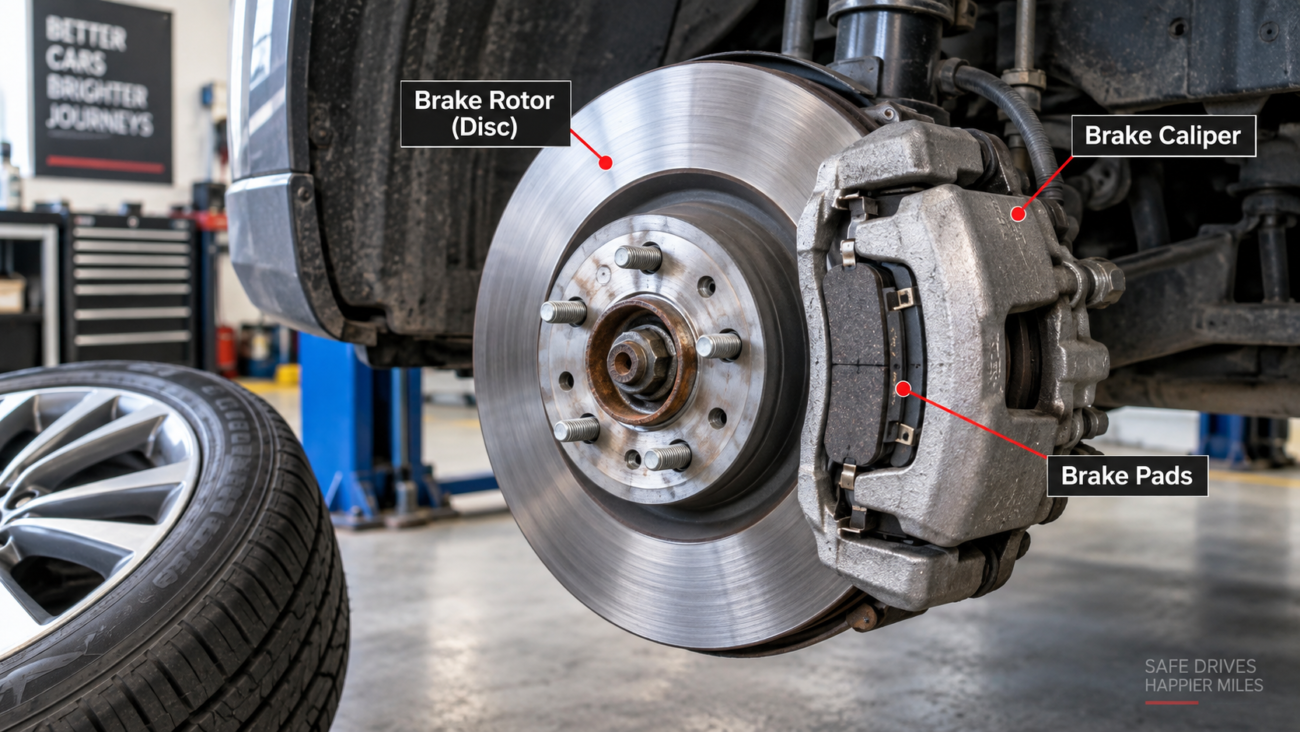
A typical ABS uses wheel-speed sensors, an ABS control module, hydraulic components, valves, and related wiring. The system monitors wheel speed and can adjust brake pressure when it detects that a wheel is about to lock.
Understanding these components makes it easier to understand how to reset ABS brake system warnings correctly.
What Does ABS Do?
During normal braking, the wheels rotate while the tires grip the road.
During very hard braking, a wheel can stop rotating while the vehicle is still moving. This is called wheel lockup. A locked wheel can make steering control more difficult, especially on slippery surfaces.
ABS monitors wheel rotation. If the system detects a wheel slowing much faster than the others, it can rapidly adjust brake pressure to that wheel.
The driver may feel a pulsing sensation through the brake pedal when ABS activates. This can be normal during an emergency stop.
ABS does not mean a vehicle can stop instantly. Road conditions, tire condition, vehicle speed, brake condition, and driver response still affect stopping distance.
What Does the ABS Warning Light Mean?
The ABS warning light indicates that the vehicle’s ABS system has detected a fault or that the system has been disabled.
The exact meaning depends on the vehicle. Some faults are minor electrical issues, while others can affect ABS operation.
The normal hydraulic brakes may still work on many vehicles when the ABS warning light is on. However, the anti-lock function may not operate correctly.
This is why how to reset ABS brake system should begin with diagnosis rather than simply switching the warning light off.
Can You Drive With the ABS Light On?
Whether you can safely continue driving depends on the warning lights and the vehicle’s braking behavior.
If only the yellow ABS light is on and the brakes feel normal, you may still have conventional braking, but the ABS function may be unavailable. Drive cautiously and arrange an inspection as soon as practical.
If the red brake warning light is also illuminated, the situation can be more serious.
Do not continue driving if the brake pedal feels unusually soft, the vehicle pulls strongly when braking, braking performance is reduced, or you notice another serious brake problem.
Why Does the ABS Warning Light Come On?
There are many reasons an ABS warning light can appear. Finding the cause is the most important part of learning how to reset ABS brake system warnings.
Faulty ABS Wheel Speed Sensor
Wheel-speed sensors are among the most common ABS components involved in warning-light faults.
Each sensor monitors wheel rotation and sends information to the ABS control module.
A sensor can become damaged or contaminated. Its wiring can also break or become disconnected.
For example, if one sensor suddenly reports a wheel speed that does not match the other wheels, the ABS module may store a fault code and turn on the warning light.
Low Brake Fluid
Some vehicles can trigger an ABS-related warning when the brake fluid level is too low.
Brake fluid may become low because of worn brake components, a leak, or other brake-system issues.
Never assume that adding fluid is the complete solution. If the level is unexpectedly low, the cause should be investigated.
Always use the brake fluid type specified by the vehicle manufacturer.
Damaged ABS Wiring or Connectors
ABS sensors are connected to the vehicle through electrical wiring.
Wires near the wheels can be exposed to water, dirt, road debris, vibration, and movement. Connectors can also become loose or corroded.
A damaged wire can interrupt communication between a sensor and the ABS module.
Weak or Disconnected Battery
Low system voltage can cause electronic control modules to register faults.
A weak battery, poor battery connection, or charging-system problem may therefore contribute to an ABS warning.
If several dashboard warning lights appeared after a weak-battery event, checking the vehicle’s electrical system is worthwhile.
ABS Module Problems
The ABS control module receives sensor information and controls parts of the ABS system.
A module can develop an electrical, communication, or internal fault.
Module-related faults often require a suitable diagnostic scanner and, in some cases, professional testing or repair.
Faults in the Brake System
The ABS warning light can sometimes appear alongside other brake-system warnings.
Problems involving brake pressure, fluid level, hydraulic components, or related sensors may affect the ABS system.
Because braking is a safety-critical system, unusual braking behavior should never be ignored.
How to Reset ABS Brake System
If you want to know how to reset ABS brake system warnings safely, follow this general process.
The exact procedure varies by vehicle make, model, and year.
Step 1: Park Safely and Turn Off the Vehicle
Park the vehicle on a safe, level surface.
Engage the parking brake and switch off the engine.
Allow the vehicle to cool if you have recently driven it and need to inspect components near the wheels.
Do not work under a vehicle that is supported only by a jack. If the vehicle must be raised, use proper safety equipment and follow the manufacturer’s instructions.
Step 2: Check the Brake Fluid
Locate the brake fluid reservoir under the hood.
Check the fluid level against the markings on the reservoir.
If it is below the recommended level, investigate why.
Do not use an incorrect fluid type or mix fluids unless the vehicle manufacturer specifically allows it.
If you see signs of leakage, have the brake system inspected rather than treating the low level as a simple reset issue.
Step 3: Inspect the ABS Sensors and Wiring
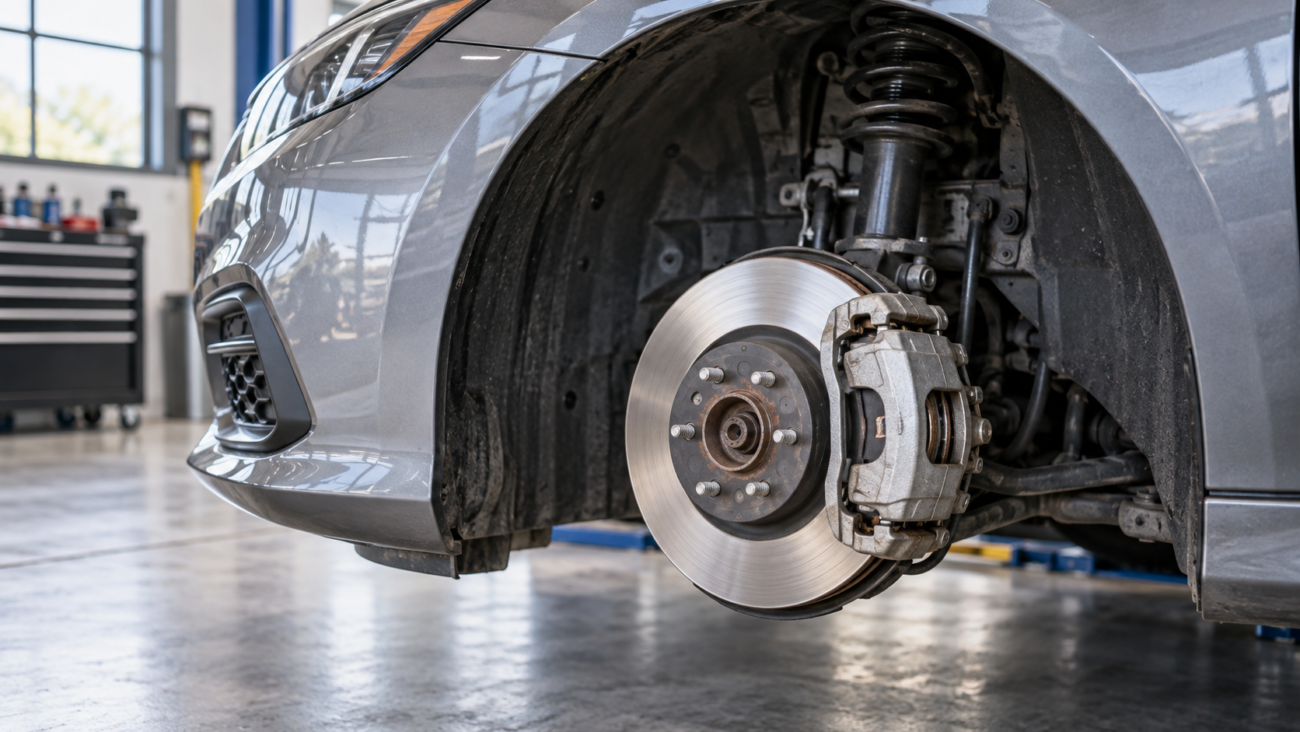
Look around the wheel areas for visible damage to ABS sensor wiring and connectors.
Check for:
- Loose connectors
- Broken or exposed wires
- Visible sensor damage
- Heavy contamination
- Wiring rubbing against moving components
- Signs of physical damage
Avoid pulling, bending, or disconnecting components unnecessarily.
A visual inspection can identify obvious problems, but it cannot confirm that a sensor is electrically or electronically healthy.
Step 4: Check the Battery
Inspect the battery terminals for obvious looseness or corrosion.
If the battery has recently been discharged, have the battery and charging system tested.
Low voltage can create electronic fault codes, so addressing a battery problem may be necessary before attempting to reset the ABS system.
Step 5: Use an OBD-II Scanner
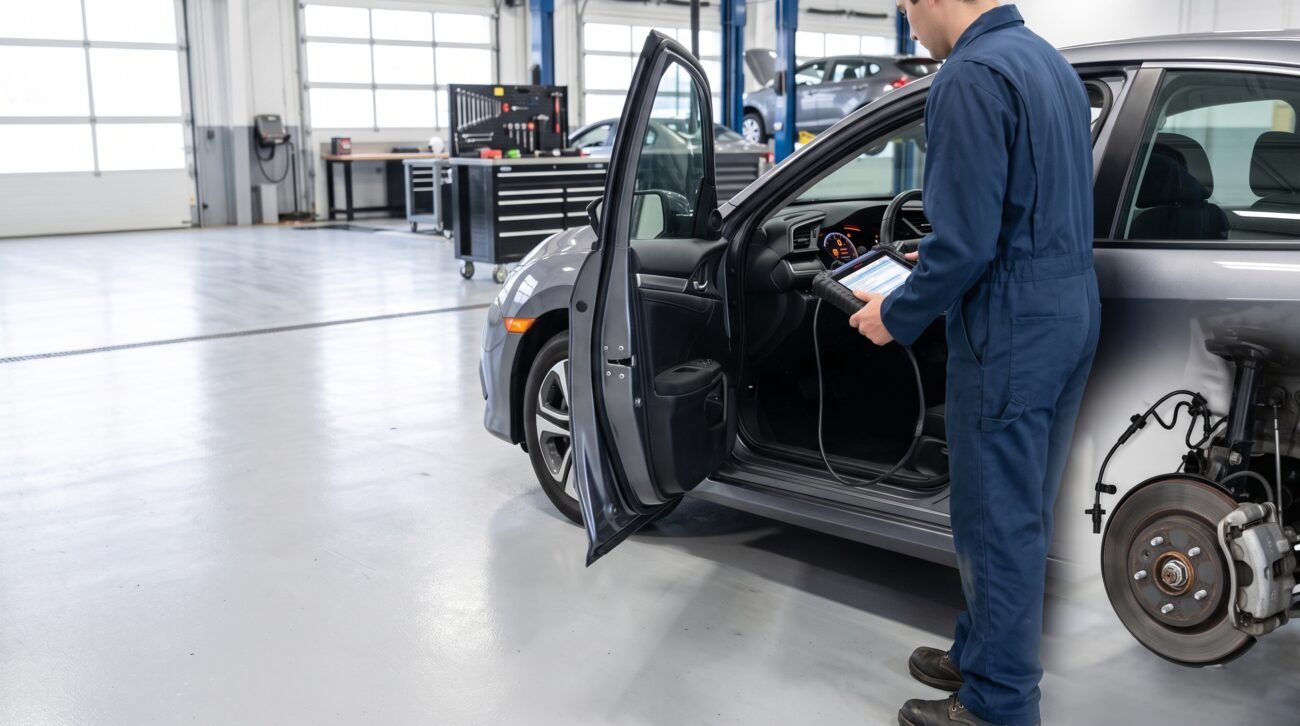
The most reliable method for diagnosing an ABS warning is to use a scanner that can communicate with the vehicle’s ABS module.
A basic engine-code reader may not be able to access ABS codes.
Connect a compatible scanner to the vehicle’s diagnostic port and follow its instructions.
Read the stored ABS codes before clearing anything.
Write the codes down or save them if the scanner supports that function.
Step 6: Clear the ABS Trouble Codes
After identifying and repairing the cause, use the scanner’s ABS-code clearing function.
This is an important part of how to reset ABS brake system warnings.
Do not clear the codes before diagnosing the problem if you still need the information. Erasing codes can remove useful diagnostic clues.
On some vehicles, the ABS warning light will turn off only after the system passes its self-check.
Step 7: Restart the Vehicle and Test the System
Turn the vehicle off and restart it.
Watch the dashboard during startup.
Warning lights often illuminate briefly as part of the vehicle’s normal system check. They should then go out if the system is operating normally.
If the ABS light remains on, scan the system again.
If the light returns after driving, the original fault may still exist or another problem may have been detected.
How to Reset ABS Light Without a Scanner
Many drivers search for how to reset ABS brake system warnings without buying diagnostic equipment.
There are a few basic things you can try, but they are not universal resets.
Turn the Ignition Off and On
If the warning was caused by a temporary condition, switching the vehicle off and restarting it may allow the ABS module to perform another self-check.
Turn the ignition off completely.
Wait briefly, then restart the vehicle.
If the ABS light goes out, continue to monitor the vehicle.
If it returns, the vehicle likely detected a fault that needs further diagnosis.
Check and Reconnect the Battery
A battery problem can contribute to electronic warning lights.
If you are qualified to inspect the battery connection, make sure the terminals are secure and free of obvious corrosion.
However, disconnecting the battery is not a universal ABS reset procedure.
Some vehicles may retain fault codes even after battery power is removed. Others can lose stored settings or require additional initialization procedures.
Always follow the vehicle manufacturer’s service information.
Inspect the ABS Fuse
Some vehicles have dedicated fuses for ABS-related circuits.
A failed fuse can indicate an electrical problem.
If a fuse is blown, replace it only with the correct type and rating specified for the vehicle.
If the replacement fuse blows again, stop replacing fuses and have the electrical system diagnosed.
Why These Methods May Not Work on Every Vehicle
There is no single reset procedure that works for every car.
Different manufacturers use different ABS systems and diagnostic strategies.
Some faults clear automatically after repair. Others require a scan tool to clear the stored code. Some systems require additional calibration or a driving cycle.
For this reason, a scanner is usually more useful than repeatedly disconnecting the battery.
How to Reset ABS Light With an OBD-II Scanner
Using an appropriate diagnostic scanner is generally the better approach when the ABS light remains on.
Find the ABS Diagnostic Port
Most modern vehicles have a standardized diagnostic connector located inside the passenger compartment.
It is often under the dashboard near the driver’s area.
The exact location varies by vehicle.
Plug the scanner into the diagnostic connector according to its instructions.
Scan for ABS Trouble Codes
Turn the ignition on as instructed by the scanner.
Select the vehicle and choose the ABS or brake-control module if your scanner provides that option.
Read the stored and pending codes.
A code is not always a direct instruction to replace a specific component.
For example, a wheel-speed sensor code can result from a damaged sensor, wiring problem, connector issue, wheel-bearing problem, or another condition affecting the sensor signal.
Repair the Cause of the Fault
Once the code is identified, inspect the related system.
For example, if the scanner identifies a wheel-speed sensor circuit fault, check the sensor, wiring, connector, and related mechanical components before replacing parts.
This diagnostic approach is much more reliable than clearing the light repeatedly.
Clear the Stored ABS Codes
After repairing the problem, use the scanner to clear the ABS codes.
Follow the scanner’s instructions.
Some vehicles may require the ignition to be cycled after clearing the codes.
Confirm That the ABS Light Is Off
Restart the vehicle.
The ABS warning light should normally illuminate during the initial self-check and then turn off if the system finds no active fault.
If it remains on, perform another scan.
A returning code is useful information because it indicates that the problem may still be present.
Common ABS Trouble Codes and What They Mean
ABS diagnostic codes vary between manufacturers, so the exact meaning should always be checked against the vehicle’s service information.
Wheel Speed Sensor Codes
These codes generally indicate a problem with a wheel-speed sensor circuit or signal.
Possible causes include:
- Sensor failure
- Wiring damage
- Connector problems
- Incorrect sensor signal
- Mechanical problems affecting sensor readings
Do not replace a sensor based only on the code without checking the related circuit.
ABS Module Codes
These codes can indicate communication, internal, power-supply, or control-module problems.
Diagnosis may require specialized equipment.
An ABS module code does not automatically mean the module itself must be replaced.
Brake Pressure Codes
Some ABS systems monitor hydraulic brake pressure.
A pressure-related code can point to a sensor, wiring, hydraulic problem, or control-system issue.
Because these faults can involve braking performance, professional inspection may be appropriate.
Communication and Wiring Codes
Modern vehicles have multiple control modules that communicate with each other.
A communication fault can be caused by wiring, connectors, power supply, grounding, or module-related problems.
This is another reason that simply learning how to reset ABS brake system warnings is not enough. The cause must be understood first.
What to Do If the ABS Light Comes Back On
If the ABS light returns after a reset, do not keep clearing it without finding the cause.
Recheck the ABS Sensors
Inspect the sensor related to the stored code.
Look for physical damage, contamination, loose connectors, or wiring problems.
If the vehicle has recently had wheel, suspension, or brake work, check whether anything near the sensor or wiring may have been disturbed.
Look for Damaged Wiring
Carefully inspect the wiring around the affected wheel.
A wire can look fine from a distance but have an internal electrical problem.
Professional electrical testing may be needed if the fault cannot be found visually.
Scan the System Again
If the warning returns, scan the ABS module again.
Compare the new code with the original code.
A recurring code can help identify an unresolved fault.
Get Professional Brake Inspection
If you cannot identify the problem, a qualified technician can perform more advanced tests.
Professional equipment may provide live wheel-speed data, electrical measurements, system tests, and manufacturer-specific diagnostic functions.
This is especially important when braking performance is affected.
Can Disconnecting the Battery Reset the ABS Light?
Battery disconnection is one of the methods people often consider when searching for how to reset ABS brake system warnings.
It may sometimes remove certain temporary electronic states, but it should not be considered a dependable ABS repair.
When Battery Disconnection May Help
If a warning resulted from a temporary low-voltage event, correcting the battery problem may help the vehicle return to normal operation.
However, the vehicle’s diagnostic system may still store information about the fault.
Why It Does Not Fix the Root Problem
Disconnecting the battery cannot repair a broken sensor, damaged wiring, mechanical problem, brake-fluid leak, or defective control module.
If the fault remains active, the ABS warning will likely return.
Possible Problems With Battery Reset Methods
Modern vehicles can store various settings and learned information.
Removing battery power can sometimes affect clock settings, radio settings, window functions, or other electronic features depending on the vehicle.
Some vehicles may also require specific procedures after battery power is restored.
Therefore, follow the manufacturer’s instructions rather than relying on battery disconnection as a universal reset.
ABS Light vs Brake Warning Light
Knowing the difference between warning lights is essential when deciding whether it is safe to drive.
What the ABS Light Means
The ABS warning light usually indicates a fault in the anti-lock braking system.
The conventional brake system may continue working, but the ABS function may be unavailable.
The exact behavior depends on the vehicle and the nature of the fault.
What the Red Brake Warning Light Means
A red brake warning light can indicate several conditions, such as the parking brake being applied or a problem with the brake system.
If it remains illuminated after releasing the parking brake, check the vehicle’s owner’s manual and have the brake system assessed.
When Both Warning Lights Are On
When the ABS warning light and red brake warning light appear together, take the situation seriously.
The combination can indicate a more significant brake-system problem.
If the brake pedal feels abnormal or braking performance is reduced, stop driving when it is safe to do so and arrange professional assistance.
When Should You Stop Driving?
Knowing when not to drive is more important than knowing how to reset ABS brake system warnings.
Signs of a Serious Brake Problem
Stop driving and seek appropriate assistance if you notice:
- A very soft or sinking brake pedal
- Major loss of braking performance
- A brake pedal that suddenly feels very different
- A significant brake-fluid leak
- Strong pulling while braking
- Grinding or other severe brake noises
- Multiple brake warning lights
- A red brake warning light that remains on for an unexplained reason
Do not rely on resetting the dashboard light when the vehicle shows physical signs of a brake problem.
Reduced Braking Performance
If the vehicle does not slow normally, do not continue driving just because the ABS light can be cleared.
Braking performance is more important than the warning light itself.
Have the vehicle inspected by a qualified professional.
ABS and Brake Lights Appearing Together
Both lights appearing together deserve particular attention.
The combination may indicate a fault that affects more than the anti-lock function.
Consult the owner’s manual and have the vehicle inspected, especially if braking behavior has changed.
FAQ
How to turn ABS brake light off?
The ABS light usually turns off after the problem is fixed. Start by checking the ABS wheel-speed sensors, sensor wiring, brake fluid level, and related fuses. You can then use an OBD-II scanner that supports ABS to read and clear the ABS fault code. If the underlying problem remains, the light will come back on. Avoid simply disconnecting the battery as a “reset,” because this may not clear the ABS fault and can hide an important safety issue.
How do I reset an ABS sensor?
You normally don’t reset the sensor itself. First, inspect and clean the sensor and its wiring. If the sensor is damaged or faulty, it may need replacement. After fixing the issue, scan the ABS control module and clear the stored fault code with a compatible diagnostic scanner. Some vehicles may also require a specific ABS calibration or relearn procedure.
What does the ABS warning light mean?
The ABS warning light means the vehicle has detected a problem with the Anti-lock Braking System. Common causes include a faulty wheel-speed sensor, damaged wiring, low brake fluid, a bad ABS fuse, or an issue with the ABS control module. Your normal brakes may still work, but ABS assistance may be unavailable. Drive carefully and have the system checked as soon as possible.
How to unlock ABS brakes?
If the brakes are locked or a wheel won’t rotate, don’t try to force the brake system open while driving. A stuck caliper, parking brake, hydraulic problem, or mechanical fault can cause a locked wheel. If the vehicle cannot move safely, have it inspected by a qualified mechanic or arrange roadside assistance. The ABS system itself normally prevents wheel lock during hard braking; it does not usually cause a brake to remain mechanically locked.
Final Thoughts
Learning how to reset ABS brake system warnings is useful, but resetting the warning light should never replace proper diagnosis.
The best approach is straightforward: park safely, check the brake fluid, inspect accessible ABS wiring and sensors, check battery condition, scan the ABS module, identify the trouble code, repair the underlying problem, and then clear the stored code with a compatible scanner.
A battery disconnect or ignition restart may occasionally remove a temporary warning, but neither method should be treated as a universal fix.
If the ABS light returns, scan the system again and investigate the new or recurring code. If the red brake warning light is also on, braking performance has changed, or you see signs of a brake-fluid leak, seek professional inspection rather than continuing to reset the warning.
In short, the correct way to reset ABS brake system warnings is to diagnose and repair the fault first, then clear the ABS codes and confirm that the system passes its self-check.



One thought on “How to Reset ABS Brake System: Easy Step-by-Step Guide”