

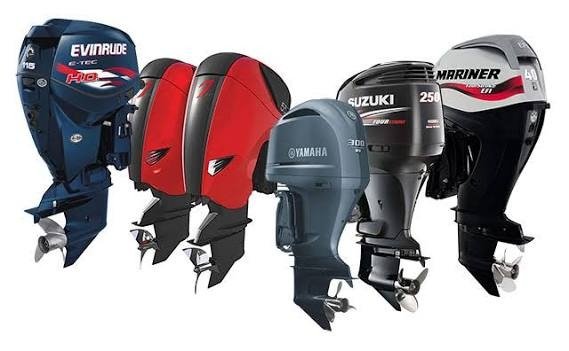
Choosing an outboard engine can feel like a bigger decision than it first appears. The engine is not simply a motor hanging from the back of a boat. It plays a major role in how quickly the boat moves, how smoothly it handles, how much fuel it uses, and how confidently you can enjoy your time on the water.
That is why so many boat owners eventually ask the same question: who makes the best outboard engines?
There is no single answer that works for every boat and every boater. A small fishing boat may need a completely different engine from a large offshore vessel. Someone who spends weekends cruising may have different priorities from a serious angler who spends hours on the water.
Today, several manufacturers have built strong reputations in the outboard engine industry. Yamaha, Mercury, Honda, Suzuki, and Tohatsu are among the brands frequently considered by boat owners. Each manufacturer offers different combinations of power, efficiency, technology, reliability, weight, and convenience.
The good news is that modern outboard engines offer more choices than ever. Whether you want a compact engine for a small boat or a powerful motor for a larger vessel, there is likely an option that fits your needs.
In this guide, we will explore the leading outboard engine brands, compare their strengths, explain what makes an engine a good choice, and show you how to choose the right motor for your boat.
What Makes an Outboard Engine a Great Choice?
Before comparing brands, it helps to understand what actually makes an outboard engine good.
A powerful engine is not automatically the best engine. Horsepower is important, but it is only one part of the overall picture.
A quality outboard should provide a useful combination of performance, reliability, fuel efficiency, durability, manageable weight, serviceability, and appropriate technology.
Reliability
Reliability is one of the most important qualities in an outboard engine.
Nobody wants an engine that performs perfectly one weekend and creates problems the next. Boaters depend on their engines to start properly, run smoothly, and continue operating when they are away from the dock.
A reliable engine can make boating more enjoyable because you spend less time worrying about unexpected mechanical problems.
Performance
Performance is another major consideration.
Depending on the boat, you may care about acceleration, cruising speed, smooth operation, or the ability to carry passengers and equipment without struggling.
The ideal engine provides enough power for the boat without being unnecessarily oversized.
Fuel Efficiency
Fuel costs can become significant for people who use their boats regularly.
Modern four-stroke outboards and other advanced engine technologies can offer impressive efficiency compared with older designs. However, actual fuel consumption depends on many factors, including engine size, boat weight, hull design, speed, load, water conditions, and how the engine is operated.
An efficient engine can help you spend more time enjoying the water and less time thinking about fuel.
Durability
An outboard engine is exposed to a challenging environment.
Saltwater, freshwater, humidity, heat, vibration, and changing weather conditions can all affect marine equipment. A durable engine needs appropriate corrosion protection and quality construction.
Regular maintenance is equally important. Even a premium engine can develop problems if it is neglected.
Service and Parts Availability
A great engine is much more useful when you can easily find qualified technicians and replacement parts.
Before buying an outboard, check the availability of authorized dealers and service centers in your area.
This is especially important if you frequently travel to remote waterways or depend on your boat for regular work.
Who Makes the Best Outboard Engines?
When people ask who makes the best outboard engines, several major manufacturers usually enter the conversation.
Yamaha, Mercury, Honda, Suzuki, and Tohatsu all have strong reputations, but their strengths can differ.
Instead of searching for one universal winner, it makes more sense to consider which manufacturer best matches your particular boat and boating style.
Yamaha Outboard Engines
Yamaha is one of the best-known names in the marine engine industry.
The company produces outboard engines across a broad range of horsepower categories, giving boat owners options for everything from smaller recreational boats to larger vessels.
One reason Yamaha frequently appears in discussions about the best outboard engines is its reputation for dependable performance and engineering.
Why Boaters Consider Yamaha
Yamaha outboards are often associated with reliability, smooth operation, and strong overall performance.
The company has also invested heavily in electronic controls, fuel management, digital technologies, and other features designed to make modern boating easier.
For many boat owners, Yamaha represents a balanced choice rather than focusing on only one characteristic.
Yamaha for Fishing
Fishing boat owners may appreciate an engine that delivers predictable performance and efficient cruising.
Depending on the boat and engine selected, Yamaha offers configurations suitable for different fishing applications.
The right setup can provide enough power to reach fishing locations efficiently while maintaining comfortable cruising performance.
Yamaha for Recreational Boating
Yamaha engines can also be suitable for recreational boating.
If your plans include cruising, family outings, exploring lakes, or spending relaxed weekends on the water, the most important thing is to match the engine correctly to the boat.
A properly matched Yamaha can provide smooth and dependable performance without requiring unnecessary horsepower.
Mercury Outboard Engines
Mercury Marine is another major name in the outboard engine market.
Mercury offers a wide selection of engines and is particularly well known among boaters who place a strong emphasis on performance and technology.
The company produces engines for a wide range of applications, from smaller recreational boats to high-performance vessels.
Why Choose Mercury?
One of Mercury’s strengths is the variety of choices available to boat owners.
Depending on the model, buyers can find engines designed around different priorities, including portability, fuel efficiency, acceleration, high horsepower, and advanced electronic features.
Mercury has also developed technologies intended to improve the boating experience through easier operation and integrated systems.
Mercury for Performance
If performance is high on your priority list, Mercury deserves serious consideration.
The appropriate Mercury engine can provide strong acceleration and responsive handling when correctly matched to a boat.
However, choosing the biggest engine available is not necessarily the right approach.
The boat manufacturer’s recommended horsepower range should always be considered first.
Mercury for Modern Boats
Modern boats increasingly use digital displays, electronic controls, and integrated marine systems.
Some Mercury setups can work with sophisticated onboard electronics, helping boat owners monitor engine information and other operating data.
This can be particularly attractive to boaters who enjoy technology and want a modern boating setup.
Honda Outboard Engines
Honda is another respected manufacturer in the marine industry.
The company is widely associated with four-stroke engine technology and a reputation for smooth, quiet operation.
Honda outboards are available in various horsepower categories and can be used across a wide range of recreational boating applications.
Why Consider Honda?
One of the main attractions of Honda outboards is their emphasis on efficient four-stroke engineering.
Four-stroke engines can provide smooth operation and are often appreciated by boaters who value quiet cruising.
Honda’s reputation in engine manufacturing also gives the brand considerable recognition among consumers who are already familiar with its automotive and power-equipment products.
Honda for Quiet Cruising
Noise can make a surprising difference to the boating experience.
A quieter engine makes conversations easier and can make fishing or relaxing on the water more pleasant.
For boaters who prioritize a smooth and comfortable ride, a suitable Honda outboard may be an appealing choice.
Honda for Recreational Users
Honda offers engines suitable for many recreational applications.
As with every manufacturer, selecting the correct model matters more than simply choosing a brand name.
Consider your boat’s weight, hull design, passenger capacity, normal load, and intended use before deciding which Honda engine is appropriate.
Suzuki Outboard Engines
Suzuki is another major competitor in the global outboard market.
Suzuki outboards have gained attention for their combination of performance, fuel efficiency, engineering, and technology.
The manufacturer produces engines in various sizes, making it possible for different types of boat owners to find suitable options.
Why Boaters Choose Suzuki
Suzuki has developed several technologies designed to improve engine efficiency and performance.
Many boat owners are particularly interested in fuel economy because operating costs can become a major part of boat ownership.
A properly matched Suzuki outboard can provide an attractive balance between power and efficient operation.
Suzuki for Fishing Boats
Fishing boats often benefit from an engine that can cruise efficiently while still providing enough power for acceleration and changing conditions.
Suzuki offers multiple options for different boat sizes, allowing buyers to choose an engine according to their specific requirements.
Suzuki and Engine Technology
Modern outboards are increasingly sophisticated.
Fuel injection, electronic controls, digital monitoring, and other technologies can improve convenience and provide boat owners with more information about engine operation.
Suzuki is one of the manufacturers that has invested in these areas.
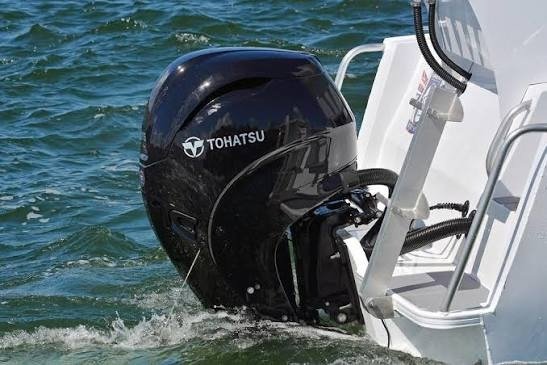
Tohatsu Outboard Engines
Tohatsu is another important manufacturer worth considering.
The company has a long history in outboard engine production and offers engines across different power categories.
Tohatsu is particularly relevant for boat owners looking for compact and practical engines.
Why Consider Tohatsu?
Tohatsu offers a variety of outboards designed for different boating applications.
Smaller engines can be especially useful for lightweight boats, tenders, small fishing boats, and other applications where portability matters.
A smaller engine can also be easier to transport, store, and install.
Tohatsu for Smaller Boats
If you own a small boat, you do not necessarily need a large engine.
An appropriately sized Tohatsu outboard may provide enough power while keeping the overall setup relatively simple.
The key is to follow the boat manufacturer’s specifications and avoid exceeding the recommended capacity.
Yamaha vs. Mercury vs. Honda vs. Suzuki vs. Tohatsu
So, who makes the best outboard engines among these manufacturers?
The answer depends heavily on what you need.
Yamaha is often considered by boaters looking for a balanced combination of reliability, performance, efficiency, and technology.
Mercury is an attractive option for boaters who place significant emphasis on performance and modern features.
Honda can appeal to people who value smooth and quiet four-stroke operation.
Suzuki is worth considering when fuel efficiency, performance, and modern engineering are important.
Tohatsu can be especially interesting for smaller boats and owners who want practical engine choices.
There is no universal winner because boats and boating habits are different.
Which Outboard Brand Is Best for Reliability?
Reliability is one of the most debated topics among boat owners.
Yamaha, Mercury, Honda, Suzuki, and Tohatsu all have large numbers of engines in service.
Rather than assuming one brand is always the most reliable, look at the specific engine model, maintenance history, usage conditions, and service support.
A well-maintained engine from any reputable manufacturer can provide years of useful service.
Maintenance Matters More Than Many People Realize
Even the most respected engine brand requires proper care.
Regular oil changes, inspection, cooling-system maintenance, corrosion protection, fuel-system care, and correct storage can all influence engine life.
A neglected premium engine may perform worse than a properly maintained engine from another reputable manufacturer.
Which Outboard Engine Is Best for Fuel Economy?
Fuel economy depends on more than the engine’s brand.
Boat design plays a major role.
A heavy boat requires more energy to move than a lightweight boat. Hull shape also affects how efficiently the boat moves through the water.
Operating speed matters as well. Running an engine aggressively at high speed can consume significantly more fuel than maintaining an efficient cruising speed.
How to Improve Fuel Efficiency
Choose an engine that is appropriately sized for the boat.
Avoid carrying unnecessary weight.
Keep the hull clean and in good condition.
Maintain the engine according to the manufacturer’s recommendations.
Use the correct propeller for the boat and engine setup.
Most importantly, operate at a sensible cruising speed rather than constantly running at maximum throttle.
What Horsepower Outboard Do You Need?
Choosing the correct horsepower is one of the most important parts of buying an outboard.
The correct engine depends on your boat.
A small aluminum fishing boat might need only a relatively low-horsepower engine, while a large offshore boat may require a much more powerful setup.
Follow the Boat Manufacturer’s Recommendations
Always check the capacity plate and manufacturer’s specifications.
These details can tell you important information about the maximum recommended horsepower and passenger or weight capacity.
Installing an engine that is too powerful can create safety, handling, structural, insurance, or regulatory concerns.
Bigger Is Not Always Better
It can be tempting to choose the biggest engine you can afford.
However, additional horsepower can also mean additional weight, fuel consumption, purchase cost, and maintenance requirements.
The goal should be appropriate power, not simply maximum power.
2-Stroke vs. 4-Stroke Outboard Engines
Another question boat owners often face is whether to choose a two-stroke or four-stroke engine.
Traditional two-stroke engines were popular for decades because of their simplicity and power-to-weight characteristics.
Modern four-stroke outboards have become extremely popular because of improvements in fuel delivery, performance, emissions, noise, and efficiency.
Advantages of Four-Stroke Engines
Four-stroke engines are generally known for smooth operation and efficient performance.
They can be a good choice for recreational boaters who want a modern engine with comfortable cruising characteristics.
Are Two-Stroke Engines Still Useful?
Older two-stroke engines can still be found in the used market.
However, buyers should carefully consider local emissions regulations, availability of parts, fuel requirements, maintenance needs, and the engine’s overall condition.
For many buyers seeking a new outboard, modern four-stroke technology is a major part of the current market.
New vs. Used Outboard Engines
Buying a new engine gives you several advantages.
You get a new powerhead and components, current technology, manufacturer support, and typically a factory warranty.
However, new engines can be expensive.
A used outboard can be much more affordable, but it requires careful inspection.
What to Check on a Used Outboard
Ask about the engine’s maintenance history.
Find out how many hours it has been operated if reliable hour information is available.
Look for visible corrosion.
Inspect the propeller and lower unit.
Check the cooling system.
Pay attention to unusual noises or vibrations.
If possible, have a qualified marine technician inspect the engine before completing the purchase.
A cheap engine is not a bargain if it immediately requires expensive repairs.
How to Maintain Your Outboard Engine
Good maintenance can make a major difference in engine performance and longevity.
You do not need to be a professional mechanic to take basic care of an outboard, although more complicated repairs should be handled by a qualified technician.
Follow the Service Schedule
Every manufacturer provides maintenance recommendations for its engines.
Follow the schedule for oil changes, filters, spark plugs, gearcase lubricant, cooling-system checks, and other required service.
Check the Propeller
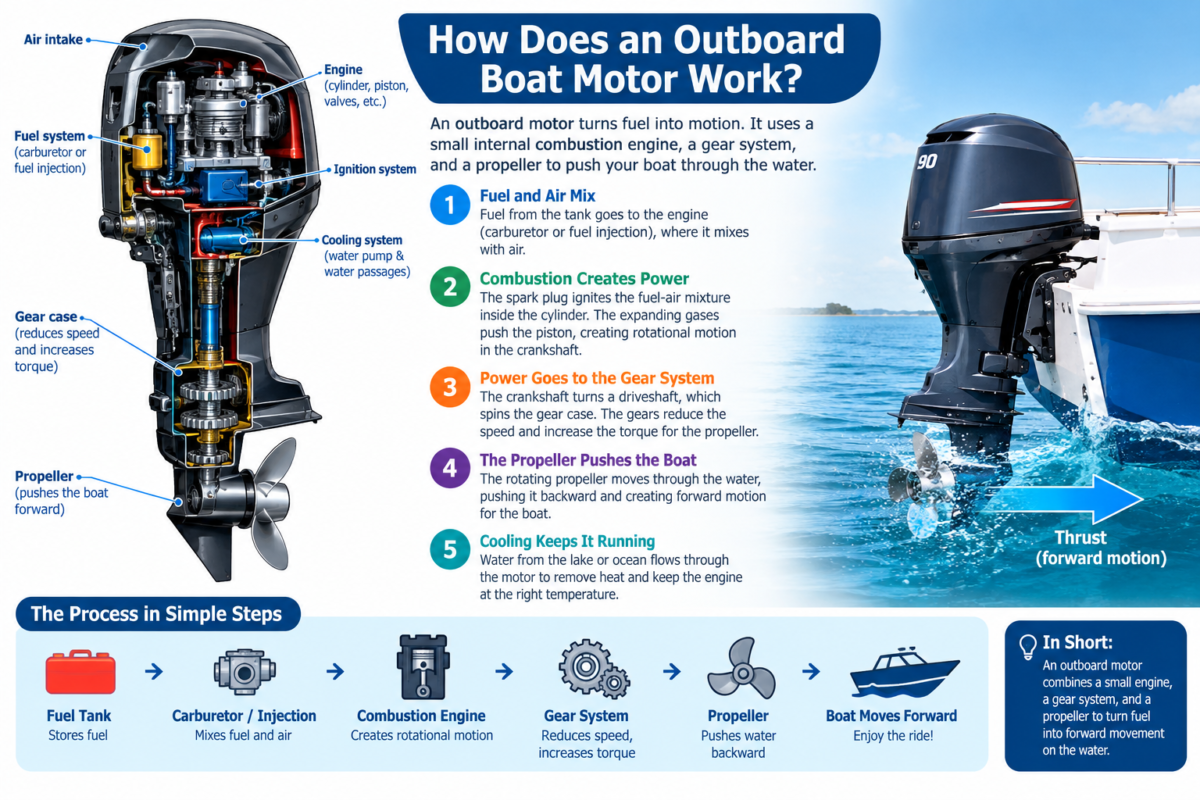
The propeller transfers engine power into movement through the water.
A damaged or bent propeller can affect acceleration, vibration, fuel consumption, and overall performance.
Inspect it regularly and repair or replace it when necessary.
Protect Against Corrosion
Corrosion is a serious concern for marine engines, particularly when they are used in saltwater.
Follow the manufacturer’s recommendations for flushing and corrosion protection.
Do not ignore small signs of corrosion because they can become larger problems over time.
Store the Engine Properly
Proper storage is particularly important when the boat will not be used for an extended period.
Follow the manufacturer’s storage recommendations and consider professional winterization or seasonal servicing where appropriate.
Common Outboard Engine Problems
Even good engines can develop problems.
Knowing the common warning signs can help you respond before a small issue becomes a major repair.
Engine Will Not Start
Starting problems can come from several sources.
The battery, fuel system, ignition system, electrical connections, safety systems, or other components may be involved.
Avoid repeatedly attempting to start an engine without understanding the cause.
Overheating
An outboard’s cooling system is essential.
Restricted water flow, a damaged water pump component, blocked passages, or other issues can cause overheating.
If an engine shows signs of overheating, stop operation and investigate the problem according to the manufacturer’s guidance.
Poor Acceleration
Poor acceleration may be related to propeller damage, incorrect propeller selection, excessive boat weight, fuel problems, engine issues, or other mechanical conditions.
A technician can help identify the actual cause.
Yamaha section:
Yamaha is one of the best-known names in the marine engine industry. The company produces outboard engines across a broad range of horsepower categories, giving boat owners options for everything from smaller recreational boats to larger vessels. You can explore the current range and specifications on Yamaha Marine’s official website.
Excessive Vibration
Unusual vibration should not be ignored.
A damaged propeller, incorrect installation, alignment problems, or mechanical issues may contribute to vibration.
How to Choose the Best Outboard Engine for Fishing
Fishing puts different demands on an outboard engine.
You may need to travel long distances, operate at low speeds, maneuver around fishing locations, and carry additional equipment.
Reliability is therefore particularly important.
Fuel efficiency can also matter because fishing trips may last several hours.
Choose an engine that matches your boat’s specifications and consider the service support available near the waters where you normally fish.
How to Choose an Outboard for Family Boating
Family boating is often about comfort rather than maximum speed.
Smooth operation, manageable noise, fuel efficiency, and dependable starting can all be important.
Consider how many passengers you normally carry and how much equipment goes aboard.
A correctly matched engine should provide comfortable acceleration without making the boat difficult to control.
How to Choose an Outboard for Offshore Use
Offshore boating can place greater demands on equipment.
Reliability becomes especially important when you are farther from shore.
Engine selection should account for the boat’s size, weight, fuel capacity, expected conditions, and intended operating range.
For serious offshore applications, professional advice from a qualified marine dealer or technician can be extremely valuable.
Why Dealer Support Matters
Imagine buying an excellent engine but discovering that there is no convenient service center anywhere near you.
That can turn routine maintenance into a major inconvenience.
Before buying, research local dealer support.
Ask whether parts are readily available and whether technicians are trained to work on the engine brand and model you are considering.
This simple step can save considerable time later.
Should You Buy the Same Brand as Your Boat?
Not necessarily.
Many boat manufacturers offer packages with particular engine brands, but that does not automatically mean the brand is the only suitable choice.
Your decision should be based on the boat’s specifications, compatible engine options, dealer support, price, performance requirements, and personal preferences.
A good boat-and-engine combination matters more than choosing a brand simply because it is popular.
What About Engine Weight?
Engine weight can have a noticeable effect on boat performance.
Putting a heavy engine on a small boat can change how the boat sits in the water.
It can also affect handling, balance, acceleration, and transportation.
When comparing engines with similar horsepower, look at their weight as well.
This is particularly important for lightweight boats.
What About Technology?
Technology has become an increasingly important part of modern outboards.
Depending on the model, features may include electronic fuel injection, digital gauges, electronic controls, integrated monitoring, and other systems.
Technology can improve convenience, but more features can also mean more components to understand and maintain.
Think about whether a particular feature genuinely benefits the way you use your boat.
How Much Should You Spend on an Outboard?
There is no single budget that works for every boater.
The purchase price depends on horsepower, engine technology, size, features, brand, and other factors.
But the initial purchase price should not be the only cost you consider.
Think about the total cost of ownership.
This can include fuel, maintenance, replacement parts, propellers, batteries, storage, installation, and occasional repairs.
An engine that costs slightly more initially may make sense if it better matches your needs and provides reasonable ownership costs over time.
Questions to Ask Before Buying
Before choosing an outboard, ask yourself a few simple questions.
What type of boat do I have?
What is its recommended horsepower range?
How many people will usually be onboard?
How far do I normally travel?
Do I prioritize speed or fuel economy?
Will I use the engine in freshwater or saltwater?
How important is low noise?
Is there a service center nearby?
What is my total budget?
Do I want a new or used engine?
Answering these questions can narrow your choices considerably.
FAQs
Who makes the best outboard engines?
There is no single manufacturer that is automatically the best for every boat. Yamaha, Mercury, Honda, Suzuki, and Tohatsu are all important brands to consider. The best choice depends on your boat, horsepower requirements, intended use, budget, service availability, and personal priorities.
Is Yamaha better than Mercury?
Yamaha and Mercury both offer a wide selection of outboard engines and modern technologies. Neither should automatically be considered better in every situation. Compare specific models based on your boat’s requirements, performance goals, dealer support, and total ownership costs.
Are Honda outboard engines reliable?
Honda has a strong reputation for engine engineering and offers a range of four-stroke outboards. Reliability depends not only on the brand but also on the specific model, maintenance history, operating conditions, and proper servicing.
Are Suzuki outboard engines good?
Suzuki is a well-established outboard manufacturer with engines designed for various boating applications. Its engines can be attractive to boaters who value a combination of performance, fuel efficiency, and modern technology.
Are Tohatsu outboard engines worth considering?
Yes. Tohatsu offers outboards across multiple horsepower categories and can be particularly relevant for smaller boats and practical recreational applications. As with any brand, compare the specific model and make sure local parts and service are available.
What is the most reliable outboard engine brand?
Reliability cannot be guaranteed simply by choosing one brand. Yamaha, Mercury, Honda, Suzuki, and Tohatsu all have established reputations. Proper engine selection, maintenance, storage, and operating practices can have a major effect on reliability.
What horsepower outboard do I need?
Start with the boat manufacturer’s recommended horsepower range. Consider the boat’s size, weight, passenger capacity, typical load, and intended use. Never choose an engine solely because it has the highest horsepower available.
How long can an outboard engine last?
Engine life varies considerably. Maintenance, operating conditions, usage, corrosion exposure, storage, and service history can all affect longevity. A properly maintained engine can provide many years of service, while a neglected engine may develop serious problems much sooner.
Is a bigger outboard always better?
No. More horsepower does not automatically mean a better boating experience. The engine should be appropriately matched to the boat. Excessive power or weight can create handling and safety concerns and may increase fuel and maintenance costs.
Are modern four-stroke outboards good for fishing?
Modern four-stroke outboards can be excellent choices for many fishing applications. They are generally known for smooth operation and efficient performance. The best option still depends on the boat, fishing style, required horsepower, and local service availability.
Should I buy a new or used outboard?
A new outboard offers current technology, a new engine, and typically manufacturer warranty coverage. A used engine can reduce the initial cost but should be carefully inspected. Maintenance records and professional inspection are especially valuable when purchasing used.
Final Thoughts
So, who makes the best outboard engines? The most honest answer is that the best manufacturer depends on the boat, the boater, and the type of adventure waiting beyond the dock.
Yamaha, Mercury, Honda, Suzuki, and Tohatsu all provide compelling options, but choosing between them should involve more than simply comparing brand names. Look closely at horsepower, engine weight, fuel efficiency, performance, technology, warranty, maintenance requirements, and local service support.
Your boating style matters just as much. A casual weekend cruiser may want smooth and efficient operation, while a serious angler may place greater importance on reliability, fuel economy, and precise control. A small boat needs a different solution from a large offshore vessel.
The smartest approach is to start with your boat’s specifications and then compare compatible engines. Choose appropriate power rather than simply choosing the largest motor available.
A quality outboard combined with proper maintenance can make boating easier, more enjoyable, and more dependable. Take your time, compare your options carefully, and select the engine that genuinely fits your boat and your plans for the water. That is ultimately what makes an outboard engine the best choice for you.

One thought on “Who Makes the Best Outboard Engines? Discover the Top Brands for Power, Performance & Reliable Boating”