

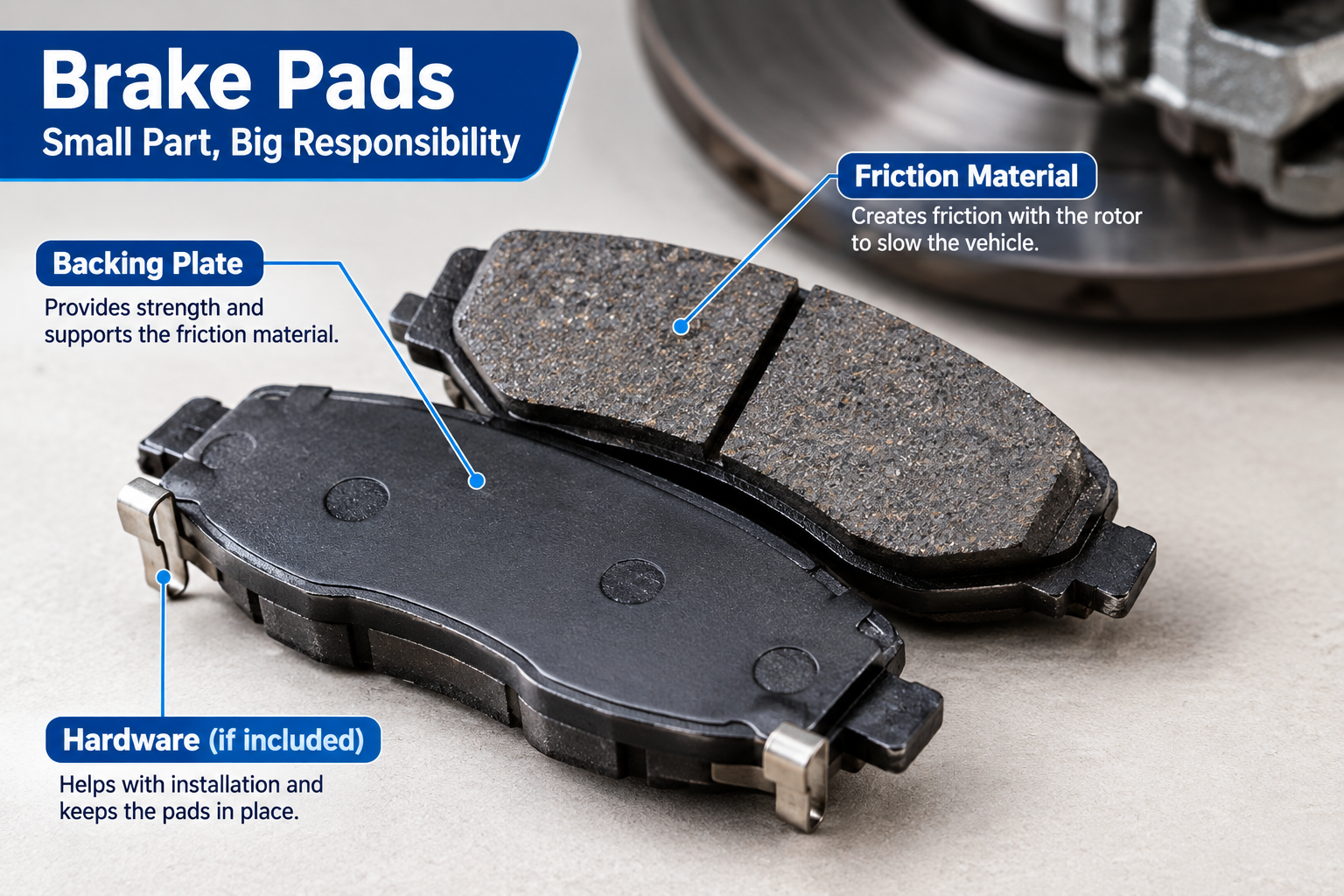
When you press the brake pedal, your car may slow down so smoothly that you hardly think about what is happening underneath it. Yet behind that simple movement is a carefully designed system that uses hydraulic pressure, mechanical force, friction, and heat to bring thousands of pounds of moving vehicle safely under control. At the center of this process are the brake pads, small but extremely important components that work every time you slow down or stop.
So, how do brake pads work? In simple terms, brake pads work by pressing against a spinning brake rotor and creating friction. That friction reduces the rotor’s rotation, which slows the wheel and ultimately slows the vehicle. Although the basic idea sounds simple, the engineering behind modern automotive braking is much more interesting.
Brake pads have to work in different temperatures, weather conditions, traffic situations, and driving environments. They must provide enough friction to slow the vehicle without wearing away too quickly. They also need to handle considerable heat while maintaining predictable braking performance. This balance is what makes modern brake systems both effective and dependable.
Understanding how brake pads work can help you recognize common brake problems, understand maintenance recommendations, and appreciate why quality braking components matter. Whether you are a new driver, a car enthusiast, or simply curious about automotive technology, learning how this system operates makes the entire braking process much easier to understand.
What Are Brake Pads?
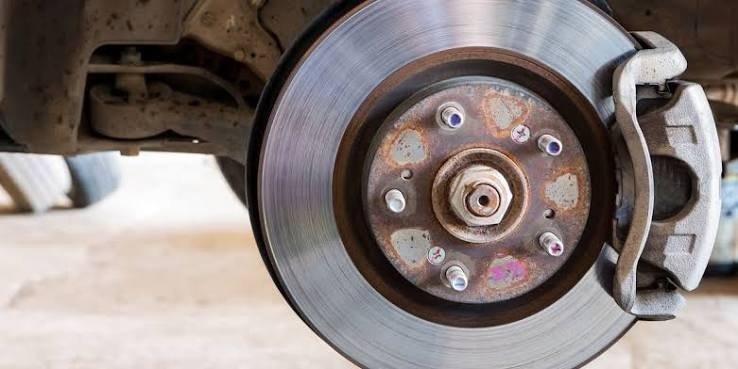
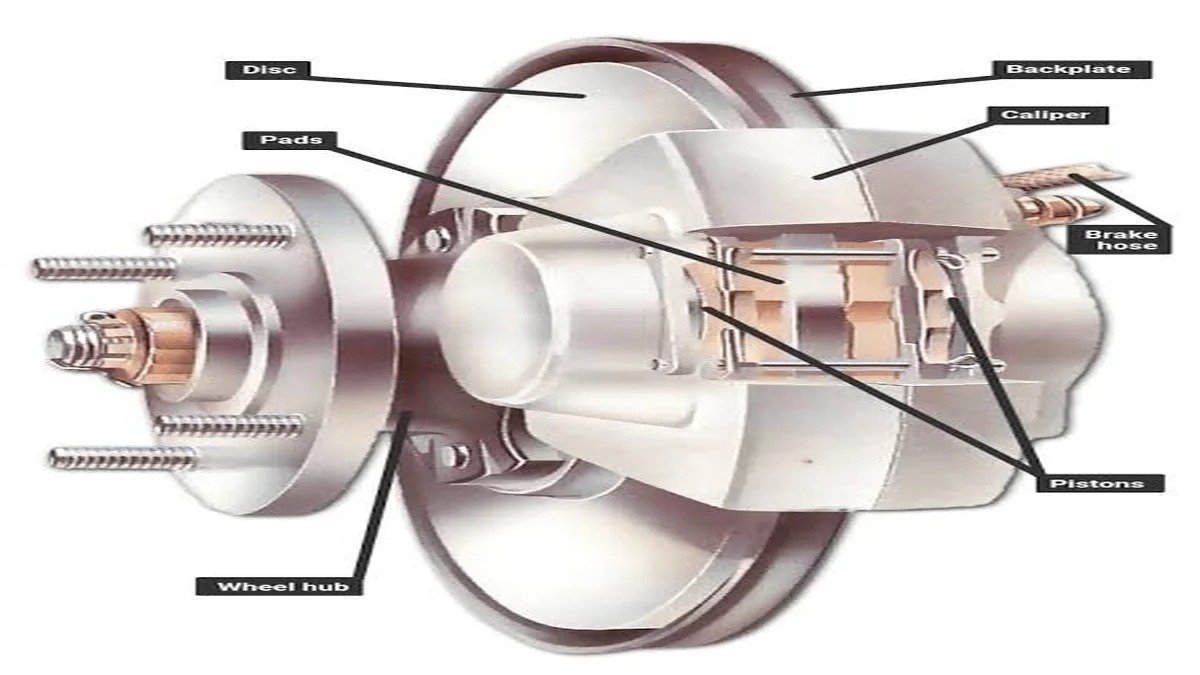
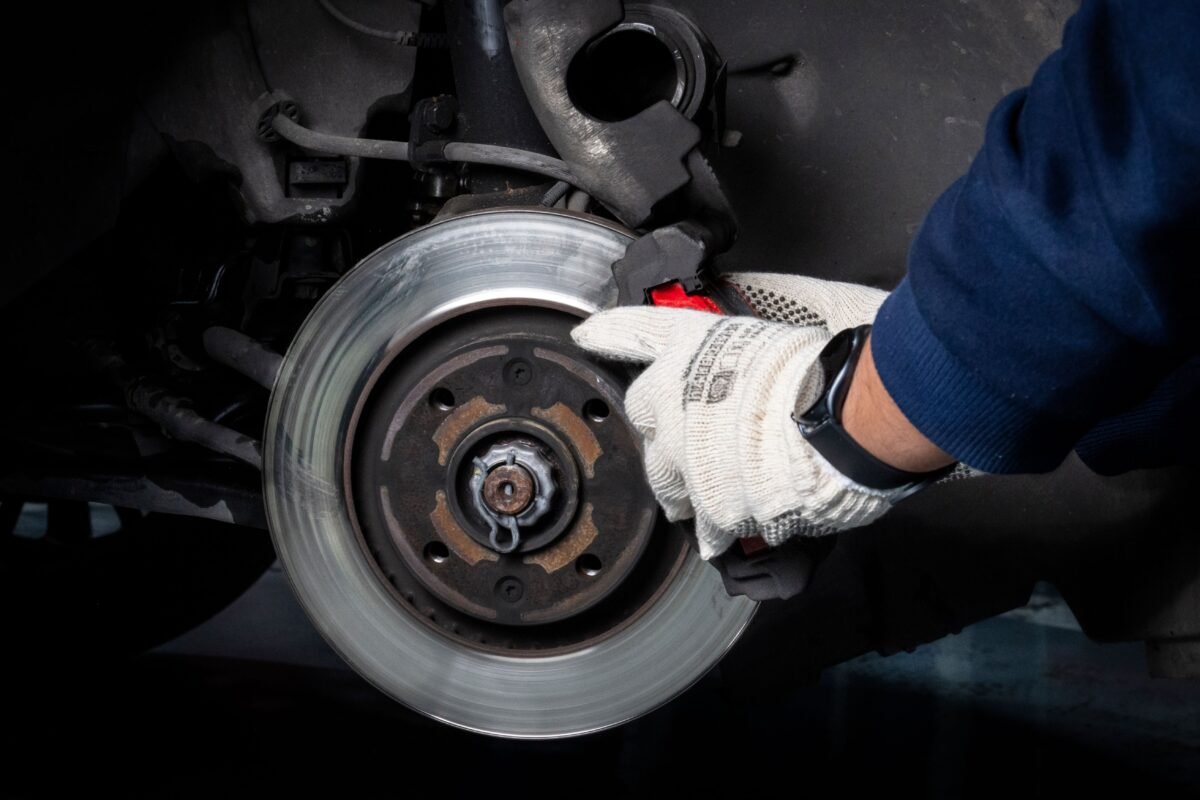
Brake pads are friction components used primarily in vehicles equipped with disc brakes. They are installed inside a brake caliper and positioned on either side of a flat, circular component called the brake rotor.
When the vehicle is moving, the rotor rotates together with the wheel. When you press the brake pedal, the braking system creates pressure that causes the caliper to move the brake pads toward the rotor. The pads then make contact with the rotor’s surfaces.
This contact produces friction. Friction opposes the rotation of the rotor and converts some of the vehicle’s kinetic energy into heat. As the rotor slows down, the wheel slows down as well. Eventually, the vehicle can come to a complete stop.
A brake pad usually consists of a backing plate and a friction material attached to it. The friction material is the part that makes contact with the rotor. Its composition can vary depending on the type of brake pad, vehicle requirements, and desired performance characteristics.
Although brake pads may look relatively simple, their design is carefully engineered. Manufacturers consider factors such as temperature resistance, friction characteristics, noise, durability, dust production, and compatibility with the vehicle’s braking system.
How Do Brake Pads Work?
The easiest way to understand how brake pads work is to follow the braking process from the driver’s foot to the wheels.
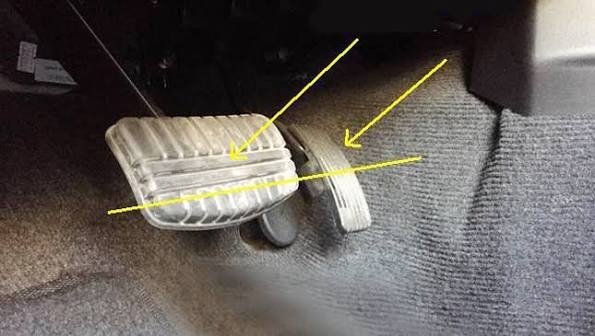
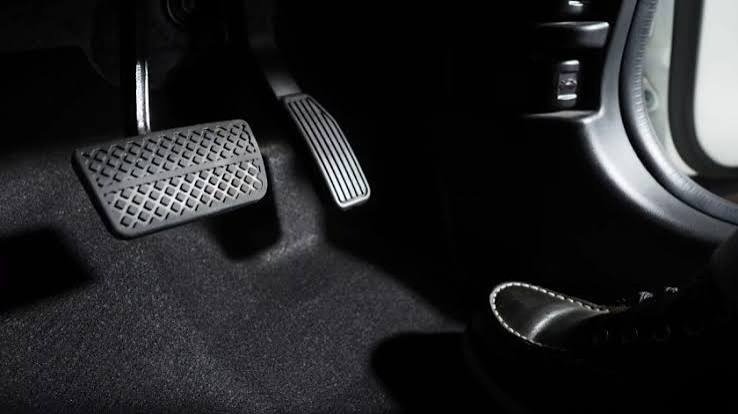
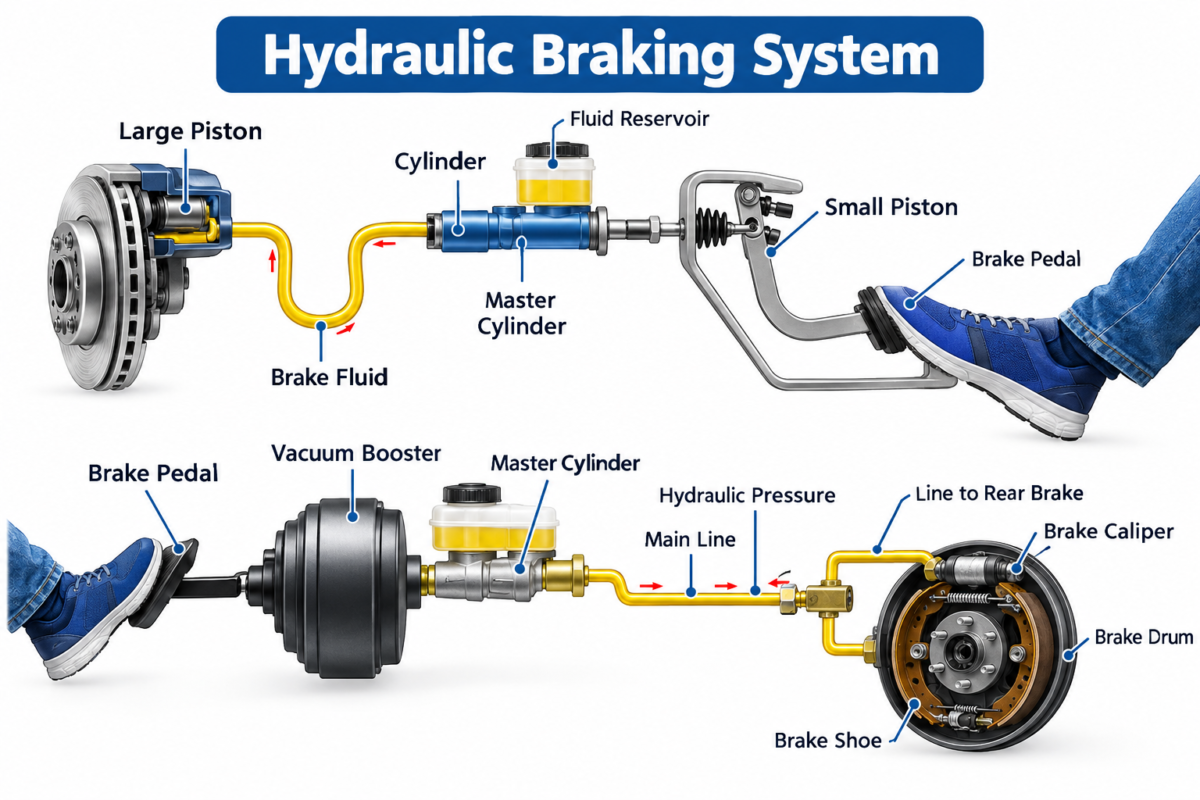
When you press the brake pedal, you create an input force. That force is transferred through the vehicle’s braking system. In a conventional hydraulic braking system, the brake pedal operates the master cylinder, which pressurizes brake fluid.
The pressurized brake fluid travels through brake lines toward the wheel-end components. At a disc brake, the fluid enters the brake caliper. Hydraulic pressure causes the caliper piston or pistons to move.
The movement of the pistons pushes the brake pads toward the brake rotor. The pads squeeze the rotor from both sides, creating friction between the stationary pads and the rotating rotor.
That friction resists rotation. Because the rotor is connected to the wheel, reducing rotor speed also reduces wheel speed. The vehicle therefore begins to slow down.
The harder you press the brake pedal, within the limits of the system, the greater the braking force can become. Modern vehicles may also use systems such as ABS, electronic brake-force distribution, and brake assist to help manage braking performance.
The important point is that brake pads do not stop a vehicle by themselves. They are one part of a larger system in which several components work together.
The Basic Braking Process Explained
The complete process can be understood through several connected steps.
First, the driver presses the brake pedal. This creates mechanical input into the braking system.
Next, the master cylinder converts the pedal movement into hydraulic pressure. Brake fluid carries this pressure through the brake lines.
The hydraulic pressure reaches the caliper at the wheel. The caliper piston responds to the pressure and pushes the brake pad.
The brake pad moves against the rotating rotor. The pad and rotor then create friction.
That friction produces resistance against the rotor’s rotation. The resistance slows the wheel.
As the wheels slow, the tires slow relative to the road, and the vehicle’s speed decreases.
The process happens extremely quickly. A modern braking system can transform the driver’s simple pedal movement into a powerful stopping action within a very short period.
Why Is Friction So Important?
Friction is the foundation of conventional disc braking. Without sufficient friction between the brake pad and rotor, the braking system would not be able to effectively reduce wheel rotation.
Friction occurs when two surfaces resist movement against each other. In a braking system, the brake pad remains essentially stationary relative to the caliper while the rotor spins with the wheel.
When the pad presses against the rotor, energy is transferred through the contact between the two surfaces. Much of the vehicle’s kinetic energy is converted into thermal energy, meaning heat.
This is why brake components can become extremely hot during repeated or heavy braking.
The goal is not simply to create the maximum possible friction. Brake engineers need a predictable friction level that works across a range of temperatures and conditions. Excessive friction can contribute to heat and wear, while insufficient or inconsistent friction can reduce braking performance.
A good brake pad therefore needs a carefully engineered friction material that performs consistently under normal driving conditions.
How Do Brake Pads Work With the Brake Rotor?
Brake pads and brake rotors are designed to work as a pair.
The rotor is a metal disc attached to the wheel assembly. When the vehicle moves, the rotor spins. The brake pads remain positioned inside the caliper and move toward the rotor when braking is required.
When the pads contact the rotor, the resulting friction slows the rotor.
The condition of the rotor matters because the brake pad needs a suitable surface against which to create friction. A rotor that is severely worn, damaged, contaminated, or excessively uneven can affect braking performance and pad wear.
Likewise, a brake pad that is worn or damaged can affect the rotor. This is one reason technicians inspect both components rather than automatically replacing only one part.
Proper interaction between the pad and rotor helps create smooth and predictable braking.
What Happens Inside the Brake Caliper?
The brake caliper is the component that positions and moves the brake pads around the rotor.
When hydraulic pressure reaches the caliper, it acts on a piston. The piston moves outward and pushes the brake pad toward the rotor.
In many disc brake designs, the caliper also helps pull or move the opposite pad into contact with the other side of the rotor. This creates the squeezing action required for friction.
There are different caliper designs, including floating and fixed calipers. Their mechanical arrangements differ, but their basic purpose remains similar: apply controlled pressure to the brake pads so they can generate friction against the rotor.
A properly functioning caliper is essential because a sticking or malfunctioning caliper can cause uneven pad wear, heat buildup, noise, or other braking problems.
What Are Brake Pads Made Of?
Brake pads are made from specially engineered friction materials. The exact composition varies according to the type of pad and its intended application.
A typical brake pad contains friction material bonded or otherwise attached to a backing plate. The friction material may include a mixture of fibers, binders, fillers, lubricants, and other components designed to produce a particular combination of friction, durability, heat resistance, noise characteristics, and wear behavior.
The backing plate provides structural support. It transfers the force generated by the caliper piston to the friction material.
Manufacturers carefully formulate brake pad materials because the pad must work across a wide temperature range. A pad that works well when cold also needs to remain predictable when the brakes become hot.
Different formulations can therefore produce noticeably different driving characteristics.
Different Types of Brake Pads
There is no single brake pad material that is perfect for every vehicle and every driver. Several major categories are commonly available.
Organic Brake Pads
Organic brake pads are made primarily from non-metallic materials combined with other components to create the desired friction characteristics.
They can provide smooth and relatively quiet braking characteristics and are often suitable for everyday driving.
However, their performance can vary depending on formulation and temperature. Some organic pads may not tolerate extreme heat as effectively as other types.
For ordinary driving, the appropriate choice depends on the vehicle manufacturer’s specifications and the exact pad design.
Semi-Metallic Brake Pads
Semi-metallic brake pads contain a significant amount of metal within their friction material.
They are commonly valued for their durability, heat-handling ability, and strong braking performance. These characteristics can make them suitable for vehicles or driving conditions where braking demands are higher.
One possible tradeoff is that some semi-metallic pads may produce more noise or brake dust than certain other formulations.
Again, the quality and formulation of the specific pad matter more than simply choosing a category.
Ceramic Brake Pads
Ceramic brake pads use a ceramic-based friction formulation, often combined with other materials.
They are widely appreciated for quiet operation, low-dust characteristics, and consistent performance in many everyday applications.
Ceramic pads can be more expensive than some alternatives, and they are not automatically the best choice for every vehicle. Brake systems are designed around specific performance requirements, so compatibility should always be considered.
Why Do Brake Pads Wear Out?
Brake pads are wear components. That means they are intentionally designed to gradually wear down during normal operation.
Every time the pad contacts the rotor, friction occurs. That friction slowly removes a small amount of friction material from the pad.
Over thousands of braking events, the material becomes thinner.
How quickly this happens depends on many factors. City driving can involve frequent braking, while highway driving may require fewer braking events. Driving in mountainous areas can place additional demands on the braking system.
Vehicle weight, traffic conditions, driving style, brake pad material, rotor condition, and brake-system health can all influence wear.
A driver who frequently performs hard braking may use brake pads differently from someone who usually brakes gently and maintains more following distance.
This is why there is no universal brake-pad lifespan that applies perfectly to every vehicle.
What Causes Uneven Brake Pad Wear?
Brake pads on the same vehicle do not always wear at the same rate.
A small difference may occur naturally, but significant uneven wear can indicate a problem that deserves inspection.
Possible causes can include caliper issues, restricted movement, problems with brake hardware, hydraulic concerns, or other mechanical conditions.
For example, if a caliper is not releasing correctly, one pad may remain closer to the rotor than intended. This can increase friction and heat and cause that pad to wear faster.
Uneven wear should therefore not simply be treated as normal. A technician can inspect the complete brake assembly and determine whether an underlying problem exists.
What Are the Signs of Worn Brake Pads?
Brake pads often provide warning signs as they approach the end of their useful service life.
Squealing or High-Pitched Noise
Some brake pads contain wear indicators designed to produce a noticeable sound when the friction material becomes sufficiently thin.
However, brake noise can have many causes. Moisture, dust, pad material, rotor condition, temperature, and hardware can all contribute to sounds.
A new or persistent noise should therefore be investigated rather than automatically blamed on normal wear.
Grinding Noise
A grinding sound during braking can be a serious warning sign. It may indicate that the friction material has become severely worn or that metal components are contacting the rotor.
Continuing to drive without inspection can potentially lead to additional brake-component damage.
Changes in Stopping Performance
If the vehicle does not feel like it is braking normally, the change should not be ignored.
A longer stopping distance, unusual pedal behavior, pulling to one side, vibration, or other changes can have different causes. Brake pads may be involved, but other components can also contribute.
Brake Warning Lights
Some vehicles include electronic brake wear sensors or warning systems. If a brake-related warning light appears, the owner’s manual can help explain what the warning means.
A warning should be taken seriously, especially if it appears alongside changes in braking behavior.
How Long Do Brake Pads Last?
The lifespan of brake pads varies considerably.
Some vehicles may go many thousands of miles before needing replacement, while other vehicles may require pads sooner because of driving conditions or brake-system demands.
Frequent stop-and-go traffic can increase brake use. Heavy loads can also increase braking demand. Driving on steep roads may require more frequent braking, particularly if engine braking is not used appropriately.
The type of brake pad also matters. Different friction materials can have different wear characteristics.
Rather than relying on one mileage number, it is better to combine mileage with inspection and actual symptoms.
Regular brake inspections can identify pad thickness, rotor condition, hardware problems, and other concerns before they become more serious.
Does Driving Style Affect Brake Pad Life?
Yes. Driving style can have a noticeable effect on brake usage.
Smooth and controlled driving generally reduces unnecessary braking. Looking farther ahead allows a driver to anticipate traffic changes and slow gradually when appropriate.
Repeated aggressive braking can generate more heat and place additional stress on the braking system.
Following too closely can also result in frequent sudden braking. Maintaining an appropriate following distance gives the driver more time to respond smoothly to changing traffic conditions.
The objective is not to avoid braking. Braking is an essential part of safe driving. The goal is to use the brakes smoothly and appropriately while remaining prepared for unexpected situations.
How Does Heat Affect Brake Pads?
Heat is a natural result of braking.
When brake pads create friction against the rotor, kinetic energy is transformed into heat. During normal driving, the braking system is designed to manage this heat.
However, repeated heavy braking can generate significant temperatures.
If braking components become excessively hot, their friction characteristics can change. This can affect pedal feel and braking consistency.
For more information about brake safety, visit NHTSA’s official brake safety guide.
Brake systems are therefore engineered with heat management in mind. Rotors, pads, calipers, ventilation, and other components all contribute to managing braking temperatures.
This is particularly important for vehicles used under demanding conditions, where repeated braking can create more heat than ordinary commuting.
What Is Brake Fade?
Brake fade refers to a reduction in braking effectiveness that can occur when the braking system becomes excessively hot.
It is more likely to be associated with repeated or prolonged heavy braking rather than ordinary short stops.
As temperature increases, the friction characteristics of brake components can change. If the system becomes too hot, the driver may notice that the brakes do not feel as effective as they normally do.
Good driving technique, appropriate vehicle maintenance, and correctly specified braking components can help reduce the risk of overheating under normal conditions.
Drivers should always follow safe driving practices and avoid unnecessarily prolonged heavy braking.
How Do Brake Pads Work With ABS?
Anti-lock Braking System, commonly called ABS, adds electronic control to the braking process.
Brake pads still create friction against the rotors, but ABS monitors wheel behavior and can rapidly adjust brake pressure when it detects conditions associated with wheel lockup.
The purpose of ABS is not to make brake pads stronger. Instead, it helps maintain useful tire contact with the road during hard braking and can help the driver retain steering control.
This distinction is important. Brake pads perform the friction-producing function at the wheel, while ABS manages brake pressure electronically.
Both systems contribute to modern braking performance, but they perform different jobs.
What Is the Difference Between Brake Pads and Brake Shoes?
Brake pads are generally associated with disc brakes, while brake shoes are generally associated with drum brakes.
In a disc brake system, pads squeeze against a rotating rotor.
In a drum brake system, shoes press outward against the inside surface of a rotating brake drum.
Both systems use friction to slow the vehicle, but their designs and mechanical arrangements are different.
Many modern vehicles use disc brakes on all four wheels, while some vehicles use disc brakes at the front and drum brakes at the rear.
The exact setup depends on vehicle design.
Can Bad Brake Pads Damage Brake Rotors?
Yes, severely worn or damaged brake pads can contribute to rotor damage.
Brake pads are designed to provide a controlled friction surface between the caliper and rotor. When the friction material becomes excessively thin, the braking system may no longer operate as intended.
In extreme cases, the backing plate or other components may contact the rotor directly. This can create additional wear and potentially require rotor replacement.
Brake-pad maintenance is therefore not just about replacing the pads themselves. Timely inspection can help protect other components of the braking system as well.
Why Is Brake Pad Maintenance Important?
Brake maintenance matters because braking is one of the most important safety functions of any vehicle.
Even when a vehicle appears to be operating normally, brake components gradually experience wear. Pads become thinner, rotors can develop wear patterns, hardware can deteriorate, and other components may require attention.
Regular inspections provide an opportunity to identify these changes.
Maintenance also helps preserve predictable brake performance. When pads, rotors, calipers, and related components are functioning correctly, the driver can have greater confidence in the vehicle’s response.
Following the maintenance schedule recommended for the vehicle is one of the simplest ways to stay ahead of brake-system problems.
How Can You Help Brake Pads Last Longer?
Good driving habits can help reduce unnecessary brake wear.
One useful habit is to anticipate traffic conditions. Looking ahead can allow you to slow gradually instead of repeatedly braking hard at the last moment.
Maintaining a safe following distance also provides more time to react to traffic changes.
On suitable roads and when appropriate for the vehicle, smooth speed control can reduce unnecessary brake use. Drivers should also avoid carrying unnecessary loads because additional vehicle weight can increase the energy that must be managed during braking.
Most importantly, do not ignore brake symptoms. A strange noise or change in braking performance can be easier and less expensive to address when identified early.
Should You Replace Brake Pads Yourself?
Brake work requires appropriate tools, knowledge, and attention to safety.
Although some experienced vehicle owners perform their own brake maintenance, replacing brake pads is not simply a matter of removing an old component and installing a new one. The brake system must be assembled correctly, the appropriate components must be used, and the vehicle must be safely supported during the work.
Mistakes in brake service can have serious consequences.
If you are not confident about the procedure or do not have the correct equipment and experience, professional service is the safer choice. A qualified technician can also inspect the rotors, calipers, hardware, and other components while servicing the pads.
What Should You Consider When Choosing Brake Pads?
Choosing brake pads should begin with compatibility.
The pad needs to be designed for the specific vehicle and braking system. Manufacturer specifications, vehicle application, and intended driving conditions should all be considered.
Price alone is not a reliable way to judge brake-pad quality. A very inexpensive pad may not provide the characteristics you need, while a premium pad may offer features that are unnecessary for your particular driving situation.
Noise, dust, durability, temperature performance, and pedal feel can vary between products.
For most drivers, the best approach is to choose a reputable product that matches the vehicle manufacturer’s requirements and the driver’s normal use.
Common Misunderstandings About Brake Pads
One common misunderstanding is that brake pads alone determine how quickly a car stops. In reality, stopping performance depends on the entire braking system as well as the tires, road surface, vehicle condition, speed, and driver response.
Another misconception is that thicker brake pads always mean better braking. Pad thickness primarily relates to remaining wear material and service life; it does not automatically determine braking quality.
Some people also assume that every brake noise means the pads are finished. Noise can have several causes, so proper inspection is more reliable than guessing.
Finally, some drivers believe ABS eliminates the need to maintain the brakes. ABS cannot compensate for severely worn or damaged braking components. Proper maintenance remains essential.
FAQs
How do brake pads work to stop a car?
Brake pads stop a car by pressing against the rotating brake rotor. The friction between the pad and rotor resists rotation, converting kinetic energy into heat and reducing the speed of the wheels.
What do brake pads rub against?
In a disc brake system, brake pads press against the brake rotor. The rotor rotates with the wheel, while the pads are positioned in the caliper and create friction when braking.
How does friction help brake pads stop a vehicle?
Friction creates resistance against the rotor’s rotation. Because the rotor is connected to the wheel, reducing its rotation reduces wheel speed and causes the vehicle to slow down.
How do I know when my brake pads are worn?
Common warning signs can include squealing, grinding, changes in braking feel, reduced braking performance, visible wear, or a brake-related warning indicator. The best way to determine pad condition is through proper inspection.
Are ceramic brake pads better than other brake pads?
Ceramic brake pads can offer advantages such as quiet operation and relatively low dust in many applications, but they are not automatically better for every vehicle. The correct choice depends on the vehicle and its intended use.
Can worn brake pads damage rotors?
Severely worn pads can contribute to rotor damage, especially if friction material is depleted and other parts begin contacting the rotor. Prompt inspection can help prevent additional damage.
Do front and rear brake pads wear at the same speed?
Not necessarily. Front and rear brakes can experience different loads and braking demands, so their wear rates can differ. Vehicle design and driving conditions also affect wear.
How often should brake pads be inspected?
Brake pads should be inspected according to the vehicle manufacturer’s maintenance recommendations and whenever you notice unusual brake noise, vibration, pulling, warning lights, or changes in braking performance.
Final Thoughts
Understanding how do brake pads work gives you a much clearer picture of what happens every time you press the brake pedal. Brake pads may be relatively small components, but their job is incredibly important. They work with the brake caliper, rotor, hydraulic system, tires, and other braking technologies to turn your pedal input into controlled vehicle deceleration.
The basic process is built around friction. Hydraulic pressure moves the caliper, the caliper applies the pads, and the pads press against the rotating rotor. Friction then converts the vehicle’s moving energy into heat and reduces wheel rotation. Modern systems add technologies such as ABS to help manage braking during demanding situations.
Because brake pads are wear components, they gradually become thinner with use. Paying attention to unusual noises, changes in braking behavior, warning lights, or other symptoms can help you identify potential problems early. Regular inspection is equally important because not every brake issue produces an obvious warning.
Ultimately, reliable braking comes from a complete system working properly together. Understanding that system helps you make smarter maintenance decisions, recognize potential concerns, and appreciate the engineering behind one of the most important technologies in every modern vehicle.




One thought on “How Do Brake Pads Work? Reveal the Powerful Secrets of Modern Automotive Braking”