

A car’s brake system is one of its most important safety systems. It allows the driver to slow down, stop at traffic lights, avoid obstacles, and control the vehicle in changing road conditions. Understanding how brakes work on car can help you recognize brake problems and know why regular maintenance matters.
So, how does a simple press of the brake pedal stop a vehicle that may weigh thousands of pounds?
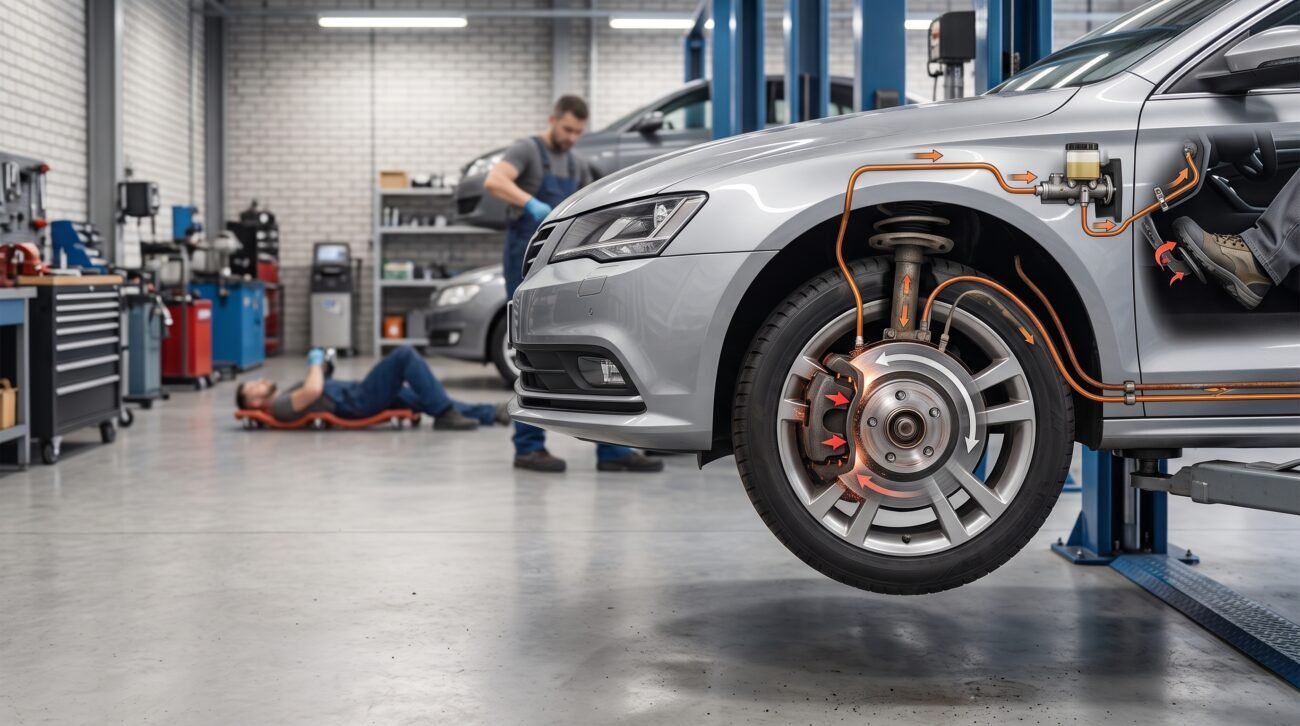
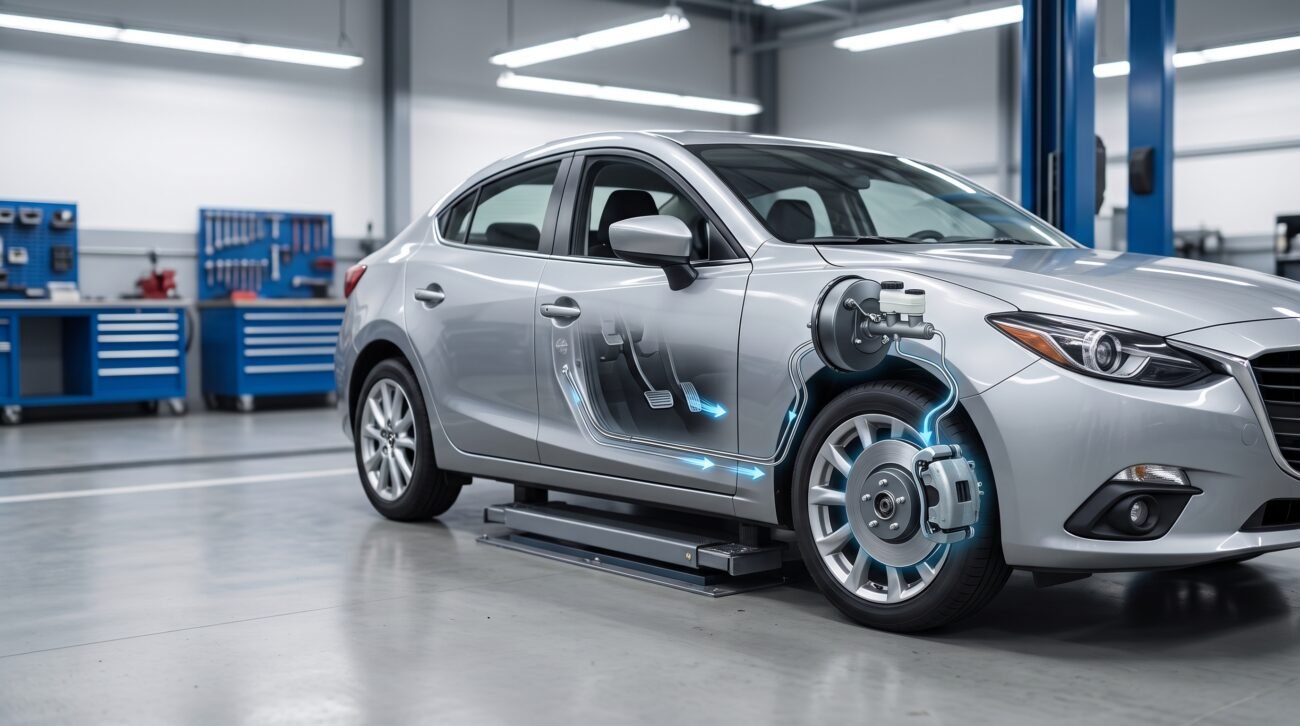
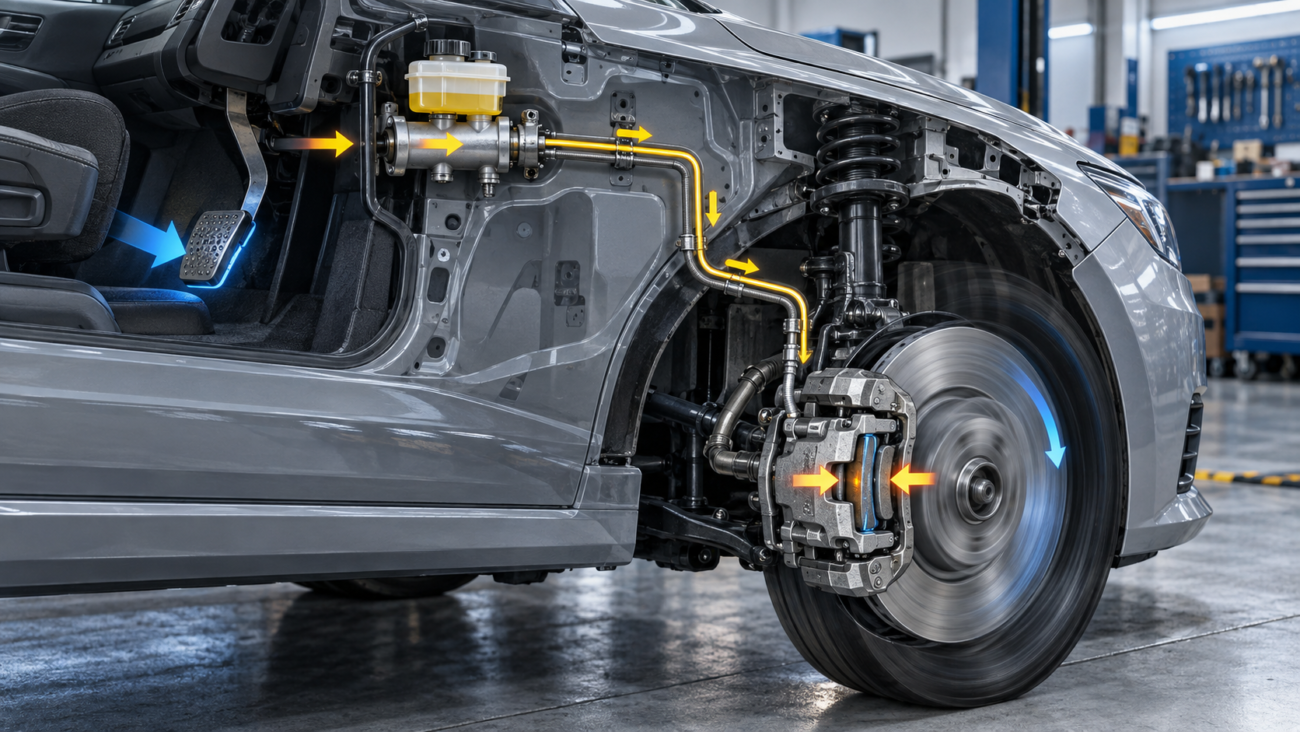
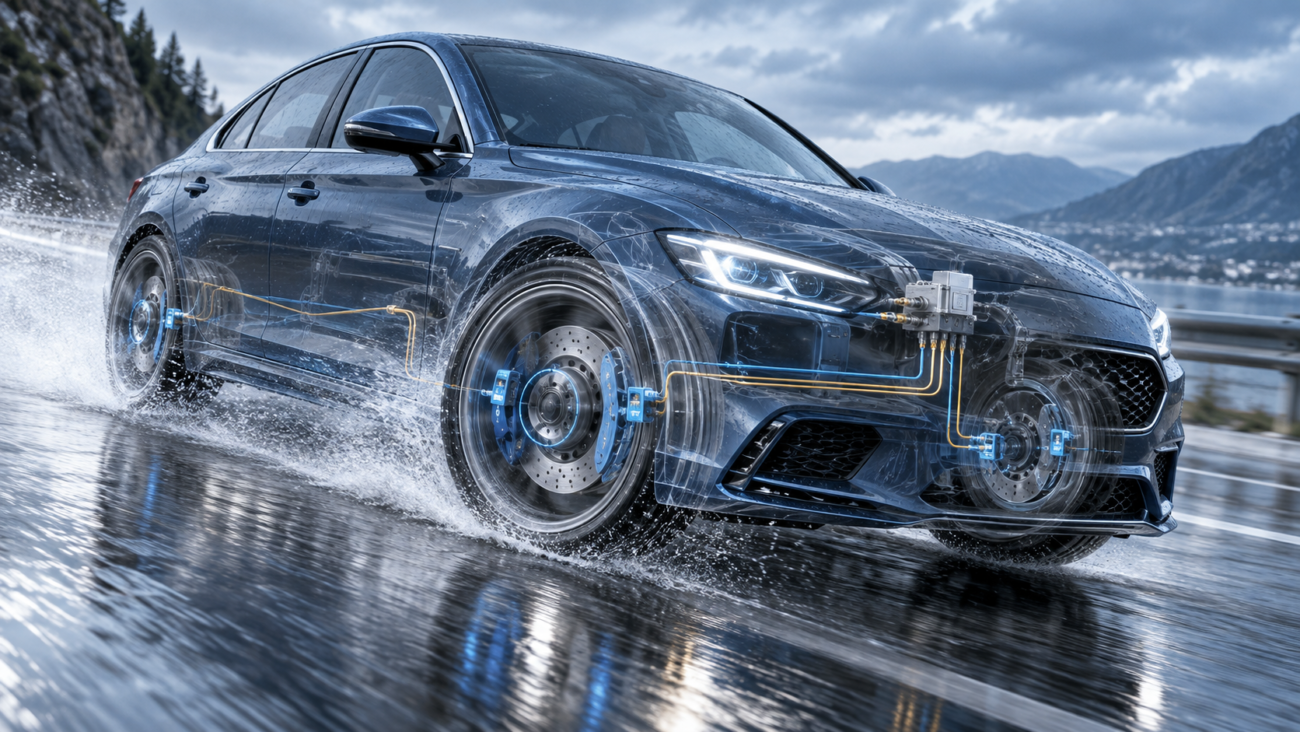
The process starts with your foot. When you press the brake pedal, the pedal transfers your force to the brake system. A brake booster helps increase that force, while the master cylinder changes it into hydraulic pressure. Brake fluid carries that pressure through brake lines to the wheels.
At the wheels, brake calipers press brake pads against rotating brake rotors. The friction between the pads and rotors slows the wheels. As the wheels slow, the tires reduce their speed against the road, bringing the entire vehicle to a stop.
This guide explains how brakes work on car step by step. We will cover brake pedals, boosters, master cylinders, brake fluid, brake lines, calipers, pads, rotors, drum brakes, and anti-lock braking systems (ABS). We will also discuss common brake problems, brake lifespan, and simple maintenance tips.
How Brakes Work on a Car
The basic idea behind how brakes work on car is simple: the braking system converts the driver’s pedal force into friction at the wheels.
When you press the brake pedal, several components work together in a short amount of time.
First, your foot pushes the brake pedal. The pedal moves a mechanical linkage or pushrod. This force reaches the brake booster and master cylinder.
The brake booster helps increase the force applied to the master cylinder. The master cylinder then creates hydraulic pressure in the brake fluid.
That pressure travels through brake lines and flexible brake hoses toward each wheel.
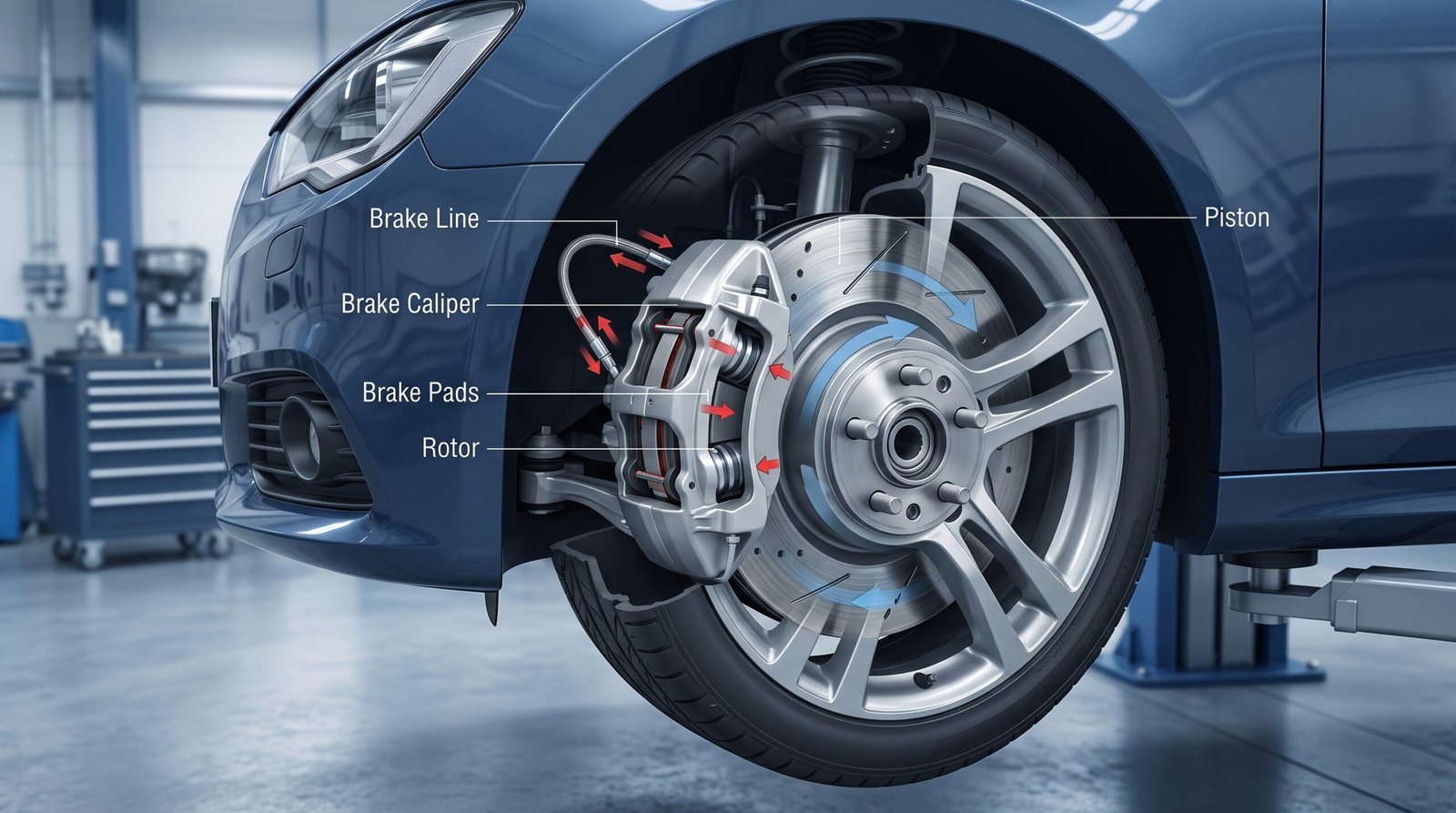
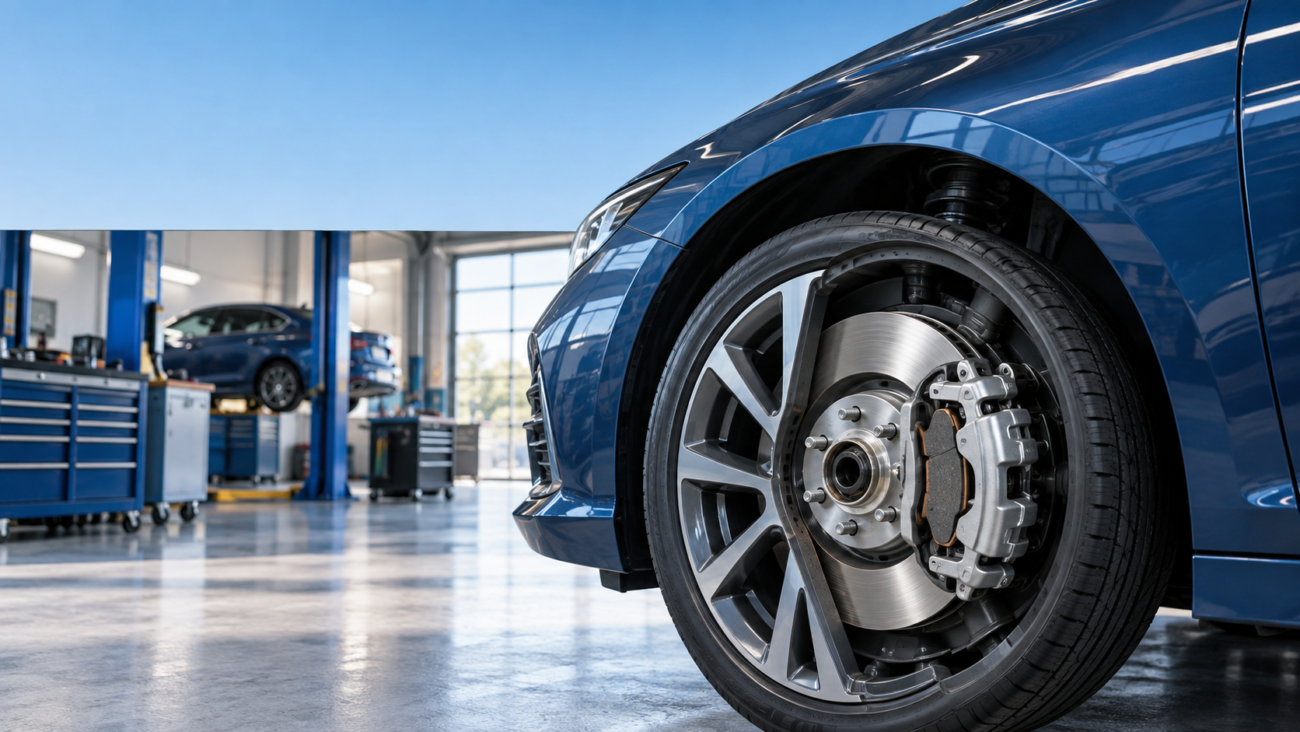
At a wheel with disc brakes, hydraulic pressure pushes a piston inside the brake caliper. The piston moves the brake pads toward the rotor. The pads squeeze the rotor from both sides.
The rotor is connected to the wheel, so friction between the pads and rotor reduces the rotor’s rotation. Because the tire is connected to the wheel, the tire also slows down.
This is the basic answer to how brakes work on car: the system uses mechanical force, hydraulic pressure, and friction to convert a driver’s pedal input into controlled vehicle deceleration.
Step 1: You Press the Brake Pedal
The first step in how brakes work on car begins when you press the brake pedal.
The brake pedal is designed to give you mechanical leverage. A relatively small movement of your foot can produce a greater force farther along the pedal mechanism.
When you push the pedal, a pushrod transfers force toward the brake booster and master cylinder.
The amount of pressure you apply matters. A gentle pedal press normally creates gradual braking. A stronger press creates greater brake pressure and stronger braking.
Modern vehicles are designed so the pedal provides useful feedback. You may feel some resistance as the hydraulic system builds pressure.
If the pedal suddenly feels much softer, sinks unusually far, or behaves differently from normal, the braking system should be inspected.
Step 2: The Brake Booster Increases Force
The brake booster makes the brake pedal easier to press.
Many modern vehicles use a vacuum brake booster, although some vehicles use other technologies, such as hydraulic or electric assistance.
The booster uses an assisting force to multiply the pressure applied by the driver. This means you do not have to push the pedal with extremely high physical force during normal braking.
Without assistance, stopping a heavy vehicle would require more effort from the driver.
The booster does not create the friction that stops the vehicle. Instead, it helps the driver apply enough force to the hydraulic braking system.
A problem with the brake booster can make the pedal feel unusually hard. If the vehicle suddenly requires much more effort to brake, professional inspection is important.
Step 3: The Master Cylinder Creates Hydraulic Pressure
The master cylinder is a key part of how brakes work on car.
It converts mechanical force from the brake pedal into hydraulic pressure.
The master cylinder contains pistons that move when the brake pedal is pressed. These pistons push against brake fluid inside the hydraulic system.
Brake fluid does not compress easily under normal operating conditions. Because of this, pressure created at the master cylinder can be transmitted through the brake lines.
Most modern passenger vehicles use a dual-circuit braking system. This design provides separate hydraulic circuits so that a single hydraulic fault does not normally eliminate all braking ability.
The brake fluid reservoir sits above or near the master cylinder and provides fluid for the system.
Step 4: Brake Calipers Push the Brake Pads
At the wheels, hydraulic pressure reaches the brake calipers.
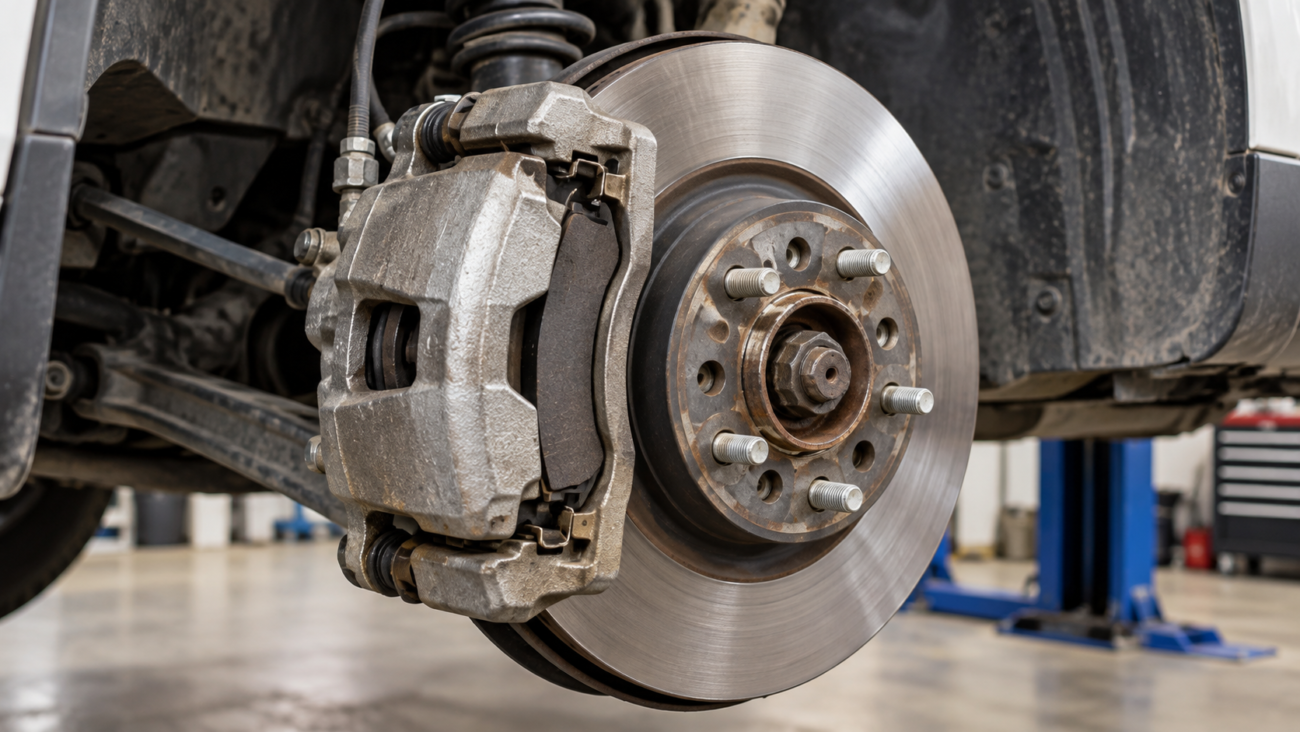
A caliper contains one or more pistons. When brake fluid pressure reaches the caliper, the piston moves the brake pad toward the rotor.
Many disc brake systems use pads on both sides of the rotor. Depending on the caliper design, the caliper body may move as part of the braking action.
The goal is the same: create controlled friction between the brake pads and the spinning rotor.
The caliper must apply force evenly and release correctly when the brake pedal is released.
A sticking caliper can cause uneven braking, excess heat, premature pad wear, or the vehicle pulling to one side.
Step 5: Brake Pads Grip the Rotors
The brake pads are the friction material that contacts the rotor.
When the pads press against the spinning rotor, friction resists its movement. This friction changes some of the vehicle’s kinetic energy into heat.
That heat is why brake rotors and pads can become very hot after repeated or heavy braking.
The pads must be made from materials that can provide consistent friction over a useful temperature range.
As the pads wear, their friction material becomes thinner. Eventually, they need to be inspected and replaced according to the vehicle manufacturer’s specifications and the condition found during inspection.
Step 6: The Car Comes to a Stop
The final stage of how brakes work on car happens when the rotating wheels slow enough for the vehicle to stop.
The brake pads slow the rotors. The rotors slow the wheels. The tires then reduce the vehicle’s speed relative to the road.
However, brakes alone do not determine stopping distance.
Vehicle speed has a major effect. Tire condition, tire grip, road surface, weather, vehicle weight, brake condition, and driver reaction time can also affect how quickly a car stops.
For example, a car traveling on a dry road with good tires may stop more effectively than the same car traveling on a wet or loose surface.
This is why safe braking requires more than simply having working brake components.
Main Parts of a Car Brake System
Understanding the main components makes how brakes work on car much easier to understand.
Brake Pedal
The brake pedal is the part the driver presses.
It transfers the driver’s input into the braking system. The pedal’s mechanical design provides leverage so that the force from your foot can be used effectively.
Brake Booster
The brake booster assists the driver’s pedal force.
It reduces the physical effort needed to apply the brakes. A properly functioning booster helps provide a comfortable and predictable pedal feel.
Master Cylinder
The master cylinder converts mechanical force into hydraulic pressure.
It contains pistons that pressurize brake fluid when the pedal is applied.
Brake Fluid
Brake fluid transfers hydraulic pressure through the braking system.
It needs to meet the correct specification for the vehicle. Different vehicles require different brake fluid types, so the manufacturer’s specification should always be followed.
Brake fluid can absorb moisture over time, which is one reason brake fluid inspection and replacement may be included in a vehicle’s maintenance schedule.
Brake Lines and Hoses
Brake lines carry brake fluid between the master cylinder and the wheels.
Flexible brake hoses are commonly used near the wheels because the suspension and steering components move.
Damage, corrosion, leaks, or deterioration in these components can affect braking performance.
Brake Calipers
Brake calipers hold the brake pads and use hydraulic pressure to press them against the rotor.
A caliper must move correctly and release the pads properly when braking pressure is removed.
Brake Pads
Brake pads contain friction material designed to contact the brake rotor.
They gradually wear during normal use. Their lifespan depends on driving conditions, brake design, vehicle weight, and driving habits.
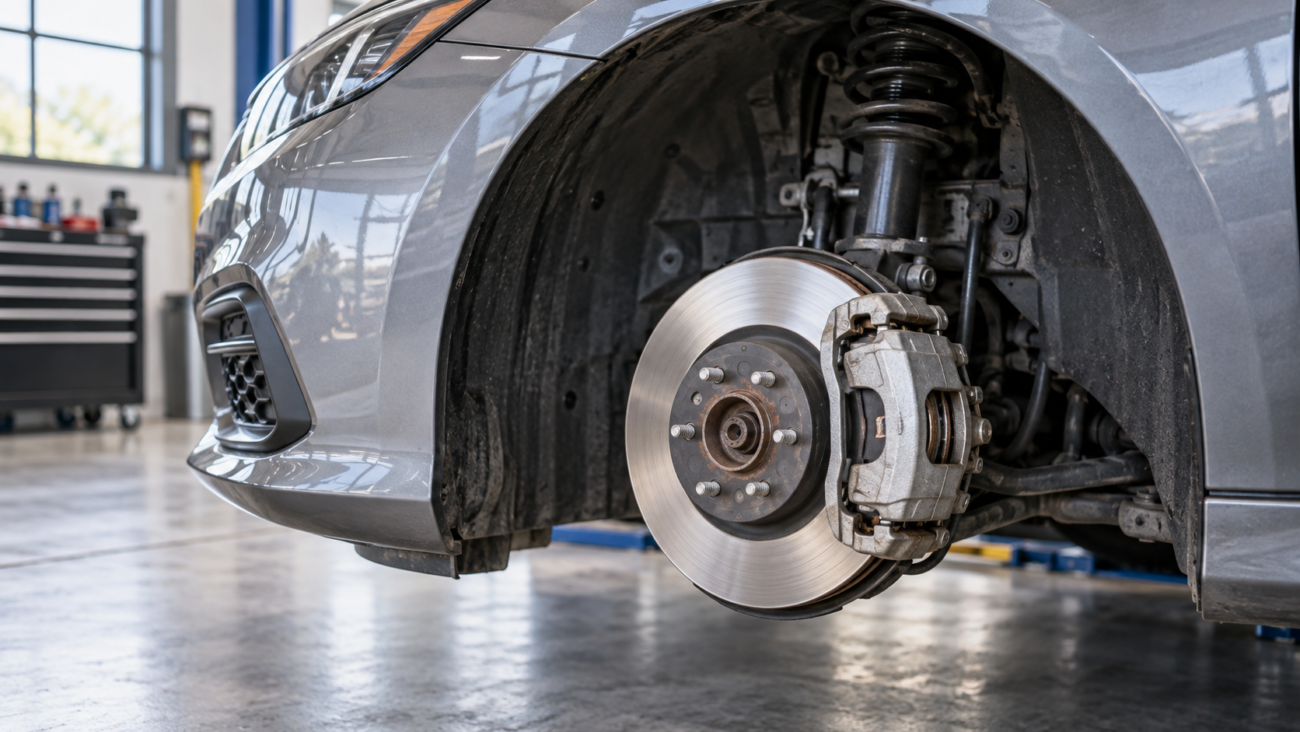
Brake Rotors
Brake rotors are flat, disc-shaped components that rotate with the wheels.
The brake pads press against the rotor’s surfaces to create friction.
Rotors can wear, develop surface problems, or become damaged. Their condition should be checked when brake pads are serviced.
How Disc Brakes Work
Disc brakes are common on modern passenger vehicles.
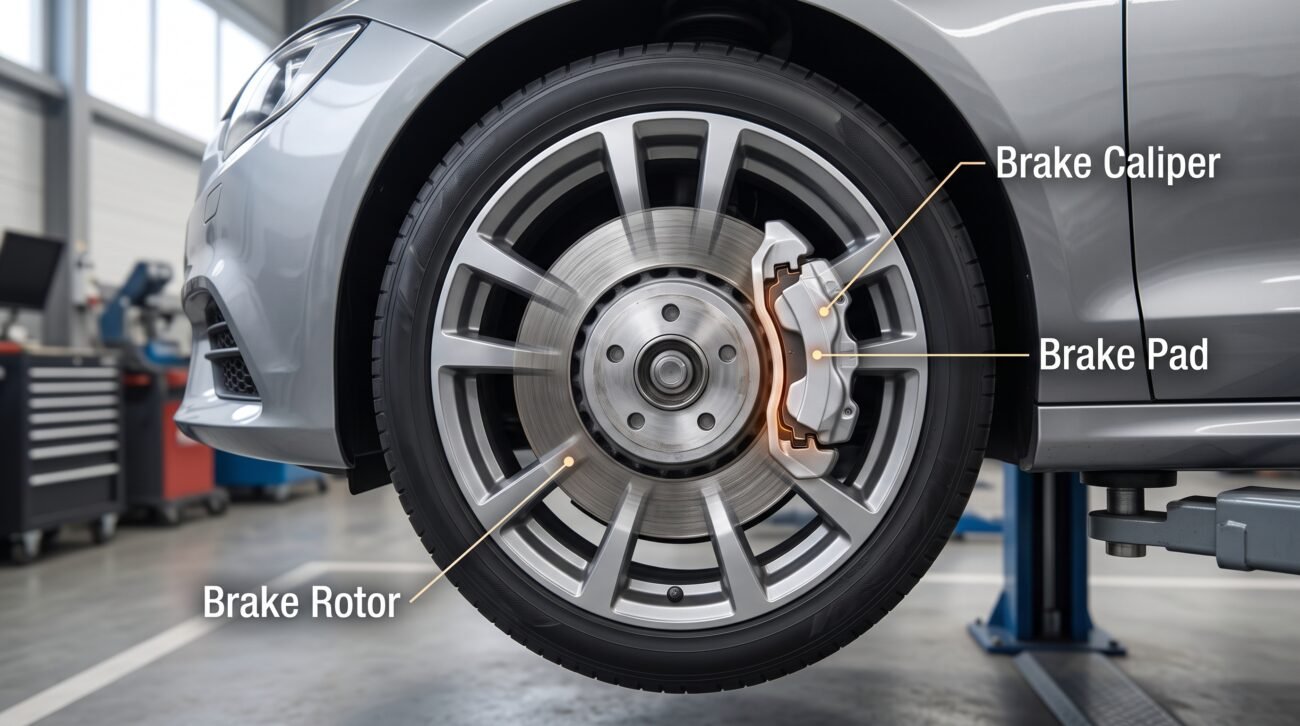
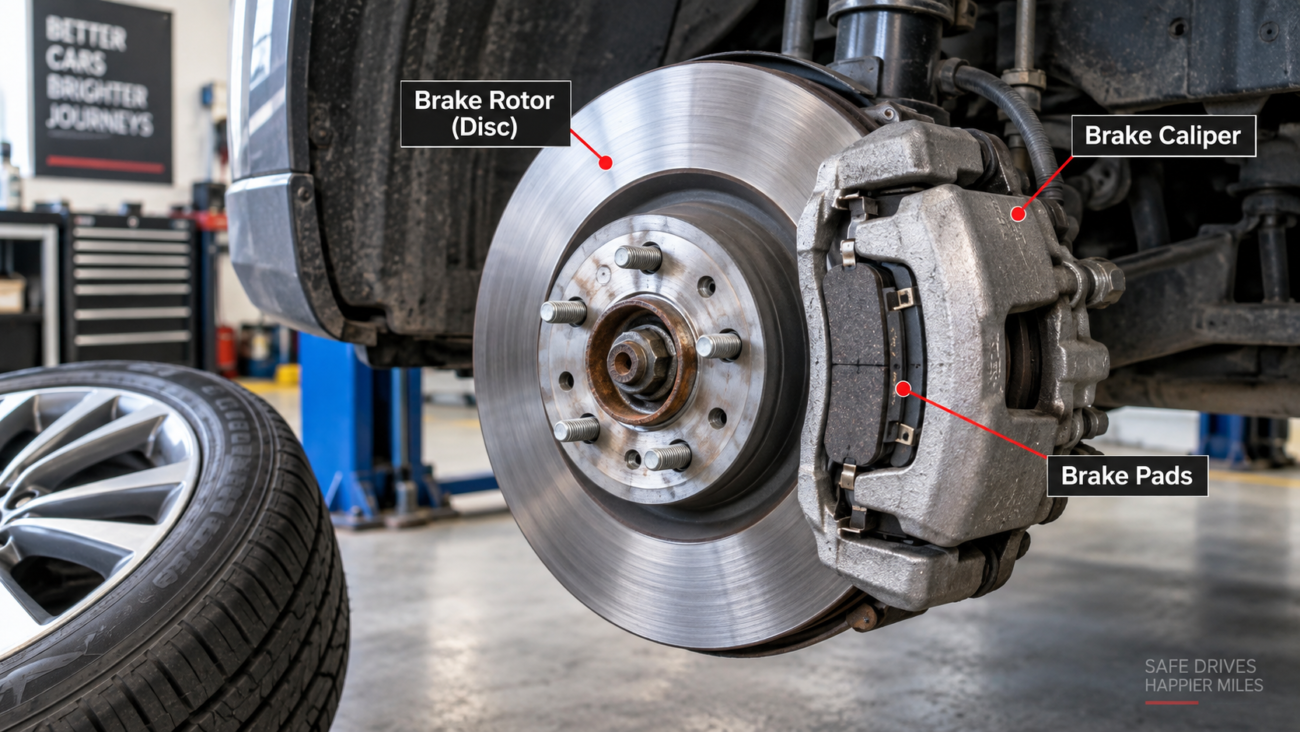
They use a rotating disc, called a rotor, and a caliper containing brake pads.
How a Disc Brake Creates Friction
The basic principle behind how brakes work on car with disc brakes is the interaction between three major components: the rotor, pads, and caliper.
The rotor rotates with the wheel.
When you press the brake pedal, hydraulic pressure reaches the caliper. The caliper piston pushes the brake pad toward the rotor.
The pad contacts the rotor and creates friction.
That friction resists rotation. Because the rotor is connected to the wheel, the wheel slows as well.
When you release the brake pedal, hydraulic pressure falls. The brake pads move away from the rotor enough to allow normal wheel rotation.
Why Disc Brakes Get Hot
Braking converts kinetic energy into heat.
Imagine a moving car carrying a large amount of energy. When you slow the vehicle, that energy has to go somewhere. Much of it becomes heat in the brake system.
This is why brakes can become extremely warm during repeated braking.
Brake components are designed to handle normal heat, but excessive or continuous braking can cause the system to become very hot.
Long downhill driving is one situation where drivers need to avoid unnecessary continuous brake application. Using the appropriate lower gear where suitable can help control speed while reducing reliance on the brakes.
How Drum Brakes Work
Drum brakes use a different design from disc brakes.
Instead of pads squeezing the outside surfaces of a rotor, drum brakes use brake shoes that press against the inside surface of a rotating drum.
Drum brakes are still used on some vehicles, particularly in certain rear-wheel applications.
Main Parts of a Drum Brake
The main components include:
- Brake drum: A rotating cylindrical component connected to the wheel.
- Brake shoes: Friction components that press against the inside of the drum.
- Wheel cylinder: Uses hydraulic pressure to move the brake shoes.
- Springs: Help control shoe movement and return components after braking.
How Drum Brakes Stop a Car
When the driver presses the brake pedal, hydraulic pressure reaches the wheel cylinder.
The wheel cylinder pushes the brake shoes outward.
The shoes contact the inside surface of the rotating drum. Friction between the shoes and drum slows the drum and the attached wheel.
As the wheel slows, the vehicle slows.
Drum brakes can provide effective braking, but their enclosed design can make inspection and heat management different from disc brakes.
Disc Brakes vs. Drum Brakes
Disc and drum brakes both use friction to slow a vehicle, but their designs are different.
Disc brakes place pads against a rotor. They generally allow heat to escape more directly and are common on front wheels and all four wheels of many vehicles.
Drum brakes place shoes against the inside of a drum. They can be durable and cost-effective and are still used on some vehicles.
The best design depends on the vehicle’s engineering, weight, performance requirements, cost, and intended use.
Neither system should be judged only by appearance. Proper maintenance and correct parts are more important than simply choosing one design over another.
How ABS Works With Car Brakes
Anti-lock braking systems, commonly called ABS, are an important part of modern vehicle safety.
What Is ABS?
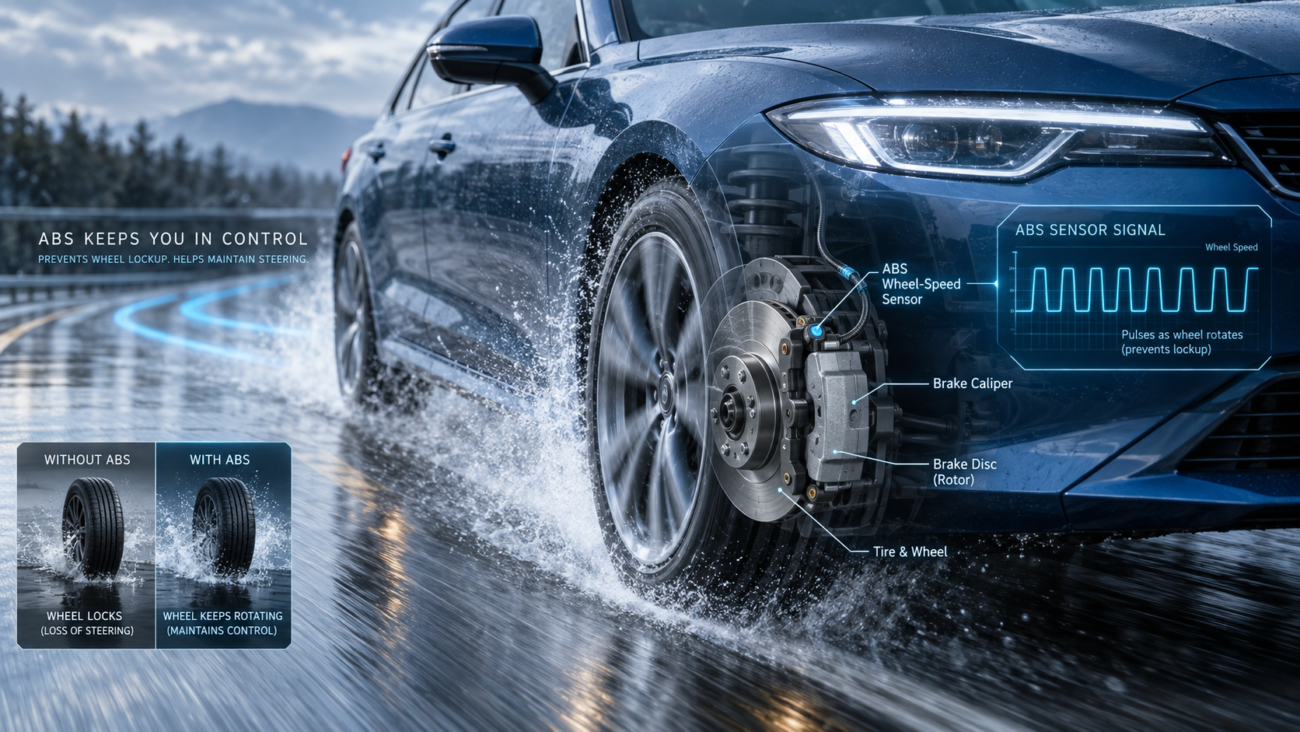
ABS is an electronic system designed to help prevent wheels from locking during hard braking.
A locked wheel can lose some ability to respond to steering input. ABS helps manage brake pressure so the wheels can continue rotating rather than staying fully locked.
How ABS Prevents Wheel Lockup
Understanding ABS adds another part to how brakes work on car.
ABS uses wheel-speed sensors to monitor wheel rotation.
If the system detects that a wheel is approaching lockup during braking, the ABS control unit can adjust hydraulic pressure to that wheel.
This happens rapidly. The system can reduce and restore brake pressure many times while the vehicle is braking.
The driver may feel a pulsing sensation through the brake pedal when ABS activates. This can be normal.
If ABS activates during an emergency stop, the driver should generally maintain firm brake pressure and steer as needed rather than repeatedly pumping the pedal.
Why ABS Helps During Emergency Braking
ABS can help maintain steering control during hard braking, especially when a wheel might otherwise lock.
For example, imagine a vehicle suddenly needs to stop because of an obstacle. The driver applies the brakes firmly.
Without ABS, a wheel may lock depending on conditions. A locked wheel can make steering control more difficult.
With ABS, the system monitors wheel speeds and adjusts brake pressure to help prevent lockup.
ABS does not eliminate stopping distance. It also cannot overcome the limits of poor tires, slippery roads, excessive speed, or unsafe driving.
What Happens When You Brake Hard?
Emergency braking is very different from gentle braking.
When you brake hard, the vehicle’s weight shifts forward.
The front tires generally carry more load while the rear tires carry less. This affects the amount of grip available at each end of the vehicle.
Tires are the only parts of the vehicle directly touching the road. Their condition and the road surface therefore have a major effect on braking.
Good brakes cannot create unlimited traction.
Wet roads, gravel, mud, ice, worn tires, incorrect tire pressure, or poor road surfaces can reduce available grip.
Speed also matters greatly. A vehicle traveling faster has more kinetic energy that must be dissipated during braking.
During hard braking, ABS may activate if the system detects conditions that could lead to wheel lockup.
The driver should keep both hands ready for steering, look where they want the vehicle to go, and apply firm braking rather than relying on repeated pedal pumping when ABS is functioning.
Common Car Brake Problems
Knowing common problems can help you understand when a brake inspection may be needed.
Squeaking or Squealing Brakes
Brake squeaking can have several causes.
Some brake noise can occur because of vibration between friction components. Moisture, dust, surface conditions, pad material, or wear can also contribute.
However, a persistent or newly developed noise should not automatically be dismissed as normal.
If squealing continues, becomes louder, or appears along with changes in braking performance, have the brakes inspected.
Grinding Noise
A grinding brake noise can indicate a more serious problem.
It may occur when friction material is severely worn or when metal components are contacting each other.
Continuing to drive with a serious grinding brake problem can cause additional damage and may reduce braking performance.
If you hear a harsh grinding sound during braking, arrange for a professional inspection as soon as it is safe to do so.
Soft or Spongy Brake Pedal
A soft or spongy pedal can indicate a hydraulic problem.
Possible causes include air in the brake system, a fluid issue, or another hydraulic component problem.
A change in pedal feel should be taken seriously because the pedal is your primary control over the braking system.
Do not ignore a pedal that suddenly feels unusually soft or sinks farther than normal.
Brake Pedal Vibration
A vibrating brake pedal can have several possible causes.
Brake rotor surface or runout issues can sometimes contribute to vibration during braking. Other wheel, tire, suspension, or braking components may also be involved.
A professional inspection is needed to identify the actual cause rather than assuming the rotors are always responsible.
Car Pulls to One Side When Braking
If your car pulls strongly to one side when you brake, the braking force may not be balanced.
Possible causes include a sticking caliper, uneven pad wear, hydraulic issues, tire problems, or suspension-related concerns.
Because several systems can create similar symptoms, the vehicle should be inspected instead of replacing parts based only on the symptom.
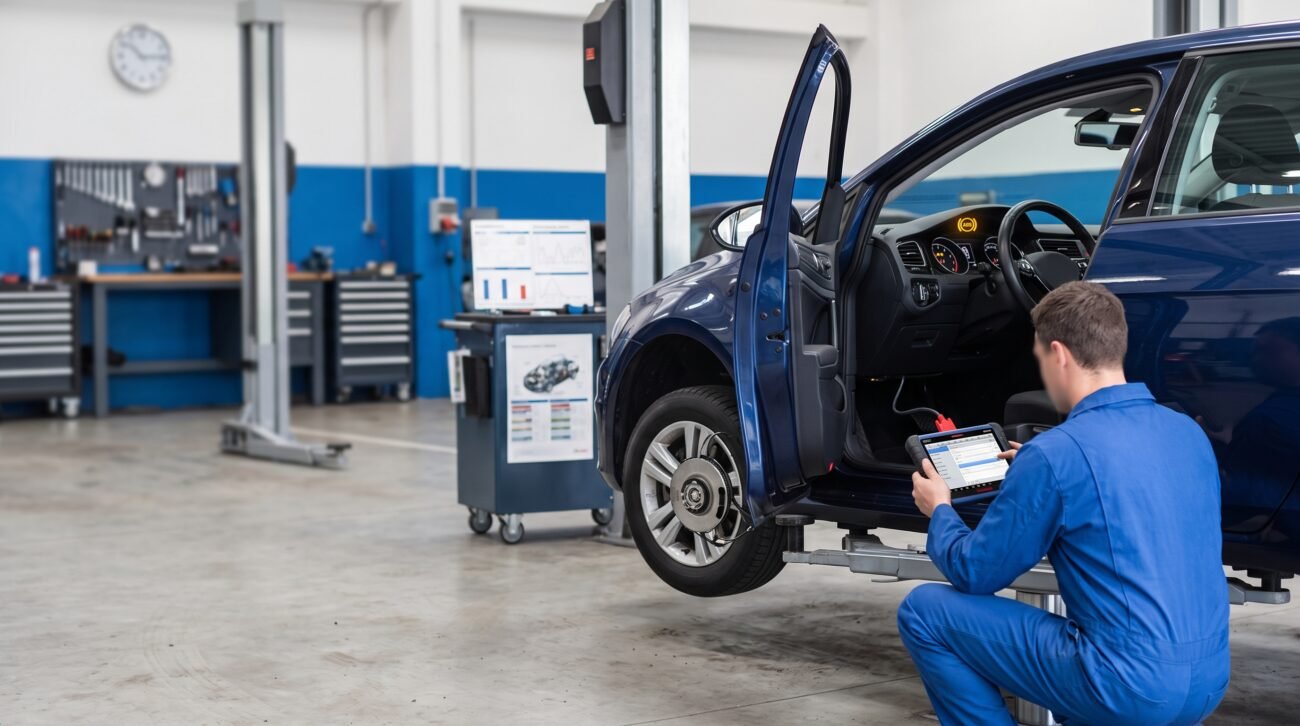
Brake Warning Light
A brake warning light should not be ignored.
Depending on the vehicle, the warning light can indicate a low brake fluid level, a parking brake that is engaged, a hydraulic system issue, or another brake-related warning.
Some vehicles also have a separate ABS warning light.
Check the vehicle owner’s manual for the meaning of the specific warning. If a brake warning remains illuminated while driving, have the system checked promptly.
How Long Do Car Brakes Last?
There is no single mileage number that applies to every brake system.
Brake lifespan depends on many factors.
Driving in heavy city traffic usually requires more frequent braking than long-distance highway driving.
Frequent hard braking can also increase brake wear.
Vehicle weight matters because heavier vehicles require more energy to be managed during braking.
The type of brake components, road conditions, driving style, traffic, towing, and terrain can all affect brake wear.
For example, a driver who spends most of the day in stop-and-go traffic may wear brake pads faster than someone who mostly drives on open roads.
This is why brake condition should be judged through inspection and measurements rather than mileage alone.
Some vehicles have brake pad wear indicators or electronic wear sensors. Even without a warning system, regular inspections can help identify worn components before they become a larger problem.
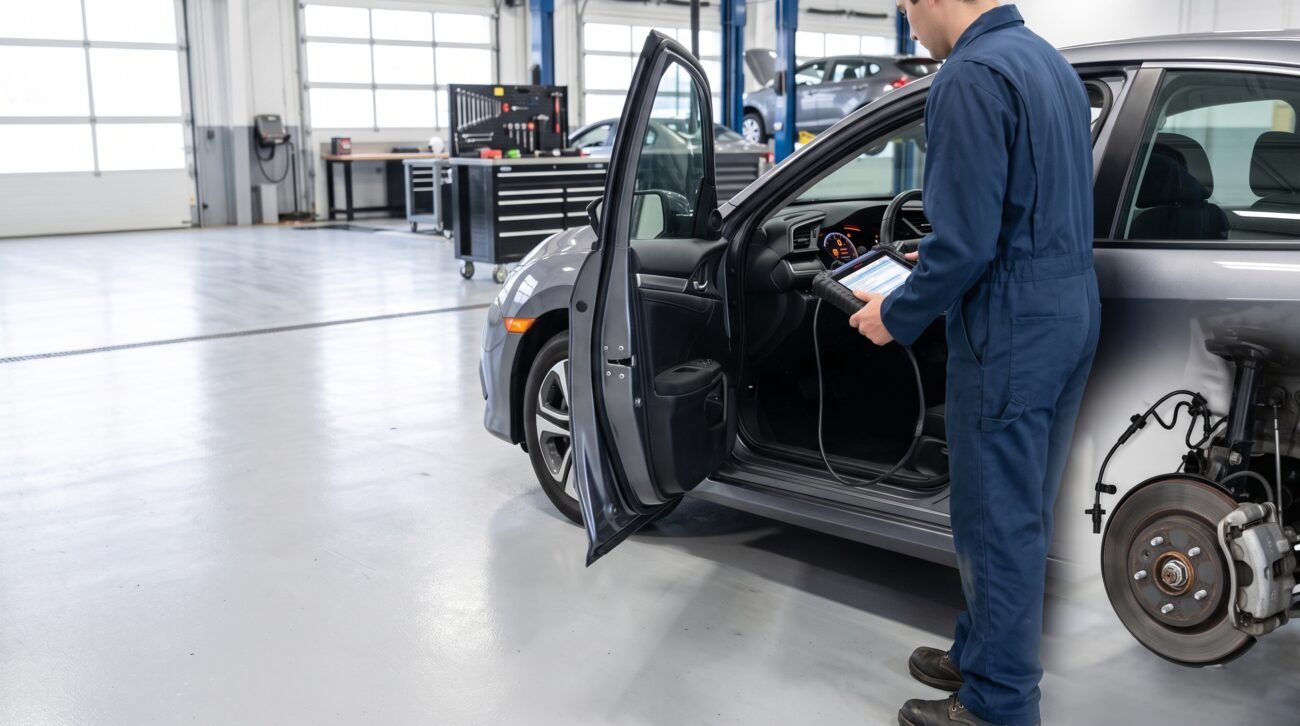
How to Maintain Your Car Brakes
Good brake maintenance helps keep the braking system working as designed.
Check Brake Pads Regularly
Brake pads should be inspected for remaining friction material and uneven wear.
If one pad is wearing much faster than another, there may be a caliper, hardware, or hydraulic issue that needs attention.
Do not wait for a severe grinding sound before checking pad condition.
Inspect Brake Rotors
Rotors should be checked for excessive wear, damage, corrosion, or other problems.
When replacing brake pads, technicians commonly inspect the rotor condition as part of the brake service.
Rotors should be replaced or serviced only when appropriate for the vehicle and within the manufacturer’s specifications.
Check Brake Fluid
Brake fluid should be checked according to the vehicle manufacturer’s recommendations.
The reservoir level should remain within the marked range.
A low fluid level can have different causes, including brake pad wear or a leak. Simply adding fluid without identifying the reason for a low level may not solve the underlying problem.
Always use the brake fluid specification recommended by the vehicle manufacturer.
Pay Attention to Warning Signs
Drivers should pay attention to changes such as:
- New or persistent brake noise
- Grinding sounds
- A soft or spongy pedal
- A pedal that sinks unusually far
- Steering or pulling during braking
- Brake vibration
- Brake warning lights
- Longer-than-usual stopping response
- Burning smells after normal driving
These signs do not all point to the same problem, but they are reasons to have the braking system checked.
Follow the Vehicle Manufacturer’s Service Schedule
The owner’s manual is one of the best sources for vehicle-specific maintenance information.
It can provide recommendations for brake inspections, brake fluid service, and other maintenance tasks.
Maintenance intervals vary between vehicles, so following the correct schedule is better than using a universal rule.
A qualified technician can also inspect components that are difficult for the average driver to see.
FAQ
Conclusion
Understanding how brakes work on car becomes much easier when you look at the system as a chain of connected actions.
You press the brake pedal, and the brake booster assists your force. The master cylinder converts that force into hydraulic pressure. Brake fluid carries the pressure through brake lines and hoses to the wheels.
At disc brakes, calipers push brake pads against rotating rotors. At drum brakes, wheel cylinders push brake shoes against the inside of drums. In both systems, friction slows the rotating components and reduces the vehicle’s speed.
ABS adds electronic control by monitoring wheel speed and adjusting brake pressure when a wheel approaches lockup.
The braking system is complex, but the basic principle is straightforward: driver input creates controlled friction that converts the vehicle’s motion into heat and slows the vehicle down.
Regular inspections are important because brake pads, rotors, fluid, hoses, calipers, and other components can wear over time. If you notice grinding, persistent unusual noise, a soft pedal, vibration, pulling, a warning light, or another major change in braking behavior, have the vehicle inspected promptly.
That is the basic answer to how brakes work on car: the brake pedal starts the process, hydraulic pressure carries the force, and friction at the wheels turns that force into stopping power.

One thought on “How Brakes Work on Car: A Simple Guide”