

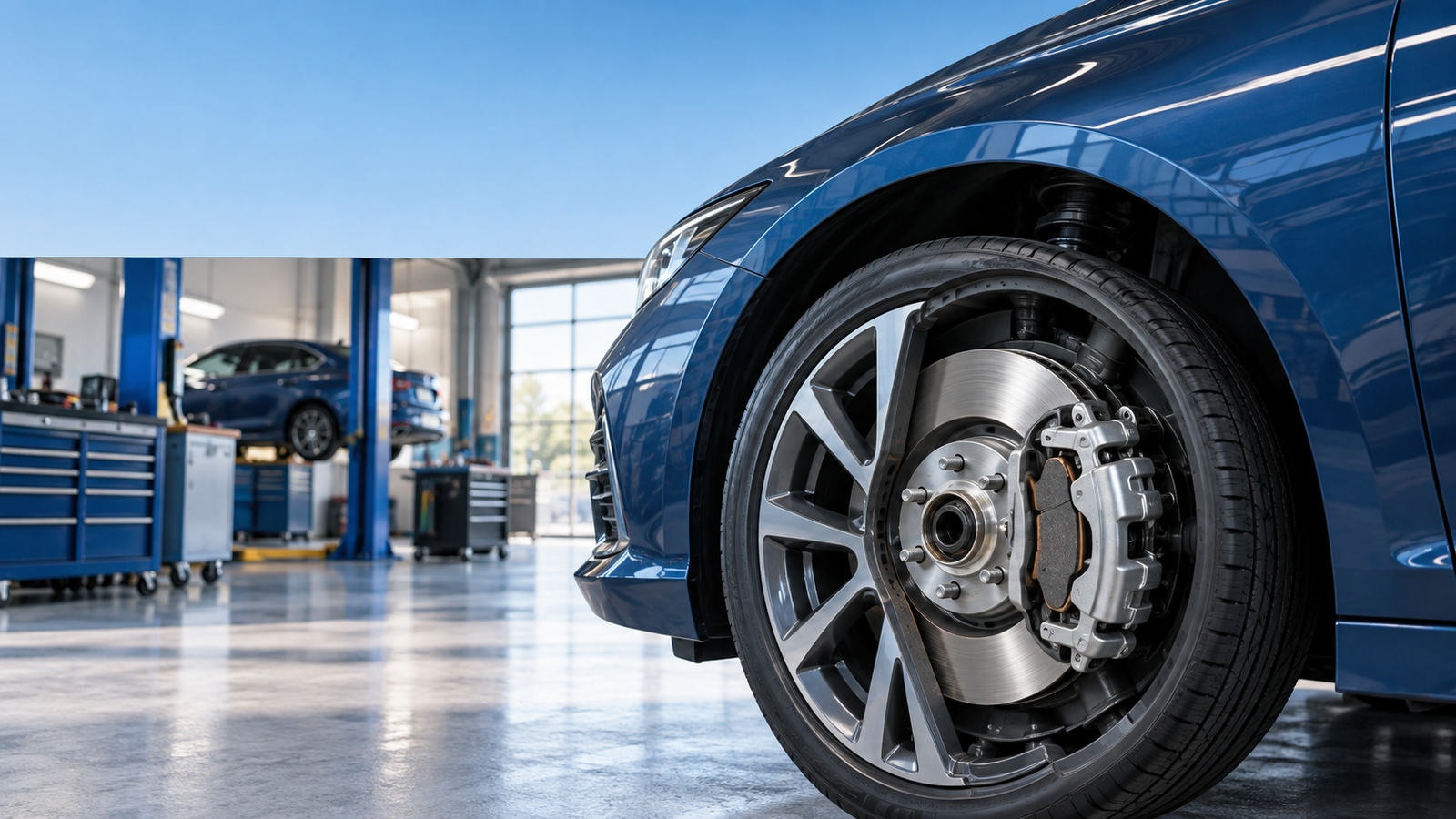
If you are wondering what does brake mean on a car, the simple answer is this: a brake is a system that slows down or stops a vehicle. When you press the brake pedal, the brake system uses pressure and friction to reduce the speed of the wheels.
Brakes are one of the most important safety systems in any car. A working engine helps a vehicle move, but reliable brakes help the driver control that movement. Whether you are slowing for traffic, stopping at a junction, or parking the car, you depend on the braking system.
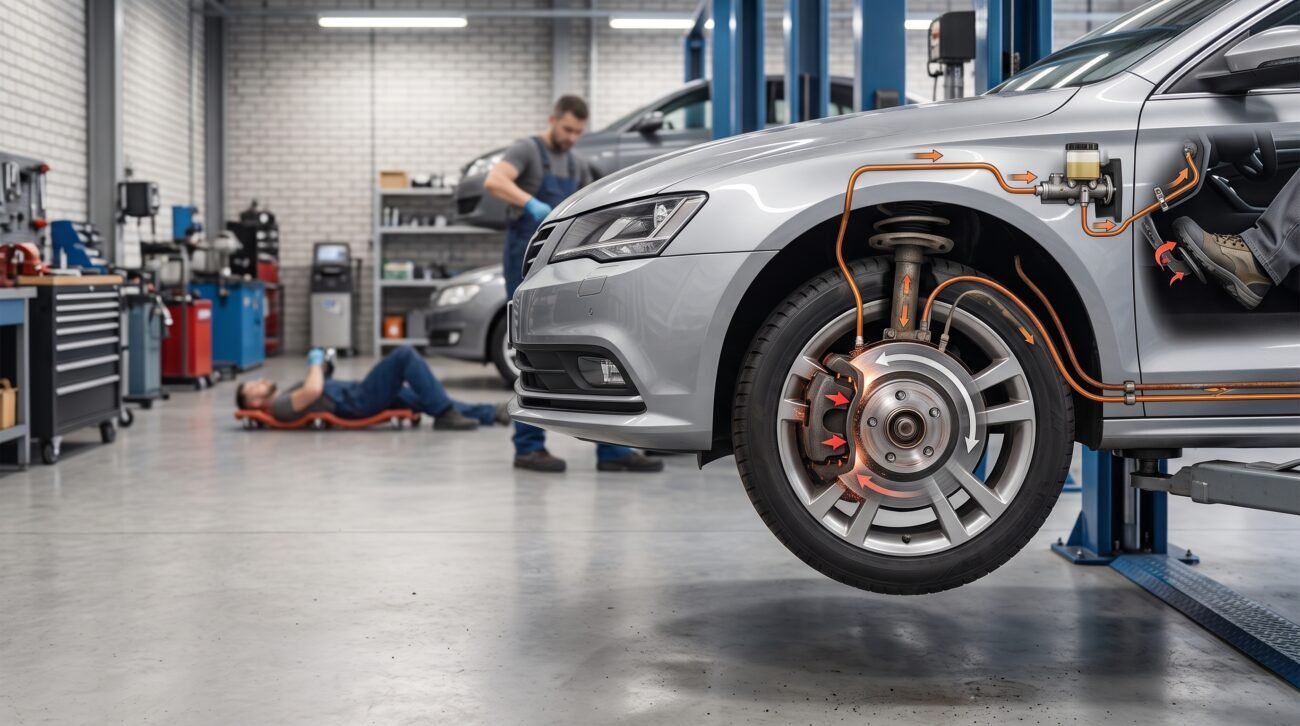
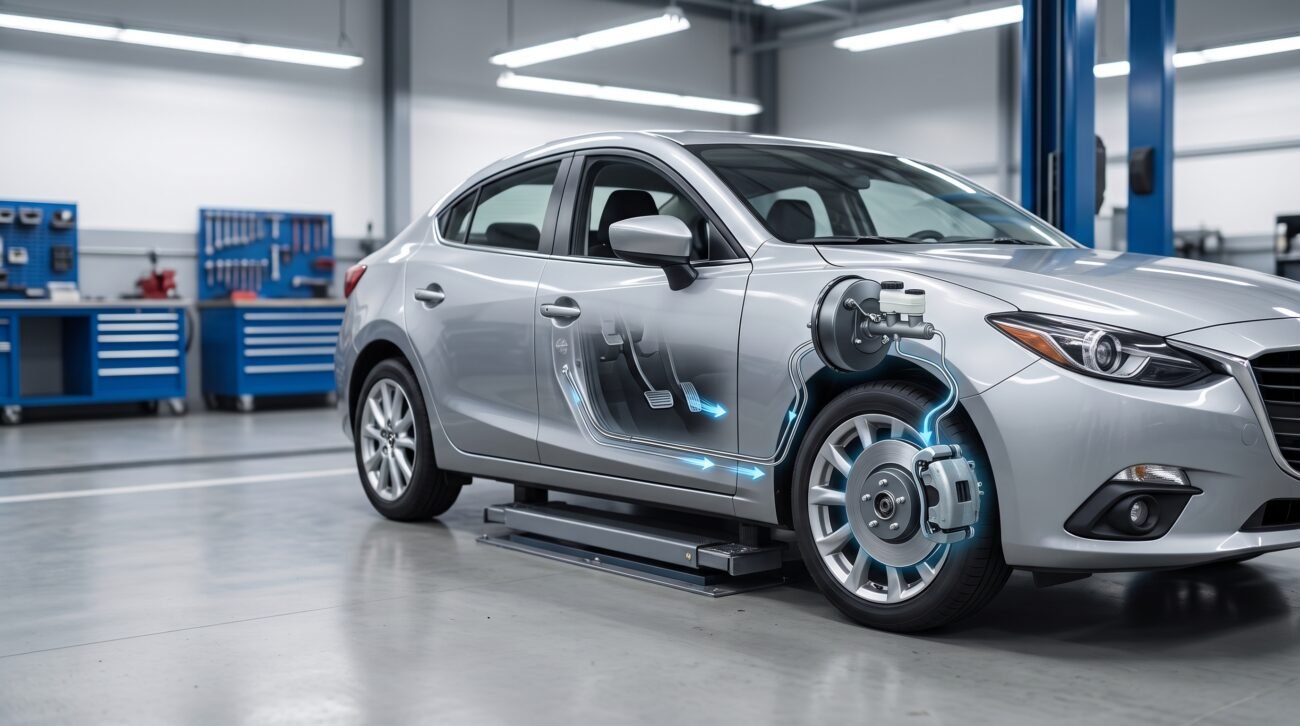
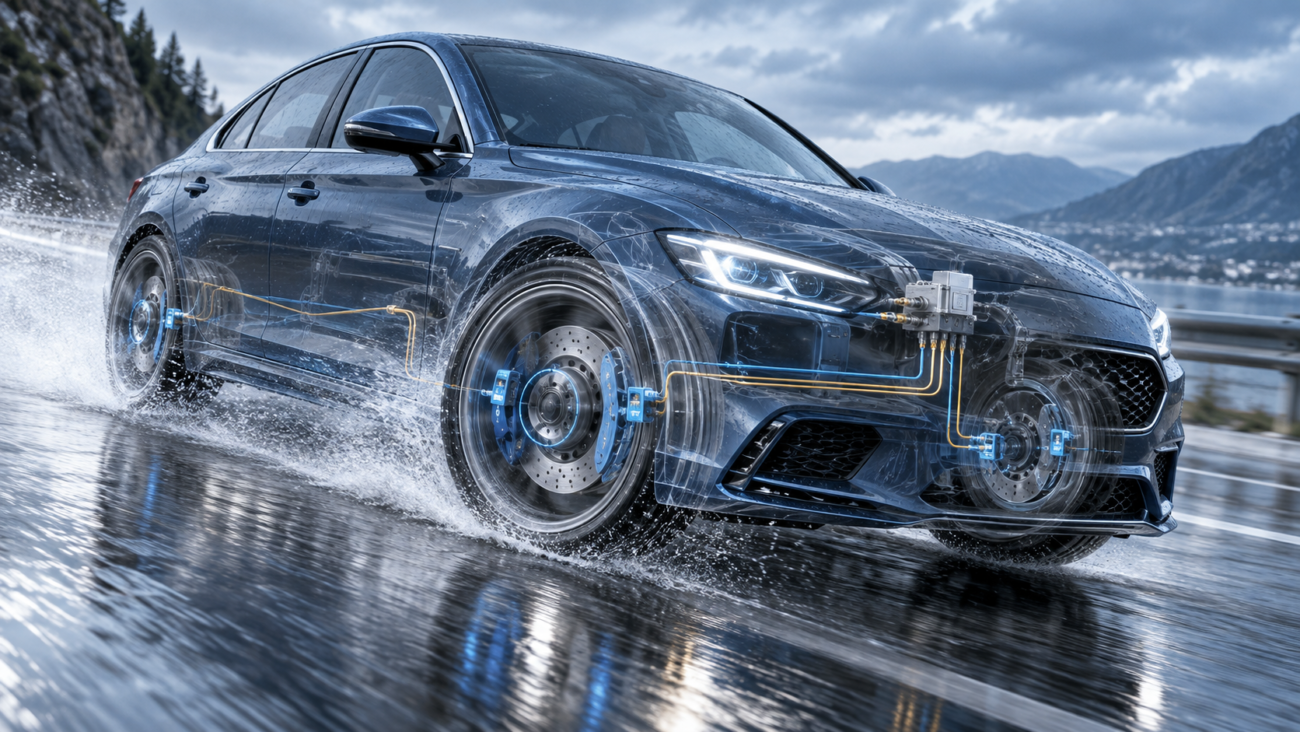
In most modern cars, pressing the brake pedal creates hydraulic pressure. That pressure moves brake components at the wheels. Brake pads may press against rotating brake discs, also called rotors. The resulting friction slows the rotating parts and converts some of the vehicle’s motion into heat.
There are different brake designs, including disc brakes, drum brakes, anti-lock braking systems, and parking brakes. Each has a specific purpose.
This guide explains what does brake mean on a car, how the system works, its major parts, common problems, and basic maintenance in simple terms.
What Does Brake Mean on a Car?
Simple Definition of a Car Brake
So, what does brake mean on a car in everyday driving?
A brake is a mechanical system that slows or stops a vehicle. It works by creating resistance against the rotation of the wheels or components connected to them.
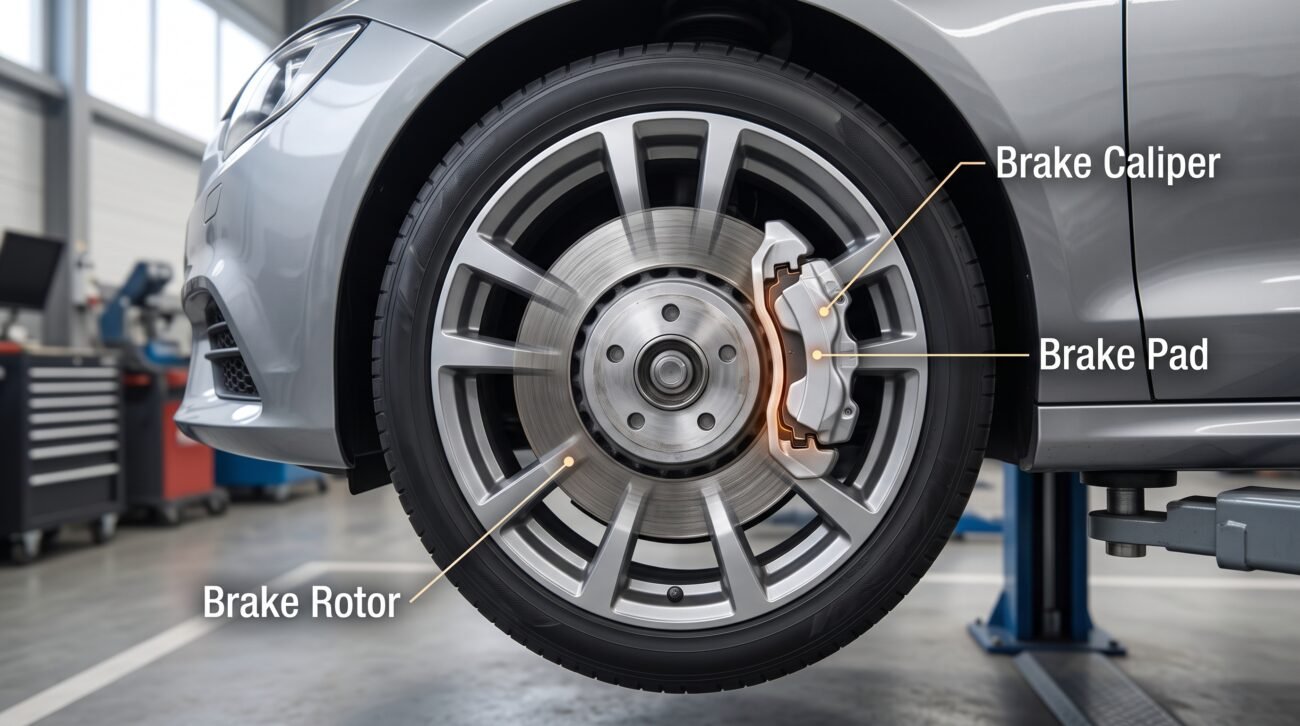
Most passenger cars use friction brakes. In a common disc-brake setup, brake pads press against a rotating rotor. This friction reduces the rotor’s speed, which helps slow the wheel and the car.
Braking does not make a moving vehicle stop instantly. Instead, it reduces the vehicle’s kinetic energy. Much of that energy is changed into heat at the braking surfaces.
The braking system must work reliably because drivers need to control speed in many situations. These include normal traffic, hills, turns, parking areas, and emergency stops.
What Do Brakes Do on a Car?
Brakes have several important jobs.
They slow the vehicle.
When you need to reduce speed, pressing the brake pedal activates the braking system.
They stop the vehicle.
When enough braking force is applied, the vehicle can come to a complete stop.
They help control speed.
Brakes allow the driver to reduce speed before corners, intersections, traffic, and other situations.
They help hold a parked vehicle.
The parking brake helps keep a stationary vehicle from moving when parked.
In simple terms, what does brake mean on a car can be understood as the system that gives the driver control over the vehicle’s speed and stopping.
How Do Car Brakes Work?
Understanding how brakes work makes it easier to recognize potential problems.
Pressing the Brake Pedal
When you press the brake pedal with your foot, the pedal moves a mechanism connected to the brake system.
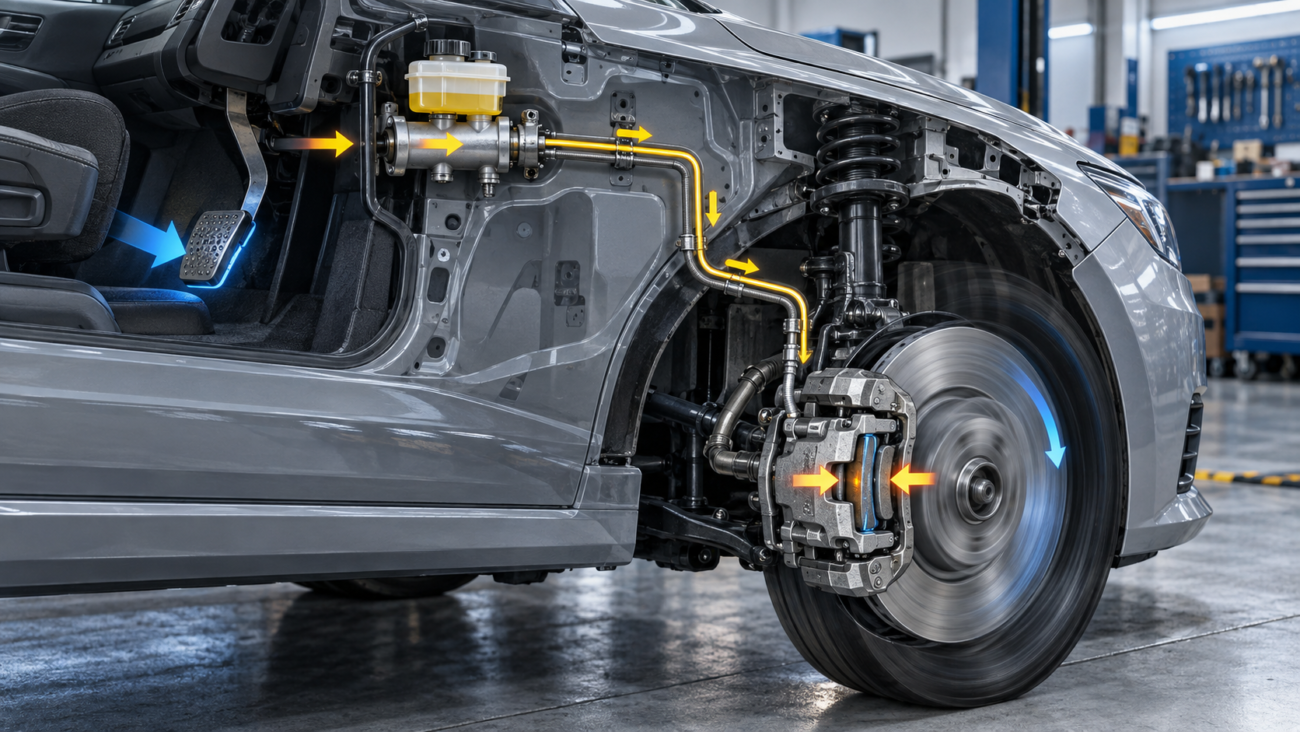
In a typical hydraulic braking system, the pedal pushes a component in the master cylinder. This creates pressure in the brake fluid.
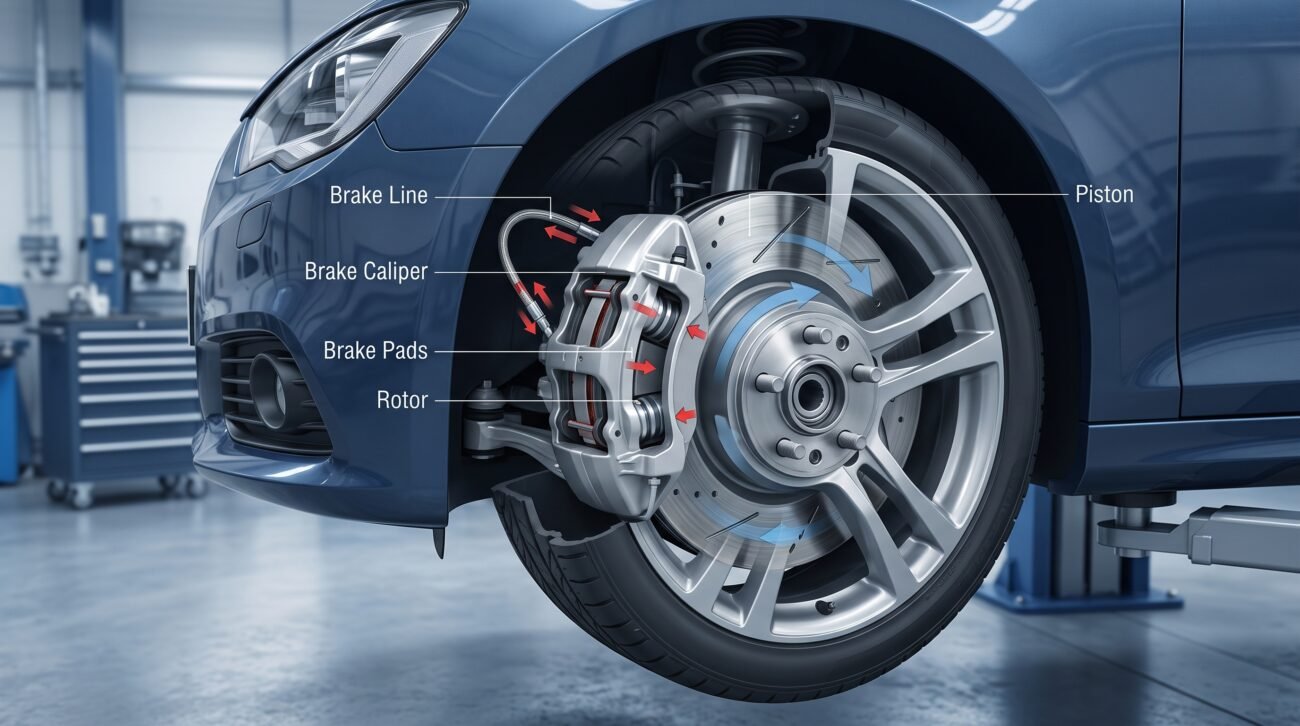
That pressure travels through brake lines toward the wheels. At the wheel, the pressure activates a caliper or another brake mechanism.
The system is designed so that a relatively small movement of your foot can create useful braking force at the wheels.
Hydraulic Brake Pressure
Brake fluid is a special fluid used to transfer pressure through the braking system.
Unlike a gas, brake fluid is designed to resist compression. When the master cylinder creates pressure, that pressure can travel through the brake lines.
The pressurized fluid reaches the wheel brakes and causes the brake components to move.
If air enters a hydraulic brake system, the pedal can feel soft or spongy because air is compressible. A leak can also reduce the system’s ability to maintain proper pressure.
This is one reason brake fluid and the hydraulic system need proper maintenance.
Friction Slows the Wheels
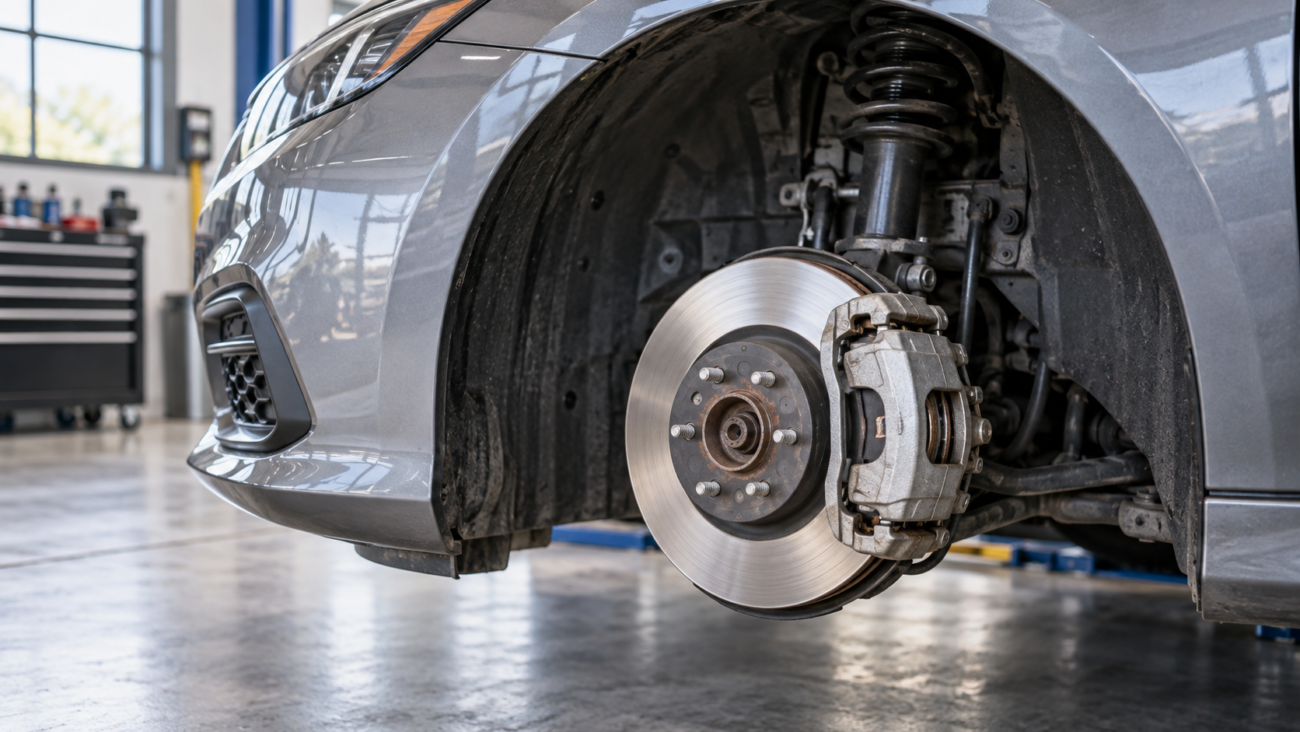
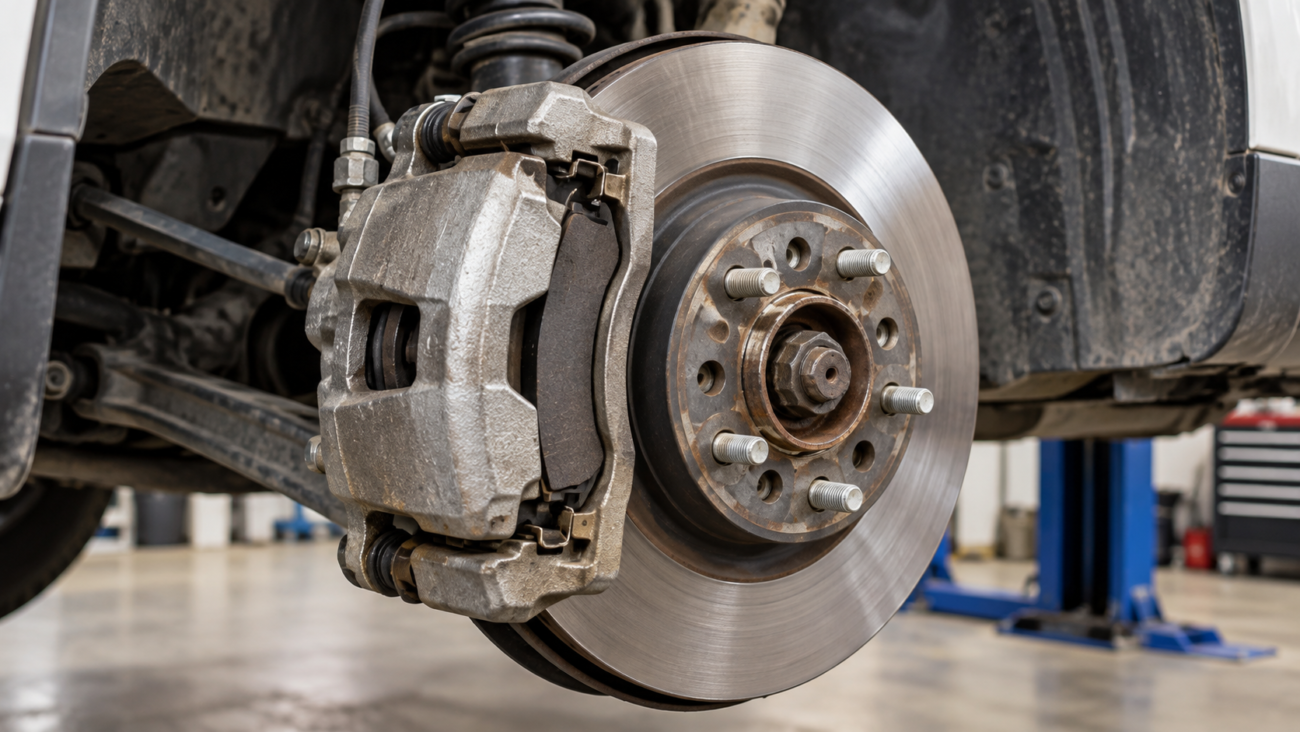
In a disc brake, a caliper pushes brake pads against a spinning rotor.
The pads create friction against the rotor. This friction resists rotation and slows the wheel.
The process also creates heat. During normal braking, some of the vehicle’s kinetic energy is converted into thermal energy.
For example, imagine a car traveling toward a red traffic light. The driver presses the brake pedal. Hydraulic pressure moves the caliper, the pads contact the rotors, friction increases, and the car slows until it stops.
This basic process explains what does brake mean on a car from a mechanical point of view: the brake system creates controlled resistance that reduces vehicle motion.
What Are the Main Parts of a Car Brake System?
A brake system contains several components that work together.
Brake Pedal
The brake pedal is the pedal the driver presses with a foot to request braking.
It is normally located to the left of the accelerator pedal in a left-hand-drive vehicle and to the right of the accelerator in a right-hand-drive vehicle.
The pedal is connected to the braking mechanism. When you press it, force is transmitted into the brake system.
Brake Master Cylinder
The master cylinder is an important part of a hydraulic brake system.
It converts mechanical force from the brake pedal into hydraulic pressure. The pressure then travels through brake lines toward the wheel brakes.
Many modern vehicles use a dual-circuit braking system. This design provides separate hydraulic circuits rather than relying on one single circuit.
Brake Fluid
Brake fluid transfers hydraulic pressure from the master cylinder to the wheel brakes.
It must have properties suitable for the vehicle’s braking system and operating temperatures.
Brake fluid can absorb moisture over time, depending on its type and operating environment. For this reason, manufacturers may specify inspection or replacement intervals.
Always use the brake-fluid specification listed by the vehicle manufacturer.
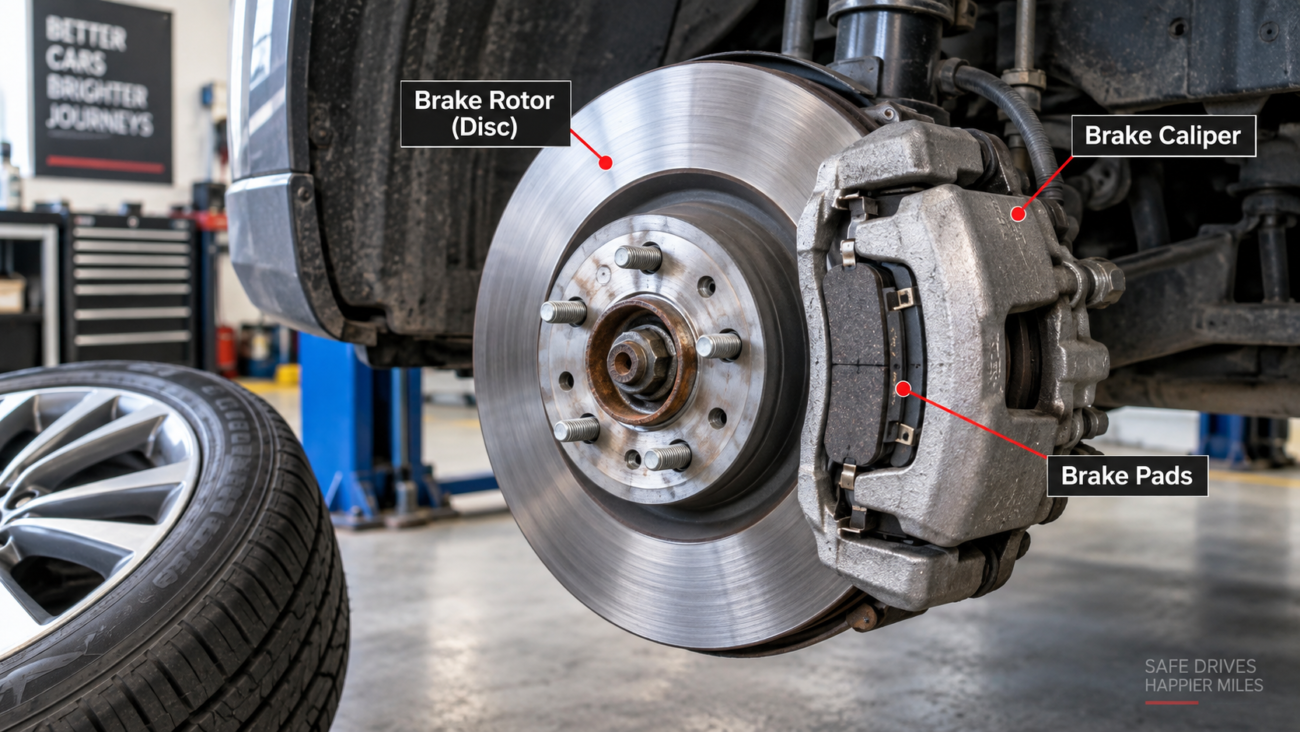
Brake Caliper
A brake caliper is commonly used with disc brakes.
It holds or supports the brake pads and applies pressure so the pads contact the rotor.
When hydraulic pressure reaches the caliper, one or more pistons move and push the pads toward the rotor.
Brake Pads
Brake pads are friction materials used with disc brakes.
When the driver brakes, the pads press against the rotor. Their friction helps slow the rotor and wheel.
Brake pads gradually wear as they are used. Their service life depends on factors such as driving style, traffic, vehicle weight, and brake design.
Brake Rotors
A brake rotor is a flat, rotating disc attached to the wheel hub or related rotating assembly.
The brake pads clamp against the rotor when braking.
Rotors must remain within the manufacturer’s specifications for thickness and condition. Severe wear, damage, or other problems may require replacement.
Brake Drums and Brake Shoes
Drum brakes use a different design.
Instead of pads clamping onto an exposed rotor, brake shoes press outward against the inside surface of a rotating drum.
Drum brakes are still used on some vehicles, often on rear wheels, although many vehicles use disc brakes on all four wheels.
Both systems use friction to slow the vehicle, but their mechanical designs are different.
What Are the Different Types of Car Brakes?
Different braking systems serve different purposes.
Disc Brakes
Disc brakes use a rotor and brake caliper with friction pads.
They are common on modern passenger cars. Disc brakes can provide effective braking and are relatively easy to inspect because many components are accessible from outside the wheel assembly.
Disc brakes are often used on front wheels because the front brakes typically handle a significant portion of the braking work during deceleration.
Some vehicles use disc brakes at all four wheels.
Drum Brakes
Drum brakes use a rotating drum and brake shoes.
When the brakes are applied, the shoes move outward and contact the inner surface of the drum.
Drum brakes have been used in vehicles for many decades. They remain common in certain applications, especially some rear-wheel braking systems.
They can be effective, but their components are enclosed within the drum, which makes inspection different from inspecting disc brakes.
Anti-Lock Braking System (ABS)
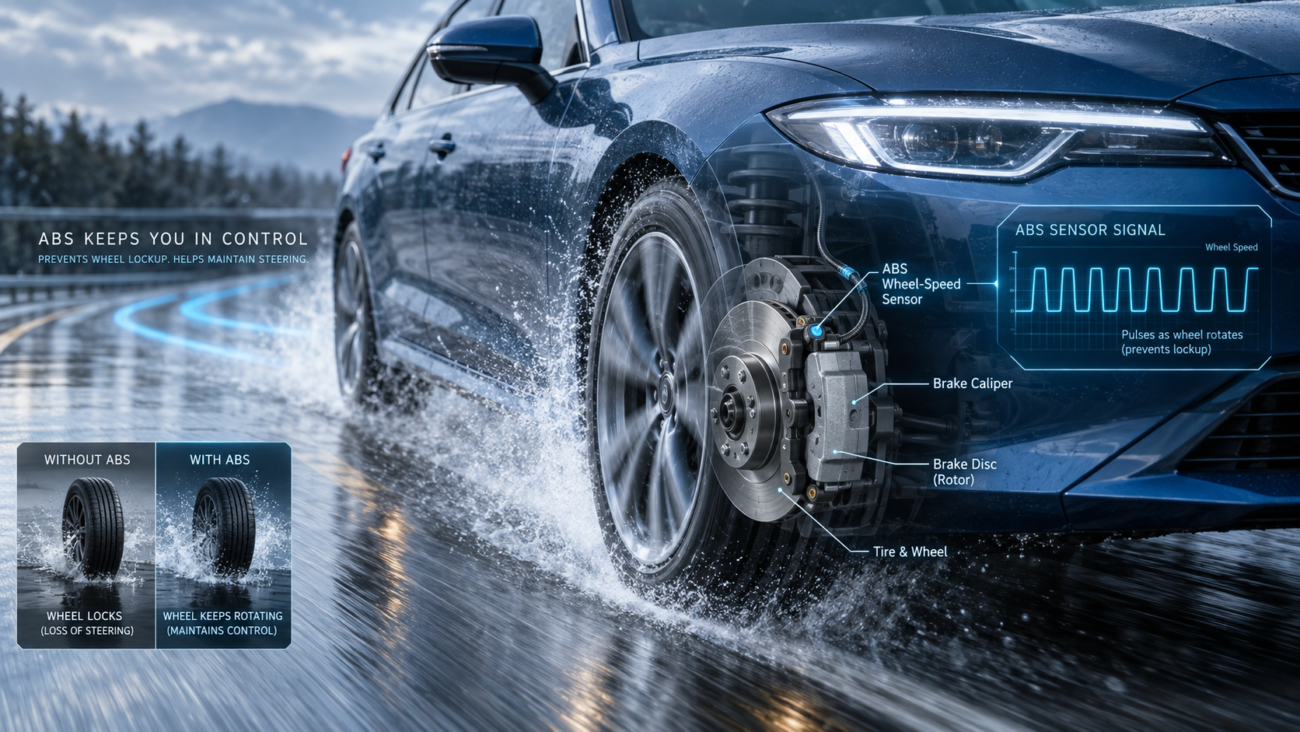
The anti-lock braking system, or ABS, is designed to help prevent the wheels from locking during hard braking.
ABS monitors wheel speed and can rapidly adjust brake pressure when it detects a wheel is approaching lockup.
This can help the driver maintain steering control during certain hard-braking situations.
ABS does not mean a vehicle cannot skid under any circumstances. Tires can still lose traction because of road conditions, speed, or other factors.
If the ABS warning light stays on, the system should be checked according to the vehicle manufacturer’s guidance.
Parking Brake
The parking brake is designed to help keep a parked vehicle from moving.
It may be operated by a hand lever, foot pedal, or electronic switch, depending on the vehicle.
The parking brake is different from the normal service brakes used when slowing the vehicle while driving.
Modern cars may use an electronic parking brake instead of a traditional hand-operated lever.
What Does the Brake Pedal Mean?
The brake pedal provides useful information about how the braking system feels.
Normal Brake Pedal Feel
A properly functioning brake pedal should generally feel firm and predictable when the vehicle is stopped or slowing.
The exact pedal feel varies between vehicles.
A small amount of pedal movement is normal, but the pedal should not suddenly become much softer, sink unusually far, or behave differently from its normal feel.
Changes in pedal feel can indicate a problem that deserves inspection.
Soft or Spongy Brake Pedal
A soft or spongy brake pedal can have several possible causes.
These may include:
- Air in the hydraulic brake system
- Low brake fluid caused by a leak or another issue
- Hydraulic component problems
- Other brake-system faults
A soft pedal matters because the driver may need more pedal travel to achieve the expected braking response.
If the pedal suddenly feels very different, have the braking system inspected promptly.
Hard Brake Pedal
A hard brake pedal can also have different causes.
On many modern vehicles, the brake booster helps reduce the effort needed to apply the brakes. A problem with brake assist, vacuum supply, or related components can make the pedal unusually hard.
If the brake pedal suddenly becomes much harder than normal, professional inspection is appropriate.
A hard pedal does not automatically identify one specific failed component. Diagnosis requires checking the vehicle’s actual braking system.
What Does the Brake Warning Light Mean?
Dashboard warning lights should not be ignored.
Red Brake Warning Light
A red brake warning light can have different meanings depending on the vehicle.
It may indicate that the parking brake is engaged. It can also indicate a brake-system issue, such as low brake fluid or another condition identified by the vehicle’s monitoring system.
Check the owner’s manual to understand the exact meaning for your car.
If the light remains on after releasing the parking brake, or if it appears with changes in brake performance, the vehicle should be checked.
ABS Warning Light
The ABS warning light indicates that the vehicle has detected a possible problem with the anti-lock braking system.
A vehicle may still have its basic braking function when the ABS light is on, but the anti-lock feature may not work as intended.
The exact behavior depends on the fault and vehicle.
This is different from the basic red brake warning light. One relates specifically to the ABS, while the other can indicate a broader braking-system issue.
What Are the Signs of Bad Brakes?
Knowing common warning signs can help you identify a problem early.
Squeaking or Grinding Sounds
Brake noise can have many causes.
A high-pitched squeak may occur because of brake-pad material, vibration, wear indicators, or environmental conditions.
Grinding can be more concerning. It may indicate severe brake-pad wear or contact between unsuitable braking surfaces.
Not every noise means the same thing, so unusual or persistent sounds should be inspected.
Car Pulls to One Side When Braking
If the vehicle pulls to one side when braking, possible causes can include uneven braking force, a sticking brake component, tire problems, suspension issues, or alignment problems.
Because several vehicle systems can cause this symptom, it should not automatically be blamed on the brakes.
If the pulling happens mainly during braking, have the braking system and related components inspected.
Steering Wheel Vibrates When Braking
A steering-wheel vibration during braking can have several causes.
Brake rotor thickness variation, uneven braking surfaces, suspension problems, wheel issues, or other faults can contribute to vibration.
A technician can inspect the brake rotors, pads, wheel components, and suspension to identify the cause.
Brake Pedal Feels Different
Changes in brake-pedal feel are important.
Watch for:
- A soft pedal
- A spongy pedal
- A pedal that travels unusually far
- A pedal that becomes unusually hard
- A pedal that behaves differently from normal
A sudden change deserves prompt attention.
Longer Stopping Distance
If your car needs noticeably more distance to stop under similar conditions, something may be wrong.
Possible causes include worn brake components, tire problems, poor road grip, brake-system faults, or other mechanical issues.
Longer stopping distance is a serious safety concern because it reduces the distance available to avoid a collision.
How Often Should Car Brakes Be Checked?
There is no single inspection schedule that fits every vehicle.
Factors That Affect Brake Wear
Several factors affect brake wear.
Driving habits: Frequent hard braking can increase brake wear.
Traffic conditions: Stop-and-go city driving usually requires more braking than steady highway driving.
Vehicle weight: Heavier vehicles can place greater demands on braking components.
Road conditions: Hills, traffic, road surfaces, and weather can affect brake use.
Brake and vehicle type: Brake design and vehicle specifications affect service requirements.
These differences are why mileage alone cannot predict exactly when brake components need replacement.
When to Inspect Brake Pads and Rotors
The best starting point is the vehicle owner’s manual.
Manufacturers may provide recommended inspection intervals and specifications for brake components.
Brake pads and rotors should also be inspected when you notice warning signs such as unusual noise, vibration, pulling, warning lights, or changes in pedal feel.
A technician can measure pad thickness and rotor condition instead of guessing based only on mileage.
How Long Do Car Brakes Last?
Brake life varies widely.
Brake Pad Lifespan
There is no universal mileage figure for every brake pad.
Brake pads can last very different lengths of time depending on:
- Driving style
- Traffic
- Vehicle weight
- Terrain
- Brake design
- Pad material
- Maintenance
A driver who frequently drives through busy city traffic may use the brakes more often than someone who spends most of their time on open roads.
Brake Rotor Lifespan
Brake rotors also have no universal replacement mileage.
Their condition depends on use, brake-pad condition, corrosion, heat, rotor specifications, and other factors.
Rotors should be inspected for thickness, surface condition, and other manufacturer-defined requirements.
Why Driving Habits Matter
Driving style can have a major effect on brake wear.
City driving: Frequent stops and starts mean more brake applications.
Highway driving: Steady-speed highway driving may involve fewer brake applications, although traffic and terrain still matter.
Frequent hard braking: Repeated aggressive braking can increase heat and wear.
Smooth, attentive driving can reduce unnecessary braking, but drivers should never avoid necessary braking just to save brake components.
What Happens If You Ignore Brake Problems?
Brake problems should not be left unchecked.
Reduced Braking Performance
Worn or damaged brake components may affect braking performance.
For example, severely worn brake pads may not provide the braking performance expected from a properly maintained system.
A hydraulic problem can also affect pedal feel and braking response.
Damage to Other Brake Components
Ignoring a brake problem can sometimes allow one damaged or worn component to affect other parts.
For example, severely worn friction material can allow inappropriate contact with other brake surfaces.
Repairing a small problem early may help prevent additional component damage.
Increased Safety Risk
The most important concern is safety.
Brakes are needed whenever a driver slows or stops the vehicle. A braking problem can therefore affect everyday driving.
If you notice a major change in braking performance, a warning light, severe grinding, or another serious symptom, do not simply continue driving and hope it disappears.
Follow your vehicle manufacturer’s guidance and have the car inspected by a qualified technician.
How to Keep Your Car Brakes in Good Condition
Good maintenance can help keep the braking system working as intended.
Follow the Maintenance Schedule
Use the vehicle owner’s manual as your main maintenance reference.
Follow the recommended inspection and service schedule for brake fluid and brake components.
Avoid Unnecessary Hard Braking
Brake firmly when needed, but avoid unnecessary repeated hard braking.
Look ahead and maintain a safe following distance so you have more time to slow smoothly when traffic changes.
Never sacrifice safe stopping simply to reduce brake wear.
Check Brake Fluid as Recommended
Check brake fluid according to the vehicle manufacturer’s instructions.
Do not simply add fluid whenever the level drops without understanding why it is low. A low level can sometimes indicate a leak or brake-pad wear.
Use only the fluid specification recommended for the vehicle.
Pay Attention to Warning Signs
Do not ignore changes such as:
- New brake noises
- A soft or spongy pedal
- An unusually hard pedal
- Vehicle pulling during braking
- Vibration while braking
- Warning lights
- Noticeably longer stopping distances
Early inspection can help identify problems before they become more serious.
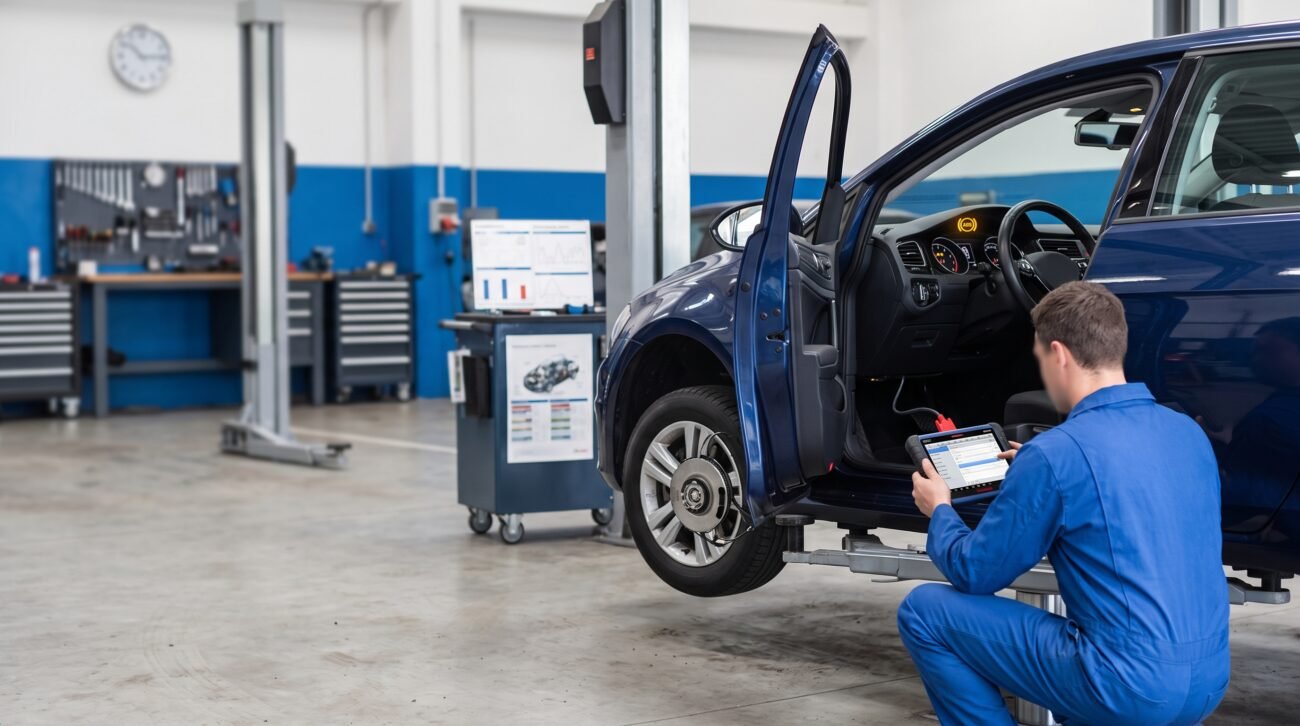
Have Brake Problems Inspected by a Qualified Technician
Brake systems are safety-critical components.
If you are unsure about a brake problem, professional inspection is the safest approach.
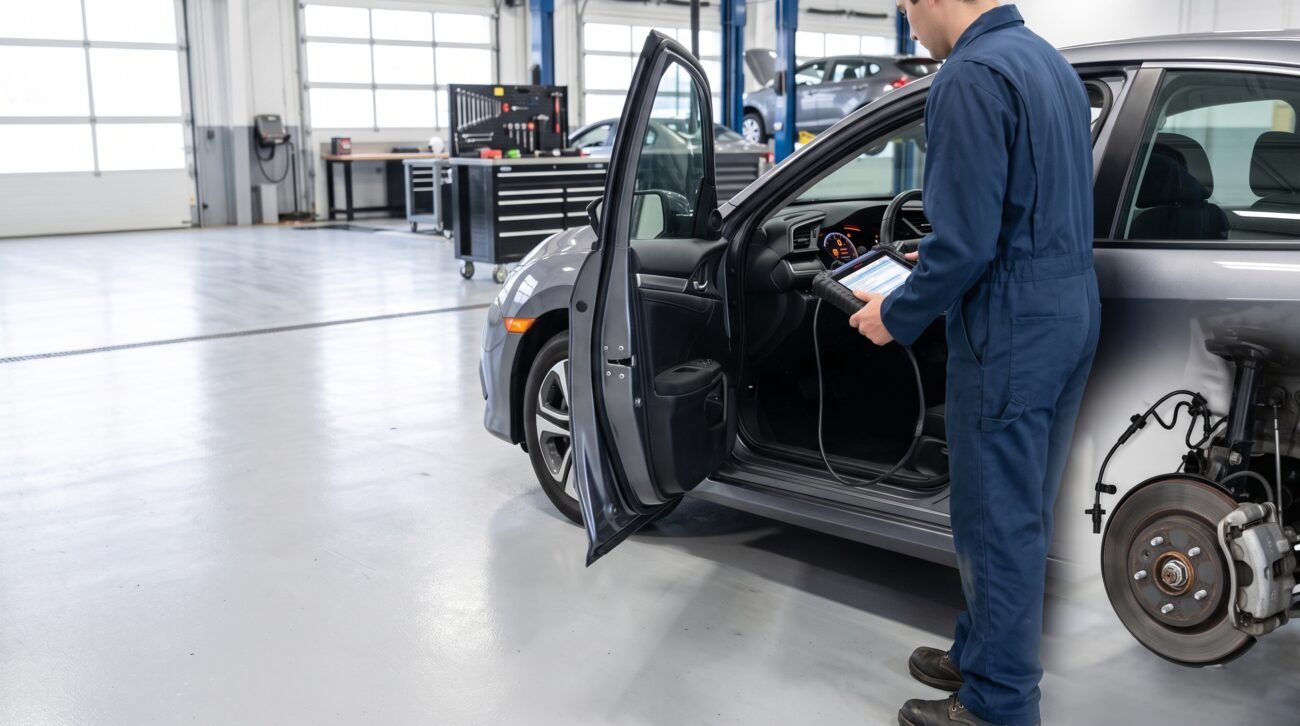
A qualified technician can inspect the pads, rotors, calipers, hydraulic system, fluid, ABS components, and other related parts.
FAQ
What does brake mean on a car?
What does brake mean on a car? A brake is a system designed to slow down or stop a vehicle. It commonly uses friction between brake components to reduce wheel speed and convert motion into heat.
What do brakes do on a car?
Brakes slow the vehicle, bring it to a stop, help control speed, and, through the parking brake, help keep a parked vehicle stationary.
How do car brakes stop a vehicle?
When the driver presses the brake pedal, the braking system creates force at the wheels. In a common disc-brake system, brake pads press against rotating rotors. Friction slows the rotating parts and reduces the vehicle’s speed.
What are the main parts of a brake system?
Common components include the brake pedal, master cylinder, brake fluid, brake lines, calipers, brake pads, rotors, and, depending on the vehicle, drums and shoes. ABS and parking-brake components may also be part of the overall braking system.
What is the difference between disc and drum brakes?
Disc brakes use pads that press against a rotating rotor. Drum brakes use shoes that press against the inside of a rotating drum. Both use friction to slow the vehicle, but their designs are different.
What does the brake warning light mean?
It depends on the vehicle. A red brake warning light may indicate that the parking brake is engaged or that the vehicle has detected a brake-system issue. Check the owner’s manual for the exact meaning and have the vehicle inspected if the light remains on unexpectedly.
How do I know if my brakes are bad?
Possible warning signs include unusual squeaking or grinding, pulling during braking, vibration, a soft or hard pedal, warning lights, or increased stopping distance. These symptoms can have different causes, so inspection is important.
How often should car brakes be replaced?
There is no universal replacement interval. Brake-pad and rotor life varies with driving habits, traffic, vehicle weight, road conditions, and brake design. Follow the manufacturer’s maintenance guidance and replace components when they reach the applicable service limits or show a confirmed problem.
Final Thoughts
So, what does brake mean on a car? A brake is the vehicle system that slows or stops the car and helps the driver control speed. Most modern braking systems use hydraulic pressure and friction to reduce the rotation of the wheels.
The main components include the brake pedal, master cylinder, brake fluid, calipers, pads, rotors, and, on some vehicles, drums and shoes. ABS adds a control system designed to help prevent wheel lockup during hard braking.
Because brakes are a critical safety system, unusual sounds, warning lights, changes in pedal feel, pulling, vibration, or longer stopping distances should not be ignored.
The best approach is simple: follow the vehicle manufacturer’s maintenance schedule, pay attention to changes in braking behavior, and have suspected brake problems checked by a qualified technician.

One thought on “What Does Brake Mean on a Car? A Simple Guide”