


When the ABS warning light suddenly appears on your dashboard, it is natural to wonder what happened and how to turn off anti-lock brake system warnings. For many drivers, the light can be confusing because the vehicle may still appear to drive and brake normally. However, an illuminated ABS warning should not simply be treated as an annoying dashboard notification.
The anti-lock brake system, commonly called ABS, is an important part of modern vehicle safety. It monitors wheel movement and can automatically adjust braking force when a wheel approaches a lockup condition. This helps the driver maintain better steering control during hard braking. The National Highway Traffic Safety Administration describes ABS as a system that senses wheel rotation and adjusts braking forces to control wheel slip.
So, when people search for how to turn off anti lock brake system, they may actually mean several different things. Some want to disable ABS temporarily, while others simply want to turn off the ABS warning light after a problem has appeared. Those are two very different situations.
The safest approach is usually not to disable the ABS itself. Instead, the goal should be to understand why the warning appeared, identify the underlying problem, repair it appropriately, and then allow the warning system to reset according to the vehicle manufacturer’s procedure.
What Is an Anti-Lock Brake System?
An anti-lock brake system is an electronic safety system designed to reduce the possibility of wheel lock during heavy braking. When a driver suddenly applies the brakes, a wheel can sometimes stop rotating while the vehicle is still moving. A locked wheel can lose useful traction and make steering control more difficult.
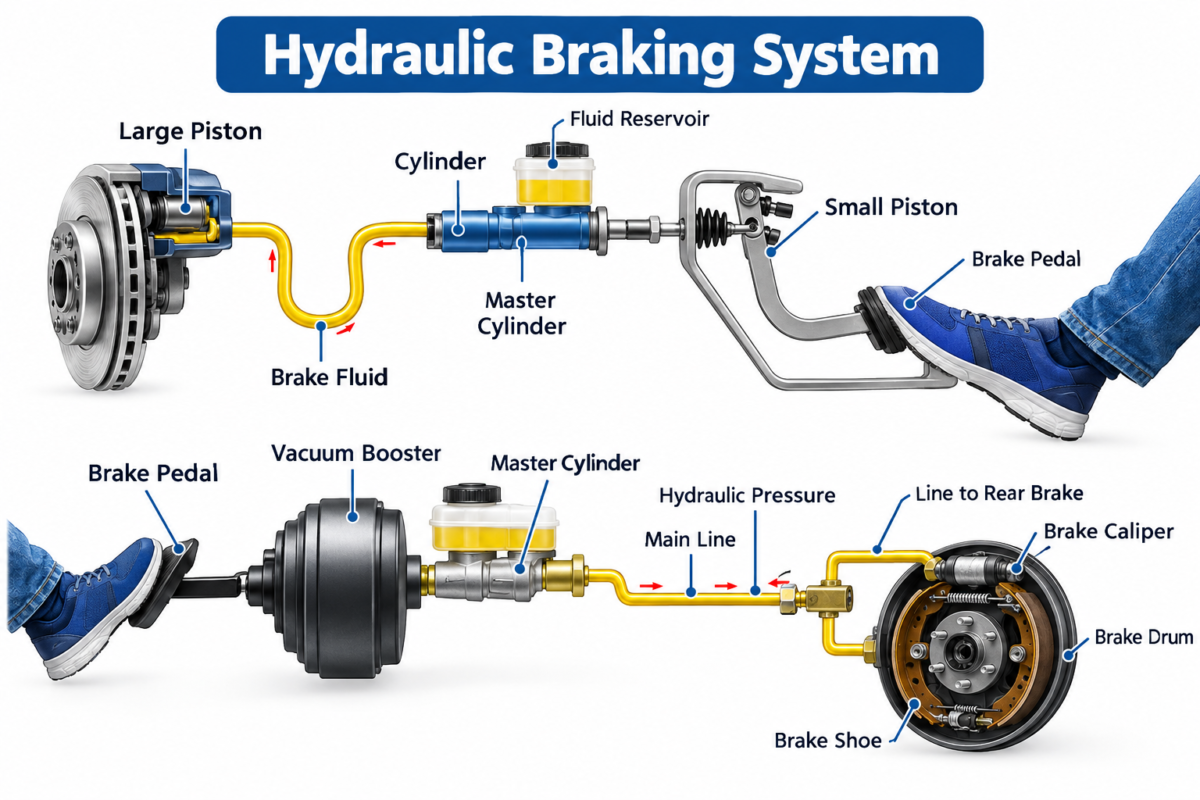
ABS is designed to respond automatically. It uses sensors to monitor wheel speed and sends information to a control module. If the system detects that a wheel is approaching lockup, it can adjust hydraulic brake pressure at that wheel.
NHTSA explains that an ABS senses the rate of wheel rotation, processes those signals through a control device, and uses that information to adjust brake forces.
This process happens very quickly. The driver does not normally need to activate ABS manually. When ABS operates during hard braking, the driver may feel pulsing through the brake pedal or hear sounds from the braking system. That can be normal when the system is actively working.
Why ABS Is Important
The biggest advantage of ABS is that it helps control wheel slip during braking. When the wheels remain rotating rather than staying locked, the driver can generally retain better steering control while braking hard.
ABS does not mean that a vehicle can stop instantly under every road condition. Tire condition, road surface, vehicle speed, weather, vehicle weight, and driver behavior all affect braking performance.
Modern vehicles may also integrate ABS information with other electronic systems, such as traction control and electronic stability control. This means an ABS fault can sometimes affect more than one warning light or driving-assistance feature.
What Does “Turn Off Anti Lock Brake System” Actually Mean?
The phrase how to turn off anti lock brake system can have two different meanings.
The first meaning is intentionally disabling the ABS. That is generally not something an ordinary driver should do simply because the warning light is annoying or because they want conventional braking behavior.
The second meaning is turning off the ABS warning light. This is much more common. A driver may see the yellow ABS symbol remain illuminated and want to know how to make it disappear.
The correct solution for an ABS warning light is usually to determine why the light came on. Once the underlying issue has been properly addressed, the vehicle may clear the warning automatically, or a suitable diagnostic procedure may be required depending on the vehicle.
Turning Off the System vs. Fixing the Warning
These two ideas should never be confused.
If the ABS warning light is illuminated because the system has detected a fault, removing power from a component or attempting to bypass the system does not necessarily repair the problem. It can also create additional diagnostic difficulties.
A better approach is to treat the warning as information from the vehicle. The light is telling you that the ABS has detected something that needs attention.
Can You Turn Off ABS in a Normal Car?
Most everyday passenger vehicles are not designed around a simple driver-operated ABS off switch. The exact design varies by manufacturer, model, trim level, and market.
Some vehicles may provide special electronic settings for particular driving situations, but that does not mean the driver should attempt to disable ABS independently.
If your vehicle has a manufacturer-provided ABS-related setting, the owner’s manual is the best source for understanding what that setting does.
For a vehicle with an illuminated ABS warning light, the safer objective is to diagnose the system instead of deliberately disabling it.
Why the Owner’s Manual Matters
ABS systems differ considerably between vehicles. A procedure that applies to one vehicle may not apply to another.
Your owner’s manual can explain:
- What the ABS warning light means.
- Which warning lights may appear together.
- Whether your vehicle has any special ABS-related settings.
- What the manufacturer recommends when the light remains illuminated.
- When the vehicle should be inspected.
This is particularly important because braking systems are safety-critical components.
What Does the ABS Warning Light Mean?
The ABS warning light normally appears briefly when the vehicle is switched on as part of the system’s self-check. If the system determines that everything is operating normally, the light should go out.
If the light stays on while driving, the vehicle has detected an ABS-related problem.
For example, Hyundai’s current owner information explains that the ABS warning light illuminates briefly during startup and can remain illuminated when there is an ABS malfunction. It also advises inspection when the warning remains on.
This illustrates an important point: the correct response to an ABS warning is diagnosis, not simply hiding the warning.
ABS Light During Startup
Seeing the ABS light for a few seconds when you start the vehicle can be completely normal.
Many vehicles illuminate several dashboard indicators during startup. The vehicle performs electronic checks before the engine is fully operating.
If the ABS light goes out after the self-check, there may be no ABS fault.
ABS Light That Stays On
A warning light that remains illuminated deserves attention.
The cause could be something relatively straightforward, such as a sensor-related issue, but it could also involve wiring, an electronic control component, or another part of the braking system.
That is why the light itself does not provide enough information to identify the exact fault.
Common Reasons the ABS Light Comes On
There are several possible reasons an ABS warning light may appear. The exact cause varies by vehicle.
Faulty Wheel-Speed Sensor
Wheel-speed sensors are essential parts of an ABS. They provide information about how quickly individual wheels are rotating.
If a sensor becomes damaged or stops providing a reliable signal, the ABS control system may detect an inconsistency.
A sensor problem can therefore cause an ABS warning light to appear.
Damaged Sensor Wiring
The sensor itself may not be the problem. Wiring and electrical connections can also become damaged or disconnected.
Because wheel areas are exposed to moisture, dirt, road debris, vibration, and temperature changes, electrical components near the wheels can experience harsh operating conditions.
Low Battery Voltage
Electrical voltage problems can sometimes cause warning lights to appear.
Modern vehicles depend heavily on electronic control modules, and low voltage during startup or after a battery problem can sometimes trigger temporary warnings.
Hyundai’s owner information, for instance, notes that an ABS warning may appear after jump-starting because of low battery voltage and recommends addressing the battery condition.
ABS Control Module Problem
The ABS control module interprets sensor information and manages the system’s response.
If the module or its associated electrical system develops a fault, the vehicle may illuminate the ABS warning light.
Because the module is a specialized electronic component, diagnosis may require appropriate diagnostic equipment.
Brake-System Issues
Although the ABS warning light is specifically associated with the anti-lock system, other brake warning lights can provide additional information.
How to Diagnose an ABS Warning Safely
If your goal is to understand how to turn off the anti-lock brake system warning, diagnosis should come before resetting the light.
Start With the Dashboard
Look at all the warning lights that appear.
Is it only the ABS light? Is there also a brake warning light? Is the traction-control light illuminated? Are there other messages on the dashboard?
The combination of warnings can provide useful clues.
Check the Owner’s Manual
Find the section covering warning lights and braking systems.
Manufacturers often explain what each indicator means and what action the driver should take.
This is a much better source than assuming every vehicle’s ABS works in the same way.
Use Appropriate Diagnostic Equipment
ABS faults are often stored as diagnostic trouble codes.
A basic engine-code scanner may not always provide the information required to diagnose an ABS. Depending on the vehicle, an ABS-capable scan tool may be necessary.
A qualified technician can use the stored fault information along with live sensor data and physical inspection to determine the cause.
Inspect for Obvious Problems
A professional or knowledgeable vehicle owner may look for obvious signs of damaged wiring or components around the wheel area.
However, because braking systems are safety-critical, complicated electrical or hydraulic repairs should be handled by someone properly qualified.
How to Turn Off the ABS Warning Light After Repair
Once the underlying problem has been repaired, the warning light may turn off automatically depending on the vehicle and fault.
In other cases, the ABS may require a diagnostic scan procedure to clear the stored fault after the repair has been completed.
The important point is that clearing the warning should not replace fixing the problem.
If a technician simply clears the code while the underlying fault remains, the warning may return.
Why Clearing the Code Is Not the Same as Repairing ABS
Think of the warning light as a message rather than the actual problem.
If your vehicle detects a faulty wheel-speed signal and you clear the warning without correcting that signal, the system may detect the same issue again.
The better sequence is:
Warning → Diagnosis → Repair → Verification → Reset if required
That approach is much more useful than simply trying to make the dashboard light disappear.
Should You Remove the ABS Fuse?
Drivers sometimes search for ways to disable ABS by removing a fuse or disconnecting components.
This is not a good general solution for a warning light or ABS problem.
The exact electrical architecture differs between vehicles, and removing a fuse can potentially affect other systems connected to the same circuit.
More importantly, deliberately disabling a safety system does not repair the fault that caused the warning.
If your vehicle manual specifically provides an approved procedure for a particular operating mode, follow the manufacturer’s instructions. Otherwise, avoid experimenting with ABS fuses or wiring.
What Happens If ABS Stops Working?
If an ABS fault occurs, the conventional hydraulic braking system may still operate on some vehicles, but the anti-lock function may not be available.
That does not mean the vehicle should be treated as completely normal.
Without functioning ABS, the vehicle may not provide the same wheel-lock prevention assistance during emergency braking.
ABS Failure Does Not Always Mean Complete Brake Failure
This distinction is important.
An ABS warning does not automatically mean that the brake pedal will stop working. However, it means the driver should take the warning seriously.
If the vehicle has additional brake-system warnings, unusual pedal behavior, reduced braking performance, fluid leakage, or other serious symptoms, driving should be avoided until the vehicle has been properly inspected.
What If the ABS Light Comes On While Driving?
If the ABS light appears while you are driving, stay calm and avoid sudden maneuvers.
Pay attention to the vehicle’s braking behavior and check whether any other warning lights appear.
If braking feels normal and only the ABS light is illuminated, arrange for the vehicle to be inspected as soon as practical.
If the ABS warning appears together with a brake warning light or the brakes do not feel normal, treat the situation much more seriously.
Manufacturer guidance can differ by vehicle, so the owner’s manual should be consulted.
ABS Light vs. Brake Warning Light
These two dashboard warnings are not necessarily the same.
The ABS light generally relates to the anti-lock braking system.
A red brake warning light can indicate a different issue, such as a parking-brake condition or a brake-fluid problem, depending on the vehicle.
When both lights illuminate together, the situation may indicate a broader braking-system problem.
Why the Difference Matters
A driver who sees a yellow ABS light may assume that the brakes have completely failed. That is not necessarily true.
On the other hand, assuming that an illuminated ABS light is harmless can also be a mistake.
The safest approach is to understand the warning and follow the manufacturer’s recommended inspection procedure.
Can a Bad ABS Sensor Cause the Warning Light?
Yes. A faulty wheel-speed sensor is one possible reason for an ABS warning.
The sensor provides wheel-speed information to the ABS. If the signal is missing, inconsistent, or outside expected parameters, the control system may recognize a fault.
However, it is important not to assume that the sensor is automatically the cause simply because the ABS light is on.
A proper diagnostic process should identify the actual fault before parts are replaced.
Can Low Battery Voltage Trigger an ABS Warning?
Yes, low electrical voltage can sometimes cause an ABS warning.
This can happen during certain battery-related situations, including after a jump-start on some vehicles.
If the warning appeared immediately after a weak-battery event, it is worth checking the battery and charging system.
However, the warning should not automatically be dismissed as a battery problem without verification.
Can Restarting the Vehicle Turn Off the ABS Light?
Sometimes a temporary condition can disappear after the vehicle is switched off and restarted.
For example, manufacturer guidance may describe specific situations where an ABS warning appears temporarily under unusual conditions.
However, restarting the vehicle should not be considered a universal ABS repair.
If the light returns or remains illuminated, the system should be checked.
Does ABS Always Reduce Stopping Distance?
Not necessarily.
ABS is primarily designed to help prevent wheel lock and maintain control during braking. It does not guarantee a shorter stopping distance in every situation.
This is an important point because ABS is sometimes misunderstood as a system that makes every emergency stop shorter.
Its major benefit is controlled braking and maintaining useful wheel rotation when lockup might otherwise occur.
How ABS Works During Emergency Braking
Imagine a driver suddenly needs to stop because traffic ahead slows unexpectedly.
The driver applies strong pressure to the brake pedal.
The ABS monitors wheel speeds. If one wheel begins approaching a lockup condition, the system can reduce or hold brake pressure at that wheel and then increase pressure again as conditions change.
The process can occur extremely quickly.
What the Driver May Feel
When ABS activates, the brake pedal may pulse.
The driver may also hear mechanical or electronic sounds from the braking system.
These sensations can be surprising if someone has never experienced ABS operation before.
During an emergency stop, drivers should follow their vehicle manufacturer’s instructions rather than trying to manually pump the brake pedal.
For example, Hyundai specifically advises drivers not to pump the brakes when using ABS in an emergency. (Hyundai Owner’s Manual)
How to Prevent ABS Problems
Regular vehicle maintenance can help identify potential problems before they become more serious.
Keep the brake system properly maintained and pay attention to warning lights.
During routine servicing, technicians can inspect brake components, wheel areas, electrical connections, and other relevant systems.
Keep Tires Properly Maintained
ABS depends on wheel-speed information and tire-road interaction.
Incorrect tire condition or significant differences between tires can influence vehicle behavior.
Follow the vehicle manufacturer’s recommendations for tire pressure, size, and replacement.
Pay Attention to Warning Lights
Do not ignore warning lights for weeks simply because the vehicle still appears to drive normally.
Electronic warning systems exist to alert the driver before a problem becomes more difficult or expensive to diagnose.
Maintain the Battery
Because ABS is an electronic system, proper vehicle electrical performance matters.
A weak battery or charging-system problem can sometimes produce unusual dashboard warnings.
When Should You Get Professional Help?
You should consider professional inspection when the ABS warning remains illuminated, especially if the light returns repeatedly.
Professional assistance is particularly important when:
- The ABS and brake warning lights appear together.
- The brake pedal feels unusual.
- Braking performance changes.
- The vehicle pulls unexpectedly while braking.
- Brake fluid appears to be leaking.
- The warning appears repeatedly after restarting.
- Multiple electronic warning lights appear at the same time.
Brake systems are safety-critical. Guessing at repairs can create more problems than it solves.
What a Mechanic May Check
A qualified technician may begin by scanning the ABS control system for stored fault codes.
The technician may then inspect wheel-speed sensor signals, wiring, connectors, brake components, and other parts related to the fault.
Depending on the vehicle, additional diagnostic testing may be necessary.
The purpose is not simply to turn the dashboard light off. The purpose is to identify why the vehicle detected the fault.
FAQs
How do I turn off anti lock brake system?
For most everyday vehicles, you should not try to deliberately disable the ABS. If you mean the ABS warning light, identify and repair the underlying fault first. Depending on the vehicle, the light may then clear automatically or require an appropriate diagnostic reset.
How do I turn off the ABS warning light?
The correct method depends on the vehicle and the reason the warning appeared. Diagnosis should come first. After the underlying problem is repaired, the warning may clear itself or may require an appropriate scan-tool procedure.
Can I drive with the ABS light on?
Some vehicles can still provide conventional braking when the ABS has a fault, but ABS assistance may not be available. Manufacturer guidance should be followed, and the system should be inspected promptly.
Can a bad wheel-speed sensor cause an ABS light?
Yes. A faulty or damaged wheel-speed sensor can be one possible cause of an ABS warning. However, proper diagnosis is needed before replacing the sensor.
Will disconnecting the battery reset ABS?
It is not a universal solution. Battery disconnection may not repair or properly clear an ABS fault, and it can affect other vehicle settings. Follow the manufacturer’s recommended procedure instead.
Is it safe to remove the ABS fuse?
You should not remove an ABS fuse simply to make a warning disappear or intentionally disable the system. The correct procedure depends on the vehicle, and disabling a safety system can create additional problems.
Why does my ABS light come on and then disappear?
A temporary electrical condition, sensor signal issue, low voltage event, or other intermittent fault could potentially cause this behavior. If the light repeatedly appears, the system should be diagnosed rather than ignored.
Why are both the ABS and brake lights on?
Both lights appearing together can indicate a more serious braking-system issue. Manufacturer guidance should be consulted, and the vehicle should be inspected promptly. Hyundai, for example, warns that simultaneous ABS and parking-brake warnings can indicate that the braking system is not operating normally.
Does ABS work all the time?
No. ABS generally becomes active when the system detects conditions where wheel lock may occur during braking. Under ordinary braking, the system does not need to continuously intervene.
Can ABS prevent every skid?
No. ABS cannot prevent every type of skid or loss of stability. Vehicle speed, road conditions, tires, steering input, and many other factors remain important. Hyundai notes that ABS cannot prevent every loss of stability caused by sudden steering changes.
Final Thoughts
Understanding how to turn off anti lock brake system is really about understanding the difference between disabling ABS and dealing with an ABS warning. For most drivers, deliberately turning off a safety system is not the right answer. ABS exists to help control wheel slip during hard braking and can provide valuable assistance when a vehicle is approaching wheel lock.
If the ABS warning light appears, take it as useful information rather than simply an unwanted dashboard light. Start by checking the owner’s manual and observing whether any other warning lights are illuminated. A diagnostic scan may then help identify whether the issue involves a wheel-speed sensor, wiring, low voltage, the control module, or another component.
After the actual fault has been repaired, the warning may disappear automatically or may require a manufacturer-approved diagnostic reset. Simply clearing the warning without correcting the cause can allow the problem to return.
Most importantly, pay close attention to changes in braking performance. If the brake pedal feels abnormal, braking becomes weaker, a red brake warning appears, or multiple brake-related warnings illuminate, professional inspection should take priority over trying to switch the warning off. A properly maintained ABS system gives you a better chance of maintaining control when sudden braking is required, making diagnosis and repair much more valuable than simply making the dashboard light disappear.




One thought on “How to Turn Off Anti Lock Brake System? Discover the Smart, Safe & Simple Guide to Understanding and Managing”