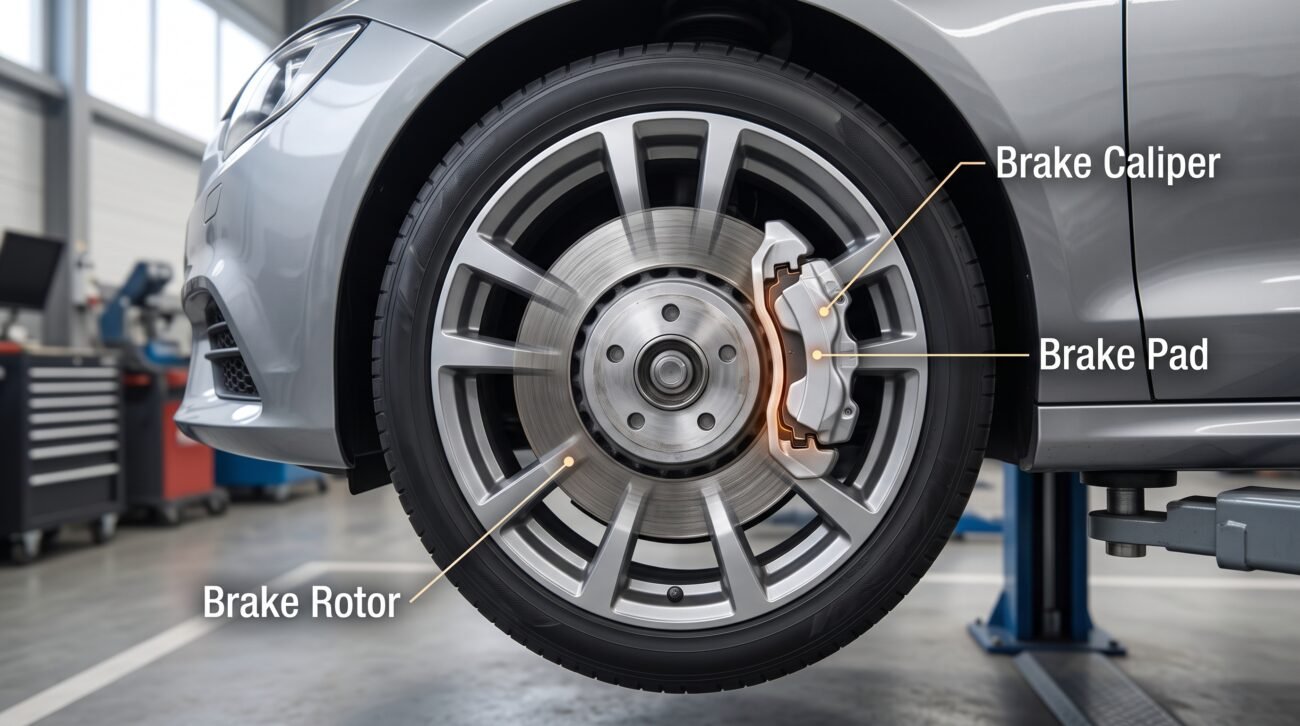

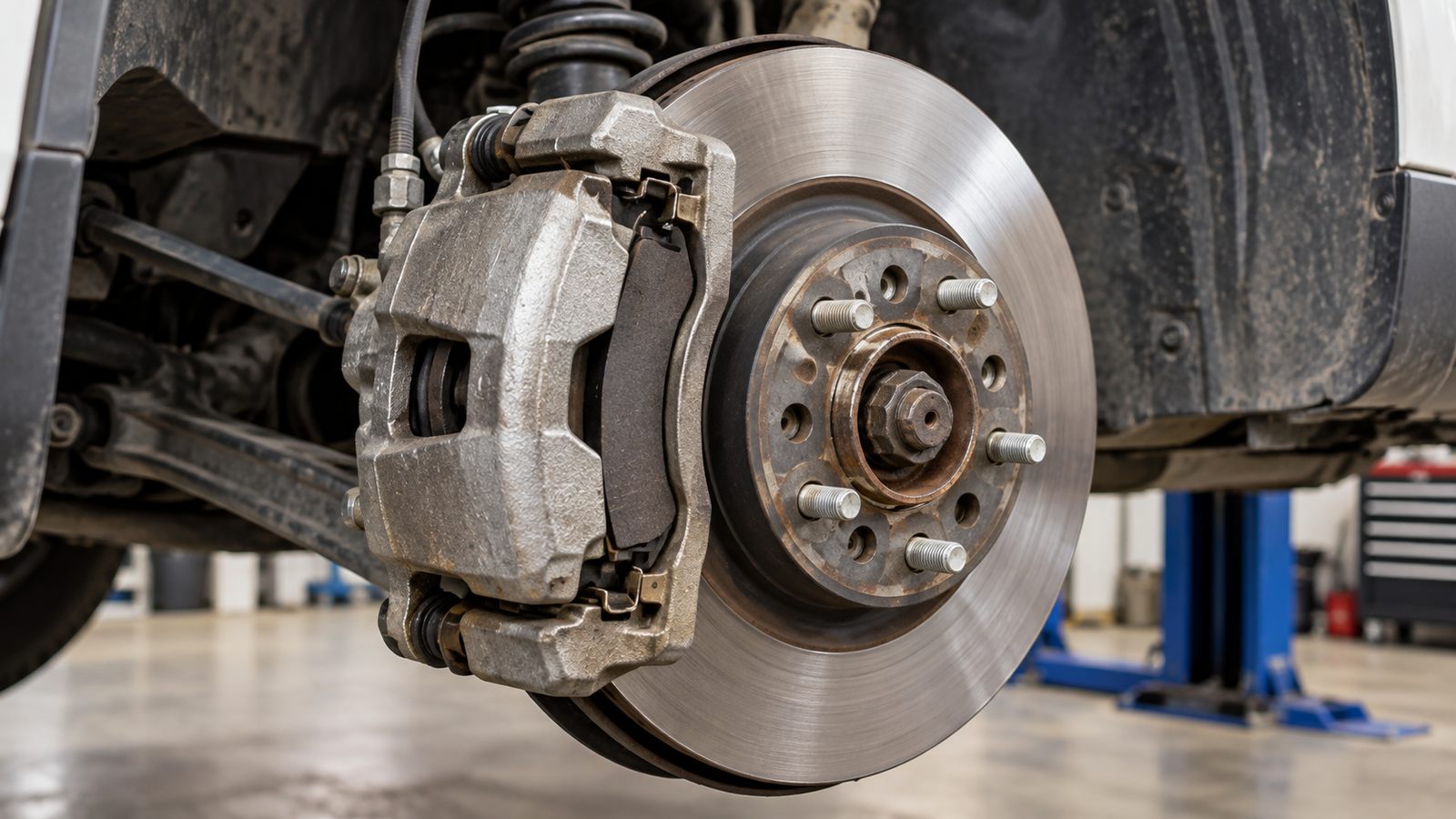
If you are wondering what does the brake look like in a car, the answer is that a car brake is not one single part. It is a system made up of several components that work together to slow and stop the vehicle.
On most modern cars, you will find disc brakes, especially on the front wheels. Disc brakes have a round metal brake rotor, a brake caliper, and brake pads. Some vehicles also use drum brakes, which have a round enclosed housing with brake shoes and other parts inside.
The exact appearance depends on the vehicle, its brake design, and whether the parts are new or worn. You may be able to see part of a disc brake through the wheel, while drum-brake components are mostly hidden inside the drum.
Understanding the basic appearance of these parts can help you recognize your car’s braking system and notice obvious signs of wear. However, visual inspection alone cannot confirm that brakes are safe or working correctly.
What Does a Disc Brake Look Like?
Disc brakes are common on passenger cars and light vehicles. They are relatively easy to recognize because the main components sit around a visible metal disc.
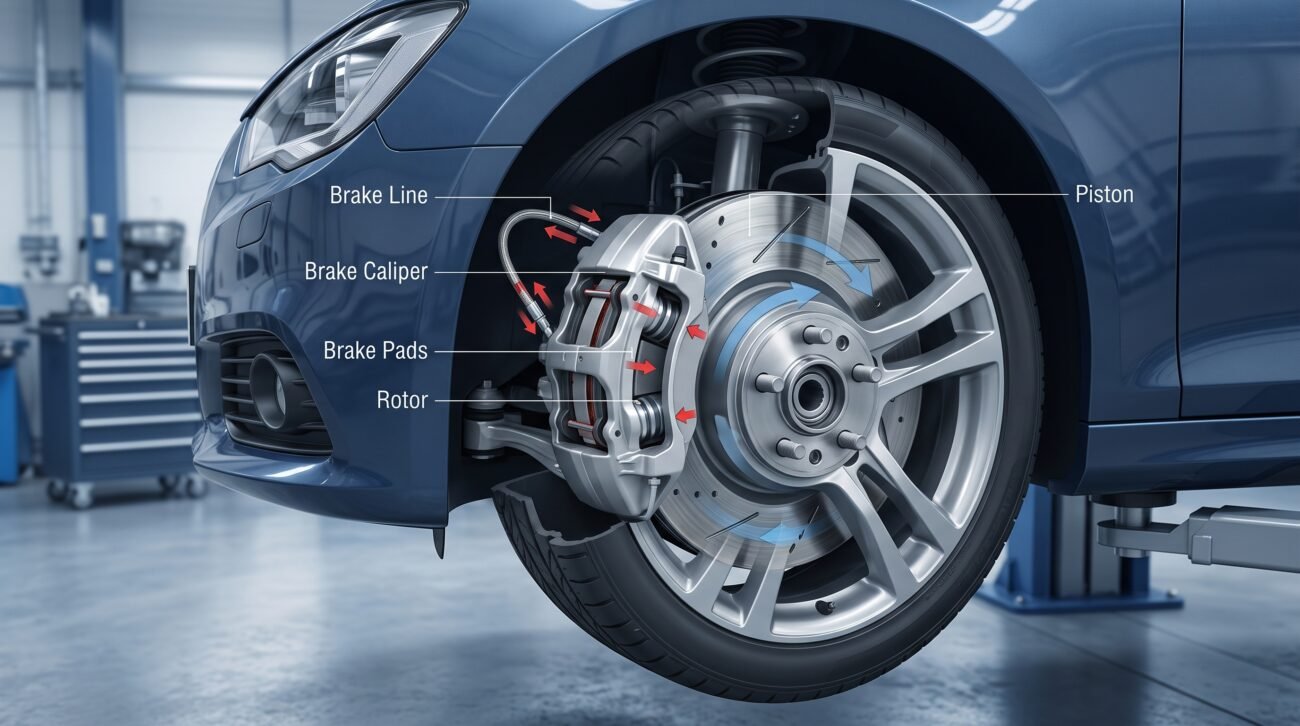
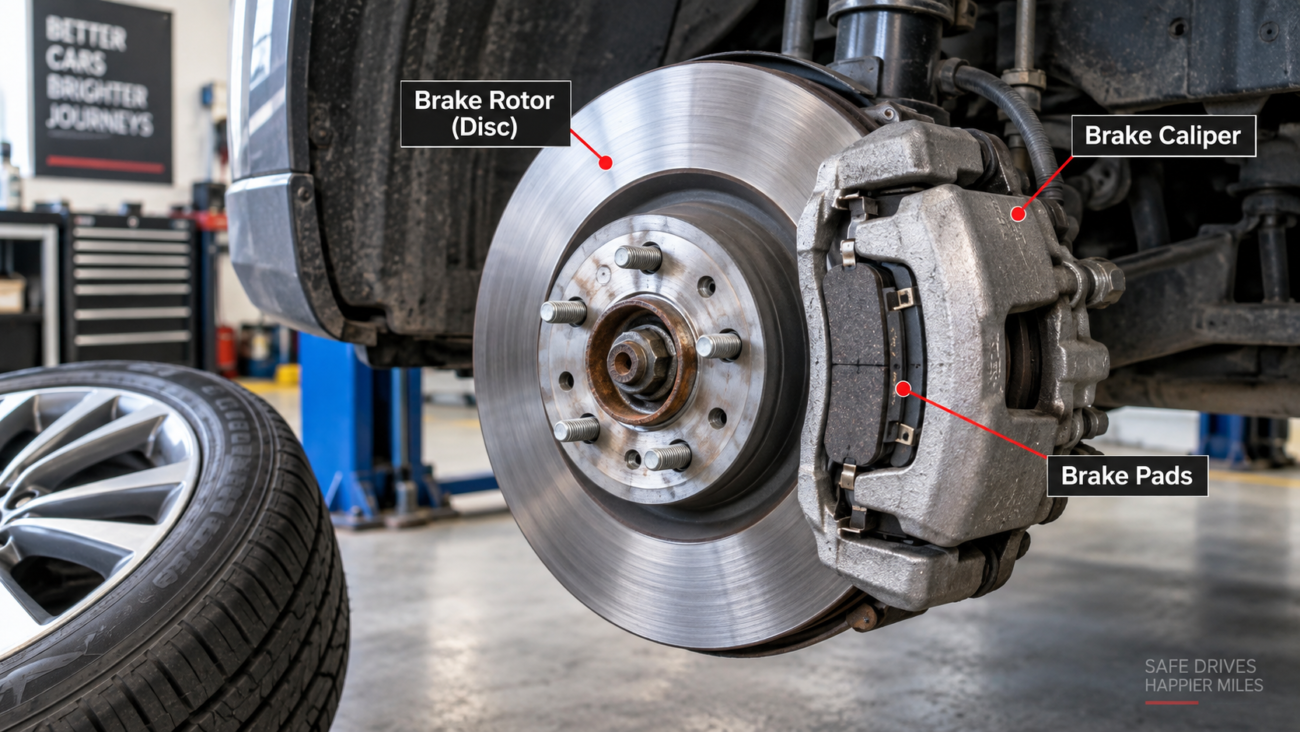
A typical disc-brake assembly includes:
- Brake rotor
- Brake caliper
- Brake pads
- Brake lines
- Wheel hub and related hardware
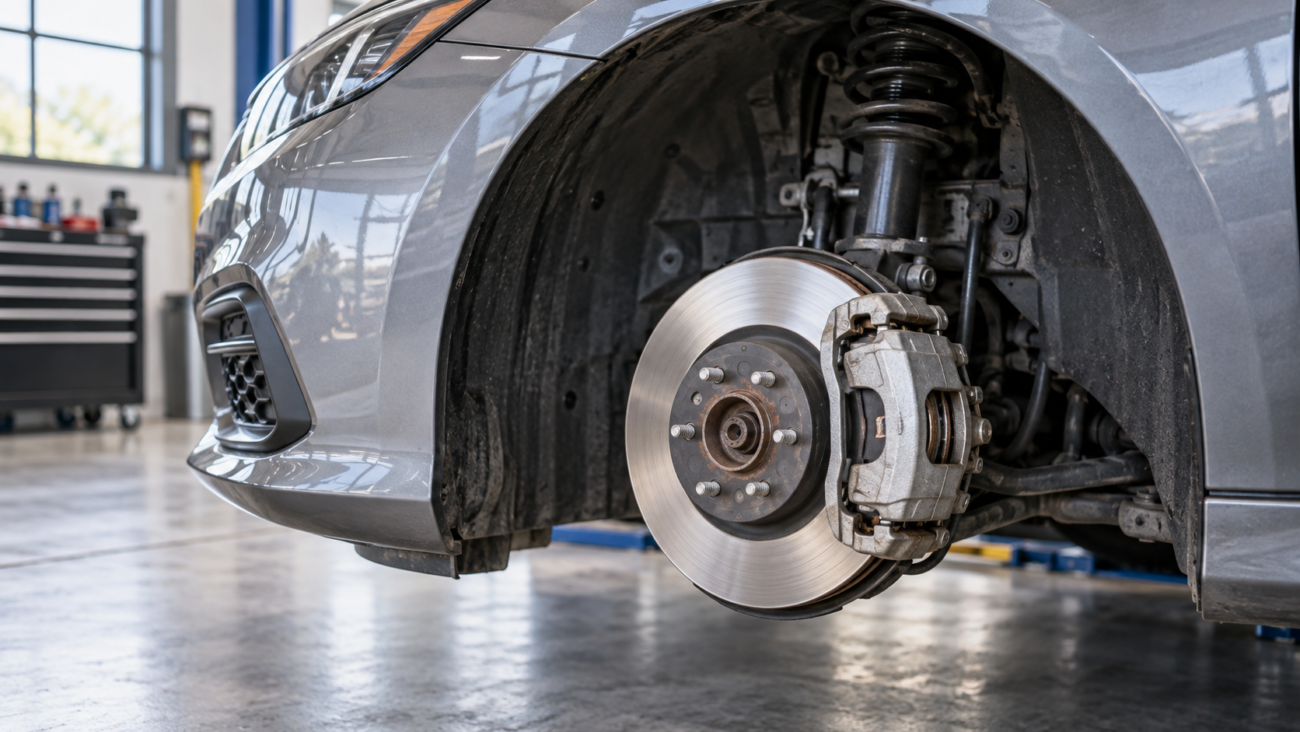
When you look through an alloy wheel, the large round metal disc is usually the brake rotor. A bulky metal component sitting around part of the rotor is the caliper.
Brake Rotor
The brake rotor is a round, flat metal disc that rotates with the wheel. It is mounted to the wheel hub and sits inside the wheel.
When you press the brake pedal, the brake pads are pressed against the rotor. The friction between the pads and rotor helps slow the rotating wheel.
Rotors can have different designs.
A solid rotor is generally one continuous disc. A vented rotor has internal passages between two friction surfaces. These passages allow air to move through the rotor and help manage heat during braking.
From the outside, a vented rotor can still look like a normal round disc. The difference is mainly in its construction.
The visible rotor surface may be smooth, slightly textured, or show normal signs of use. A rotor that has severe grooves, cracks, or other unusual damage needs proper inspection.
Brake Caliper
The brake caliper sits around part of the brake rotor. It contains the mechanism that applies pressure to the brake pads.
Visually, a caliper usually looks like a metal housing wrapped around the edge of the rotor. Depending on the vehicle, it may be relatively compact or quite large.
Some performance vehicles have larger calipers, but appearance alone does not tell you whether a brake system is suitable or safe.
Inside the caliper are components such as pistons and seals. When hydraulic brake pressure reaches the caliper, the pistons move the brake pads toward the rotor.
The caliper is therefore one of the easiest disc-brake parts to identify when looking through a wheel.
Brake Pads
Brake pads are small components installed inside the caliper. They have a metal backing plate and a friction material designed to contact the rotor.
The friction material is the part that gradually wears down during normal braking.
New brake pads generally have a clearly visible layer of friction material. As the vehicle is driven and the brakes are used, that material becomes thinner.
The exact shape varies between vehicles. Some pads are relatively rectangular, while others have curves, tabs, slots, or other design features.
A worn pad may look noticeably thinner than a new one, but checking pad thickness accurately can sometimes require a closer inspection.
Brake Lines
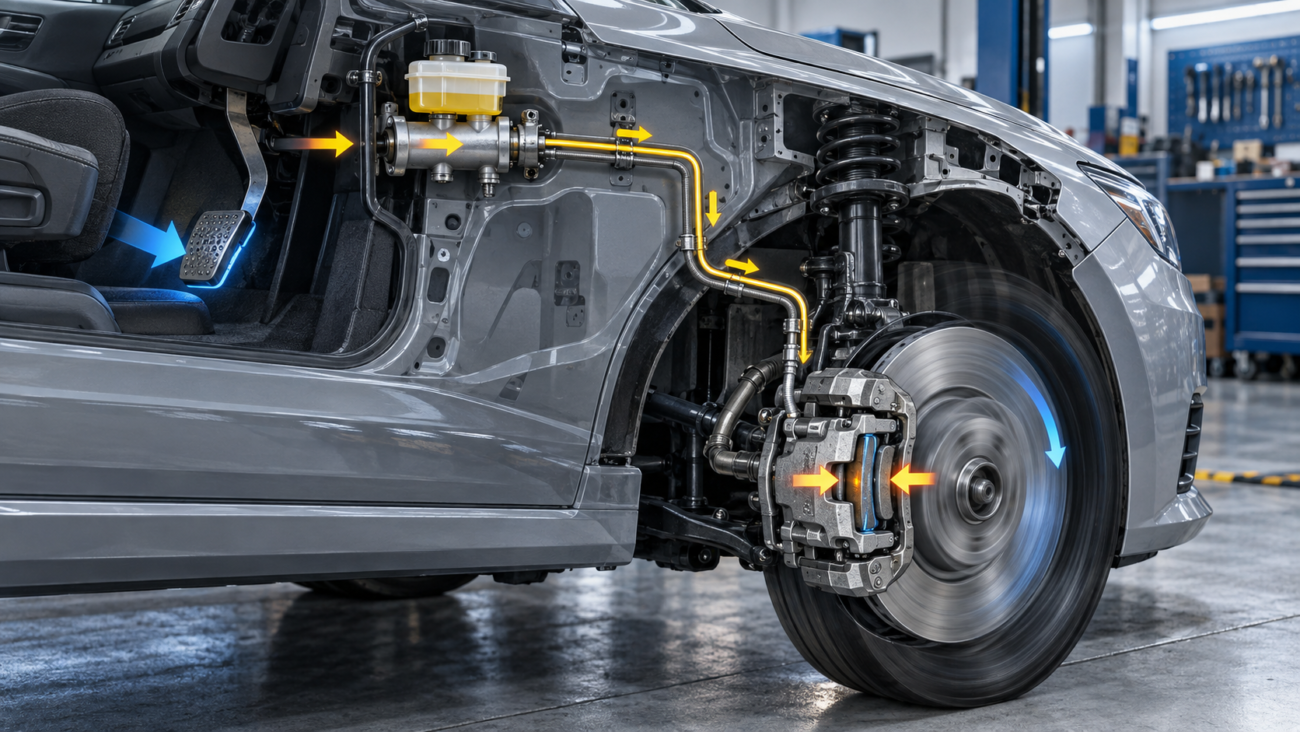
Brake lines carry hydraulic brake fluid from the master cylinder toward the braking components at the wheels.
Some brake lines are rigid metal pipes, while flexible brake hoses are used in areas where the suspension and steering require movement.
You may not see all of the brake lines when looking at a wheel because much of the system is routed behind other components.
Brake lines are an important part of the hydraulic system. Leaks, corrosion, or damaged hoses can affect braking and should be checked by a qualified mechanic.
What Does a Brake Rotor Look Like?
A brake rotor looks like a large, round metal disc mounted behind the wheel. It is one of the most recognizable parts of a disc-brake system.
Its appearance can change with use, age, and environmental conditions.
New Brake Rotor
A new or properly prepared brake rotor normally has a relatively smooth friction surface.
It is circular and usually made from cast iron or another material specified for the application. Many rotors have ventilation channels inside them, although these may not be obvious from the front.
The rotor may have a clean metallic appearance when new. After being installed and used, its surface will naturally change as the brake pads make contact with it.
A small amount of surface discoloration or normal wear does not automatically mean a rotor is defective.
Worn Brake Rotor
A worn rotor may show visible changes such as:
- Grooves or scoring
- Uneven wear
- Discoloration
- Rust on areas that normally do not contact the pad
- Cracks or other physical damage
Some surface marks can occur through normal use, so appearance must be considered along with the vehicle manufacturer’s specifications.
Deep grooves can indicate abnormal or advanced wear. Uneven surfaces can also contribute to brake vibration or noise.
If a rotor looks severely damaged, it is better to have the braking system inspected rather than assuming the vehicle is safe because the brakes still work.
What Do Brake Pads Look Like?
Brake pads are much smaller than brake rotors. They sit between the caliper and rotor and provide the friction needed for disc braking.
Because they sit inside the caliper, you may not get a complete view of the pad without looking closely.
New Brake Pads
A new brake pad normally has a metal backing plate with a thicker layer of friction material attached to it.
The friction material is the portion designed to press against the brake rotor.
Pad shapes vary by vehicle. The size, thickness, slots, clips, and backing plate design can all be different.
When installed, only part of the pad may be visible. This is why simply looking through a wheel does not always give you a reliable measurement of remaining pad material.
Worn Brake Pads
As brake pads are used, their friction material gradually becomes thinner.
A very thin pad has less usable friction material remaining. Excessive wear can reduce the pad’s service life and may allow the backing plate to contact the rotor if the pad becomes completely worn.
That can damage other brake components.
If you suspect that your brake pads are very thin, have them inspected. A mechanic can measure the remaining friction material and compare it with the appropriate service limits.
What Does a Brake Caliper Look Like?
A brake caliper usually looks like a metal clamp or housing positioned around the edge of a brake rotor.
It is normally one of the most noticeable parts of a disc-brake assembly.
The caliper’s job is to hold the brake pads and apply force to them when hydraulic pressure is created.
Fixed vs. Floating Calipers
There are different caliper designs.
A floating caliper, also called a sliding caliper, can move relative to its mounting bracket. It typically uses one or more pistons on one side and moves to apply force to both pads.
A fixed caliper remains mounted in position relative to the rotor. It can have pistons on both sides of the rotor.
From outside the vehicle, the difference may not always be obvious.
Most everyday passenger vehicles use practical brake designs chosen by the manufacturer for the vehicle’s weight, performance, cost, and other requirements.
Where Is the Brake Caliper Located?
The caliper is positioned around the outer edge of the brake rotor.
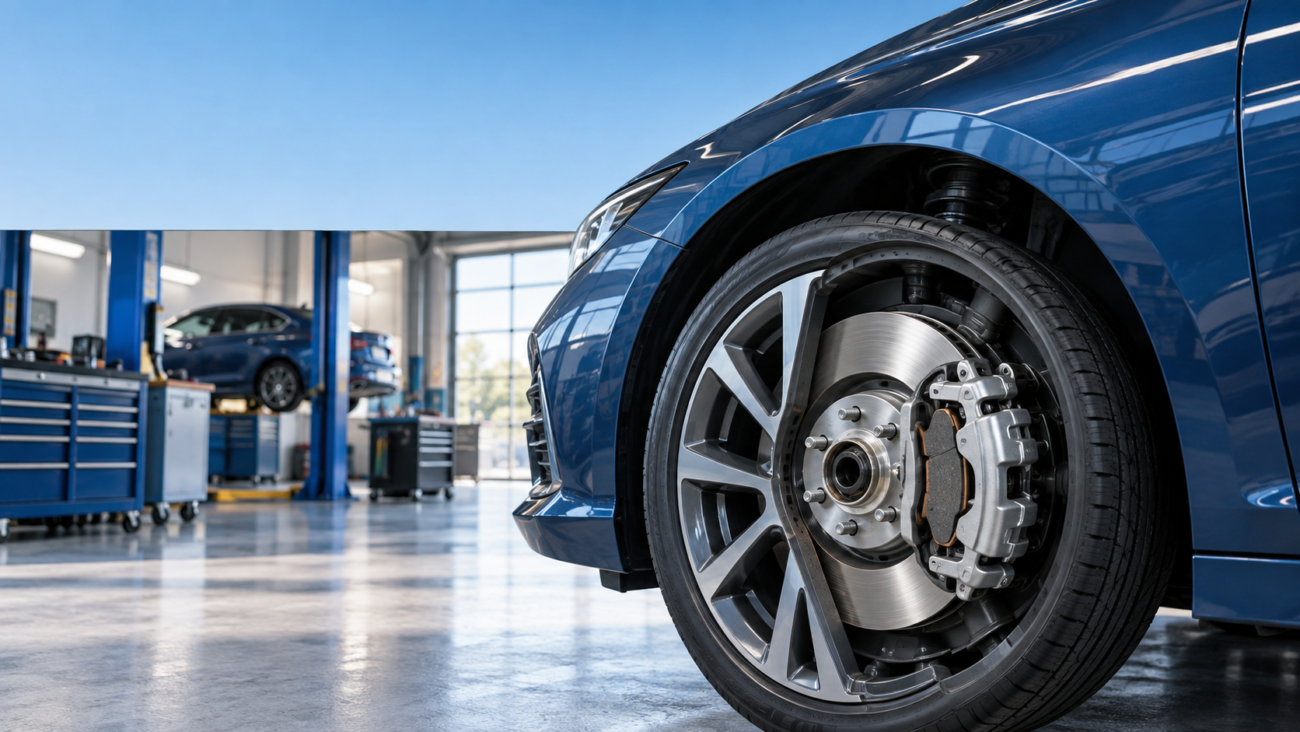
If your vehicle has open-spoke alloy wheels, you may be able to see the rotor and a portion of the caliper without removing the wheel.
The exact viewing angle depends on the wheel design.
Some wheels have narrow spokes that block much of the brake assembly. Other wheels provide a clearer view.
Remember that seeing a brake component does not mean you can fully inspect it. Important surfaces and hardware may remain hidden.
What Does a Drum Brake Look Like?
A drum brake has a different appearance from a disc brake.
Instead of having an exposed rotor and caliper, the braking components are housed inside a round metal drum.
Drum brakes are still used on some vehicles, often on rear wheels, although the exact setup varies by vehicle.
Brake Drum
The brake drum is a round metal housing that rotates with the wheel.
It covers the internal brake components. From the outside, it generally looks like a large circular metal cylinder or drum.
When the brake is applied, components inside the drum press friction material against the inner surface of the rotating drum.
Because the working parts are enclosed, you normally cannot see the brake shoes just by looking at the wheel.
Brake Shoes
Brake shoes perform a role similar to brake pads, but they have a different shape and operate differently.
They are curved components located inside the brake drum. Friction material is attached to the shoe and contacts the inside of the drum when the brake is applied.
This differs from disc brakes, where flat brake pads clamp against the sides of a rotor.
Other Drum Brake Components
A drum-brake assembly may contain several additional parts, including:
- Wheel cylinder
- Return springs
- Hold-down springs
- Backing plate
- Brake adjuster
- Brake shoes
- Parking-brake mechanism
These parts work together to move the shoes against the drum and return them when the brake is released.
Because so much of the mechanism is enclosed, drum brakes generally require more disassembly for a detailed visual inspection.
What Does the Brake Pedal Look Like in a Car?
When people ask what does the brake look like in a car, they may also mean the brake pedal inside the cabin.
The brake pedal is the control you press with your foot to activate the braking system.
Brake Pedal Location
In a typical automatic car, the brake pedal is located to the left of the accelerator pedal.
It is usually wider than the accelerator pedal, although pedal shapes and layouts vary by vehicle.
In a manual-transmission car, the brake pedal is normally positioned between the clutch pedal and accelerator.
The pedal usually has a rubber or textured surface to provide grip for the driver’s foot.
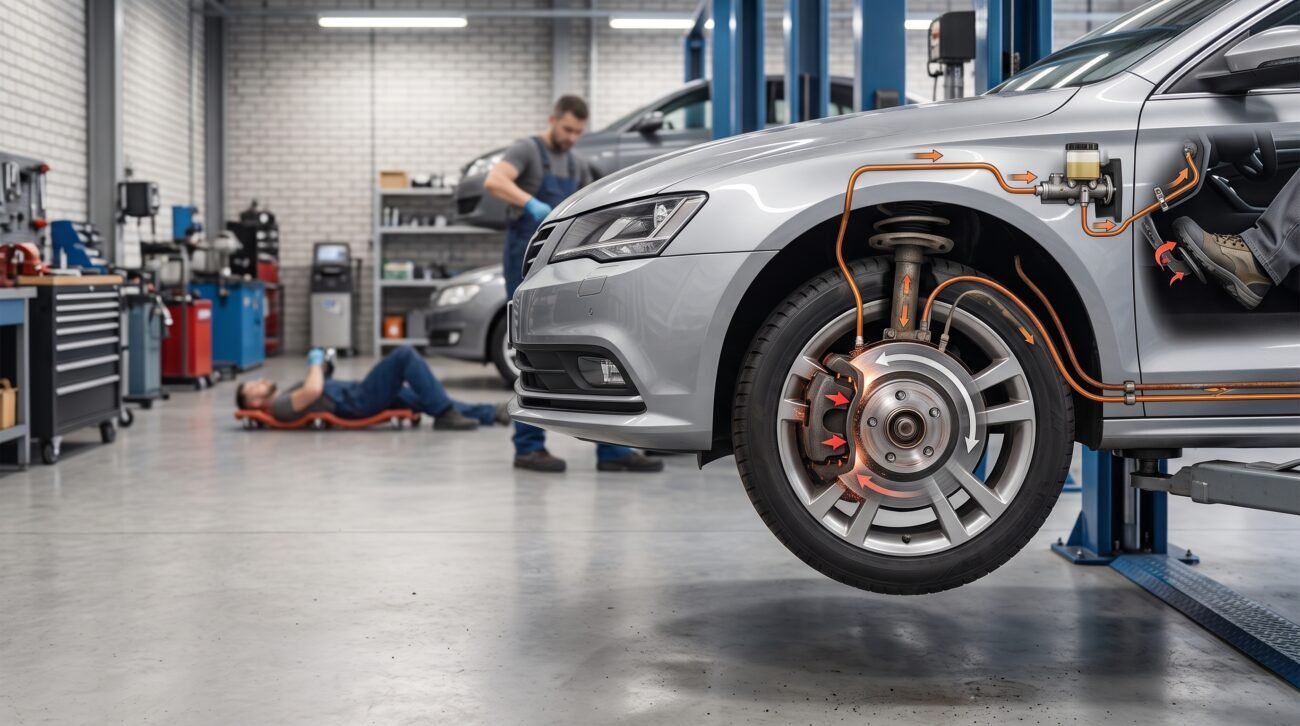
What Happens When You Press the Brake Pedal?
Pressing the brake pedal moves a mechanism connected to the master cylinder.
The master cylinder converts pedal force into hydraulic pressure. Brake fluid then carries this pressure through the hydraulic system toward the brakes at the wheels.
At a disc brake, hydraulic pressure causes the caliper pistons to push the brake pads against the rotor.
At a drum brake, hydraulic pressure can operate a wheel cylinder, which moves the brake shoes against the inside of the drum.
The result is friction that slows the rotating wheels.
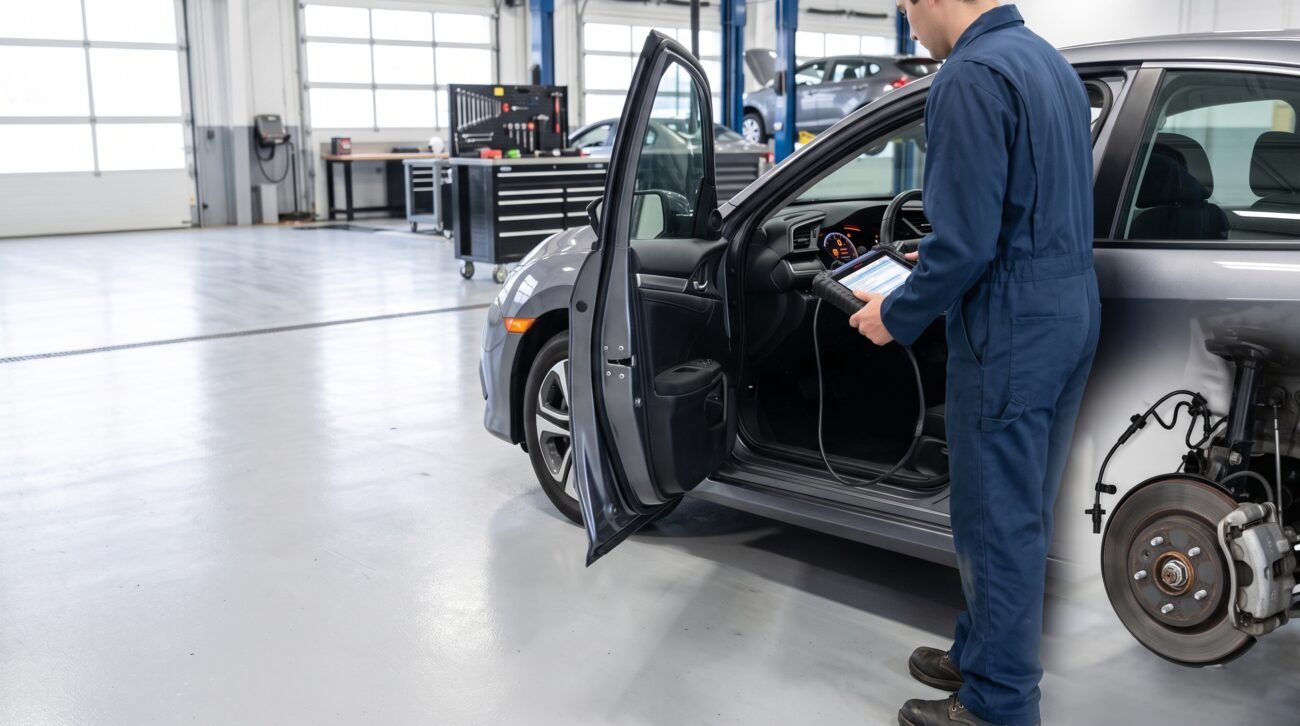
Modern vehicles may also include systems such as anti-lock braking systems (ABS), which can control brake pressure during hard braking to help reduce wheel lock.
What Does the Brake System Look Like Under the Hood?
Some major brake components are located in the engine compartment or near the firewall.
The exact layout varies from one vehicle to another.
Brake Fluid Reservoir
The brake fluid reservoir is a small container that stores brake fluid for the hydraulic braking system.
It is generally mounted on or near the master cylinder.
Many reservoirs are made from translucent plastic, allowing the fluid level to be viewed without opening the container.
The reservoir may have minimum and maximum markings.
If the brake-fluid level is unusually low, do not simply assume that adding fluid solves the problem. A low level can have several causes, including brake-pad wear or a hydraulic leak. The vehicle should be checked according to the manufacturer’s recommendations.
Master Cylinder
The master cylinder is a key hydraulic component.
It receives force through the brake pedal and creates hydraulic pressure in the brake system.
It is commonly located near the firewall in the engine compartment and is connected to the brake-fluid reservoir.
Several brake lines can connect to the master cylinder and carry fluid toward different parts of the braking system.
Brake Booster
Many vehicles use a brake booster to reduce the amount of pedal effort needed.
The booster is generally positioned between the brake pedal mechanism and the master cylinder.
It is commonly a round housing near the firewall.
Brake boosters can use different technologies depending on the vehicle. Many conventional vehicles use vacuum assistance, while other vehicles may use electric or hydraulic assistance.
If the brake pedal suddenly becomes much harder to press than usual, the vehicle should be inspected.
Disc Brakes vs. Drum Brakes
Disc and drum brakes both use friction to slow the vehicle, but their physical designs are different.
How Disc Brakes Look
Disc brakes have a relatively open design.
The main visible components include:
- Round rotor
- Caliper
- Brake pads
The rotor and part of the caliper can often be seen through wheel spokes.
This makes disc brakes easier to recognize from outside the vehicle.
The rotor rotates with the wheel, while the caliper and pads remain mounted to the vehicle. When the brake pedal is pressed, the pads clamp the rotor.
How Drum Brakes Look
Drum brakes have a more enclosed appearance.
The brake drum forms a housing around the internal shoes and hardware. Most of the working components are hidden when the drum is installed.
This means you usually cannot identify the condition of the shoes by simply looking at the outside of the wheel.
Disc brakes are often easier to inspect visually, while drum brakes may require removal of the drum for a detailed inspection.
What Should Healthy Car Brakes Look Like?
There is no single appearance that proves a brake system is healthy.
However, certain basic visual signs can be reassuring when combined with proper inspection and normal brake performance.
Signs of Normal Brake Components
A normally operating disc-brake assembly may have:
- A rotor without obvious severe cracks or damage
- A reasonably even friction surface
- Adequate brake-pad material
- A caliper that appears properly mounted
- No obvious brake-fluid leakage
- No severely damaged hoses or lines
Some surface rust can appear on brake rotors after a vehicle has been parked, particularly in damp conditions. This does not automatically mean the braking system is unsafe.
The important point is that normal appearance depends on the vehicle and its operating conditions.
Why Appearance Is Not Enough
A brake system can have a problem that is difficult or impossible to see from outside the vehicle.
For example, visual inspection may not reveal:
- Internal hydraulic problems
- A sticking caliper piston
- Certain hose problems
- Problems with wheel bearings
- Incorrect brake-fluid condition
- Some forms of uneven brake wear
- ABS or electronic faults
This is why brake inspection should not be based only on appearance.
If the car pulls to one side, vibrates while braking, makes unusual noises, or has a change in pedal feel, it is wise to have the vehicle checked.
What Do Bad or Worn Brakes Look Like?
Worn brakes do not always look dramatic. Sometimes the most important signs are small changes in pad thickness or rotor condition.
Here are some visible signs that may indicate a need for inspection.
Deep Grooves on the Rotor
A brake rotor can develop grooves or scoring over time.
Light surface marks may occur during normal use, but deep or unusual grooves can indicate a problem involving the rotor, brake pads, contamination, or other components.
A heavily scored rotor may not provide the smooth friction surface expected for proper braking.
Because rotor condition depends on manufacturer specifications, a mechanic should measure and inspect it before deciding whether it needs replacement or another service.
Very Thin Brake Pads
Brake pads naturally become thinner as their friction material wears.
If very little friction material remains, the pads may be approaching the end of their usable service life.
Some brake pads include wear indicators that can produce a warning noise when the pad becomes sufficiently worn. Some vehicles also use electronic pad-wear sensors.
However, not every vehicle has the same warning system.
Regular inspection is more reliable than waiting for a warning sign.
Cracks or Severe Damage
Cracks, broken components, severe corrosion, or other major physical damage should not be ignored.
A brake component with obvious structural damage can affect the braking system.
Do not attempt to judge the safety of severely damaged brakes based only on a photograph or quick visual check.
A qualified mechanic should inspect the vehicle before it is relied on for normal driving.
Uneven Brake Wear
Brake pads should generally wear in a reasonably consistent manner within the same axle and braking system.
If one pad is much thinner than another, it may point to a problem such as restricted movement, a caliper issue, or another mechanical cause.
Uneven rotor wear can also occur.
Finding uneven wear is useful because it may show that replacing only the worn component will not address the underlying problem.
How Can You See What Your Car Brakes Look Like?
If you want to know what does the brake look like in a car, the easiest place to start is usually the wheel area.
Looking Through the Wheel
If your car has disc brakes and the wheel has open spokes, you may be able to see:
- The round brake rotor
- Part of the brake caliper
- The outer edge of the brake pads
The rotor is usually the large circular metal surface.
The caliper looks like a housing around part of the rotor.
The brake pad is usually much harder to identify because much of it is hidden inside the caliper.
If the car uses drum brakes, you may see the outer drum housing instead. The brake shoes and internal springs are normally hidden.
When Wheel Removal Is Needed
A wheel may need to be removed for a more complete inspection.
Even with the wheel removed, some brake components can remain difficult to inspect without additional disassembly.
For example, the inner surface of a rotor or the full thickness of a brake pad may not be easy to evaluate from one angle.
If you are unfamiliar with brake systems, it is safer to have a qualified mechanic inspect them rather than trying to remove or disassemble brake components yourself.
Brake systems are safety-critical components.
FAQ
What does the brake look like in a car?
A car brake can look different depending on the braking system. A disc brake normally has a round metal rotor with a caliper and brake pads around it. A drum brake has a round enclosed drum with brake shoes and other components inside.
What does a brake rotor look like?
A brake rotor looks like a large, round, flat metal disc mounted behind the wheel. Some rotors are solid, while others have internal ventilation channels.
What do brake pads look like?
Brake pads are relatively small components with a metal backing plate and friction material. They fit inside the brake caliper and press against the rotor during braking.
What does a brake caliper look like?
A brake caliper usually looks like a metal housing or clamp positioned around part of the brake rotor. It holds the brake pads and uses hydraulic pressure to apply them to the rotor.
Are disc and drum brakes different?
Yes. Disc brakes use a rotor and caliper with pads that press against the rotor. Drum brakes use brake shoes that press against the inside of a rotating drum.
How can I tell if my brakes are worn?
You may notice thin brake-pad material, deep rotor grooves, unusual discoloration, or other visible damage. Other signs include unusual brake noise, vibration, pulling, or changes in pedal feel. A proper inspection is the best way to determine brake wear.
Can I see my brake pads through the wheel?
Sometimes. On some vehicles, part of the brake pad can be seen through the wheel spokes. However, the wheel design and caliper position may block the view, so a complete inspection may require removing the wheel.
Can I see drum-brake shoes without removing the drum?
Usually, no. The shoes and most of the drum-brake mechanism are enclosed inside the brake drum. Detailed inspection generally requires access to the inside of the assembly.
Why do brake rotors sometimes look rusty?
Brake rotors can develop surface rust when exposed to moisture, especially when the vehicle has been parked. Light surface rust may disappear from the braking surface after normal use, but heavy corrosion or other damage should be inspected.
Do all four wheels use disc brakes?
No. Brake configurations vary by vehicle. Some cars use disc brakes at all four wheels, while others use disc brakes on the front and drum brakes on the rear.
Is it safe to judge brake condition by looking at them?
No. A visual check can reveal obvious problems, but it cannot identify every brake fault. Hydraulic, mechanical, electronic, or internal problems may require a professional inspection.
Final Thoughts
So, what does the brake look like in a car? It depends on the type of braking system.
With disc brakes, the most recognizable parts are the round brake rotor, the caliper around the rotor, and the brake pads inside the caliper. Brake lines carry hydraulic fluid to the braking components.
With drum brakes, the main visible part is the round brake drum. The brake shoes, wheel cylinder, springs, backing plate, and adjuster are mostly hidden inside the drum.
You may be able to see disc-brake components through the wheel, but a quick look cannot confirm that the brakes are safe. Deep rotor grooves, very thin pads, cracks, severe damage, leaks, or uneven wear deserve attention.