
If you are wondering how much to fix anti lock brake system, the answer depends on which ABS component has failed, your vehicle’s make and model, labor rates, and the type of replacement part needed. A simple ABS sensor or wiring repair may cost much less than replacing an ABS control module or hydraulic unit.
For many vehicles, a basic ABS repair may cost roughly $100 to $300, while more complex repairs can reach $500 to $1,500 or more. These are broad estimates, not fixed prices. Luxury vehicles, newer vehicles, and models with expensive integrated ABS units can cost considerably more.
The most important step is diagnosis. An illuminated ABS warning light does not automatically mean the ABS module or pump has failed. A faulty wheel-speed sensor, damaged wire, loose connector, blown fuse, or tone ring can create similar symptoms.
Understanding how much to fix anti lock brake system starts with finding the actual fault. Once the problem is identified, a repair shop can give you a much more useful estimate.
How Much Does It Cost to Fix an Anti-Lock Brake System?
There is no single price for ABS repair because the anti-lock braking system contains several components. The final bill depends on the failed part and how difficult it is to access and replace.
Average ABS Repair Cost
A typical ABS diagnostic scan may cost around $50 to $150, although some shops charge more or apply the diagnostic fee toward the repair.
A minor ABS repair, such as replacing a sensor or repairing a damaged connector, may fall in the $100 to $350 range. More involved electrical repairs can cost several hundred dollars.
An ABS control module or hydraulic unit can be much more expensive. Depending on the vehicle, part availability, labor, programming, and whether the part is new, rebuilt, or used, the total can reach $500 to $1,500+.
So, when considering how much to fix anti lock brake system, it helps to separate the cost into three areas:
- Diagnosis
- Parts
- Labor
For example, imagine a vehicle has a failed wheel-speed sensor. A shop may charge for an ABS scan, replace the sensor, clear the fault code, and perform a road test. That is very different from replacing an ABS hydraulic control unit.
ABS Repair Cost by Problem
The following figures are general U.S. repair estimates. Actual prices vary widely by vehicle and location.
| ABS Problem | Approximate Total Repair Range |
|---|---|
| ABS diagnostic scan | $50–$150 |
| ABS wheel-speed sensor | $100–$350 |
| Wiring or connector repair | $75–$400+ |
| Fuse or relay | $20–$150 |
| Tone/reluctor ring | $150–$500+ |
| ABS control module | $500–$1,500+ |
| ABS hydraulic pump/unit | $600–$1,500+ |
| Related brake component repair | $100–$800+ |
These numbers are planning ranges rather than guaranteed prices. Some vehicles use an ABS sensor that is easy to replace, while others require additional disassembly.
If you are researching how much to fix anti lock brake system, do not assume the highest number applies to your vehicle. Diagnosis should come first.
ABS Diagnostic Cost
An ABS diagnostic test is different from a basic engine-code scan.
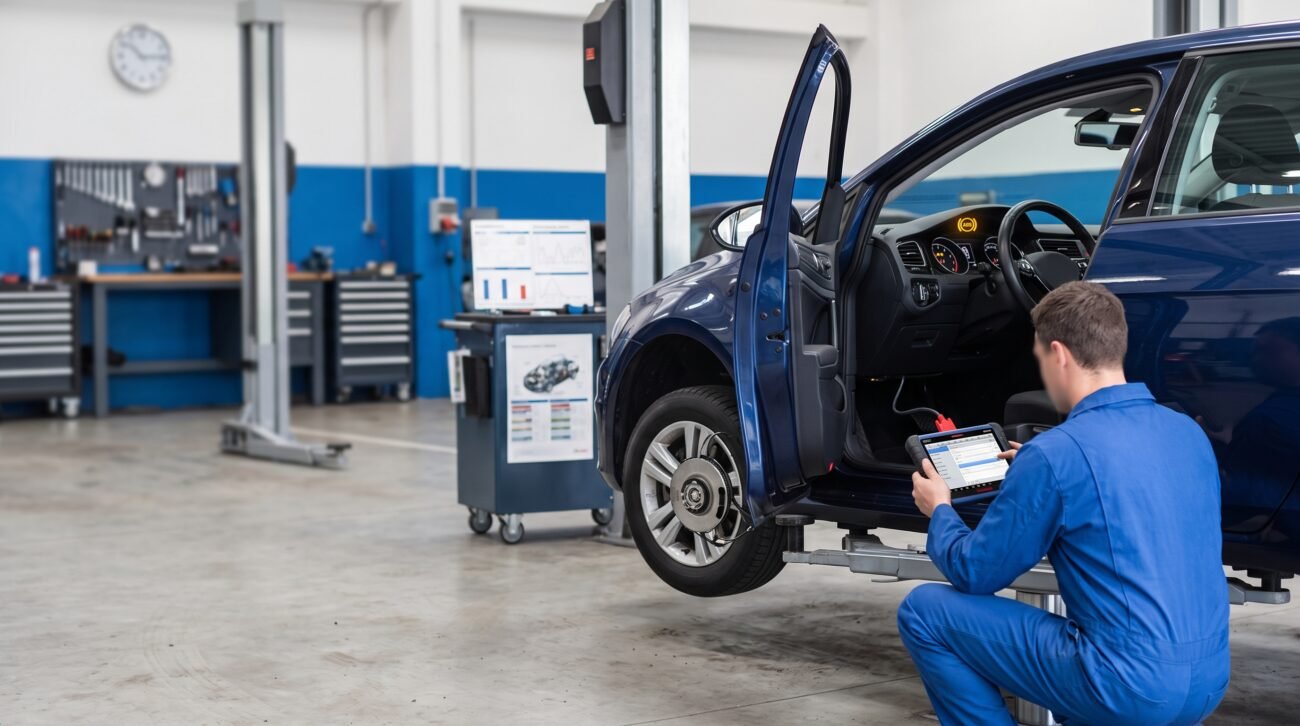
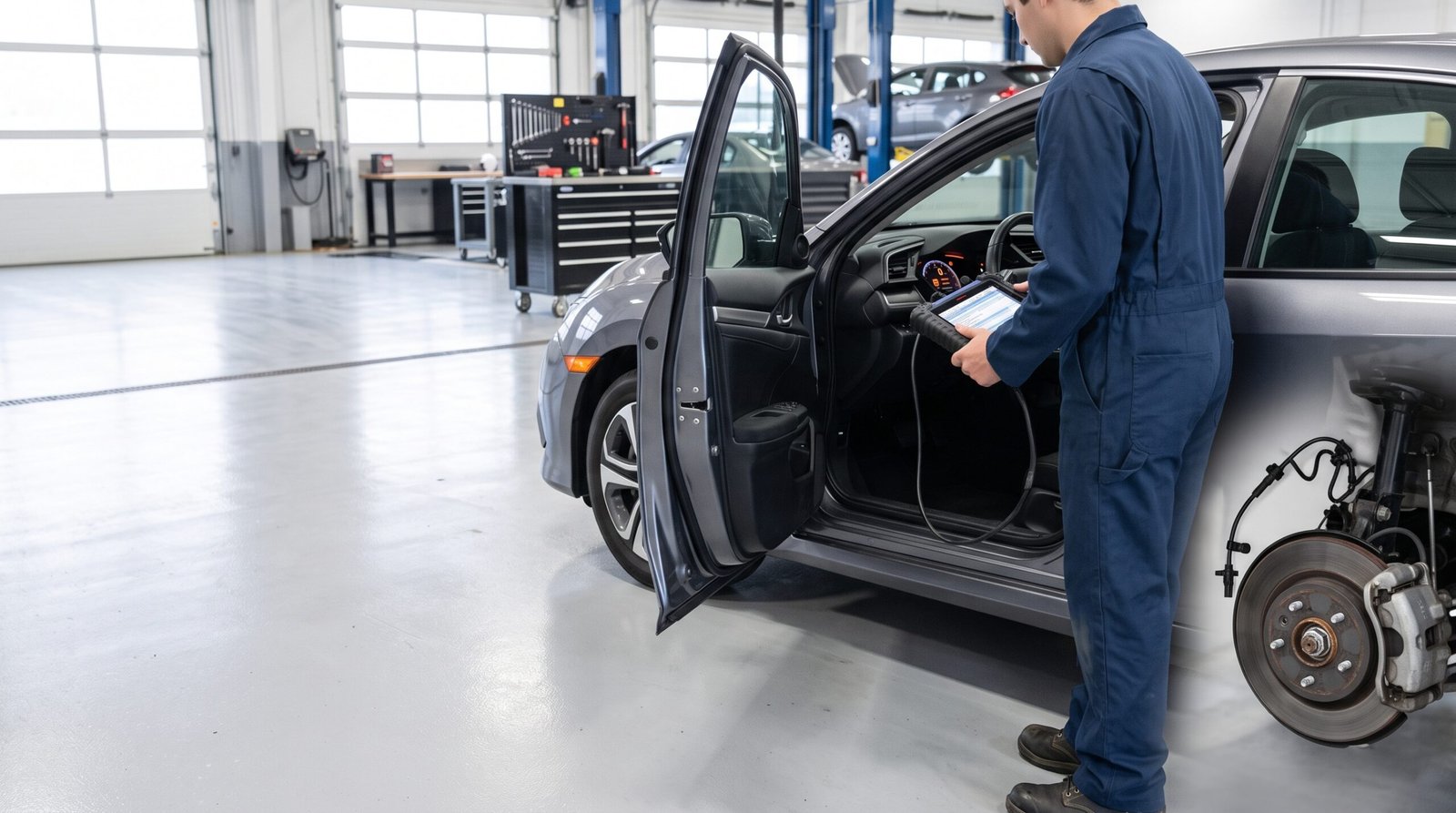
A technician normally connects a scan tool that can communicate with the vehicle’s ABS module. The technician may retrieve diagnostic trouble codes, review wheel-speed data, inspect wiring, and perform additional tests.
For example, an ABS code may indicate a problem with the left-front wheel-speed sensor circuit. That does not always prove the sensor itself is bad. The technician still needs to check the sensor, connector, wiring, wheel bearing, and related components.
Some shops charge a separate diagnostic fee. Others reduce or waive the fee if you authorize the repair.
A proper diagnosis can actually save money because it reduces the chance of replacing a good part.
Common Anti-Lock Brake System Problems
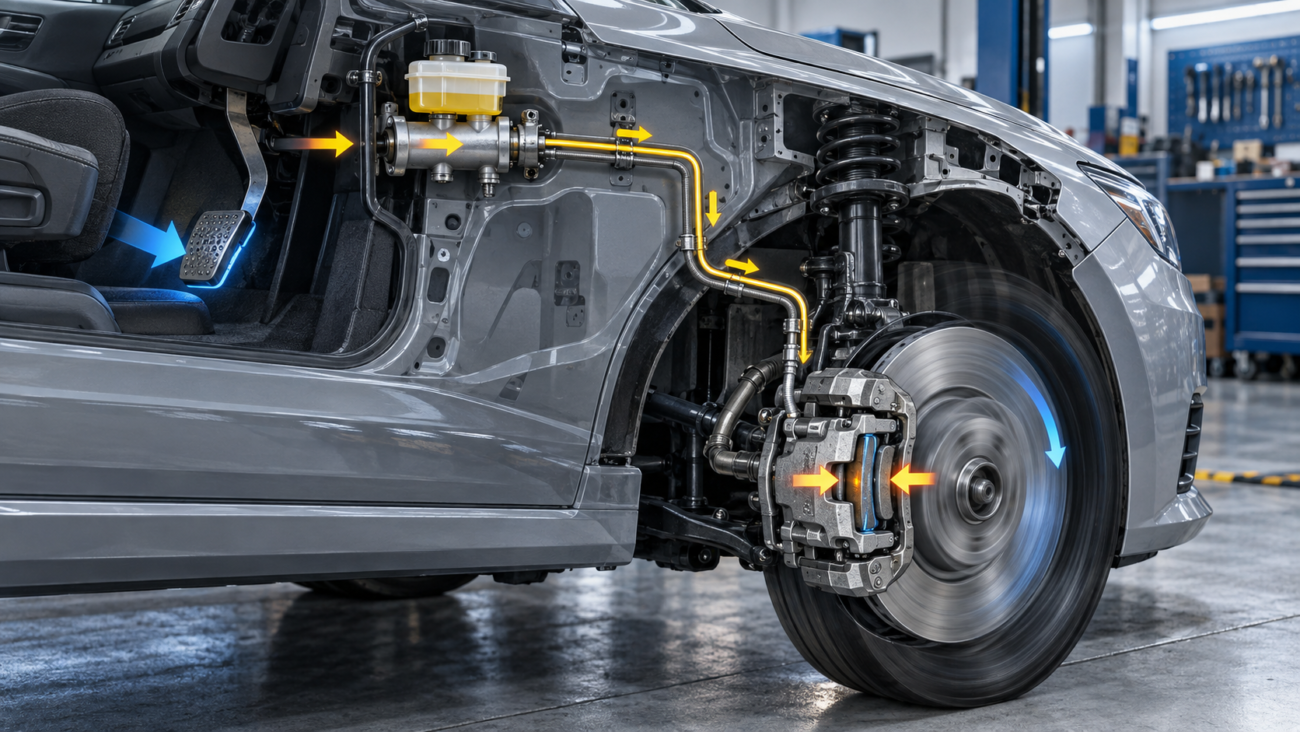
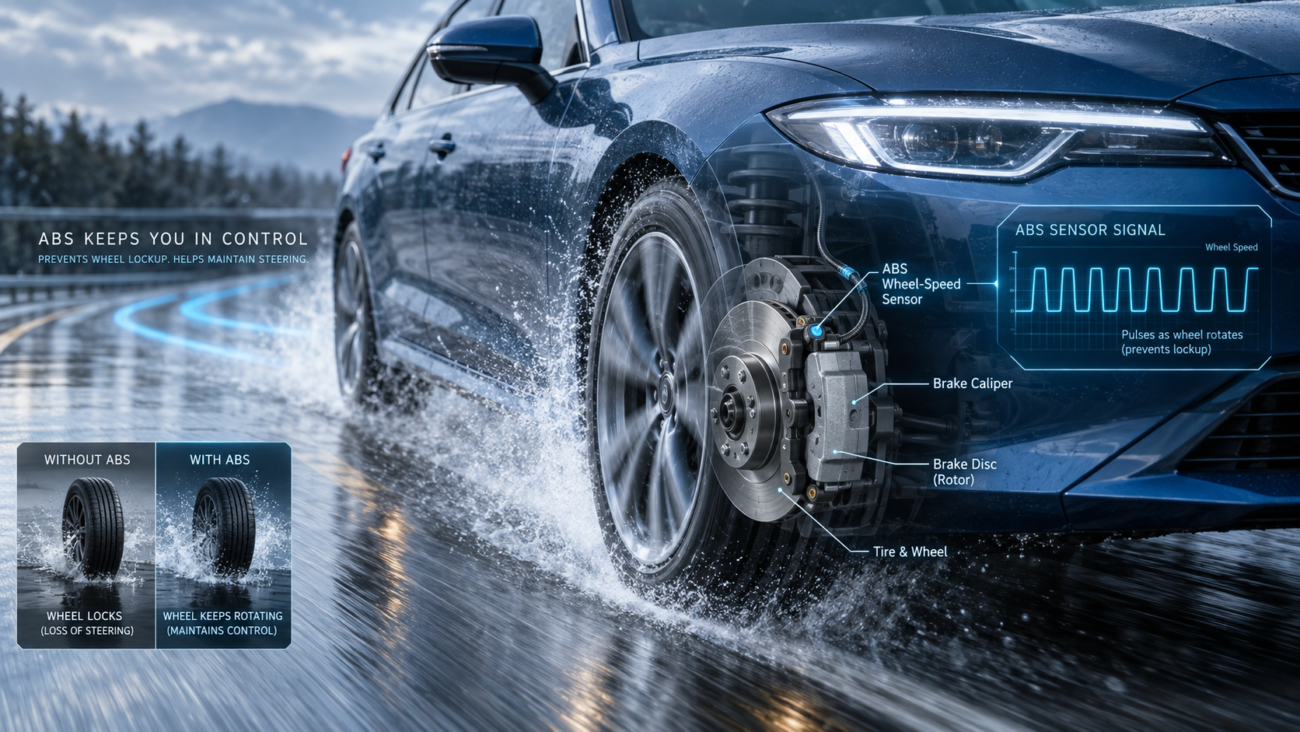
The ABS system monitors wheel speed and uses electronic controls to help prevent wheel lock during hard braking. Several different parts can cause an ABS warning light.
Faulty ABS Wheel-Speed Sensor
Wheel-speed sensors are among the most common causes of ABS warning lights.
These sensors monitor how fast individual wheels are turning. The ABS control unit compares the signals from the wheels and uses that information to control braking pressure when necessary.
A failed sensor may cause:
- ABS warning light
- Traction-control warning light
- Stability-control warning light
- ABS system deactivation
- Stored ABS trouble codes
- Loss of certain driver-assistance functions
Sensors can fail because of age, contamination, corrosion, damaged wiring, physical damage, or problems with the wheel bearing or reluctor ring.
Sensor replacement is often less expensive than module or hydraulic-unit replacement. However, the exact price depends on sensor location and vehicle design.
If you are estimating how much to fix anti lock brake system, a wheel-speed sensor is one of the less expensive possibilities.
Damaged ABS Wiring or Connectors
ABS wiring runs close to the wheels and suspension, where it can be exposed to moisture, dirt, road debris, heat, and movement.
A wire may become damaged or a connector may develop corrosion. A loose connection can also interrupt the sensor signal.
A wiring problem may cause an intermittent ABS light. The warning light might disappear and return later, especially when the vehicle travels over bumps or when the wiring moves.
A technician may repair a damaged section of wire or replace a connector instead of replacing the complete wiring harness.
The cost depends on how easy the damaged area is to access. A simple connector repair may be relatively inexpensive, while a difficult harness repair can require more labor.
Failed ABS Control Module
The ABS control module is the electronic brain of the anti-lock braking system. It receives information from wheel-speed sensors and controls the hydraulic system.
A failed module may produce multiple ABS-related fault codes. You may also see traction-control or stability-control warnings.
Module problems can be more expensive because the part itself may be costly. Some vehicles also require programming, coding, or calibration after module replacement.
Depending on the vehicle, a specialist may be able to repair or rebuild a module. However, compatibility and warranty coverage are important.
Before approving an expensive module replacement, ask the technician what tests confirmed the module has failed.
ABS Pump or Hydraulic Unit Failure
The ABS hydraulic unit controls brake fluid pressure for the individual wheels during ABS operation. Many systems combine the hydraulic unit, pump, valves, and electronic control module into one assembly.
A hydraulic problem can be more expensive because the unit may be difficult to access and replace.
The repair may also require:
- Removing the defective unit
- Installing the replacement
- Connecting brake lines
- Bleeding the brake system
- Performing electronic setup or calibration when required
- Clearing fault codes
- Testing the system
This is why how much to fix anti lock brake system can vary from a modest sensor repair to a four-figure repair.
What Affects the Cost of ABS Repairs?
The same ABS problem can have very different prices on different vehicles.
Vehicle Make and Model
Parts availability is a major factor.
A common vehicle may have many replacement sensors and modules available from several suppliers. A less common model may require a special-order part.
Luxury and performance vehicles can also have higher parts and labor costs. Some newer vehicles combine several electronic functions into integrated modules.
When asking how much to fix anti lock brake system, always provide the repair shop with the exact year, make, model, engine, and sometimes trim level.
Labor Rates
Labor rates vary between repair shops and regions.
Independent repair shops often have different hourly rates from dealerships. A dealership may have higher labor costs, but it may also have direct access to manufacturer diagnostic equipment and vehicle-specific information.
An independent shop with strong ABS diagnostic experience can also be an excellent option.
Ask whether the estimate includes:
- Diagnostic labor
- Repair labor
- Parts
- Brake fluid
- Programming
- Calibration
- Taxes and shop fees
This makes estimates easier to compare.
OEM vs. Aftermarket Parts
OEM means Original Equipment Manufacturer. These parts are generally designed to meet the vehicle manufacturer’s specifications.
Aftermarket parts come from other manufacturers. Quality varies between brands.
A quality aftermarket ABS sensor can be a reasonable choice for some vehicles. However, extremely cheap parts may have poor fit, durability, or signal quality.
Before choosing a part, ask about the warranty. A slightly more expensive part with a good warranty may provide better value than the cheapest option.
Severity of the Problem
The failed component has a major effect on the bill.
A simple sensor replacement may be straightforward. A damaged wiring harness can require detailed electrical testing. A control module or hydraulic unit can involve expensive parts, programming, and brake bleeding.
That is why two drivers with the same ABS warning light may receive completely different repair estimates.
ABS Repair Cost vs. ABS Replacement Cost
Not every ABS problem requires replacing a major component.
A technician should determine whether the faulty part can be repaired safely before recommending replacement.
When an ABS Component Can Be Repaired
Some electrical problems can be repaired instead of replacing an entire assembly.
Examples include:
- Damaged wiring
- Loose connectors
- Corroded terminals
- Broken sensor wiring
- Certain fuse or relay problems
For example, if a wire near a wheel has been damaged but the sensor itself is working correctly, repairing the wiring may solve the problem.
However, brake and ABS repairs should be performed correctly. A poor electrical repair can cause another intermittent fault.
When Replacement Is Usually Needed
Replacement is generally more likely when a component has an internal failure or physical damage that cannot be repaired reliably.
Examples include:
- Failed wheel-speed sensor
- Internally damaged ABS module
- Defective hydraulic valve assembly
- Failed ABS pump
- Severely damaged reluctor ring
A replacement component should be compatible with the vehicle. Some electronic modules require programming after installation.
If you are comparing how much to fix anti lock brake system, ask whether the estimate is for repair, replacement, or rebuilding. These options can have very different prices.
Can You Drive With the ABS Warning Light On?
An ABS warning light should not be ignored.
In many vehicles, a steady ABS warning light means the anti-lock function has detected a fault and may be disabled. The regular hydraulic brakes may still operate, but the vehicle may not have normal ABS protection during emergency braking.
The exact behavior depends on the vehicle and the fault.
What Happens When ABS Stops Working?
ABS is designed to help prevent the wheels from locking during hard braking. When the ABS system is disabled, normal braking may still work in many vehicles, but the anti-lock function may not.
Other systems may also be affected.
Modern vehicles often integrate ABS with:
- Traction control
- Electronic stability control
- Hill-start functions
- Certain driver-assistance features
Therefore, several warning lights may appear together.
If your vehicle has only an ABS warning light and the brake pedal feels normal, you may still have basic braking ability. However, you should arrange an inspection as soon as practical.
When You Should Stop Driving
Do not continue driving if you notice serious brake symptoms.
Stop driving and seek professional assistance if:
- The red brake warning light is also illuminated
- The brake pedal feels unusually soft or hard
- Braking performance is reduced
- The vehicle pulls strongly while braking
- Brake fluid is leaking
- You hear severe or unusual braking noises
- The pedal goes unusually close to the floor
These symptoms can indicate a problem beyond the ABS electronics.
The question of how much to fix anti lock brake system becomes less important than brake safety when braking performance has changed.
How to Diagnose an Anti-Lock Brake System Problem
A systematic diagnosis is better than replacing parts based only on symptoms.
Check the ABS Warning Light
The ABS warning light normally looks like the letters “ABS” inside a circle or similar symbol, depending on the vehicle.
When the ignition is switched on, the light may illuminate briefly as part of a system check. It should normally turn off after the vehicle starts if no fault is detected.
If it stays on, the system has detected a problem.
Check your owner’s manual because warning-light meanings can differ by vehicle.
Scan for ABS Trouble Codes
A basic engine scanner may not communicate with the ABS module.
A proper diagnostic tool can access the ABS system and retrieve stored codes. These codes provide useful clues about the affected circuit or component.
However, a trouble code is not always a direct instruction to replace a part.
For example, a wheel-speed sensor code could be caused by:
- Failed sensor
- Broken wire
- Corroded connector
- Damaged tone ring
- Wheel-bearing problem
- Incorrect sensor installation
A technician should test the circuit before replacing the component.
Inspect ABS Sensors and Wiring
A visual inspection can reveal obvious problems.
Look around the wheel area for:
- Broken sensor wires
- Loose connectors
- Corrosion
- Physical damage
- Missing clips
- Contamination
- Signs of rubbing
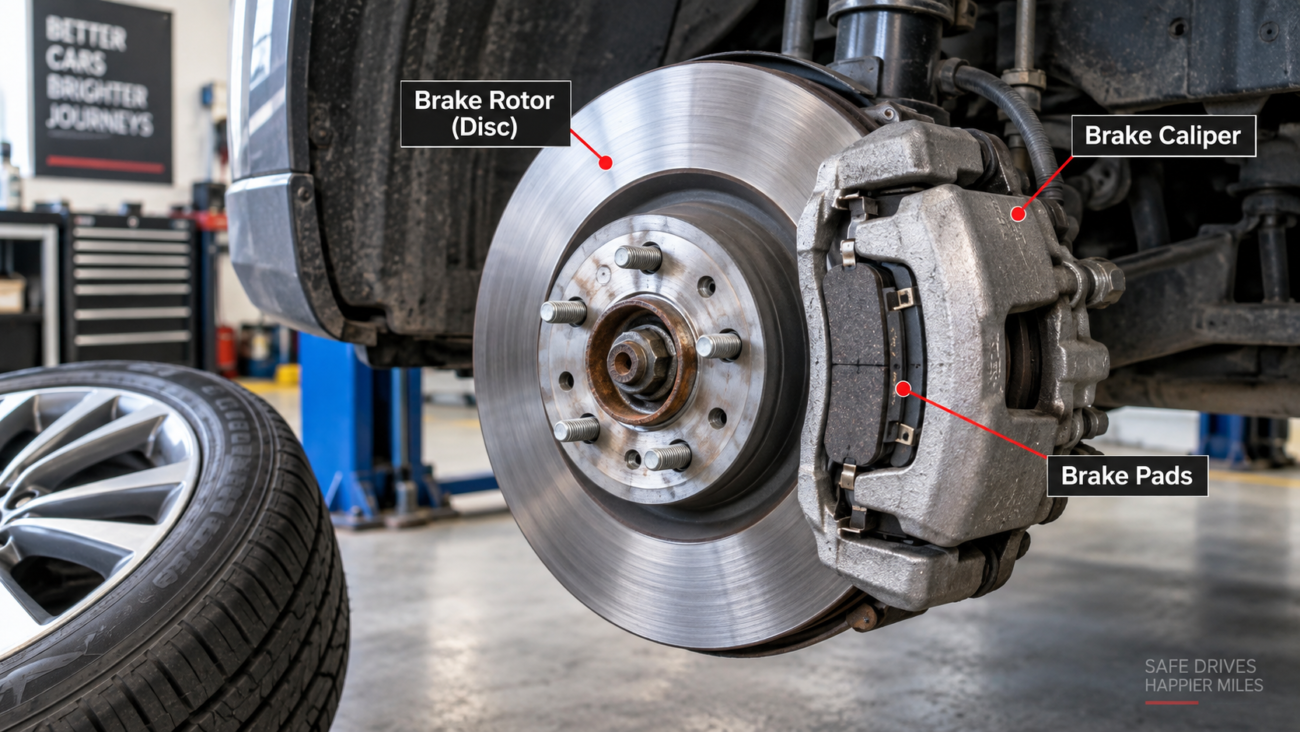
A technician may also inspect the tone ring and wheel bearing because these parts can affect the sensor signal.
This step can sometimes identify a relatively inexpensive repair before an expensive component is considered.
How to Save Money on ABS Repairs
ABS repairs can be expensive, but there are safe ways to control costs.
Get a Proper Diagnosis First
Do not replace an ABS sensor simply because the warning light is on.
The warning light tells you that a fault has been detected. It does not always tell you which physical component needs replacement.
Paying for an accurate diagnosis can prevent unnecessary parts replacement.
This is especially important when considering how much to fix anti lock brake system because replacing several parts without testing can quickly increase the bill.
Compare Repair Shop Estimates
If the repair is not an emergency, consider getting estimates from more than one reputable shop.
Ask each shop to provide:
- Diagnostic findings
- Part name
- Part price
- Labor hours
- Labor rate
- Programming costs
- Brake bleeding costs
- Warranty information
Suppose one shop estimates $850 and another estimates $1,100. The cheaper estimate may not necessarily be better. One may be using a rebuilt module while the other uses a new OEM part.
A detailed estimate helps you compare the actual work.
Consider Quality Aftermarket Parts
Aftermarket parts can reduce repair costs when a reputable manufacturer makes the component.
For some sensors and electrical components, aftermarket options can offer reasonable value.
However, avoid choosing a part based only on the lowest price. ABS components are part of an important vehicle safety system.
Ask the repair shop which brands they trust and what warranty is included.
DIY ABS Repair: Is It Worth It?
Some basic inspection tasks may be suitable for an experienced vehicle owner. More complex ABS work is better left to a qualified technician.
Repairs You May Be Able to Inspect Yourself
If you are comfortable working around your vehicle, you may be able to perform basic visual checks.
You can inspect:
- ABS fuses listed in the owner’s manual
- Visible sensor wiring
- Loose connectors
- Obvious physical damage
Always switch the vehicle off and follow the owner’s manual. Do not disconnect safety-system components without knowing the correct procedure.
A visual inspection cannot replace electronic diagnosis.
Repairs Better Left to a Professional
ABS module replacement, hydraulic work, brake bleeding, and advanced electrical diagnosis can require specialized tools and knowledge.
A professional may need:
- ABS-capable scan equipment
- Electrical testing equipment
- Manufacturer repair information
- Brake bleeding equipment
- Programming equipment
- Calibration procedures
Brake fluid and hydraulic systems also require careful handling.
If the repair involves opening the hydraulic brake system, it is usually best to have the work completed by a qualified professional.