

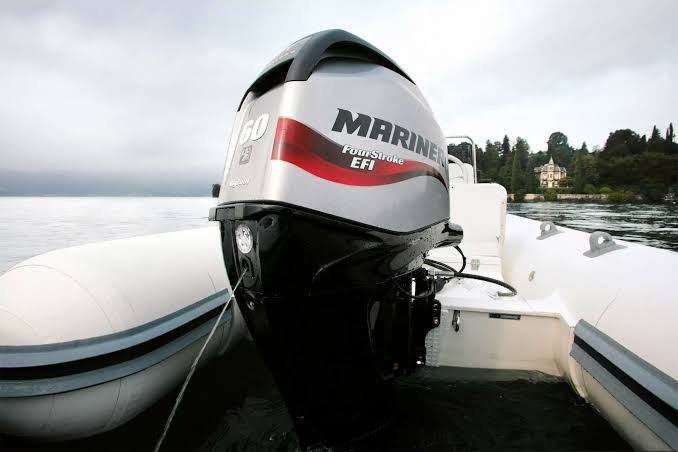
If you have ever searched for an older outboard motor, you may have come across the Mariner name. The logo can look familiar, the engine may resemble a Mercury, and the model information can sometimes leave buyers wondering about its actual origins.
That leads to an important question: who makes Mariner outboard motors?
The short answer is that Mariner outboards have a strong historical connection with Mercury Marine. Mercury Marine’s own corporate documentation identifies Mariner as one of its outboard brands. Mercury Marine itself is the marine engine division of Brunswick Corporation.
However, the complete story is more interesting than simply saying that Mariner and Mercury are the same thing.
Mariner was developed and marketed as a separate outboard brand, while sharing important manufacturing, engineering, and technology connections with Mercury over different periods. This is why boat owners can sometimes find Mariner engines that have similarities to Mercury models.
For anyone researching a used Mariner, understanding this relationship can make the engine much easier to identify and evaluate.
In this guide, we will explore who made Mariner outboards, how the brand became connected to Mercury, what happened to the Mariner name, whether these engines are reliable, how to identify an older model, and what buyers should know before purchasing or maintaining one.
Who Makes Mariner Outboard Motors?
Mariner outboard motors are historically associated with Mercury Marine, which is part of Brunswick Corporation.
Mercury Marine’s supplier documentation specifically lists Mariner among its outboard brands. The same documentation describes Mercury Marine as the marine engine division of Brunswick Corporation and notes that Mercury began producing outboard motors in 1939.
This relationship explains why many Mariner engines share characteristics with Mercury outboards.
However, it is important not to assume that every Mariner model is simply a Mercury engine with a different sticker. Different models, markets, production periods, and specifications can vary.
When researching a particular Mariner, the model number, serial number, horsepower, production period, and component information are much more useful than the brand name alone.
Is Mariner the Same as Mercury?
This is one of the most common questions surrounding the brand.
The easiest way to understand it is to think of Mariner as a separate brand with a close historical relationship to Mercury Marine.
Mercury Marine has produced and marketed outboard engines under the Mariner name, and historical examples show Mercury and Mariner versions of related engines.
For example, period marine coverage documented Mercury and Mariner versions of certain direct-injection outboards.
That does not mean every part of every Mariner is identical to a Mercury-branded engine.
Manufacturing arrangements and specifications changed over time, so anyone looking for replacement parts should verify compatibility using the exact model and serial information.
The Fascinating History Behind Mariner Outboards
To understand Mariner, it helps to understand Mercury first.
Mercury Marine’s history goes back to 1939, when Carl Kiekhaefer became involved with outboard engines after acquiring a manufacturing facility in Wisconsin. Mercury later developed into one of the world’s major marine propulsion companies.
The company’s history became closely associated with engineering, racing, performance, and outboard innovation.
Over the decades, Mercury expanded its product offerings and developed technologies for different types of boaters.
Mariner became part of that broader outboard story.
Why Create Another Outboard Brand?
A separate brand can be useful for reaching different markets.
Outboard manufacturers have historically used different brand names for various markets, dealers, and customer groups.
Mariner became particularly recognizable in markets outside the United States and in certain international boating communities.
This allowed customers to encounter Mariner-branded engines even when the underlying company and engineering relationship pointed back toward Mercury.
Shared Engineering and Manufacturing
The relationship between Mariner and Mercury is one reason older Mariner engines can look familiar to people who know Mercury products.
Some engines used similar powerheads, gearcases, controls, and other components depending on the specific generation.
Historical marine coverage also documented engines being offered under both Mercury and Mariner branding.
Still, it is better to verify an individual engine instead of assuming that two engines are interchangeable simply because their brand names are related.
Mercury Marine’s Long Outboard Legacy
Mercury’s history provides important context for understanding Mariner.
Mercury Marine began producing outboards in 1939 and became known for engineering and performance. Its development included both recreational engines and engines used in demanding performance applications.
The company also developed a strong relationship with boat racing.
Racing provided manufacturers with a way to test ideas under demanding conditions and build a reputation for performance.
That culture became an important part of Mercury’s identity.
From Early Outboards to Modern Technology
Outboard technology has changed dramatically over the decades.
Early engines were relatively simple compared with today’s electronically controlled motors.
Modern engines can include electronic fuel injection, digital controls, advanced monitoring systems, and sophisticated engine-management technology.
Mercury’s current product information demonstrates how far outboard technology has developed, with modern engines covering everything from small portable models to very high-horsepower applications.
Mariner engines found on the used market belong to different generations of this long technological evolution.
Are Mariner Outboards Good Engines?
The answer depends heavily on the specific engine.
A well-maintained Mariner can still be a useful and dependable outboard, particularly when its age, condition, and intended application are taken into account.
But an old outboard should never be judged only by its brand.
Two engines carrying the Mariner name can have completely different histories.
One may have received regular servicing and careful storage.
Another may have spent years in harsh saltwater conditions with minimal maintenance.
The difference between those two engines can be enormous.
Reliability Depends on Maintenance
Outboard engines operate in a demanding environment.
They are exposed to water, vibration, changing temperatures, fuel-system demands, and, in many cases, salt.
Regular maintenance can make a major difference.
Oil, cooling-system components, fuel-system parts, electrical connections, propellers, and lower-unit components all deserve attention.
Age Matters
Age does not automatically make an engine useless.
However, older engines can require more attention because seals, hoses, electrical components, fuel-system parts, and other components can deteriorate over time.
Parts availability should therefore be considered before purchasing an older Mariner.
Mariner Outboards and Two-Stroke Engines
Many Mariner outboards found on the used market are older two-stroke engines.
Two-stroke technology was extremely common in the outboard industry for many years.
These engines became popular because they could offer strong power while remaining relatively compact and lightweight.
They also had a simpler mechanical design than many modern electronically controlled engines.
Advantages of Older Two-Stroke Outboards
One attraction of older two-stroke engines is their relatively straightforward design.
Experienced marine technicians may be familiar with their mechanical systems, and some owners appreciate the simplicity of older technology.
However, condition remains more important than age alone.
Environmental Considerations
Modern marine engines have developed significantly in response to emissions requirements and environmental concerns.
Older two-stroke engines may not meet the same emissions standards as newer engines.
Local rules can also vary depending on where a boat is operated.
Therefore, buyers should check the applicable regulations before choosing an older engine for regular use.
Mariner vs. Mercury Outboard Motors
Comparing Mariner and Mercury can be confusing because of their close history.
The right way to approach the comparison is to look at the specific engine models, not simply the logos.
Similarities
Depending on the production period, Mariner and Mercury engines may share important components or engineering characteristics.
Historical examples show Mercury and Mariner versions of certain engines being offered during the same period.
This can be helpful when researching an older engine.
Differences
Branding, market availability, specifications, equipment, and model designations can vary.
Even when two engines appear closely related, a component that fits one model may not necessarily fit another.
That is why model and serial information is essential when ordering parts.
How to Identify a Mariner Outboard
If you own a Mariner but do not know exactly which engine you have, start by looking for its identification information.
Most outboards have an identification plate or label containing important information.
You may find details such as the model designation, serial number, horsepower information, and other manufacturing information.
Why the Serial Number Matters
The serial number can be extremely useful when researching an older engine.
It can help a dealer or technician determine the engine’s production range and identify compatible components.
Mercury’s current service systems also use product and serial ranges to identify supported outboard configurations.
If you need parts or technical assistance, providing the exact identification information is much better than simply saying that you have a Mariner outboard.
How Much Horsepower Did Mariner Outboards Have?
Mariner outboards were available across a wide range of horsepower categories during the brand’s history.
Smaller engines were suitable for lightweight boats, tenders, and small fishing boats.
Mid-range engines could power recreational fishing and cruising boats.
Larger engines were designed for bigger boats requiring considerably more propulsion.
Because Mariner models span different generations, it is important to check the exact model rather than assuming horsepower based only on the engine’s appearance.
Mariner Outboards for Fishing Boats
Fishing is one of the most common applications for older outboards.
A good fishing motor needs dependable starting, predictable performance, and appropriate fuel economy.
For anglers using an older Mariner, preventive maintenance can be especially valuable.
Before heading out, check the engine’s basic condition, fuel system, cooling system, propeller, and controls.
The goal is not simply to make the engine run.
The goal is to know that the engine is in appropriate condition for the type of trip you are planning.
Mariner Outboards for Recreational Boating
Mariner engines can also be found on recreational boats used for cruising, family outings, and general freshwater boating.
For recreational use, smooth operation and dependable starting are often more important than maximum speed.
The right propeller and appropriate engine setup can also make a noticeable difference in how the boat feels on the water.
Common Problems With Older Mariner Outboards
Like any older mechanical product, a Mariner outboard can develop problems.
Knowing the common warning signs can help owners identify issues early.
Starting Problems
Starting difficulties can come from several causes.
Fuel-system issues, battery problems, electrical connections, ignition components, or other mechanical conditions may be responsible.
Avoid guessing when the problem is unclear.
A qualified marine technician can diagnose the system more accurately.
Cooling System Problems
An outboard relies on proper cooling to maintain an appropriate operating temperature.
If water flow becomes restricted or cooling components wear out, the engine can overheat.
Overheating should always be treated seriously.
Fuel System Issues
Older fuel systems can develop problems after long periods of storage.
Fuel quality, hoses, filters, carburetor components, and other parts may need inspection depending on the engine.
Corrosion
Corrosion is particularly important for engines used in saltwater.
External corrosion can be obvious, but internal corrosion can sometimes be harder to identify.
This is another reason why a professional inspection can be valuable when buying an older outboard.
Propeller Damage
A damaged propeller can cause vibration and reduce performance.
Even a relatively small amount of damage can affect how efficiently the boat moves through the water.
How to Maintain a Mariner Outboard
Good maintenance is one of the best ways to get useful service from an older outboard.
Follow the Correct Service Information
Try to find the correct service information for your exact model.
Different engines can have different specifications and maintenance requirements.
Do not assume that information from a visually similar engine applies automatically to yours.
Check the Propeller
Inspect the propeller regularly.
Look for visible damage, unusual wear, or anything that might indicate an impact.
Maintain the Cooling System
Keep the cooling system in proper condition.
If you notice abnormal temperature behavior or other warning signs, stop and investigate rather than continuing to operate the engine without understanding the problem.
Protect Against Corrosion
Saltwater use requires particular attention.
Flush the engine according to the manufacturer’s instructions and follow appropriate corrosion-protection practices.
Store the Engine Correctly
Storage can have a major effect on an older outboard.
Fuel, moisture, temperature changes, and inactivity can all affect components.
Follow appropriate storage procedures for the specific engine.
Finding Parts for a Mariner Outboard
Parts availability is one of the biggest considerations when purchasing an older Mariner.
Because the brand has a long history, the exact age and model of the engine matter.
Some components may be easier to find than others.
Mercury Connection Can Help
The historical relationship between Mariner and Mercury can be useful when researching parts.
Mercury’s current support and service resources demonstrate the importance of identifying the exact product and serial range before working with a component.
However, never assume that a Mercury part fits a Mariner simply because the brands are connected.
Always verify compatibility.
Ask for the Exact Part Number
When possible, obtain the original part number.
This reduces confusion and makes it easier for a dealer or technician to identify the correct replacement.
Should You Buy a Used Mariner Outboard?
A used Mariner can be an interesting option for someone looking for an older outboard at a reasonable price.
But buying used requires more research than buying a new engine.
The purchase price is only one part of the equation.
You should also consider possible repair costs, parts availability, installation, maintenance, and the engine’s remaining useful life.
Inspect Before Buying
If possible, have a qualified marine technician inspect the engine.
The inspection can provide information about its general mechanical condition and identify issues that may not be obvious from the outside.
Mercury History Paragraph
Mercury Marine has a long history in the outboard industry, beginning its outboard production in 1939. Over the decades, the company developed engines for recreational boating, fishing, racing, and other marine applications. For more information about Mercury’s current products and marine technology, visit Mercury Marine.
Ask About Maintenance History
A documented maintenance history can be extremely valuable.
Ask whether the engine was regularly serviced and how it was stored.
Find out whether it was primarily used in freshwater or saltwater.
These details can help you understand what you may be buying.
What Makes a Mariner Outboard Valuable?
Not every older Mariner engine has the same value.
Several factors can influence desirability.
The exact model matters.
Horsepower matters.
Condition matters.
Maintenance history matters.
Parts availability matters.
Originality can also be important for certain older engines.
An engine that has been carefully maintained and properly stored can be much more attractive than one that has been heavily modified or neglected.
Mariner’s Place in Mercury’s Brand Family
Mercury Marine’s corporate documentation currently identifies Mariner among its outboard brands.
That is an important piece of information for anyone researching the brand.
It helps explain why Mariner and Mercury are frequently discussed together.
Mercury’s broader portfolio has evolved considerably over time, and its current product lineup is very different from the older Mariner engines commonly found on the used market.
Today, Mercury continues to develop new propulsion and digital technologies, while Mariner is primarily encountered by many buyers as a historical or used-engine brand.
Why Mariner Still Interests Boat Owners
You might wonder why an older brand still receives so much attention.
Part of the answer is simple: there are still many older boats and engines in use.
Owners want to keep them running.
Collectors may appreciate their history.
Fishing and recreational boaters may find a well-maintained used engine that fits their needs.
And people researching an engine they already own naturally want to know where it came from.
The Mercury connection makes Mariner particularly interesting from an engineering and manufacturing perspective.
Mariner Outboards and Modern Mercury Technology
It is important to separate historical Mariner products from today’s Mercury lineup.
Mercury continues to develop modern outboard technology.
The company currently offers engines across a broad horsepower range and continues to introduce new electronic and digital systems.
That does not mean an older Mariner contains the same technology.
Instead, it shows the broader evolution of the company and the marine-engine industry.
From Mechanical Controls to Digital Systems
Older outboards relied heavily on mechanical systems.
Modern engines can use electronic controls, sophisticated monitoring, and integrated digital systems.
This difference is important when comparing an older Mariner with a modern Mercury.
The newer engine may offer advantages in efficiency, convenience, emissions, and technology, while the older engine may appeal because of its simplicity and established design.
Mariner Outboard vs. Buying a New Engine
If your existing Mariner needs major repairs, you may eventually face a choice between rebuilding the old engine and replacing it.
There is no universal answer.
If the engine has sentimental or historical value, repairing it may make sense.
If you depend heavily on the boat and need modern efficiency and technology, a new outboard could be more practical.
Consider the total cost rather than looking only at the repair bill.
A major repair may be worthwhile if the rest of the engine is in excellent condition.
But if multiple major components require replacement, a newer engine may make more financial sense.
Questions to Ask Before Buying a Mariner
Before purchasing a used Mariner, ask several practical questions.
What is the exact model?
What is the serial number?
How much horsepower does it produce?
How old is the engine?
Was it used in freshwater or saltwater?
Does it have a maintenance history?
Has it been stored properly?
Are replacement parts available?
Can a qualified technician inspect it?
What repairs has it received?
Has the lower unit been serviced?
The answers can tell you much more than the Mariner badge alone.
FAQs
Who makes Mariner outboard motors?
Mariner outboards have a strong historical connection to Mercury Marine. Mercury’s own corporate documentation lists Mariner among its outboard brands and identifies Mercury Marine as the marine engine division of Brunswick Corporation.
Is Mariner owned by Mercury?
Mariner has been closely associated with Mercury Marine, and Mercury’s corporate materials identify Mariner as one of its outboard brands. The exact manufacturing and branding relationship can vary depending on the engine’s production period and market.
Are Mariner and Mercury outboards the same?
Not necessarily. Some Mariner and Mercury engines share important engineering or component relationships, but exact specifications vary by model and production period. Always verify compatibility using the engine’s model and serial information.
Are Mariner outboards reliable?
A well-maintained Mariner can still be useful and dependable, but reliability depends heavily on the individual engine’s age, maintenance, storage, corrosion exposure, and operating history.
Are Mariner outboards still made?
Mariner is primarily encountered today as a historical or used-engine brand rather than as a major current-market outboard lineup. Mercury Marine continues to manufacture and develop current outboard products under its active brands.
Can I still find parts for a Mariner outboard?
Parts availability depends on the specific engine. The model and serial number are extremely important when searching for compatible components. Some parts may be available through marine parts suppliers or Mercury-related service channels, but compatibility should always be verified.
Are Mariner and Mercury parts interchangeable?
Some components may be shared between particular models, but you should never assume interchangeability based solely on the brand relationship. Verify the exact part number and engine model before purchasing a component.
How long can a Mariner outboard last?
There is no fixed lifespan for every Mariner engine. Maintenance, operating conditions, corrosion, storage, usage, and repair history can all affect longevity. A carefully maintained engine can remain useful for many years.
Should I buy an old Mariner outboard?
It can be reasonable if the engine is in good condition, parts are available, and the price reflects its age and condition. A professional inspection is particularly useful before buying an older outboard.
Why do some Mariner outboards look like Mercury engines?
The brands have a close historical relationship, and certain Mariner and Mercury models shared engineering and manufacturing characteristics. Historical examples document related engines being offered under both brand names.
What information do I need to identify my Mariner?
Start with the model number and serial number. Horsepower, shaft length, production information, and photographs of the identification plate can also help when researching a particular engine.
Final Thoughts
So, who makes Mariner outboard motors? The answer becomes much clearer once you understand the history behind the name. Mariner has a strong connection with Mercury Marine, and Mercury’s own corporate documentation identifies Mariner as one of its outboard brands.
That connection explains why many Mariner engines share similarities with Mercury products. However, every Mariner should still be evaluated as an individual engine because specifications, components, production periods, and market versions can differ.
For anyone who owns or is considering an older Mariner, the most important information is not just the logo on the cowling. The exact model, serial number, horsepower, maintenance history, corrosion condition, parts availability, and previous use all matter.
A well-maintained Mariner can remain a useful part of a boat for years, while a neglected example may require significant investment.
The brand’s history also makes these engines interesting. Mariner represents an important chapter in the wider Mercury outboard story and in the evolution of marine propulsion.
Whether you are researching an engine already sitting on your boat or considering a used purchase, take your time and verify the details. Understanding the Mariner-Mercury connection gives you a much better starting point for making an informed decision about an older outboard.

One thought on “Who Makes Mariner Outboard Motors? Uncover the Remarkable History & Powerful Mercury Connection”