
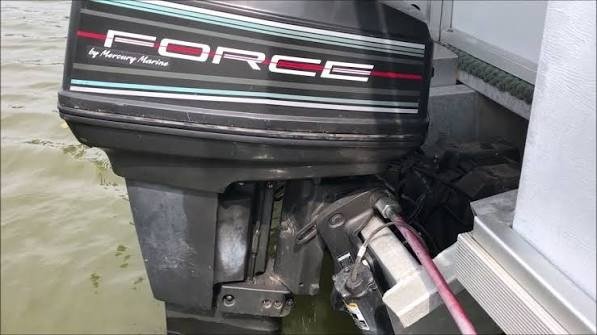
If you have ever looked at an older fishing boat or recreational boat and noticed a Force outboard motor hanging from the back, you may have wondered who actually made it. The Force name is familiar to many longtime boat owners, but its history is more complicated than simply saying that one company manufactured every Force engine.
Force outboard motors have a fascinating history that connects several important names in the marine industry. Their story involves Chrysler Marine, U.S. Marine, Bayliner, Brunswick, and Mercury Marine. Because ownership and manufacturing changed over the years, the company behind a particular Force engine can depend heavily on its production period.
The Force brand became especially popular because it offered boaters an affordable alternative to some of the more established outboard brands. Many Force engines were simple two-stroke designs that could provide useful power without the price of a premium outboard.
Today, Force outboards are no longer produced as a current brand. However, thousands of older engines are still found on boats, particularly on used boats from the 1980s and 1990s. That makes the history of Force more than just an interesting story. It can also help owners understand their engine, identify its origins, and make better decisions about maintenance and replacement parts.
So, who makes Force outboard boat motors?
The short answer is that Force outboards were produced through different ownership periods. U.S. Marine introduced the Force brand after acquiring Chrysler’s outboard business, and Brunswick later brought U.S. Marine and the Force brand under its corporate umbrella alongside Mercury Marine. By the 1990s, Mercury Marine was producing Force-branded engines, although the exact design and components varied by model and year.
Let’s explore the complete story.
Who Makes Force Outboard Boat Motors?
The answer depends on the year of the engine.
The Force brand emerged in the 1980s after U.S. Marine acquired Chrysler’s outboard operation. U.S. Marine was closely associated with Bayliner, and the new Force name was used for engines that evolved from Chrysler outboard designs.
The next major change came when Brunswick acquired U.S. Marine. Brunswick was also the parent company of Mercury Marine, bringing Force into the same broader corporate family as Mercury.
During the later Force years, Mercury Marine manufactured Force outboards and incorporated more Mercury-related components and technology into some models. A 1996 Pro-Line brochure, for example, explicitly described Force outboards as being built by Mercury Marine and positioned them as a value-oriented choice for boaters.
This history is why simply saying “Force was made by Mercury” can be incomplete.
A late Force motor may have been built by Mercury Marine, while an earlier Force motor may have been much more closely related to Chrysler’s original designs.
The best way to determine the history of a particular engine is to identify its model, serial number, horsepower, and approximate production year.
The Interesting Origins of Force Outboard Motors
To understand Force, it helps to go back before the Force name existed.
The technology and engineering behind many early Force outboards can be traced to Chrysler Marine. Chrysler had entered the marine-engine business and developed a range of outboard motors that became familiar to recreational boaters.
When the Chrysler outboard operation later changed ownership, the basic designs did not suddenly disappear. Instead, they evolved under new ownership and eventually received the Force name.
This is an important point because an older Force outboard may look like a completely different brand from a Chrysler engine, while still sharing considerable historical and engineering DNA.
The transition also demonstrates something common in the marine industry: an engine brand can change while the underlying manufacturing equipment, engineering knowledge, and designs continue into the next generation.
Chrysler Marine’s Role
Chrysler’s involvement is one of the most important pieces of the Force story.
Chrysler Marine produced outboard motors for recreational boaters and developed engines across different horsepower categories. These engines were generally designed around relatively straightforward two-stroke technology.
Two-stroke outboards were extremely common during the era when Force developed. They offered a relatively simple mechanical design and could produce useful power without the complexity associated with many modern engines.
When U.S. Marine acquired the Chrysler outboard operation, it inherited much more than a brand name. It gained manufacturing capabilities, designs, tooling, and experience that helped establish the Force line.
The Birth of the Force Brand
U.S. Marine used the Force name as it moved forward from the Chrysler era.
This helped create a fresh identity for the engines while retaining much of the existing engineering foundation.
The Force name became associated with affordable boat packages, particularly during a period when manufacturers were trying to make recreational boating more accessible.
This value-focused strategy was important.
A boater did not necessarily need the most sophisticated engine available. For many recreational applications, a relatively simple outboard that could move a boat reliably across a lake or river was attractive.
That created a market opportunity for Force.
What Was U.S. Marine?
U.S. Marine is another important name in the Force story.
U.S. Marine was closely connected with Bayliner and the recreational boating market. The company became involved with the former Chrysler outboard operation and used the Force name for its engines.
This connection is one reason Force outboards are frequently seen on older Bayliner boats.
The boat and engine were often sold together as a package, allowing customers to purchase a complete boat with an engine rather than selecting every component separately.
That approach made recreational boating easier for buyers who wanted a ready-to-use package.
Why Bayliner and Force Were Often Seen Together
Bayliner became well known for offering boats aimed at recreational consumers.
Force engines fit naturally into that strategy because they could provide an affordable source of propulsion for many of the boats being sold.
As a result, someone researching a used Bayliner from the 1980s or 1990s may encounter a Force outboard mounted on the transom.
This does not mean every Bayliner had a Force engine. Different boats were available with different power options. However, the connection between the brands is an important part of Force’s history.
Did Mercury Marine Make Force Outboard Motors?
Yes, Mercury Marine did manufacture Force-branded outboards during the later part of the brand’s history.
However, the relationship needs to be explained carefully.
Mercury did not create the Force brand from the beginning. Force existed before it became associated with Mercury Marine.
The corporate connection developed after Brunswick acquired U.S. Marine. Mercury Marine was part of Brunswick, and Force subsequently operated within that broader organization.
By the 1990s, Mercury Marine was clearly involved in manufacturing and supporting Force outboards.
A 1996 Pro-Line brochure is particularly useful historical evidence because it directly states that Force outboards were built by Mercury Marine.
That means a 1990s Force engine can have a much stronger Mercury connection than an early Force engine from the 1980s.
Were All Force Engines Made by Mercury?
No.
This is one of the most important distinctions to understand.
Force existed through several manufacturing and ownership stages. Early engines were strongly connected to Chrysler-derived designs, while later engines were manufactured under Mercury Marine’s corporate ownership.
Therefore, the phrase “Force outboard” describes a brand, not one single engine design.
A 1984 Force and a 1996 Force can be quite different internally even though both carry the same Force name.
This is why owners should avoid ordering parts based only on the word “Force.”
The exact model and serial information can make a major difference.
The Brunswick Connection
Brunswick Corporation played a major role in the later history of Force.
Brunswick has long been an important company in the marine industry, and Mercury Marine operates as part of Brunswick’s marine-engine business.
Brunswick’s historical filings describe Mercury Marine as a manufacturer and marketer of outboard engines and related marine products.
When Force became part of this broader corporate structure, it gained access to resources that were associated with Mercury Marine.
This helped explain why later Force engines can share certain components, systems, or engineering characteristics with Mercury products.
However, Force remained positioned differently in the market.
Mercury was the premium and mainstream brand, while Force was generally positioned as a more economical option.
Why Was Force Considered a Value Brand?
Force was designed to appeal to boaters who wanted useful performance without paying for every premium feature.
That positioning made sense during the era when two-stroke outboards were common.
A relatively straightforward engine could be attractive because it could be easier to understand and, depending on the repair, easier for a knowledgeable mechanic to service.
The lower price also made complete boat packages more accessible.
For many families, recreational boaters, and casual anglers, that was a significant advantage.
Simple Design Was Part of the Appeal
Older Force engines generally relied on conventional mechanical systems rather than the sophisticated electronic controls found on many modern outboards.
That simplicity could be an advantage.
There were fewer electronic systems to understand, and many components were based on established two-stroke technology.
Of course, simplicity does not automatically mean reliability.
An engine’s condition, maintenance history, storage environment, and previous repairs can have a major effect on how it performs today.
What Types of Force Outboard Motors Were Produced?
Force produced outboards in several horsepower categories.
The lineup changed over time, and different years offered different configurations.
Smaller engines were suitable for lighter boats and basic recreational use. Mid-range models could power fishing boats and family runabouts. Larger Force engines were used on bigger recreational boats that required substantially more thrust.
Most Force engines encountered today are older two-stroke gasoline outboards.
This is important because a Force owner should not expect the engine to behave exactly like a modern four-stroke outboard.
Modern Mercury products, for example, include fuel-efficient four-stroke models and advanced systems designed around current emissions requirements and modern boating expectations. Mercury’s current lineup is very different from the older Force range.
Why Were Two-Stroke Engines So Popular?
Two-stroke technology dominated many outboard categories for decades.
The basic appeal was straightforward.
Two-stroke engines could offer strong power for their size, and their mechanical design was comparatively simple.
That made them useful for marine applications where weight and compactness mattered.
During the period when Force was most active, this technology was normal rather than unusual.
The industry eventually moved strongly toward cleaner technologies, including direct fuel injection and four-stroke engines.
Mercury’s later product development illustrates this broader transition toward engines designed to meet increasingly demanding emissions requirements. Brunswick’s filings describe Mercury’s development of low-emission OptiMax and four-stroke outboards that met modern EPA requirements.
When Did Force Stop Making Outboard Motors?
Force is no longer an active outboard brand.
Production ended in the late 1990s, with many historical sources placing the end of Force production around 1999.
The discontinuation was part of a larger transformation in the outboard industry.
Environmental regulations were becoming increasingly important, and manufacturers were investing heavily in cleaner engine technologies.
For a discontinued brand such as Force, updating an older engine platform to meet changing requirements could be difficult and expensive.
Mercury instead concentrated on its own newer technologies and product families.
The result was the eventual retirement of the Force name.
Why Did Mercury Discontinue Force?
There was no single reason that explains every business decision, but changing emissions requirements and the development of newer outboard technologies were important factors in the industry’s transformation.
Older carbureted two-stroke designs faced increasing pressure from environmental regulations.
At the same time, manufacturers were investing in four-stroke technology and more advanced two-stroke systems.
Mercury’s current product history shows how dramatically the company moved toward modern low-emission engines.
For a value-oriented legacy brand like Force, maintaining a separate product line became less attractive as technology and regulations changed.
The Force brand eventually disappeared from the new-engine market.
Are Force Outboard Motors Still Available Today?
Yes, but only as used or legacy engines.
You are not likely to walk into a modern marine dealership and purchase a brand-new Force outboard.
Instead, Force engines are generally encountered on older boats, in private sales, through marine repair businesses, or as used replacement engines.
Their continued presence is partly due to the large number of boats that were originally sold with Force motors.
A well-maintained older engine can remain in service for many years.
However, age becomes increasingly important as these engines get older.
Can You Still Find Parts for Force Outboards?
Parts availability depends heavily on the specific engine.
Some components are relatively easy to source because they were shared across related engine families or reproduced by aftermarket manufacturers.
Other parts can be considerably harder to find.
This is why the model and serial number are so important.
An owner who simply searches for “Force 90 parts” may receive incomplete or conflicting information.
A precise model number gives a much better starting point.
Mercury maintains extensive product and service information for its current product families, but Force is a discontinued legacy brand, so owners should verify compatibility carefully rather than assuming that a current Mercury component fits an older Force engine. Mercury’s current service portal, for example, organizes support by product family and serial range.
How Can You Identify a Force Outboard Motor?
Identifying the exact engine is one of the smartest things an owner can do.
Start by looking for the identification plate or label.
Depending on the model, the identification information may be located around the engine mounting bracket or under the cowling.
Look for information such as:
- Force
- Horsepower
- Model number
- Serial number
- Production information
- Other identification codes
Write this information down before looking for parts.
If the engine has been repainted or modified, the identification plate can be much more useful than the appearance of the cowling.
Why the Serial Number Matters
Two Force engines with similar horsepower can have different components.
A 50-horsepower engine from one production period may not use the same parts as another 50-horsepower Force engine.
This is particularly important for electrical components, carburetors, lower units, trim systems, and other assemblies.
The serial number can help narrow down the correct configuration.
Are Force Outboard Motors Reliable?
The answer is more complicated than simply saying yes or no.
Force engines are now old enough that condition is extremely important.
A well-maintained engine that has been stored properly may perform much better than a neglected engine from the same year.
Likewise, one model may have characteristics that differ from another.
Instead of judging a Force engine solely by the name on the cowling, consider its actual condition.
Maintenance history, cooling performance, compression, electrical condition, fuel-system condition, and lower-unit health can all influence how useful an older outboard remains.
Why Engine Age Matters
Even a good engine eventually experiences wear.
Rubber components can deteriorate.
Electrical connections can corrode.
Fuel-system components can become contaminated.
Seals and gaskets can age.
Cooling passages can become restricted.
These issues are not unique to Force.
They are normal considerations when evaluating an older marine engine.
Are Late Force Motors Better Than Early Force Motors?
It would be too simplistic to say that every late Force is automatically better.
However, later Force engines benefited from the company’s evolving relationship with Mercury Marine.
Some later models incorporated Mercury-related components and systems.
This means that the exact year and model can be very important when researching a Force outboard.
An owner should therefore avoid making a buying decision based only on horsepower.
A lower-horsepower engine in excellent condition can be more useful than a higher-horsepower engine that has been neglected.
Force vs. Mercury: Are They the Same?
Force and Mercury are not simply the same brand.
They had different market identities.
Mercury became one of the major global outboard brands and continues to manufacture modern outboards today. Force was a discontinued value-oriented brand that existed primarily during the 1980s and 1990s.
However, the brands became closely connected during the later Force years because both operated under Brunswick’s corporate structure.
That relationship explains why some Force engines contain Mercury-related components.
It also explains why the phrase “Force by Mercury” appears in discussions of certain later models.
Why the Difference Matters
If you own a Force motor, you should not automatically assume that every Mercury part will fit.
Likewise, you should not assume that every Force component came from Chrysler.
The production period matters.
The model matters.
The serial number matters.
These three details can dramatically improve the accuracy of parts research.
What Happened to Chrysler Outboards?
Chrysler no longer produces outboard motors under the Chrysler Marine name.
The Chrysler outboard operation became part of the history that eventually led to Force.
That makes Force an interesting continuation of an older American outboard tradition.
The name changed, ownership changed, and engineering evolved, but the historical connection remained.
This is why collectors and enthusiasts sometimes discuss Chrysler and Force together.
The engines represent different chapters of a connected manufacturing story.
Why Do Boat Owners Still Talk About Force?
One reason is simple: there are still plenty of older boats with these engines.
Another reason is nostalgia.
Boaters who grew up using older two-stroke outboards often remember the sound, feel, and simplicity of these engines.
Force also represents an interesting period in boating history when manufacturers were trying to offer complete boat-and-engine packages at accessible prices.
For collectors, mechanics, and owners of older boats, understanding Force can therefore be surprisingly valuable.
Should You Buy a Boat With an Old Force Outboard?
Buying an older boat is a decision that should be based on the entire package, not simply the engine brand.
A boat with an older Force outboard may still be useful if the engine has been properly maintained and the rest of the boat is in good condition.
On the other hand, an inexpensive boat can become expensive if the engine needs major repairs and replacement parts are difficult to source.
The best approach is to investigate the exact motor.
Find the identification information.
Learn its approximate production year.
Check whether parts are available.
Review the engine’s maintenance history.
Most importantly, have the engine evaluated by a qualified marine professional before making a major purchase.
Common Maintenance Considerations for Older Force Motors
Older outboards need thoughtful maintenance.
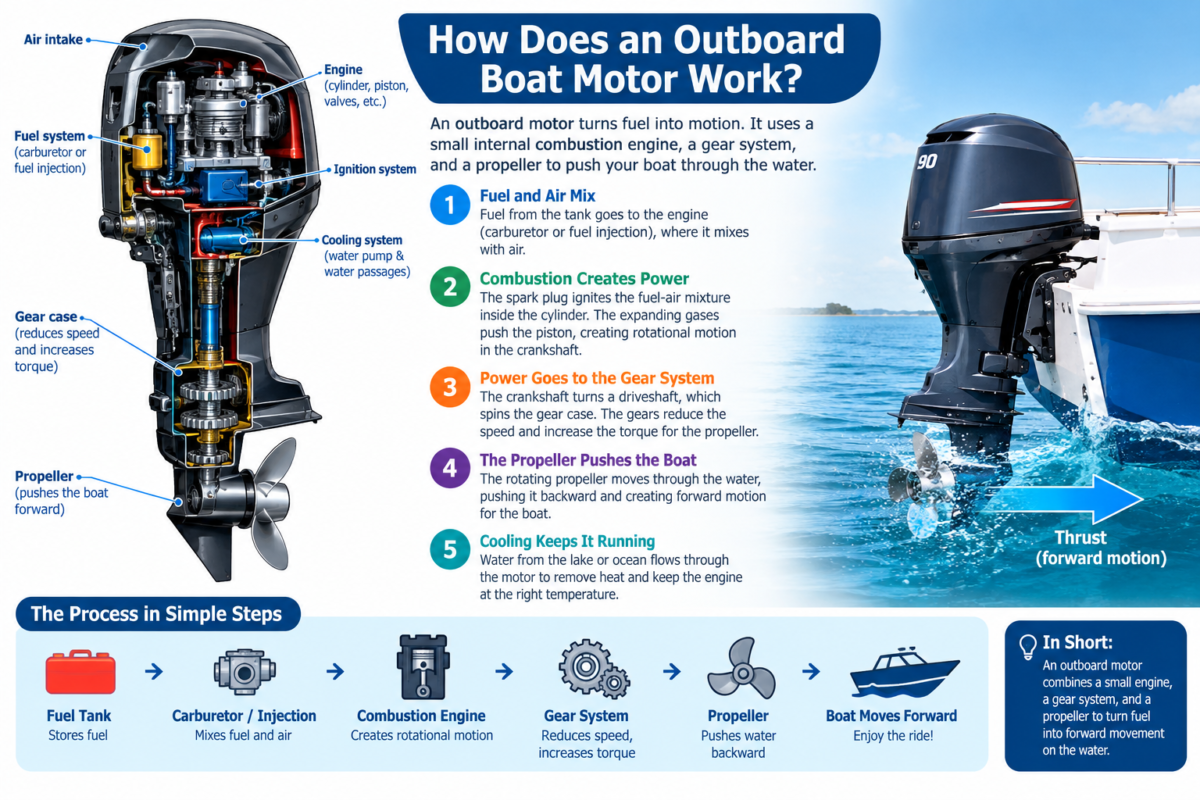
The cooling system deserves particular attention because an outboard relies on water circulation to control operating temperature.
The fuel system is also important, especially on an engine that has spent long periods sitting unused.
Electrical connections can develop corrosion over time, particularly on boats exposed to moisture or saltwater.
The lower unit should also be inspected because it contains important gears, seals, and lubrication.
Spark plugs, hoses, fuel-system components, and other wear items should be checked according to the engine’s service requirements.
Because Force models differ considerably, owners should use documentation specific to their engine rather than applying one generic maintenance schedule to every Force outboard.
Why Proper Storage Matters
Storage can have a major influence on the condition of an older marine engine.
A motor that has spent years exposed to moisture and temperature changes may develop problems faster than one that was properly stored.
Marine environments can be especially demanding.
Saltwater exposure can accelerate corrosion, while long periods without use can create fuel and mechanical problems.
For this reason, the history of the individual engine may be more important than the Force name itself.
The Legacy of Force Outboard Motors
Force may no longer be producing new engines, but the brand still has a recognizable place in boating history.
Its story connects several major names in the marine industry.
Chrysler contributed the early engineering foundation.
U.S. Marine brought the Force identity into the market.
Bayliner helped establish Force as part of affordable boat packages.
Brunswick brought the company into the same corporate family as Mercury Marine.
Mercury Marine later manufactured Force engines and incorporated Mercury-related components into some later models.
That is an unusually interesting journey for a brand that ultimately disappeared from the new-engine market.
Why Force Is Important to Marine History
Force demonstrates how the marine-engine industry evolved.
During the 1980s and 1990s, manufacturers were competing not only on performance but also on affordability.
A company could create a competitive package by combining a reasonably priced boat with a reasonably priced outboard.
Force fit into that environment.
Later, environmental regulations and changing consumer expectations pushed manufacturers toward more advanced technology.
Four-stroke engines became increasingly important.
Direct fuel injection became a major development for two-stroke technology.
Electronic controls and improved fuel-management systems became more common.
The modern outboard market looks very different from the market in which Force originally became popular.
FAQs
Who makes Force outboard boat motors?
Force outboards were made through several ownership periods. The Force brand was introduced by U.S. Marine using technology descended from Chrysler Marine’s outboard operation. Later, Brunswick brought U.S. Marine into its organization, and Mercury Marine manufactured Force-branded engines during the later years of the brand. A 1996 manufacturer brochure specifically described Force outboards as being built by Mercury Marine. (prolineboats.com)
Is Force still making outboard motors?
No. Force is a discontinued outboard brand. Its engines are now legacy products found primarily on older boats and in the used market.
Did Mercury Marine own Force?
Force became part of the broader Brunswick organization that included Mercury Marine. Mercury later manufactured Force-branded outboards, particularly during the brand’s later years.
Are Force and Mercury outboards the same?
No. They were separate brands, although later Force engines had stronger Mercury connections and could use Mercury-related components.
Were Force outboards originally Chrysler engines?
The early Force line was strongly connected to Chrysler Marine’s outboard operation. U.S. Marine acquired the Chrysler outboard business and developed the Force brand from that foundation.
Are Force outboards worth keeping?
That depends on the individual engine. A well-maintained Force outboard can remain useful, but owners should consider its age, condition, parts availability, and repair costs.
Can you still get Force outboard parts?
Some parts remain available through aftermarket suppliers and marine parts channels, while others can be more difficult to locate. Exact model and serial information is essential when researching compatibility.
Why did Force outboards disappear?
Force was discontinued as the marine industry moved toward newer, cleaner, and more technologically advanced engine platforms. Maintaining a separate older two-stroke brand became increasingly difficult as emissions requirements and product technology changed.
What is the difference between an early and late Force outboard?
Early Force engines are more closely associated with Chrysler-derived designs. Later Force engines were produced under Mercury’s broader corporate and manufacturing structure and may contain more Mercury-related components.
Where can I find the model number on a Force outboard?
The exact location depends on the model. Identification information is commonly found on an identification plate around the mounting area or under the engine cowling. If you are researching parts, record the complete information rather than relying only on horsepower.
How to Research a Force Outboard Before Buying Parts
The safest approach is to identify the engine first.
Write down the brand, horsepower, model number, serial number, and approximate year.
Then compare that information with a reliable parts catalog or service reference.
Do not purchase a component simply because an online listing says it is “for Force.”
There were many Force models, and components changed over the years.
A correct identification can save time, money, and frustration.
The Future of Force Outboards
There is no modern Force product line to replace the original engines.
Instead, Force survives as a legacy name.
Current boat owners who want a new outboard will generally be looking at active manufacturers and current technologies. Mercury Marine, for example, currently offers modern four-stroke and other advanced propulsion products, with current models supported through its dealer and service network.
That does not make Force irrelevant.
In fact, the opposite is true for people who own older boats.
Understanding the history of Force can make it easier to identify an engine, research compatible parts, understand why certain components look familiar, and determine whether an older motor is worth maintaining.
Final Thoughts
Force outboard motors have a fascinating history that is much more complicated than the name on the engine cover might suggest. The brand grew from the Chrysler Marine outboard operation, became associated with U.S. Marine and Bayliner, and later entered the Brunswick corporate family alongside Mercury Marine. During the later years of the brand, Mercury Marine manufactured Force outboards, and historical manufacturer material from the 1990s confirms that connection.
The most important thing to remember is that not every Force outboard is built exactly the same way. Early models are closely connected to Chrysler-era designs, while later models can contain more Mercury-related components. This makes the engine’s model, serial number, and production period extremely important when researching parts or maintenance information.
Although Force is no longer producing new outboards, its engines remain an interesting part of boating history. Many are still found on older recreational and fishing boats today.
For owners, the real question is not simply whether a motor says Force on the cowling. Its actual condition, maintenance history, parts availability, and specific model are much more important. With careful research and appropriate professional servicing, an older Force outboard can still represent an interesting and useful piece of marine-engine history.