

Learning to identify the pedals in a car is one of the first things a new driver must understand before moving a vehicle. Among the accelerator, brake, and clutch, the brake pedal has the most direct connection with vehicle safety because it allows the driver to slow down or stop. Understanding its position and function helps reduce hesitation, incorrect pedal selection, and dangerous reactions in emergencies.
For anyone searching which pedal is the brake in a car, the answer depends slightly on whether the vehicle has an automatic or manual transmission. However, the basic principle is straightforward. In a conventional automatic car, the brake is generally the left pedal, while the accelerator is on the right. In a manual car with three pedals, the brake is normally the middle pedal, positioned between the clutch and accelerator.
Although this article focuses on cars, pedal-operated braking also provides a useful example of how mechanical, hydraulic, electrical, and control systems work together. The same engineering mindset is important in Marine Electrical Services, industrial machinery, control systems, and safety-critical equipment.
Quick Answer: Which Pedal Is the Brake in a Car?
In a left-hand-drive or right-hand-drive conventional car, the brake pedal is normally positioned between the clutch and accelerator in a manual transmission vehicle. In an automatic transmission vehicle, there are usually two pedals: the brake pedal on the left and accelerator on the right.
The brake pedal is usually wider than the accelerator, making it easier to locate quickly with your foot. Drivers should operate the brake with the right foot rather than using both feet. This reduces the risk of accidentally pressing the accelerator and brake together.
If you are sitting in a car for the first time, do not rely only on memory. Before starting the engine, visually identify the pedals and confirm their functions. The pedal marked or shaped for braking will usually be the larger pedal.
Featured Snippet: Where Is the Brake Pedal?
The brake pedal is normally the middle pedal in a manual car and the left pedal in a conventional automatic car. The accelerator is positioned to its right. In a manual vehicle, the clutch is located to the left of the brake. The brake pedal is usually wider than the accelerator and is operated with the driver’s right foot.
This arrangement is designed to provide predictable pedal positioning and allow the driver to move quickly between acceleration and braking when necessary.
Key Takeaways
The most important points are simple. In a manual car, the brake is normally the middle pedal. In an automatic car, the brake is normally the left pedal, with the accelerator positioned on the right. The brake is normally operated using the right foot.
A brake pedal does not stop a vehicle by itself. Pressing it activates a complete braking system involving mechanical linkage, hydraulic pressure, brake fluid, calipers or wheel cylinders, friction material, rotors or drums, and electronic systems such as ABS.
A soft, spongy, unusually hard, vibrating, or sinking pedal should not be ignored. These symptoms can indicate air in the hydraulic system, worn components, fluid problems, booster issues, or other faults.
Understanding how a relatively simple pedal controls a complex safety system is also valuable for engineers working with Marine Automation, Control Systems, industrial machinery, generators, motors, and electrical safety systems.
What Is the Brake Pedal?
The brake pedal is the driver’s primary control for reducing vehicle speed and bringing the vehicle to a controlled stop. When the driver presses the pedal, the braking system converts the relatively small movement of the driver’s foot into braking force at the wheels.
In most modern vehicles, this process involves a hydraulic circuit. Pedal movement acts on a master cylinder, which pressurizes brake fluid. The pressurized fluid travels through brake lines to components at each wheel. Depending on the vehicle design, calipers squeeze brake pads against discs, or wheel cylinders push brake shoes against drums.
Many modern vehicles also use electronic assistance. Anti-lock braking systems monitor wheel speed and can rapidly adjust brake pressure when a wheel approaches lock-up. Electronic stability systems may also interact with braking to help maintain directional control.
Therefore, the pedal is only the driver’s input point. Behind it is a coordinated system of mechanical, hydraulic, electronic, and control components.
This systems approach is familiar to Marine Electrical Engineers because shipboard equipment also depends on multiple interconnected components rather than one isolated device.
Where Is the Brake Pedal Located?
The exact pedal position depends on the vehicle’s transmission design. In a traditional manual car, there are usually three pedals arranged from left to right: clutch, brake, and accelerator. Therefore, the brake is normally the middle pedal.
In a conventional automatic car, there are generally two pedals. The brake is on the left and the accelerator is on the right. Both are operated using the right foot.
Pedal dimensions also provide a useful identification clue. The brake pedal is generally broader than the accelerator because it needs to be easily located during normal and emergency driving. However, pedal shapes can vary between manufacturers and vehicle models.
A new driver should always identify the pedals before driving. Sit correctly, adjust the seat, and make sure your right foot can comfortably reach the brake and accelerator without stretching.
If you are unsure about which pedal is the brake in a car, stop and visually confirm the pedal layout before starting the vehicle. Never guess when operating a machine capable of causing injury.
Automatic vs Manual Car Pedals
Automatic and manual cars use different pedal layouts because the transmission systems operate differently. A manual car normally requires the driver to operate a clutch pedal, while an automatic transmission handles gear changes without a conventional clutch pedal.
| Vehicle Type | Left | Middle | Right |
|---|---|---|---|
| Manual | Clutch | Brake | Accelerator |
| Automatic | Brake | — | Accelerator |
In a manual car, the clutch disconnects the engine from the transmission temporarily during gear changes. The brake remains in the center because it must be readily accessible between clutch and accelerator.
Automatic cars eliminate the conventional clutch pedal. This leaves more floor space and allows the brake and accelerator to sit next to each other.
Regardless of transmission type, drivers should normally use the right foot for both braking and acceleration. This technique reduces confusion and helps prevent simultaneous pedal application.
For learner drivers, memorizing the pedal arrangement is useful, but understanding the purpose of each control is even more important. Correct pedal identification should become automatic before driving in traffic.
How the Brake Pedal Works
When the driver presses the brake pedal, force is transferred into the braking system. In a hydraulic braking system, the pedal operates a pushrod connected to the master cylinder. The master cylinder converts pedal movement into hydraulic pressure.
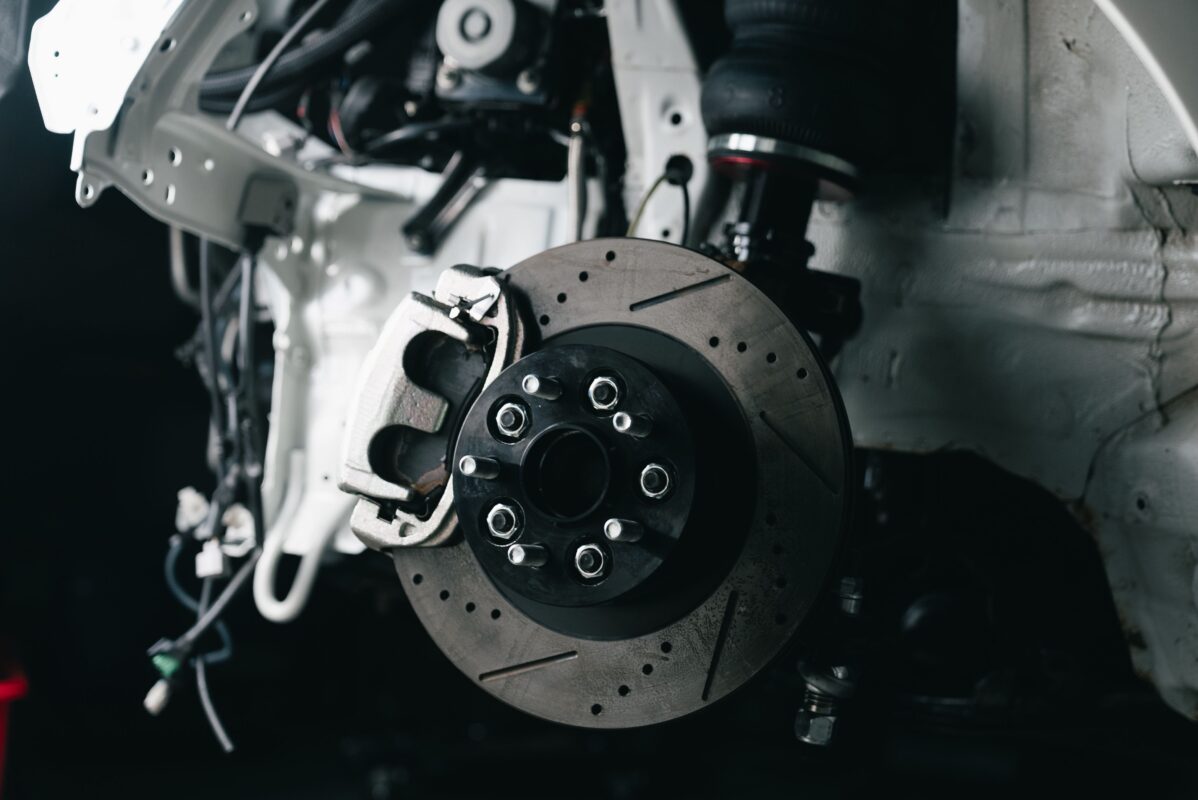
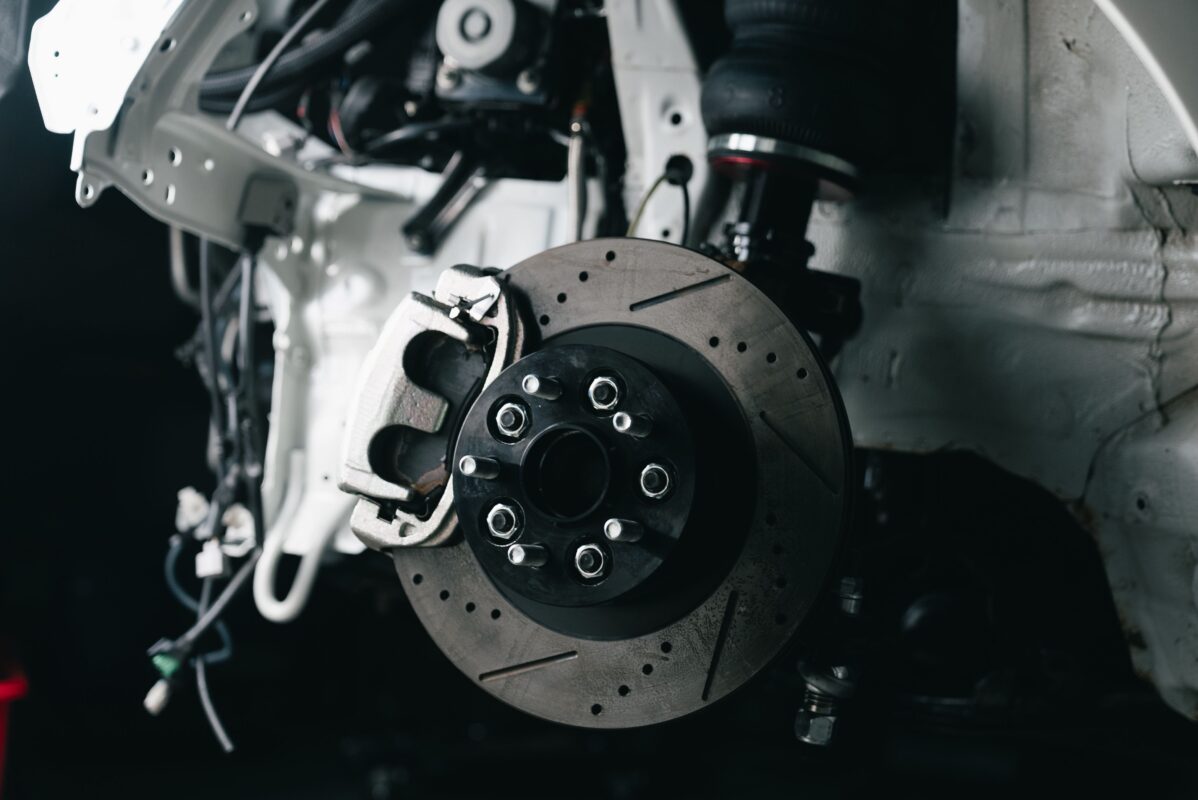
Brake fluid carries this pressure through dedicated lines toward the wheels. At disc brakes, calipers use hydraulic pressure to force brake pads against rotating brake discs. Friction between the pads and discs converts kinetic energy into heat.
At drum brakes, hydraulic pressure moves wheel-cylinder pistons that push brake shoes against the inside surface of a rotating drum. Both systems perform the same fundamental task: converting vehicle motion into heat through controlled friction.
Brake boosters reduce the amount of physical effort required from the driver. Modern vehicles may also incorporate ABS and electronic brake-control systems.
The basic engineering principle is simple but powerful: driver input becomes controlled mechanical force at the wheels.
This is similar to industrial control philosophy, where a relatively small command from an operator can initiate a carefully controlled process through actuators, sensors, hydraulic systems, electrical circuits, and automation logic.
Major Components of a Car Braking System
A complete braking system contains considerably more than the visible pedal. The brake pedal provides the initial command, but several components must work correctly for safe braking.
The master cylinder generates hydraulic pressure. Brake fluid transmits that pressure through the hydraulic circuit. Brake lines and hoses carry fluid toward each wheel. Calipers and wheel cylinders convert hydraulic pressure into mechanical movement.
At the wheel, brake pads and discs or brake shoes and drums create friction. A brake booster assists pedal force in many vehicles. Modern cars also use wheel-speed sensors and electronic control modules as part of ABS and stability-control systems.
Every component has a role in maintaining predictable braking performance. A leak in a hydraulic line, worn friction material, contaminated fluid, damaged sensor, or malfunctioning control module can affect the overall system.
This illustrates an important engineering principle: system reliability depends on component interaction. Similar thinking is essential in Marine Switchboards, Power Distribution Systems, Generator Maintenance, PLC Programming, and industrial electrical fault-finding, where a single defective component can affect an entire system.
Step-by-Step Braking Process
Understanding the braking sequence makes it easier to recognize potential problems. The process begins when the driver moves the right foot from the accelerator toward the brake pedal.
Step 1: The driver presses the brake pedal.
Step 2: Pedal movement pushes the brake system’s input mechanism.
Step 3: The master cylinder creates hydraulic pressure.
Step 4: Brake fluid carries pressure through the hydraulic circuit.
Step 5: Calipers or wheel cylinders convert hydraulic pressure into mechanical force.
Step 6: Brake pads contact discs, or shoes contact drums.
Step 7: Friction converts kinetic energy into heat.
Step 8: The vehicle slows as braking force acts against wheel rotation.
Step 9: ABS may regulate pressure if wheel lock-up is detected.
Step 10: Releasing the pedal reduces hydraulic pressure and allows the braking components to return toward their normal positions.
This entire process happens rapidly. The driver generally notices only pedal movement and vehicle deceleration.
In safety-critical engineering, this type of chain is important because troubleshooting becomes easier when each stage is understood independently.
How to Use the Brake Pedal Correctly
Correct pedal technique is essential for both safety and vehicle control. The driver should normally use the right foot for the brake and accelerator. This creates a consistent relationship between the driver’s foot position and vehicle response.
For normal braking, apply steady and progressive pressure rather than suddenly stamping on the pedal. Look ahead and anticipate traffic conditions so braking can begin smoothly.
During emergency braking in a modern vehicle equipped with ABS, firm pedal pressure is generally appropriate. The driver may feel pulsing or vibration through the pedal as ABS operates. This sensation does not necessarily mean the brakes are failing.
Do not rest your foot unnecessarily on the brake pedal. Even light pressure can generate heat and cause premature wear.
Avoid pressing the accelerator and brake simultaneously unless a specific manufacturer-approved driving technique requires it.
Most importantly, never attempt to learn pedal operation while the vehicle is moving in an uncontrolled environment. A qualified driving instructor or experienced driver should supervise learner practice.
Knowing which pedal is the brake in a car is only the first step; knowing how and when to use it is what makes the knowledge useful.
Brake Pedal Inspection Procedure
A basic brake inspection should begin with the pedal itself. The pedal should have a predictable feel, appropriate travel, and a firm response under normal operating conditions.
With the vehicle safely stationary, inspect the pedal for physical damage, looseness, abnormal movement, or unusual noise. Check whether the pedal returns normally after being released.
A technician should then inspect the brake fluid reservoir, hydraulic lines, hoses, master cylinder, calipers, and wheel-cylinder areas for signs of leakage. Brake pads and discs should be checked for excessive wear, uneven contact, cracks, scoring, or overheating.
The inspection should also consider warning lights and electronic diagnostic information. If the vehicle has ABS or stability-control faults, diagnostic equipment may be required.
Professional inspection procedures must follow the vehicle manufacturer’s specifications. Different brake systems have different tolerances, fluid requirements, bleeding procedures, and testing methods.
For engineering teams, the same principle applies to industrial and marine systems: inspection should follow documented procedures rather than assumptions. Electrical Troubleshooting and Marine Electrical Fault Finding similarly require systematic observation, measurement, isolation, testing, and verification.
Brake System Testing Methods
Brake testing should evaluate both mechanical performance and system condition. A visual inspection is useful, but it cannot identify every fault.
A technician may evaluate pedal travel, pedal firmness, hydraulic pressure, brake fluid condition, pad thickness, disc condition, wheel operation, and electronic diagnostic codes. Brake dynamometer or roller testing may also be used in professional environments to compare braking force between wheels.
ABS systems require additional diagnostic testing because wheel-speed sensors, wiring, hydraulic modulators, and electronic control units can influence operation.
A road test should only be performed when the vehicle has been judged safe for testing. The technician can observe stopping behavior, steering stability, unusual noise, vibration, pedal feedback, and warning indicators.
Testing should always be controlled and performed in an appropriate location.
This systematic approach is similar to Marine Electrical Services. When a vessel experiences an electrical fault, an experienced engineer does not replace components randomly. The engineer identifies symptoms, reviews system drawings, checks inputs and outputs, measures electrical parameters, isolates the fault, repairs the affected section, and verifies the system afterward.

which pedal is the brake in a car
Common Brake Pedal Problems
Several symptoms can indicate a problem with the braking system. A soft or spongy pedal may be associated with air in the hydraulic system, fluid problems, or other faults.
A pedal that gradually sinks while pressure is maintained can indicate hydraulic pressure loss or an internal master-cylinder issue and should be investigated promptly.
A very hard pedal may indicate a problem with brake assistance, depending on the vehicle design. Other symptoms include grinding noises, squealing, vibration, pulling to one side, increased stopping distance, or warning lights.
Brake pedal vibration during ABS activation can be normal during hard braking. However, vibration during ordinary braking may indicate disc or wheel-related problems.
Fluid leaks should always be treated seriously because loss of hydraulic fluid can compromise braking performance.
Never diagnose a safety-critical braking problem based solely on one symptom. Several different faults can create similar sensations.
A qualified technician should inspect the vehicle when braking behavior changes unexpectedly.
Troubleshooting a Brake Pedal
Brake troubleshooting should follow a logical sequence rather than replacing parts without evidence. Start by documenting the symptom. Determine whether the problem occurs during normal braking, emergency braking, low-speed operation, high-speed operation, or only after the vehicle becomes warm.
Next, inspect the brake fluid level and condition, followed by visible hydraulic components. Look for wet areas, damaged hoses, corrosion, or leakage.
If the pedal feels soft, the hydraulic system may require professional bleeding or further investigation. If the pedal feels unusually hard, the brake-assistance system may need inspection.
For vibration, inspect discs, pads, wheel assemblies, suspension components, and wheel alignment as appropriate. For ABS warning lights, electronic diagnostic scanning can help identify sensor or control-system faults.
The key principle is isolation. Determine whether the fault originates at the driver input, hydraulic circuit, mechanical brake assembly, or electronic control system.
This diagnostic mindset closely resembles Electrical Fault Finding in marine and industrial applications. Engineers isolate the system into sections, test each section, identify abnormal readings, correct the root cause, and verify the final result.
Brake Maintenance Tips
Regular maintenance can improve braking reliability and reduce unexpected failures. Brake components should be inspected according to the vehicle manufacturer’s recommended schedule and whenever unusual symptoms appear.
Brake fluid should be checked and replaced according to manufacturer requirements because fluid can absorb moisture over time. Worn brake pads should be replaced before friction material becomes dangerously thin.
Discs and drums should be inspected for excessive wear, scoring, cracks, heat damage, and dimensional problems. Calipers should move correctly and should not show signs of leakage or seizure.
Brake hoses should be checked for cracking, swelling, corrosion, or physical damage. Warning lights should never be ignored.
Good maintenance is preventive rather than reactive. The same principle is used in Preventive Maintenance programs for vessels, generators, motors, switchboards, automation equipment, and industrial power systems.
Electrical Marine Solutions emphasizes the importance of systematic technical maintenance because reliable engineering performance depends on detecting developing problems before they become major failures. On vessels and industrial installations, preventive inspections can reduce downtime and improve operational reliability.
Brake Safety Precautions
Brake systems are safety-critical equipment. Any significant change in braking performance should be treated seriously. Understanding which pedal is the brake in a car is essential for every driver because identifying the correct control is the first step toward safe vehicle operation.
Never drive a vehicle that has a major brake fluid leak, dramatically increased stopping distance, a pedal that reaches the floor, or a serious brake-system warning. Knowing which pedal is the brake in a car does not mean the vehicle is automatically safe; the complete braking system must also be maintained and inspected properly.
When working on brakes, the vehicle must be securely supported using appropriate equipment. Never rely only on a jack when working underneath a vehicle. Anyone learning which pedal is the brake in a car should also understand that professional brake maintenance involves significant safety risks and should be performed using proper procedures and equipment.
Use the correct brake fluid specified by the manufacturer. Different fluid types should not be mixed unless the manufacturer explicitly permits it. Identifying which pedal is the brake in a car is a basic driving requirement, while selecting the correct fluid and servicing the hydraulic system requires technical knowledge and adherence to manufacturer specifications.
After brake repairs, the system must be tested correctly before returning the vehicle to normal operation. A technician should confirm that pedal feel, braking response, hydraulic operation, and warning systems are functioning correctly. This is particularly important after identifying which pedal is the brake in a car and investigating a suspected braking-system fault.
Technicians should also use appropriate personal protective equipment and follow workshop safety procedures. Proper tools, safe lifting equipment, suitable protective equipment, and manufacturer-approved procedures should always be used when servicing braking components. The basic knowledge of which pedal is the brake in a car should always be combined with responsible maintenance practices.
The same safety culture applies to marine electrical work. Marine Electrical Engineers working around generators, switchboards, motors, high-energy electrical systems, and automation equipment must isolate energy sources, verify safe conditions, use suitable protective equipment, and follow approved procedures. Just as knowing which pedal is the brake in a car helps establish safe control in a vehicle, proper isolation and verification help establish safe working conditions in marine electrical environments.
Safety is not simply a checklist. It is a fundamental engineering principle. Whether someone is learning which pedal is the brake in a car or an engineer is performing Electrical Troubleshooting on a marine power system, every task should be approached with proper identification, risk assessment, controlled procedures, testing, and verification.
Repair vs Replacement: Which Is Better?
The correct decision depends on the condition of the component, manufacturer specifications, safety requirements, and overall system condition. Understanding which pedal is the brake in a car is the first step for a new driver, but maintaining the complete braking system requires much more than identifying the correct pedal.
Some components can be serviced or repaired. Brake calipers, for example, may sometimes be rebuilt if their condition and design allow it. Other components, such as severely damaged hydraulic lines or excessively worn friction components, generally require replacement. When evaluating which pedal is the brake in a car, technicians can also use the pedal’s condition and response as an initial indication of potential braking-system problems.
Cost should not be the only consideration. A cheaper repair that does not restore reliable performance can create additional risk and expense. Knowing which pedal is the brake in a car may be simple, but deciding whether a damaged braking component should be repaired or replaced requires proper technical assessment, testing, and safety judgment.
Technicians should consider component age, previous repairs, corrosion, availability of replacement parts, labor requirements, and compatibility. These factors can determine whether repair or replacement provides the safest and most reliable solution. For anyone learning which pedal is the brake in a car, understanding these maintenance principles can also help them recognize why professional inspection is important.
The same decision-making process is used in marine engineering. A vessel’s generator, motor, control panel, switchboard component, or automation module may sometimes be repaired, while replacement may be more appropriate when reliability, availability, or safety is compromised. Just as which pedal is the brake in a car identifies an important control point, marine engineers must identify critical components and evaluate their condition before deciding on corrective action.
A professional engineer evaluates the root cause and expected service life rather than simply choosing the lowest immediate cost. This approach prevents temporary repairs from becoming recurring failures. Understanding which pedal is the brake in a car provides a basic example of how identifying the correct control is only the beginning; reliable operation depends on the condition of the entire system.
Ultimately, whether dealing with a vehicle braking system or complex marine equipment, the correct approach is to inspect, diagnose, evaluate, repair or replace as necessary, and verify performance afterward. The same engineering discipline used to understand which pedal is the brake in a car can support reliable Marine Electrical Services, Generator Repairs, Motor Repairs, Marine Automation, Switchboard Maintenance, PLC Programming, and industrial electrical systems.
Cost Factors for Brake Repairs
Brake repair costs vary significantly depending on the vehicle, component, location, labor rates, parts quality, and extent of damage.
Routine brake-pad replacement is generally less complex than replacing a master cylinder, brake booster, ABS module, caliper, or damaged hydraulic lines.
Costs can also increase when multiple components have deteriorated simultaneously. For example, neglected brake pads may damage discs, creating additional replacement requirements.
Electronic diagnostic work can add labor costs when an ABS or stability-control fault is involved.
The best way to manage repair costs is preventive maintenance. Identifying worn components before they damage associated parts can reduce overall expenses.
In industrial and marine environments, the same economic principle applies. Preventive maintenance may require planned expenditure, but unplanned failures can create much larger costs through emergency repairs, vessel downtime, production interruption, damaged equipment, and operational delays.
Therefore, reliability engineering should consider the total cost of ownership, not simply the initial repair price.
Engineering Lessons from a Brake System
A vehicle braking system demonstrates several important engineering concepts: input, energy conversion, force multiplication, feedback, control, redundancy, and fault detection.
The driver provides an input through the pedal. The system amplifies that input and distributes braking force to the wheels. Sensors monitor wheel behavior, while electronic control systems may intervene when required.
This architecture resembles many industrial control systems. A PLC receives an input, executes programmed logic, and controls outputs. Sensors provide feedback, actuators perform physical actions, and protection systems respond to abnormal conditions.
Marine Automation operates on similar principles. A ship’s propulsion, generator, pump, ventilation, power distribution, and alarm systems often depend on coordinated control architecture.
For Electrical Marine Solutions, understanding systems at this level is important because marine electrical engineering is not only about wiring. It involves power generation, distribution, control, automation, monitoring, protection, troubleshooting, and safe operation.
A brake pedal is therefore a simple example of a much broader engineering truth: a reliable system depends on every connected stage working correctly.
Why Trust Electrical Marine Solutions
Electrical Marine Solutions presents itself as a marine-focused technical company supporting marine power and electrical applications, with a stated base in Gdańsk, Poland. Its website describes technical consultation, marine installation support, repower-related assistance, and marine engineering experience.
For customers dealing with complex marine or industrial electrical systems, expertise matters because troubleshooting often requires more than replacing an obvious component. Electrical systems must be understood as interconnected networks involving power sources, distribution equipment, protection devices, control circuits, sensors, motors, generators, and automation.
The company’s stated technical positioning is relevant to services such as Marine Electrical Services, Electrical Troubleshooting, Marine Automation, Generator Maintenance, Motor Repairs, Marine Switchboard Maintenance, PLC Programming, Control Systems, and Preventive Maintenance.
A professional approach should emphasize accurate diagnosis, engineering documentation, safe isolation, appropriate testing equipment, root-cause analysis, and post-repair verification.
Electrical Marine Solutions also highlights technical consultation and support as part of its service approach.
For vessel operators and industrial customers, this type of engineering mindset can help reduce unexpected downtime and improve the reliability of critical electrical and control systems.
Industries That Depend on Reliable Control and Braking Systems
Automotive braking is obviously important for passenger vehicles, commercial vehicles, buses, trucks, and specialist machinery. Understanding which pedal is the brake in a car is one of the first basic skills a driver needs before operating any vehicle. However, the broader engineering concepts involved are also relevant to many other industries.
Commercial vessels depend on reliable electrical power, control systems, motors, generators, automation, alarms, and distribution equipment. Cargo ships require dependable systems because equipment failure can affect operations, safety, schedules, and cargo handling. In the same way that a driver must know which pedal is the brake in a car, marine operators must understand the purpose of critical controls and how they influence connected equipment.
Offshore platforms operate in demanding environments where electrical reliability and preventive maintenance are especially important. Industrial facilities also depend on motors, PLCs, control panels, power distribution systems, and emergency systems. The basic concept behind which pedal is the brake in a car can be related to these environments because both involve an operator providing an input that produces a specific system response.
The common requirement across these industries is predictable system behavior. Whether an engineer is explaining which pedal is the brake in a car or troubleshooting a complex industrial control circuit, the objective is to ensure that the system responds correctly and safely to the intended input.
Whether the input is a brake pedal, PLC command, switchboard control, or operator instruction, the system must translate that input into a controlled physical response. Understanding which pedal is the brake in a car therefore provides a simple example of the broader relationship between operator input, control mechanisms, and physical output.
That is why engineering disciplines such as electrical troubleshooting, automation, instrumentation, mechanical maintenance, and safety engineering often overlap.
A small control input can influence a very large amount of energy. Proper design, maintenance, testing, and protection are therefore essential. The same principle applies from basic vehicle controls to advanced Marine Automation, Power Distribution Systems, generators, motors, Marine Switchboards, and industrial control systems.
Future Trends in Vehicle Braking and Control Systems
Vehicle braking technology continues to become more electronic and software-controlled. Conventional hydraulic braking remains widespread, but modern vehicles increasingly integrate braking with advanced driver-assistance systems, electronic stability control, regenerative braking, and automated driving technologies.
Electric vehicles add another layer because regenerative braking can use the electric motor to recover energy while slowing the vehicle. The mechanical friction brakes remain important, especially during stronger braking and when regenerative braking is limited.
Brake-by-wire technologies are also developing, allowing electronic control systems to influence braking commands more directly.
These trends demonstrate the growing convergence between mechanical systems, electrical engineering, electronics, sensors, software, and automation.
Marine engineering is experiencing a similar transformation. Modern vessels increasingly use digital monitoring, PLC-based automation, intelligent motor control, condition monitoring, remote diagnostics, and integrated power management.
As systems become more interconnected, engineers need multidisciplinary knowledge. Electrical Marine Solutions operates within an industry where electrical engineering, automation, marine machinery, control systems, and troubleshooting increasingly overlap.
The future of reliable engineering is therefore not simply about individual components. It is about integrating intelligent monitoring, predictive maintenance, automation, and dependable safety systems.
Practical Real-World Example
Imagine a new driver entering an automatic vehicle for the first time. The driver sees two pedals but is uncertain about their purpose. The correct approach is to stop, inspect the pedal arrangement, identify the larger brake pedal on the left, and locate the accelerator on the right.
Before moving, the driver should adjust the seat and mirrors, fasten the seat belt, and ensure the foot position is comfortable. The driver should then practice gentle braking in a safe environment.
Now consider a different scenario: the brake pedal suddenly feels soft. Instead of continuing to drive normally, the driver should recognize the symptom as abnormal and arrange professional inspection.
This example demonstrates the importance of recognizing normal system behavior. Engineers use the same principle when maintaining marine generators, switchboards, motors, PLC systems, and control equipment.
When a system behaves differently from its established baseline, that deviation becomes a diagnostic clue.
Professional troubleshooting therefore begins with a simple question: What has changed?
From there, the technician identifies the affected subsystem, performs appropriate tests, determines the root cause, repairs it, and confirms that normal operation has been restored.
Maintenance Checklist
A useful brake-system maintenance checklist includes the following:
- Check brake pedal feel.
- Check pedal travel.
- Inspect brake fluid level.
- Look for hydraulic leaks.
- Inspect brake hoses and lines.
- Check brake pad thickness.
- Inspect brake discs or drums.
- Check caliper operation.
- Monitor brake warning lights.
- Scan ABS faults when required.
- Listen for unusual braking noises.
- Check for vibration.
- Monitor changes in stopping distance.
- Follow manufacturer service intervals.
- Perform professional inspection when symptoms appear.
For marine and industrial electrical systems, a comparable preventive-maintenance checklist can include generator condition, motor insulation, switchboard connections, protective devices, control circuits, PLC inputs and outputs, alarm systems, sensors, and power distribution equipment.
Inspection Checklist
Before considering a braking system healthy, technicians should confirm which pedal is the brake in a car, whether the pedal operates correctly, hydraulic pressure is maintained, there are no significant leaks, friction components remain within acceptable limits, and electronic warning systems show no unresolved faults. Understanding which pedal is the brake in a car is an important first step before evaluating the condition of the complete braking system.
The inspection should also consider the complete vehicle rather than only the pedal. Knowing which pedal is the brake in a car helps technicians and new drivers correctly identify the primary braking control before checking its operation, pedal travel, pressure, and overall response.
A professional inspection should document findings and identify components approaching their service limits. This allows maintenance to be planned instead of waiting for a failure. When technicians understand which pedal is the brake in a car, they can also explain basic pedal operation clearly to vehicle owners and inexperienced drivers.
The same documentation philosophy is valuable in marine electrical engineering. Inspection reports should identify measured values, abnormal findings, corrective actions, component condition, and recommended follow-up work. The basic principle behind which pedal is the brake in a car can be compared with industrial control systems, where a specific operator input must produce a predictable system response.
Proper records can help identify recurring faults and support preventive maintenance planning. They also help engineers determine whether a problem is isolated or part of a developing system-wide issue. For technicians explaining which pedal is the brake in a car, documented inspection findings can make technical information easier for customers and learners to understand.
For critical equipment, historical maintenance information can become a valuable diagnostic resource. Engineers can compare current measurements with previous results and identify gradual deterioration. This systematic approach is useful when evaluating which pedal is the brake in a car as well as more complex mechanical, electrical, and control systems.
Ultimately, understanding which pedal is the brake in a car is only the beginning. A reliable braking system requires proper inspection, testing, maintenance, documentation, and timely corrective action. The same engineering discipline supports reliable Marine Electrical Services, Marine Automation, Electrical Fault Finding, generator maintenance, switchboard inspection, PLC systems, and industrial control equipment.
Professional Tips
Tip 1: Learn the pedal layout before moving the vehicle.
Tip 2: Use your right foot for normal braking and acceleration.
Tip 3: Never ignore a sudden change in pedal feel.
Tip 4: Do not assume an ABS warning light will disappear safely without diagnosis.
Tip 5: Never use an incorrect brake fluid.
Tip 6: Follow the vehicle manufacturer’s maintenance specifications.
Tip 7: Do not perform brake repairs without appropriate tools, knowledge, and safety procedures.
Tip 8: Treat hydraulic leaks as potentially serious.
Tip 9: Use systematic troubleshooting instead of random component replacement.
Tip 10: In marine and industrial environments, combine preventive maintenance with condition monitoring whenever practical.
The most important professional principle is simple: when safety depends on a system, uncertainty should lead to inspection—not guesswork.
FAQs
Which pedal is the brake in an automatic car?
In a conventional automatic car, the brake pedal is normally the left of the two pedals, while the accelerator is on the right. The brake is generally wider than the accelerator. Drivers should normally use the right foot for both pedals to maintain consistent control and reduce the risk of pressing both pedals accidentally.
Which pedal is the brake in a manual car?
In a manual car, the brake is normally the middle pedal. From left to right, the pedals are usually clutch, brake, and accelerator. The clutch is used for gear changes, the brake slows or stops the vehicle, and the accelerator controls engine power.
Is the middle pedal always the brake?
In a conventional three-pedal manual vehicle, the middle pedal is normally the brake. However, unusual or specialized vehicles can have different layouts. Always confirm the pedal arrangement from the vehicle manufacturer’s documentation before driving an unfamiliar vehicle.
Which pedal is the brake and which is the accelerator?
The brake is normally positioned to the left of the accelerator. In an automatic car, it is the left pedal and the accelerator is the right pedal. In a manual car, the brake is in the middle, with the accelerator on the right.
Is the brake pedal bigger than the accelerator?
Usually, yes. The brake pedal is commonly wider than the accelerator to make it easier for the driver’s foot to locate it quickly. However, pedal shapes and dimensions vary between manufacturers, so size should be treated as a helpful identification clue rather than the only method.
Can I use my left foot to brake?
Most conventional drivers are taught to use the right foot for both braking and acceleration. This reduces the likelihood of accidentally applying both pedals and provides consistent pedal control. Specialized driving techniques can differ, but ordinary drivers should follow their vehicle manufacturer’s guidance and professional driving instruction.
Why does the brake pedal feel soft?
A soft or spongy brake pedal can have several causes, including air in the hydraulic system, brake-fluid problems, hydraulic leaks, or other braking-system faults. Because braking is safety-critical, a significant change in pedal feel should be professionally inspected rather than ignored.
Why is my brake pedal hard to press?
An unusually hard pedal can sometimes be associated with a problem in the brake-assistance system. Other causes may exist depending on the vehicle design. If the pedal becomes substantially harder than normal or braking performance changes, the vehicle should be inspected by a qualified technician.
Why does my brake pedal vibrate?
Brake-pedal vibration can occur when ABS activates during hard braking, which can be normal. Vibration during ordinary braking may indicate issues involving brake discs, wheel assemblies, or other components. The exact cause requires inspection and should not be assumed from vibration alone.
How far should a brake pedal travel?
Brake-pedal travel varies by vehicle design. The pedal should have a predictable, firm feel and should operate within the manufacturer’s specified range. A pedal that suddenly travels much farther than normal, approaches the floor, or feels inconsistent should be inspected promptly.
Can a brake pedal go to the floor?
Yes, a brake pedal can sometimes travel unusually far or reach the floor because of hydraulic or mechanical faults. This is potentially dangerous. If the pedal suddenly loses normal resistance or braking performance is reduced, the vehicle should not be treated as safe for ordinary driving.
How often should brakes be inspected?
Brake inspection frequency depends on the vehicle, mileage, driving conditions, manufacturer recommendations, and component condition. Brakes should also be inspected whenever the driver notices noise, vibration, pulling, warning lights, unusual pedal feel, or increased stopping distance.
What happens if brake fluid is low?
Low brake fluid can indicate fluid loss or component wear and may affect hydraulic braking performance. It should not simply be topped up without identifying the reason for the low level. A technician should inspect the braking system for leaks and other underlying problems.
What does ABS do?
ABS, or anti-lock braking system, helps prevent individual wheels from locking during heavy braking. Wheel-speed sensors provide information to the control system, which can regulate hydraulic brake pressure. This helps the driver maintain steering control while braking hard.
Can worn brake pads affect the pedal?
Worn brake pads can affect braking performance and may change pedal behavior depending on the vehicle and extent of wear. They can also damage discs if allowed to deteriorate excessively. Regular inspection helps identify wear before it creates additional safety and repair issues.
Should I press the brake and accelerator together?
Normal driving does not require simultaneous brake and accelerator application. Doing so can create unwanted vehicle behavior and increase component stress. Drivers should normally use the right foot to move between acceleration and braking while following appropriate driving techniques.
What should I do if the brake warning light comes on?
A brake warning light should not be ignored. Depending on the vehicle, it can indicate low brake fluid, parking-brake activation, hydraulic problems, or another fault. Check the vehicle documentation and arrange appropriate inspection, especially if braking performance has changed.
Can brake problems be diagnosed without a scan tool?
Some mechanical brake problems can be identified through visual and physical inspection without electronic diagnostic equipment. However, modern vehicles may require scanning equipment for ABS, stability-control, or electronic braking faults. Proper diagnosis depends on the vehicle and the symptom.
Why is preventive maintenance important for braking systems?
Preventive maintenance helps identify worn components, fluid problems, leaks, and developing faults before they become serious. The same philosophy applies to marine and industrial systems. Planned inspections can reduce unexpected failures, improve reliability, and help operators manage maintenance costs more effectively.
Conclusion
Understanding which pedal is the brake in a car is a basic driving skill, but it also represents a much larger engineering concept. When learning which pedal is the brake in a car, drivers should remember that a manual car normally has the brake as the middle pedal. In a conventional automatic vehicle, the brake is normally the left pedal, with the accelerator positioned on the right. Knowing which pedal is the brake in a car helps new drivers develop confidence and maintain proper vehicle control.
The pedal itself is only the starting point. Behind which pedal is the brake in a car is a complete braking system involving mechanical components, hydraulic pressure, friction, electronic monitoring, sensors, and control systems. Reliable braking therefore depends on proper design, maintenance, inspection, and timely troubleshooting. Understanding which pedal is the brake in a car is especially important before operating an unfamiliar vehicle.
The same engineering principles apply beyond automotive systems. Commercial vessels, cargo ships, offshore platforms, industrial plants, generators, motors, Marine Switchboards, Power Distribution Systems, PLCs, and automated control systems all depend on reliable interaction between components. In this broader engineering context, understanding which pedal is the brake in a car provides a simple example of how an operator’s input can control a complex technical system.
Electrical Marine Solutions focuses on technical marine and electrical applications where reliable system performance, preventive maintenance, troubleshooting, and engineering support are essential. The company’s website describes marine technical consultation, installation support, and marine power expertise. The same systematic approach used to understand which pedal is the brake in a car can be applied to diagnosing complex marine electrical and industrial systems.
If your vessel or industrial facility requires Marine Electrical Services, Electrical Troubleshooting, Electrical Fault Finding, Marine Automation, Generator Repairs, Motor Repairs, Switchboard Maintenance, PLC Programming, Control Systems, Preventive Maintenance, or Industrial Electrical Engineering, professional technical support can help identify problems before they become expensive operational failures. Whether you are learning which pedal is the brake in a car or troubleshooting a critical marine system, understanding how individual components interact is fundamental to safe and reliable operation.
For beginners, remembering which pedal is the brake in a car is only the first step. Drivers should also understand how the braking system responds to pedal pressure, how brake components work together, and why unusual pedal behavior should never be ignored. Similarly, engineers working with marine and industrial equipment must understand both individual components and the complete system.
Ultimately, knowing which pedal is the brake in a car demonstrates a simple but important engineering principle: the correct input must produce a predictable and controlled output. This principle is equally important in automotive braking, Marine Automation, PLC Programming, generator control, switchboard operation, and industrial electrical engineering.