

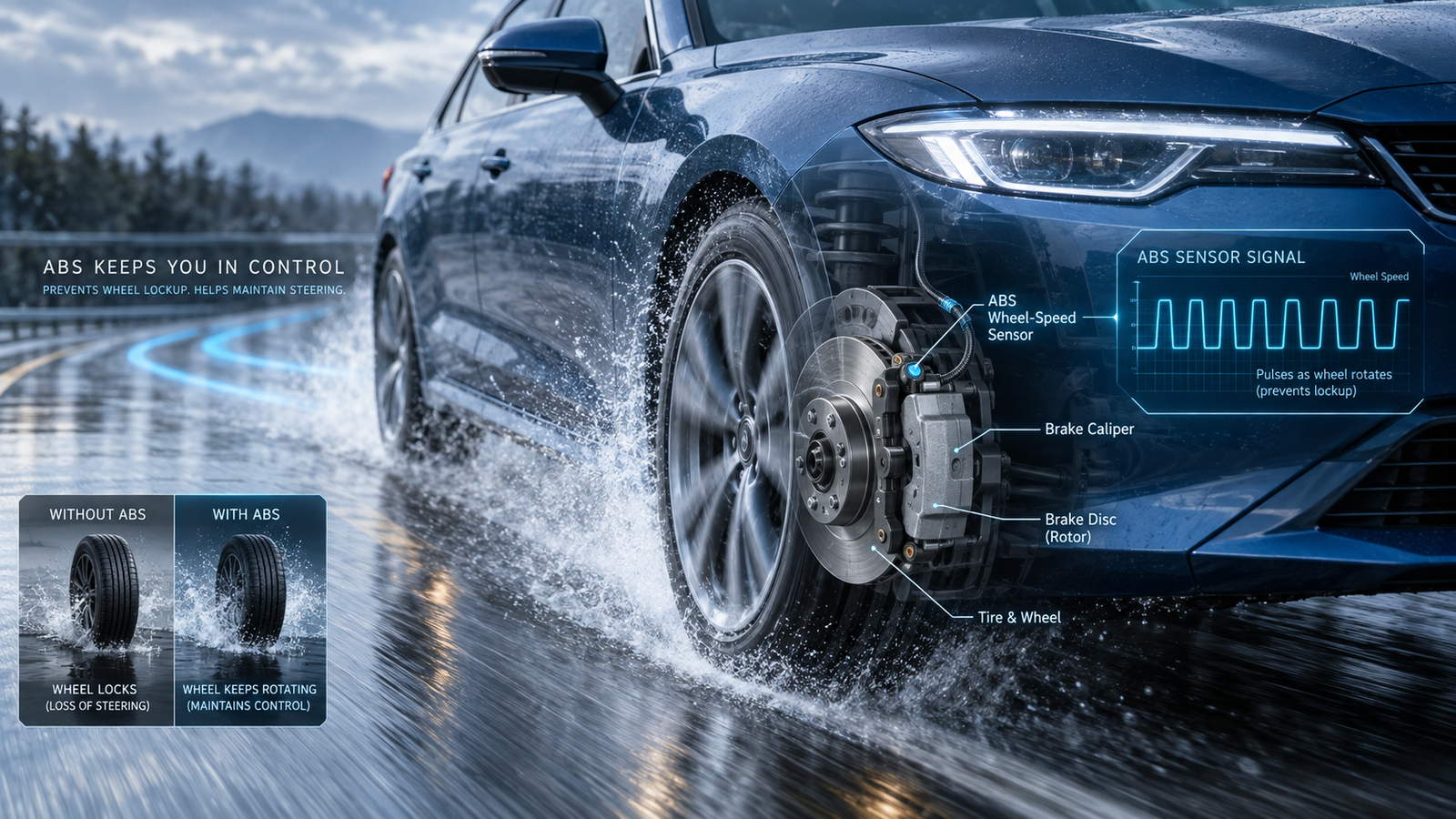
The antilock brake system (ABS) is a safety system designed to help keep a vehicle’s wheels from locking during hard braking. When a wheel is about to stop rotating while the car is still moving, ABS can reduce and reapply brake pressure very quickly.
So, what does the anti-lock brake system do? Its main job is to help prevent wheel lockup and maintain steering control during heavy braking. Instead of allowing a locked wheel to slide, ABS automatically manages brake pressure so the tires can continue rotating and maintain contact with the road.
This can be especially useful during an emergency stop. For example, if a driver suddenly sees an obstacle and presses the brake pedal hard, ABS can intervene if one or more wheels are close to locking.
ABS does not make a vehicle immune to skidding, and it cannot create extra tire grip. Road conditions, tire condition, vehicle speed, and braking technique still matter. However, ABS can help a driver retain more control when strong braking is needed.
What Happens When Your Wheels Lock Up?
To understand ABS, it helps to understand wheel lockup.
A wheel is rolling when it rotates as the vehicle moves along the road. During normal braking, the brakes slow the wheel while the tire continues to roll.
A locked wheel is different. It has stopped rotating even though the vehicle is still moving. The tire can then slide across the road surface.
Imagine pushing a toy car across a floor. If its wheels roll, you can easily change its direction. If you somehow force the wheels to stop turning while the toy continues sliding, changing its direction becomes much harder.
A similar principle applies to a real vehicle.
When the front wheels lock during braking, the driver may have much less ability to steer the vehicle. The car can continue moving in its existing direction even though the driver turns the steering wheel.
ABS is designed to reduce the chance of this happening during hard braking.
Rolling Wheels vs. Locked Wheels
A rolling tire can generally generate useful forces for both braking and steering.
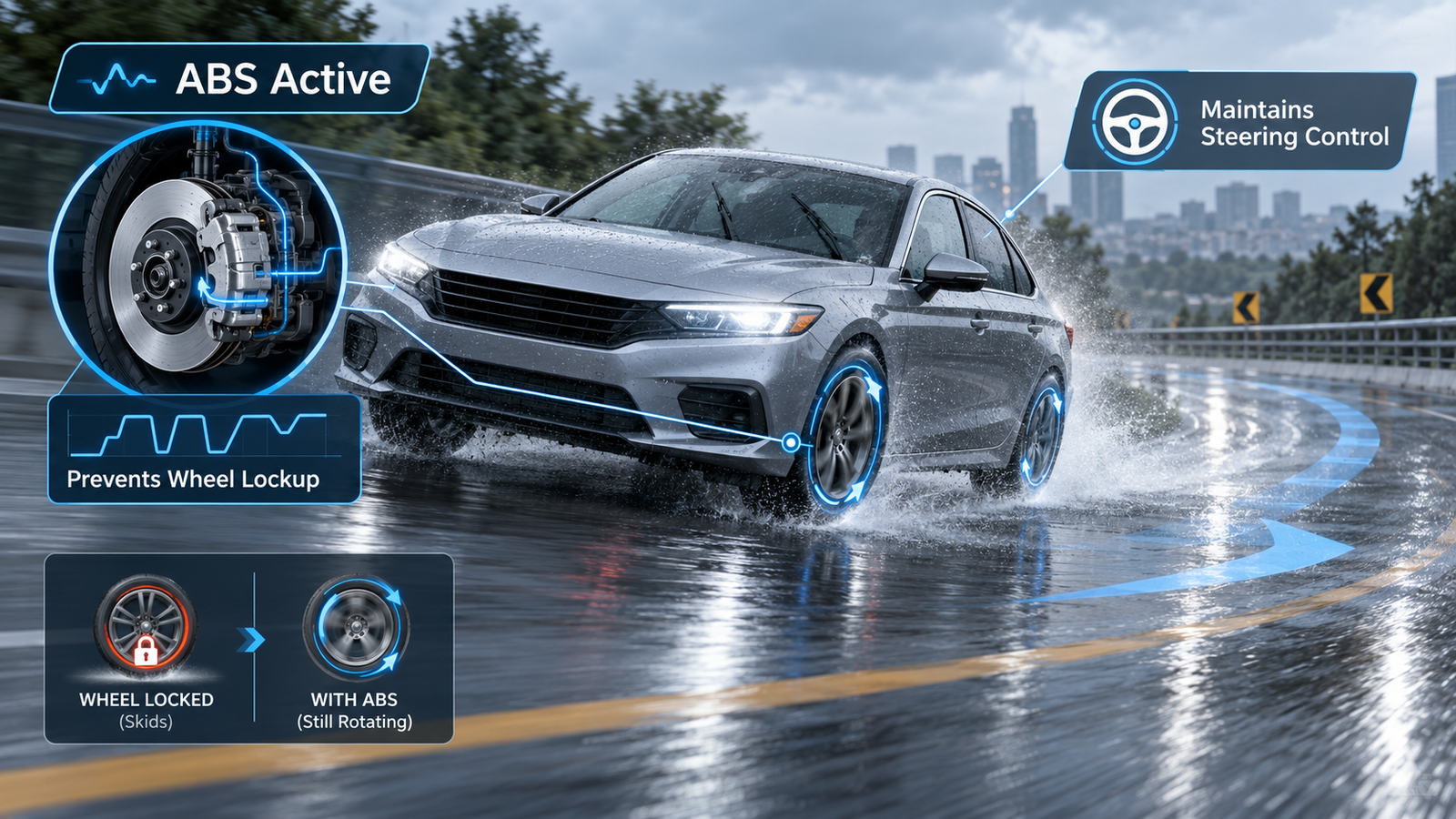
A locked tire, on the other hand, is sliding. Once a tire loses the ability to rotate normally, the vehicle may not respond to steering input as expected.
This is one reason ABS is important. It helps manage braking pressure so the wheels do not remain locked.
Why Is ABS Important?
ABS provides several important benefits:
- Improved steering control: A driver can generally retain better steering ability while braking hard.
- Better stability: ABS can help reduce uncontrolled wheel lockup during emergency braking.
- Reduced risk of wheel lockup: The system automatically adjusts brake pressure when it detects a wheel approaching lockup.
- Better control on some slippery surfaces: ABS can help manage braking when available tire grip is limited.
The exact benefit depends on the road surface, tires, vehicle, and driving conditions.
How Does an Antilock Brake System Work?
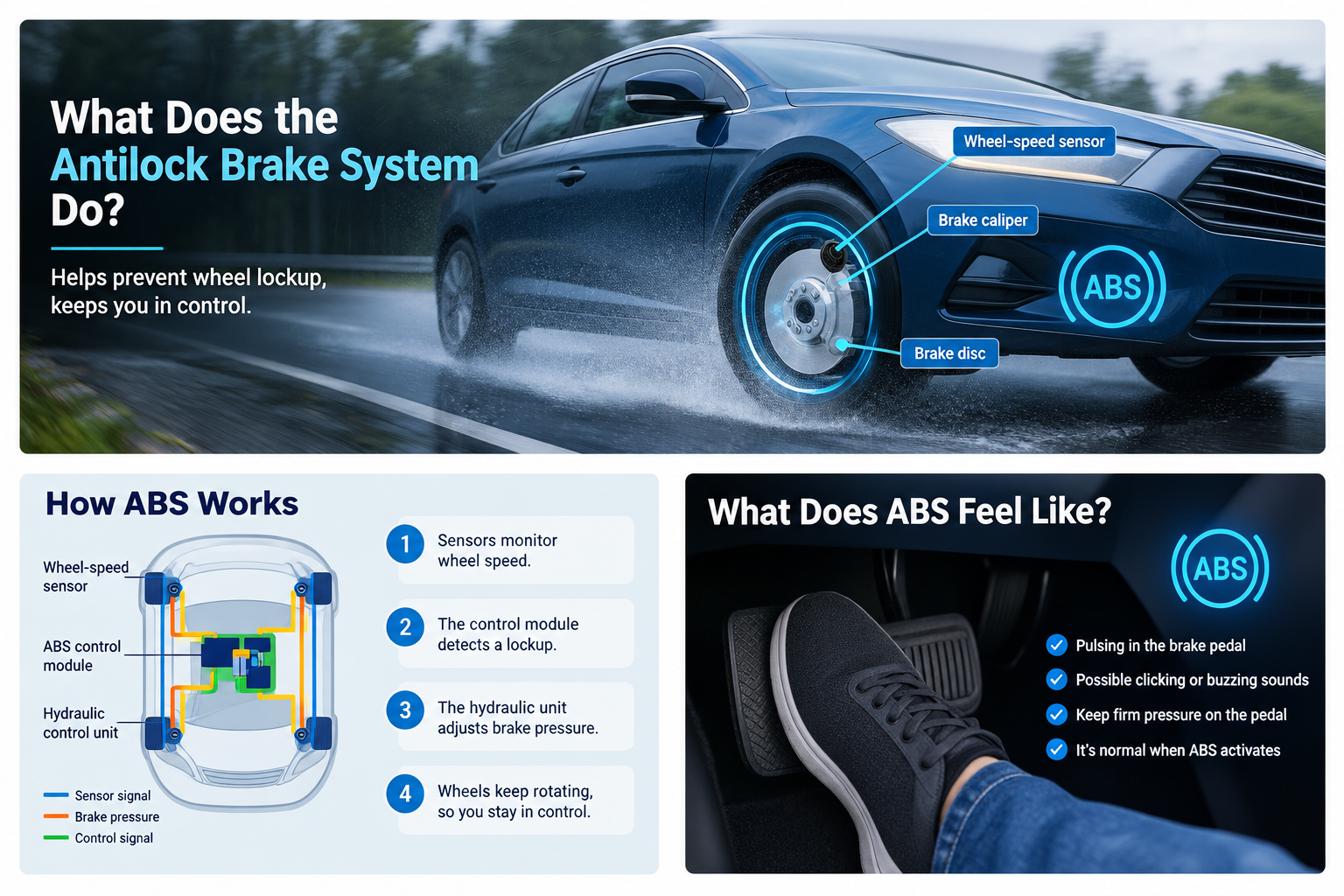
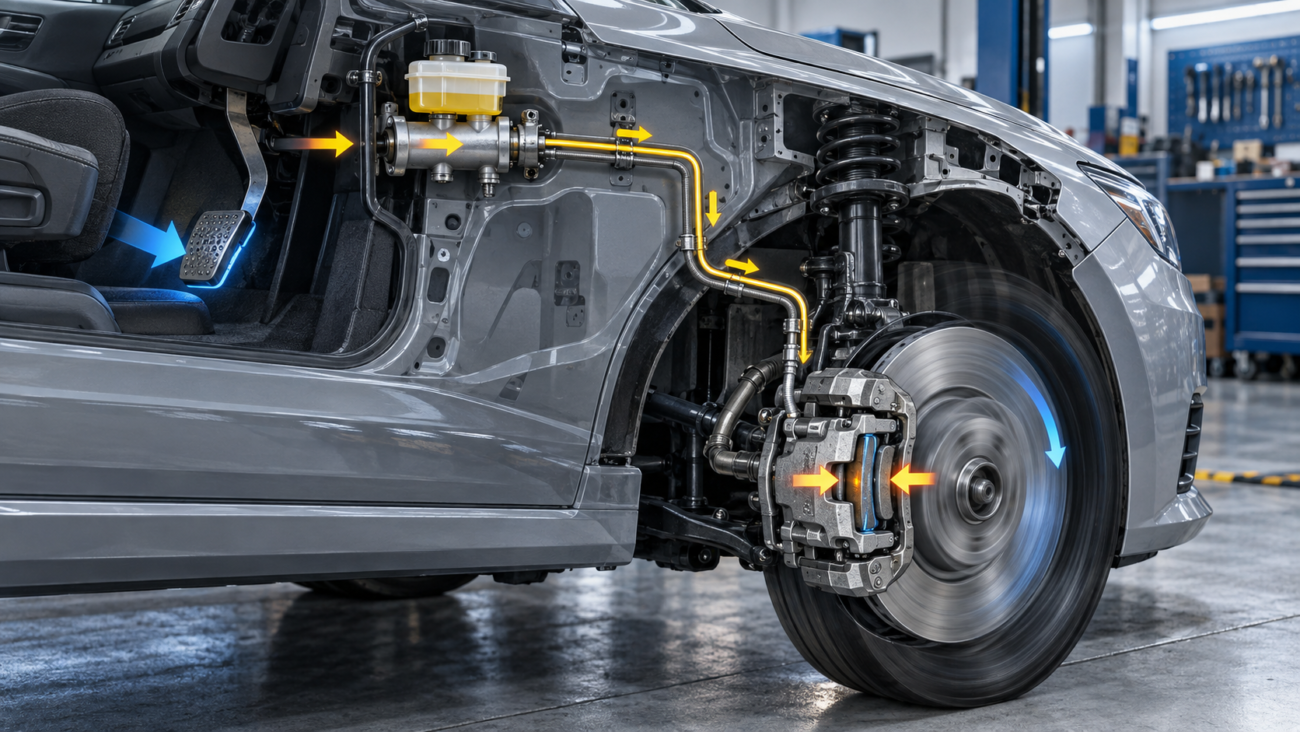
ABS works through several components that communicate with one another.
The basic process looks like this:
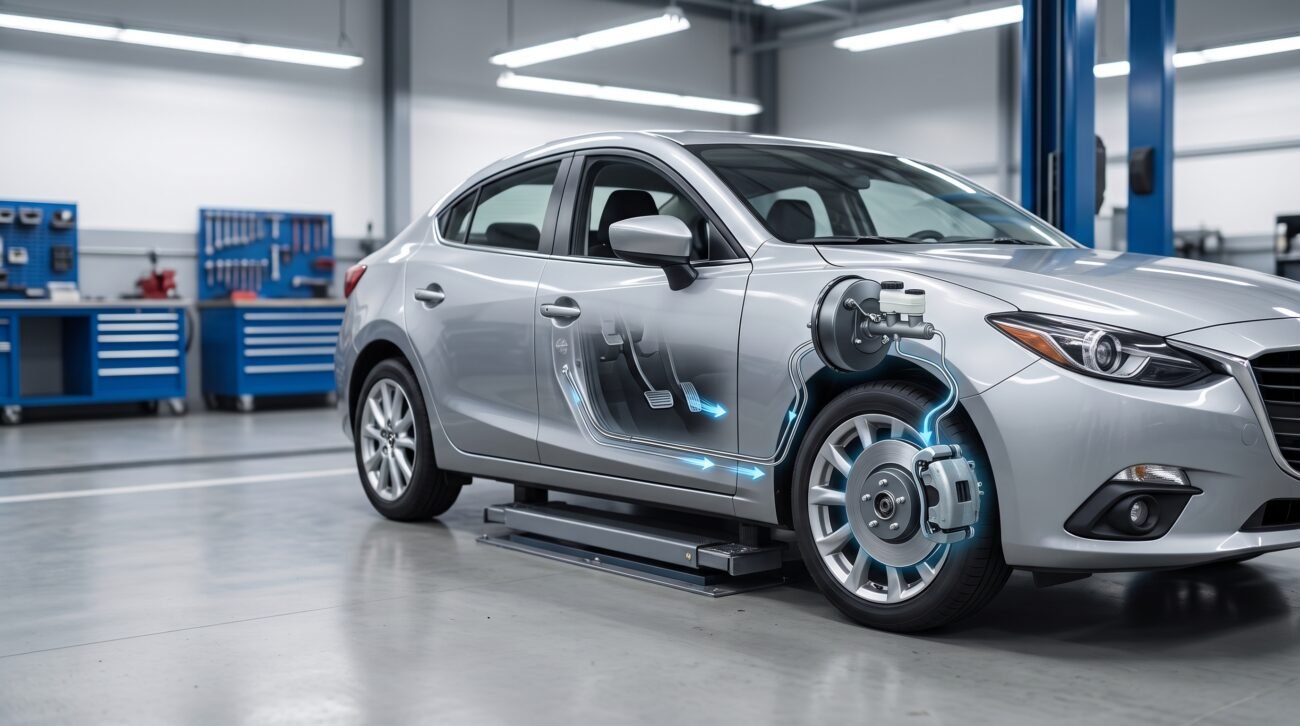
- The driver presses the brake pedal.
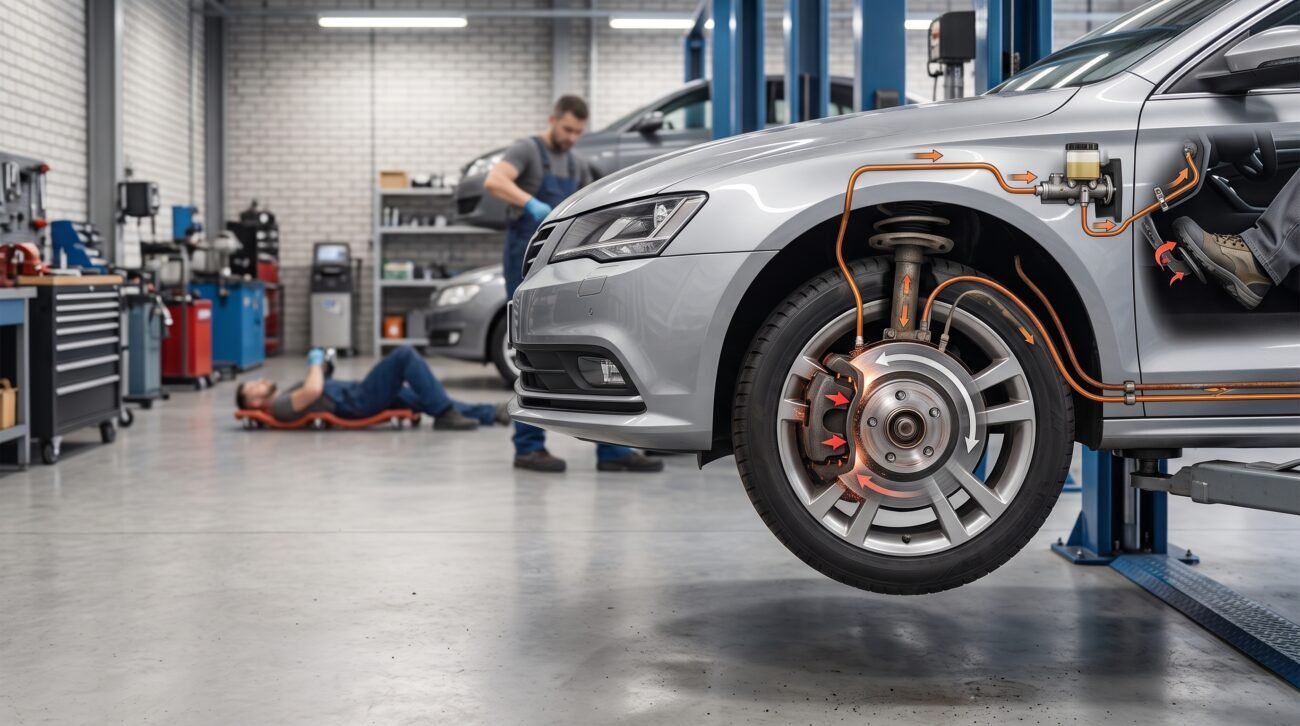
- Brake pressure is sent through the braking system.
- Wheel-speed sensors monitor how quickly each wheel is rotating.
- The ABS control module compares wheel speeds.
- If a wheel appears likely to lock, the system commands the hydraulic unit to adjust brake pressure.
- Brake pressure can be reduced and then increased again rapidly.
- This process can repeat many times during a hard braking event.
The system works automatically. The driver does not need to manually pump the brakes when ABS activates.
Wheel-Speed Sensors
Wheel-speed sensors monitor the rotational speed of the vehicle’s wheels.
The ABS system uses this information to determine whether a wheel is slowing much faster than expected compared with the other wheels or with the vehicle’s motion.
For example, imagine that all four wheels are rotating normally and the driver suddenly applies heavy braking. If one wheel’s rotation drops sharply, the system may determine that the wheel is approaching lockup.
The sensor sends this information to the ABS control module.
Modern vehicles can use different types of wheel-speed sensors, but their basic purpose is the same: provide wheel-speed information to the vehicle’s control system.
ABS Control Module
The ABS control module is the electronic control unit responsible for processing information from the wheel-speed sensors.
It continuously evaluates wheel-speed information and determines whether ABS intervention may be necessary.
When the system detects conditions associated with wheel lockup, the module can command the hydraulic control unit to change brake pressure at the affected wheel.
The module must make these decisions very quickly because wheel lockup can happen in a short period during heavy braking.
Hydraulic Control Unit
The hydraulic control unit controls brake-fluid pressure within the ABS system.
It contains components such as valves and, depending on the vehicle design, a pump that allows the system to adjust pressure.
When ABS activates, the hydraulic unit can reduce pressure to a wheel that is approaching lockup. It can then increase pressure again when appropriate.
This release-and-reapply process happens rapidly and automatically.
The driver does not need to pump the brake pedal.
What Does ABS Feel Like When It Activates?
Many drivers notice that the brake pedal feels different when ABS activates.
You may feel a rapid pulsing or vibration through the brake pedal. You may also hear clicking, buzzing, or mechanical sounds from the braking system.
These sensations can be surprising if you have never experienced ABS before.
They can occur because the system is rapidly changing brake pressure.
If you need to make an emergency stop and ABS activates, the normal response is to keep firm pressure on the brake pedal and focus on steering around the hazard when it is safe to do so. Do not repeatedly pump the pedal just because you feel the vibration.
The exact pedal feel and sound vary between vehicles.
If you experience unusual brake behavior during ordinary braking, however, it is worth having the vehicle inspected. A persistent warning light or significant change in braking performance should not be ignored.
Does ABS Make a Car Stop Faster?
This is one of the most common questions about ABS.
The answer is not always.
ABS is primarily designed to help prevent wheel lockup and help the driver maintain steering control during hard braking. It is not simply a system designed to guarantee the shortest possible stopping distance in every situation.
Stopping distance depends on many factors, including:
- Road surface
- Tire condition
- Tire type
- Tire pressure
- Vehicle speed
- Vehicle weight
- Brake condition
- Weather
- Available traction
On many paved surfaces, ABS can help a driver brake effectively while retaining steering control. But there are conditions where a locked wheel or a non-ABS braking system may behave differently, particularly on loose surfaces.
The important point is that ABS cannot overcome the physical limits of tire-road traction.
If your tires have very little grip, ABS cannot create grip that does not exist.
For this reason, ABS should be viewed as an important safety aid, not a replacement for safe driving, good tires, or proper vehicle maintenance.
When Does the Antilock Brake System Activate?
ABS does not normally activate every time you press the brake pedal.
It generally becomes active when the system detects conditions indicating that one or more wheels are approaching lockup.
During Emergency Braking
ABS is most noticeable during hard or emergency braking.
For example, suppose a vehicle is traveling along a road when an unexpected obstacle appears ahead. The driver immediately applies strong pressure to the brake pedal.
The braking force may be high enough to cause one or more wheels to approach lockup.
The ABS system detects the change in wheel speed and begins adjusting brake pressure as needed.
The driver may feel the familiar pulsing sensation in the brake pedal.
On Wet or Slippery Roads
Wet roads can reduce tire grip.
If a driver brakes hard on a wet surface, the tires may have less available traction than they would on a dry road. Under these conditions, a wheel can approach lockup more easily.
ABS can respond by adjusting brake pressure.
However, ABS does not make wet roads safe at any speed. Drivers still need to reduce speed when conditions require it and leave enough space to stop.
During Hard Braking on Dry Roads
ABS can also activate on dry pavement.
Dry roads generally provide good traction, but tires can still approach lockup if braking force exceeds the available tire-road grip.
For example, a driver traveling at a relatively high speed may suddenly apply the brakes very hard. Even on dry pavement, the wheels can approach lockup.
ABS can intervene when the system detects this condition.
ABS vs. Regular Brakes: What’s the Difference?
A conventional braking system can slow a vehicle without ABS. The major difference is how brake pressure is managed when a wheel approaches lockup.
With a basic conventional braking system, the driver controls braking pressure through the brake pedal.
If the driver brakes extremely hard and a wheel locks, the driver may need to reduce pedal pressure to allow the wheel to rotate again.
ABS automates this process.
Instead of relying on the driver to detect wheel lockup and adjust pressure manually, ABS uses sensors and electronic controls to monitor wheel behavior.
The system can then adjust hydraulic pressure very quickly.
Conventional Braking
With conventional brakes:
- The driver presses the brake pedal.
- Hydraulic pressure operates the brakes.
- If braking force exceeds available traction, a wheel can lock.
- The driver has to manage pedal pressure.
ABS Braking
With ABS:
- The driver presses the brake pedal firmly.
- Sensors monitor wheel speed.
- The control module detects potential wheel lockup.
- The hydraulic system adjusts brake pressure.
- The process repeats as needed.
This automatic control is particularly useful during emergency braking.
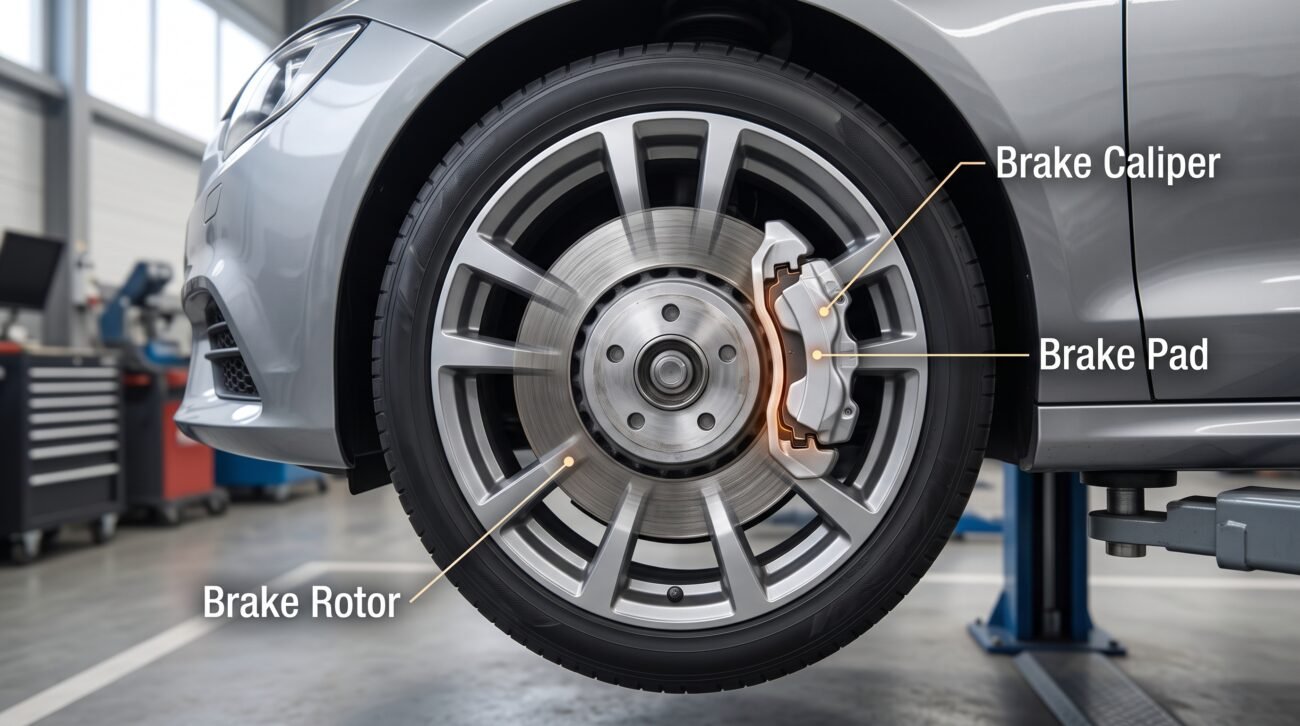
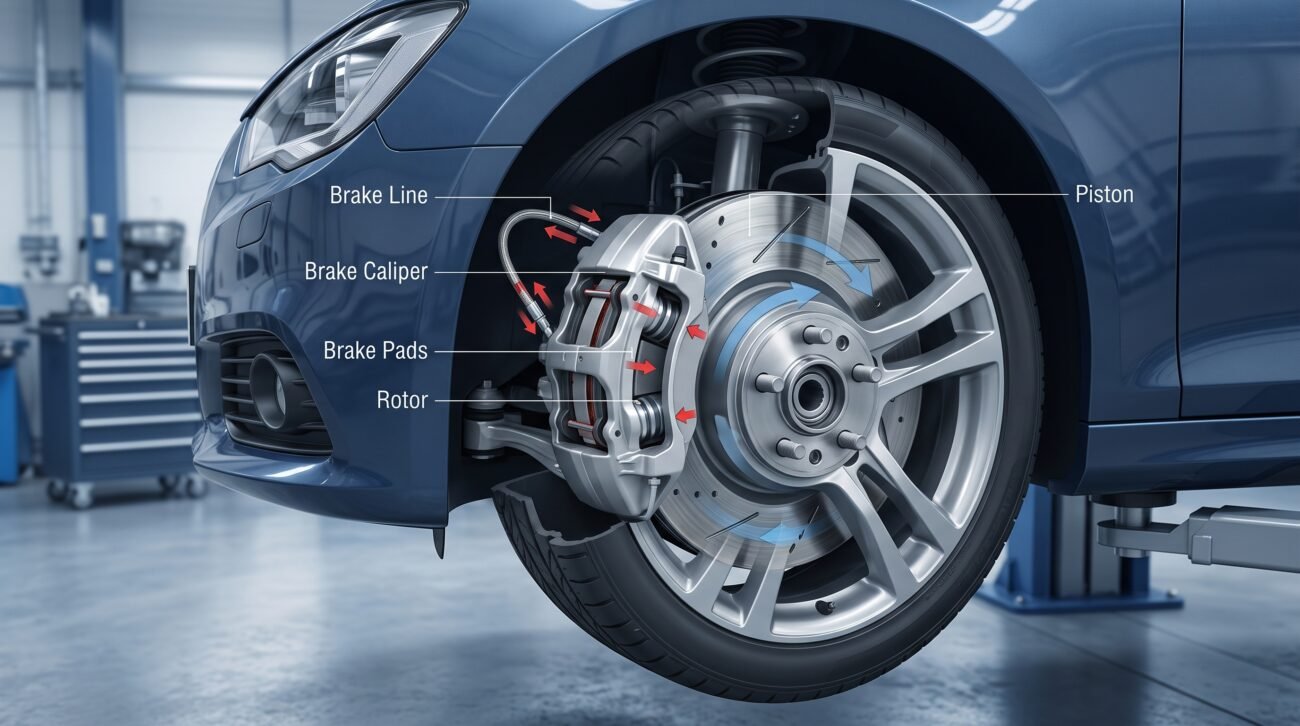
What Are the Main Parts of an ABS System?
An ABS system contains several important components.
Wheel-Speed Sensors
Wheel-speed sensors monitor how quickly each wheel is rotating.
The information from these sensors is essential because the control system needs to know when a wheel is slowing in a way that suggests it may lock.
A damaged or malfunctioning sensor can affect ABS operation.
ABS Control Module
The ABS control module receives information from the sensors.
It processes this information and determines when the system should intervene.
In many modern vehicles, ABS-related functions are integrated with other electronic vehicle-control systems.
Hydraulic Control Unit
The hydraulic control unit manages brake-fluid pressure.
It uses valves and other hydraulic components to increase, maintain, or decrease pressure as commanded by the control system.
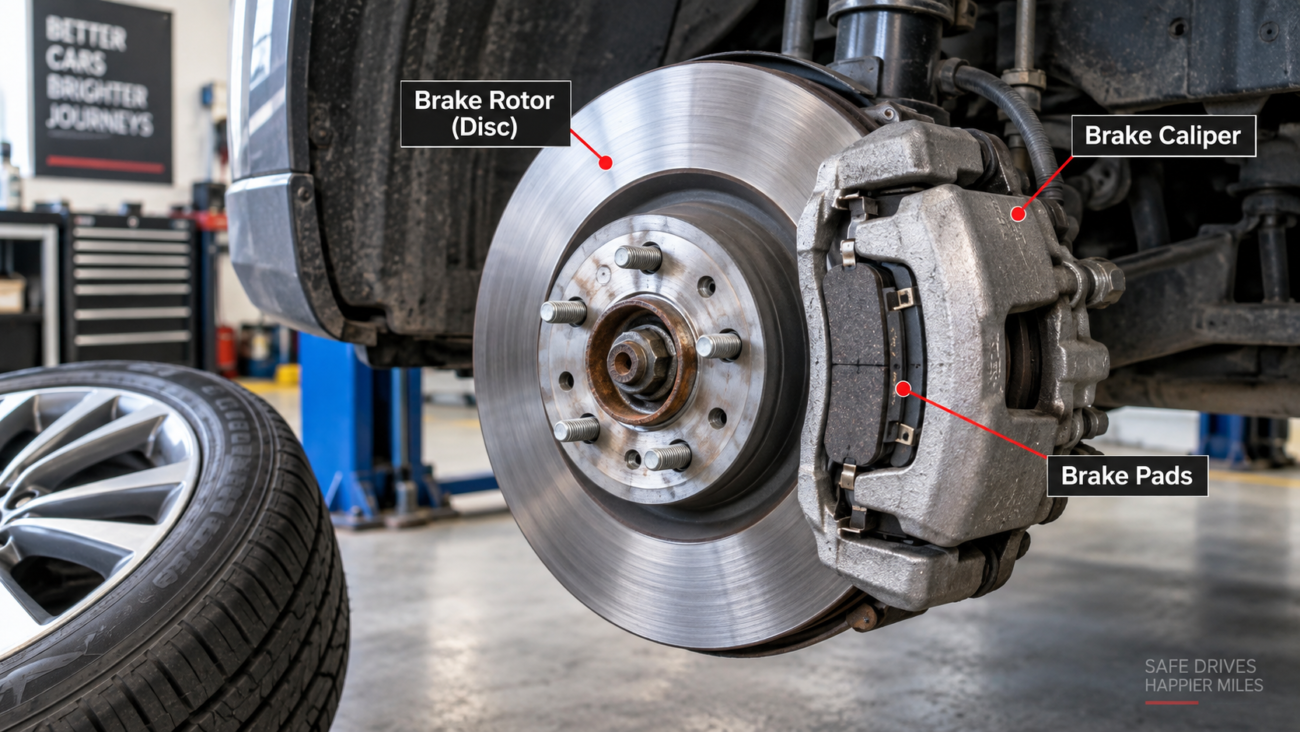
ABS Pump and Valves
The ABS pump and valves help manage hydraulic pressure during ABS operation.
The valves can control the flow of brake fluid to individual brake circuits, while the pump helps restore hydraulic pressure as the system cycles.
Together, these parts allow ABS to adjust braking pressure rapidly.
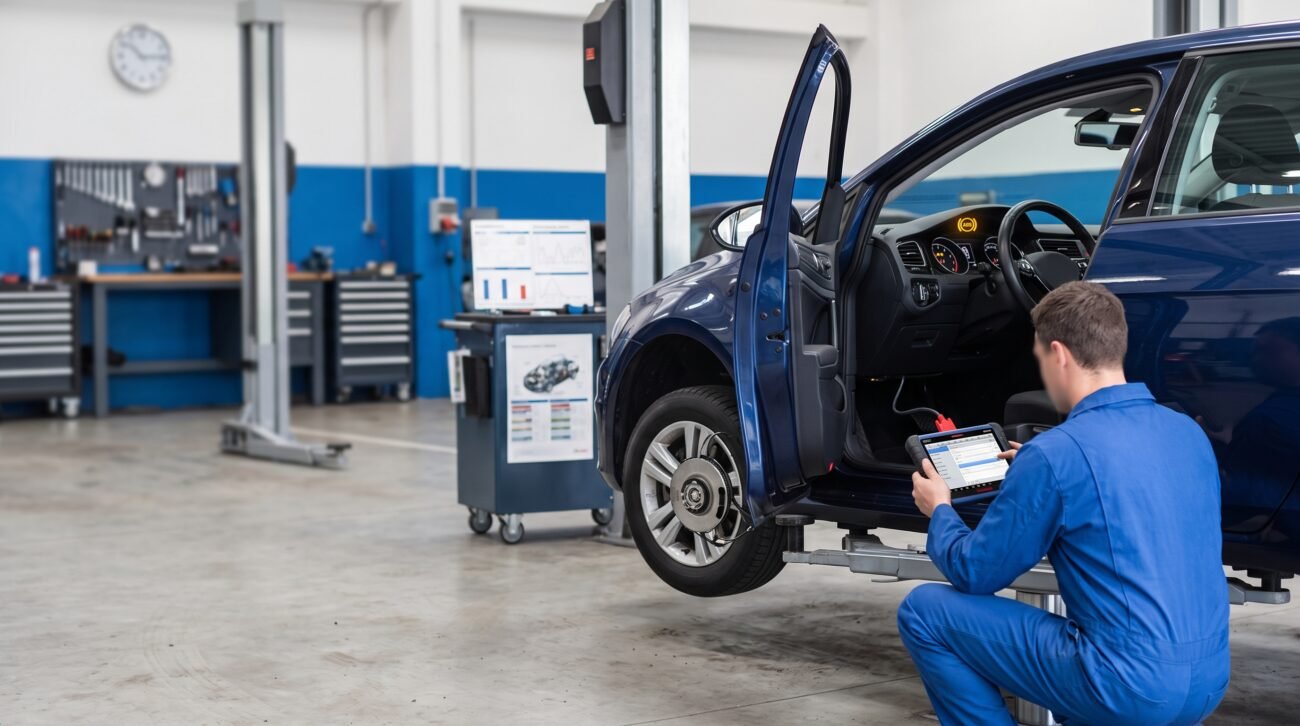
What Does the ABS Warning Light Mean?
An illuminated ABS warning light means the vehicle’s ABS system has detected a problem or has been disabled.
The exact meaning depends on the vehicle.
Possible causes include:
- A wheel-speed sensor problem
- Wiring or electrical issues
- A problem with the ABS control module
- A hydraulic or valve problem
- Low system voltage or another electrical fault
- Other ABS-related faults
The ABS warning light is different from the regular brake warning light.
The regular brake warning light can indicate issues involving the vehicle’s primary braking system, parking brake, or brake-fluid level, depending on the vehicle.
If the ABS light stays on while driving, the vehicle’s regular brakes may still operate, but the antilock function may not be available.
That does not mean the warning should be ignored.
Have the vehicle checked by a qualified technician, especially if the ABS light appears together with the regular brake warning light or if the brake pedal feels abnormal.
Always check your vehicle owner’s manual for the specific warning-light information for your model.
Common ABS Problems and Symptoms
ABS components can develop faults just like other vehicle systems.
ABS Warning Light Stays On
One of the most obvious symptoms is an ABS warning light that remains illuminated.
This can indicate a stored fault in the ABS system.
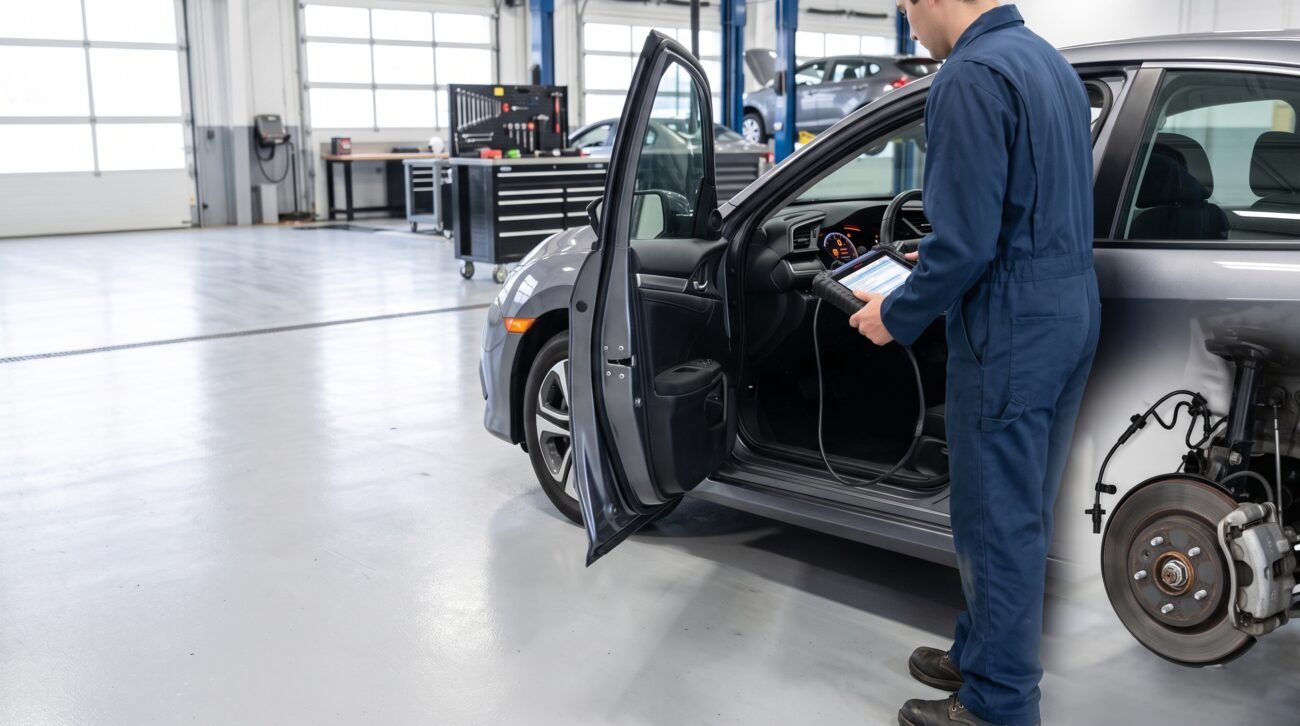
A diagnostic scan can often help identify the affected system or component.
ABS Activates Unexpectedly
ABS should normally activate when the system detects conditions associated with wheel lockup.
If ABS repeatedly activates during gentle, normal braking, the vehicle should be inspected.
A faulty wheel-speed sensor, damaged wiring, incorrect sensor information, or another system problem can potentially cause abnormal operation.
Brake Pedal Feels Unusual
A brake pedal that suddenly feels very different should not be ignored.
A soft, unusually low, hard, or inconsistent brake pedal can have several possible causes, and not all are related to ABS.
Because brakes are safety-critical, unusual pedal behavior should be professionally checked.
ABS Makes Unusual Sounds
Clicking, buzzing, and pulsing can be normal when ABS activates.
However, noises that occur frequently during normal braking or noises accompanied by warning lights or changes in braking performance deserve attention.
Wheel-Speed Sensor Problems
Wheel-speed sensors operate near the wheels and can be exposed to dirt, moisture, road debris, heat, and physical damage.
Sensor wiring can also develop faults.
Because ABS diagnosis can involve electronic and hydraulic components, brake repairs are not a good area for unsafe experimentation. If the ABS system has a fault, professional diagnosis is the safer choice.
Does ABS Work on Snow, Ice, and Gravel?
Yes, ABS can operate on snow, ice, gravel, and other low-traction surfaces. However, the results can differ from those on paved roads.
The most important thing to understand is that ABS cannot overcome limited traction.
On ice, for example, tires have very little grip. ABS may prevent the wheels from staying locked, but the vehicle can still require a long distance to stop.
On gravel or loose surfaces, braking behavior can also differ from braking on asphalt.
The vehicle’s tires, speed, road surface, temperature, and design all affect braking performance.
ABS on Ice
Ice provides very little tire-road grip.
ABS may help preserve steering ability during hard braking, but it cannot make the vehicle stop quickly on ice.
The safest approach is to drive slowly enough for the conditions and leave plenty of space.
ABS on Snow
Snow conditions vary greatly.
Packed snow, fresh snow, wet snow, and icy snow can provide different levels of traction.
ABS can manage wheel lockup, but stopping distance may still be much longer than on dry pavement.
ABS on Gravel
Loose gravel presents a different challenge.
Some vehicles may stop differently on loose surfaces because a locked wheel can build material in front of the tire. ABS may reduce that type of wheel lockup.
This does not mean drivers should deliberately disable ABS or use special braking techniques unless the vehicle manufacturer specifically recommends them.
The key point is simple: ABS helps manage wheel lockup, but it does not eliminate the limitations of the road surface.
ABS and Other Vehicle Safety Systems
ABS is often part of a larger group of electronic vehicle safety systems.
ABS and Traction Control
ABS and traction control both use wheel-speed information, but they have different primary jobs.
ABS mainly operates during braking to help prevent wheel lockup.
Traction control mainly operates during acceleration when a driven wheel begins to spin faster than appropriate for the available traction.
Both systems can use information from wheel-speed sensors and other vehicle sensors.
ABS and Electronic Stability Control
Electronic Stability Control, often called ESC or a similar manufacturer-specific name, is designed to help the vehicle maintain its intended direction during certain loss-of-control situations.
ESC can use the vehicle’s braking system to apply braking force to individual wheels.
ABS provides an important foundation for this type of individual-wheel braking control.
In other words, ABS is not the same as ESC, but the systems can work together.
ABS and Brake Assist
Brake Assist has a different role from ABS.
Brake Assist can help provide strong braking assistance when the system detects an emergency braking situation.
ABS, by comparison, manages wheel behavior and brake pressure when a wheel is approaching lockup.
A vehicle can have ABS, Brake Assist, traction control, and electronic stability control working together as part of a broader safety system.
FAQ
What does the antilock brake system do?
If you are wondering what does the antilock brake system do, the main job of ABS is to help prevent a vehicle’s wheels from locking during hard or emergency braking. When a wheel is about to stop rotating, the ABS system can rapidly reduce and restore brake pressure.
This process helps the tires keep rotating while the vehicle is slowing down. As a result, the driver may have a better chance of maintaining steering control and avoiding an obstacle.
So, what does the antilock brake system do in a real driving situation? It monitors wheel speed and reacts when it detects possible wheel lockup. The system can make very quick brake-pressure adjustments that a driver cannot normally make manually.
ABS is especially useful during emergency braking. However, it is important to remember that ABS does not make a vehicle immune to accidents or loss of traction.
Does ABS prevent a car from skidding?
When asking what does the antilock brake system do, many drivers also want to know whether ABS completely prevents skidding. The answer is no.
ABS can reduce the risk of wheel lockup during hard braking. This may help reduce certain types of skidding and can help the driver maintain better control.
However, a vehicle can still lose traction because of excessive speed, wet or icy roads, worn tires, sudden steering, or other factors.
Understanding what does the antilock brake system do can help drivers use the system correctly. ABS is designed to help manage wheel lockup, not to replace safe driving.
Can you steer while ABS is working?
Yes. One of the major benefits of ABS helps explain what does the antilock brake system do during emergency braking.
If you need to brake suddenly because of a hazard, keep firm pressure on the brake pedal and steer carefully toward a safe path. ABS is designed to help keep the wheels rotating so that steering control can be maintained better during heavy braking.
You may feel a pulsing sensation or hear mechanical sounds from the brake system when ABS activates. This can be normal.
Knowing what does the antilock brake system do can make this experience less surprising. Do not repeatedly pump the brake pedal when ABS is operating. Keep steady pressure on the pedal and focus on steering safely.
Is it safe to drive with the ABS light on?
An ABS warning light that stays on should be checked as soon as reasonably possible.
Understanding what does the antilock brake system do also explains why an ABS warning matters. If the ABS system has a fault, the basic brakes may still work on many vehicles, but the anti-lock function may not be available.
If the regular brake warning light also comes on, the brake pedal feels unusual, or braking performance changes, the situation should be treated as more urgent.
Do not assume that an ABS warning means every part of the braking system has failed. However, it should never be ignored.
Does ABS work every time you brake?
No. ABS does not normally activate every time you press the brake pedal.
If you are learning what does the antilock brake system do, it is important to know that ABS usually activates only when the system detects that one or more wheels are approaching lockup.
Normal and gentle braking generally does not require ABS intervention.
During hard braking, however, the system may activate automatically. This is one reason why knowing what does the antilock brake system do is useful for new drivers.
Does ABS reduce stopping distance?
ABS does not guarantee a shorter stopping distance in every situation.
The primary answer to what does the antilock brake system do is that it helps prevent wheel lockup and supports steering control during hard braking. It is not simply a system designed to make every stop shorter.
Stopping distance depends on many factors, including:
- Vehicle speed
- Tire condition
- Tire pressure
- Road surface
- Weather
- Brake condition
- Vehicle weight
- Driver reaction time
On some surfaces, ABS may help provide effective braking and control, while on others, stopping performance can vary.
This is why what does the antilock brake system do should be understood as a question about vehicle control, not just stopping distance.
Can ABS fail while regular brakes still work?
Yes, an ABS fault does not necessarily mean that the basic braking system has completely failed.
To understand what does the antilock brake system do, it helps to separate ABS from the vehicle’s basic braking system. Conventional brakes can often continue to provide braking even if the ABS function has a fault.
However, the exact behavior depends on the vehicle and the type of problem.
If the ABS warning light appears, have the vehicle inspected by a qualified technician. If braking performance changes or a brake warning light appears, seek professional assistance promptly.
Knowing what does the antilock brake system do can help you understand why an ABS fault should not be ignored.
What Are the Main Parts of an ABS System?
Another useful way to understand what does the antilock brake system do is to look at its main components.
Wheel-Speed Sensors
Wheel-speed sensors monitor how quickly each wheel is rotating. The ABS system uses this information to identify a wheel that may be approaching lockup.
ABS Control Module
The electronic control module processes information from the wheel-speed sensors. It determines when brake pressure needs to be adjusted.
Hydraulic Control Unit
The hydraulic unit controls brake pressure at the wheels. It can rapidly adjust pressure when the system detects possible wheel lockup.
Together, these components explain what does the antilock brake system do and how it can react so quickly during emergency braking.
Why Is ABS Important?
ABS is important because losing wheel rotation during hard braking can reduce the driver’s ability to steer.
The key to what does the antilock brake system do is understanding the relationship between braking and steering. When a wheel is locked, it can become much harder for the driver to control the vehicle’s direction through steering.
ABS helps prevent prolonged wheel lockup. This can give the driver a better opportunity to steer around a hazard while continuing to brake.
Still, ABS cannot overcome the laws of physics. Drivers should always maintain a safe speed and leave enough following distance.
What Should You Do When ABS Activates?
If ABS activates during emergency braking, remain calm.
For many vehicles, the recommended response is to apply firm, steady pressure to the brake pedal and steer toward a safe area.
You may notice vibration or pulsing through the brake pedal. This can happen when the ABS system rapidly adjusts brake pressure.
Understanding what does the antilock brake system do can help drivers recognize that these sensations can be part of normal ABS operation.
Do not release the brake simply because the pedal feels different unless you have another reason to do so.
What Does the ABS Warning Light Mean?
An ABS warning light can indicate that the system has detected a problem.
Since what does the antilock brake system do involves electronic sensors, a control module, and hydraulic components, several different faults can cause the warning light to appear.
Possible causes can include a sensor problem, wiring issue, control-module fault, or another ABS-related problem.
The exact cause cannot be determined from the warning light alone. A diagnostic check is usually needed.
ABS and Safe Driving
Even when a vehicle has ABS, safe driving remains essential.
The answer to what does the antilock brake system do should never be interpreted as “ABS makes driving completely safe.” ABS is a safety feature that can assist the driver, but it cannot compensate for excessive speed, poor visibility, unsafe following distance, or severely reduced tire grip.
Good tires, proper tire pressure, regular brake maintenance, and careful driving all remain important.
Final Thoughts on What ABS Does
So, what does the antilock brake system do?
ABS helps prevent a vehicle’s wheels from staying locked during hard braking. It uses wheel-speed sensors, an electronic control module, and a hydraulic control unit to monitor wheel behavior and rapidly adjust brake pressure.
The biggest safety benefit of ABS is its ability to help the driver maintain better steering control while braking hard.
When considering what does the antilock brake system do, remember that it is not designed to guarantee a shorter stopping distance in every situation. It also cannot prevent every skid or overcome poor tires and slippery roads.
ABS is one part of a vehicle’s overall safety system.
If the ABS warning light stays on, the vehicle should be inspected by a qualified technician. Regular brake maintenance, properly inflated tires, good tires, and safe driving habits remain essential.
In short, what does the antilock brake system do? It is designed to help keep the wheels from locking during heavy braking, giving the driver a better chance of maintaining control and steering around a hazard when necessary.
Once you understand what does the antilock brake system do, it becomes easier to understand why ABS is an important safety feature in modern vehicles. It does not replace careful driving, but it can provide valuable assistance when hard braking is necessary.


One thought on “What Does the Antilock Brake System Do? A Simple Guide”