
If you have ever looked through a car wheel and wondered, “what does the brake look like?”, you are not alone. Car brakes can look confusing at first because some parts are easy to see while others are hidden inside the wheel or brake assembly.
In simple terms, a typical disc brake looks like a flat, round metal disc with a smaller clamp-like part called a caliper around its edge. The brake pads sit inside the caliper and press against the disc when you apply the brake pedal. A drum brake looks different. It has a large, round metal drum that covers most of the working parts.
Knowing what brakes look like can help you understand basic car maintenance. It can also make it easier to talk with a mechanic if you notice something unusual.
Let’s look at the different brake parts and learn how to identify them.
What Does the Brake Look Like in a Car?
When people ask what a car brake looks like, they are often referring to the parts visible behind the wheel.
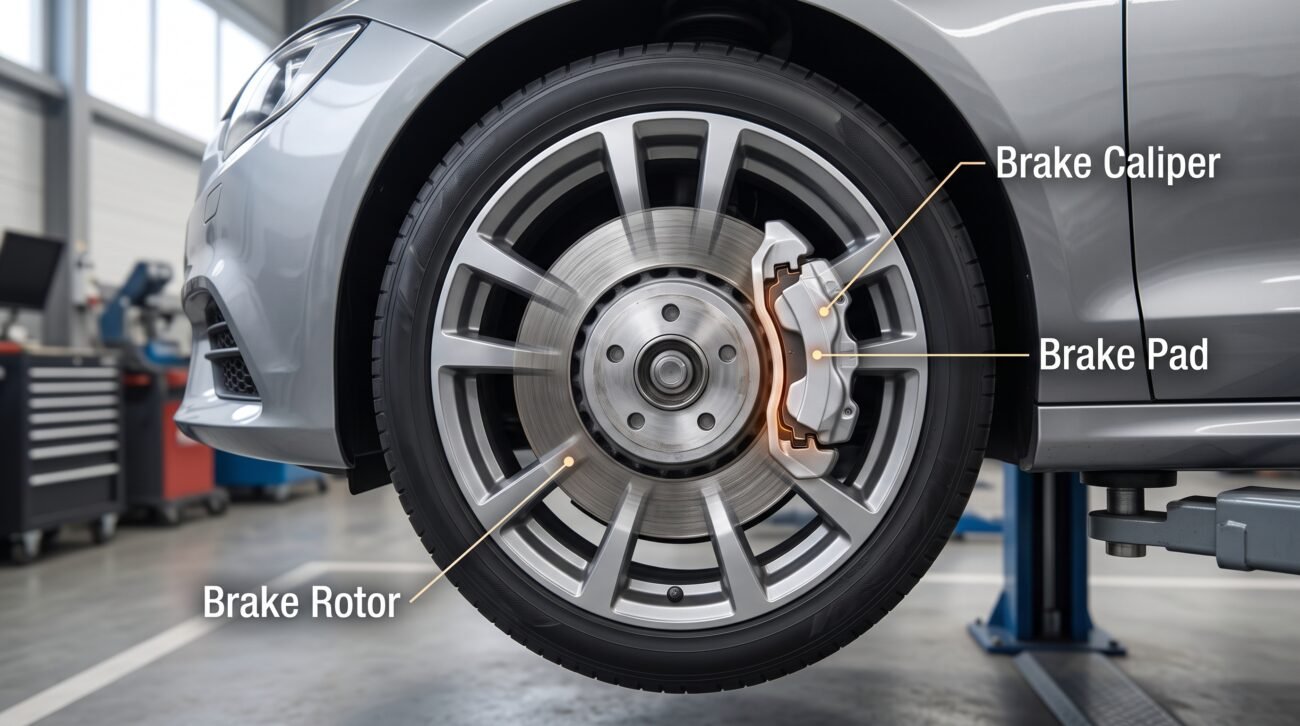
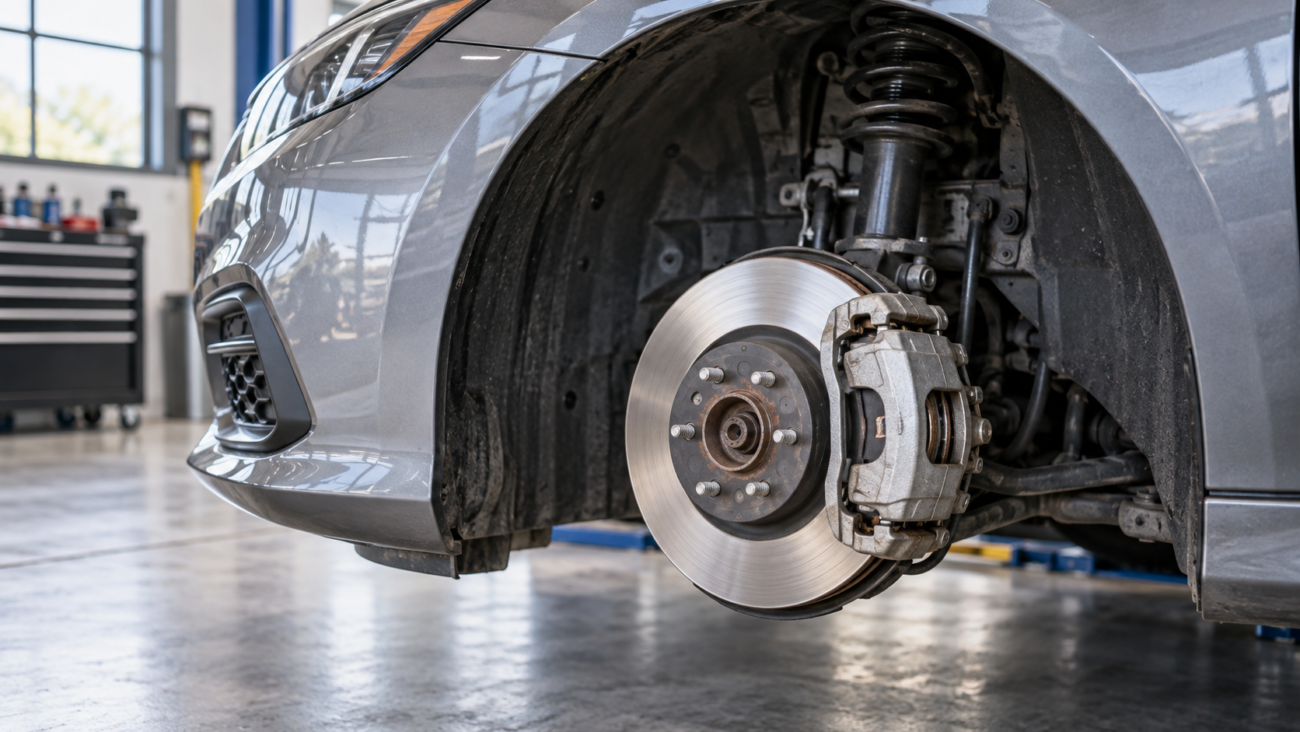
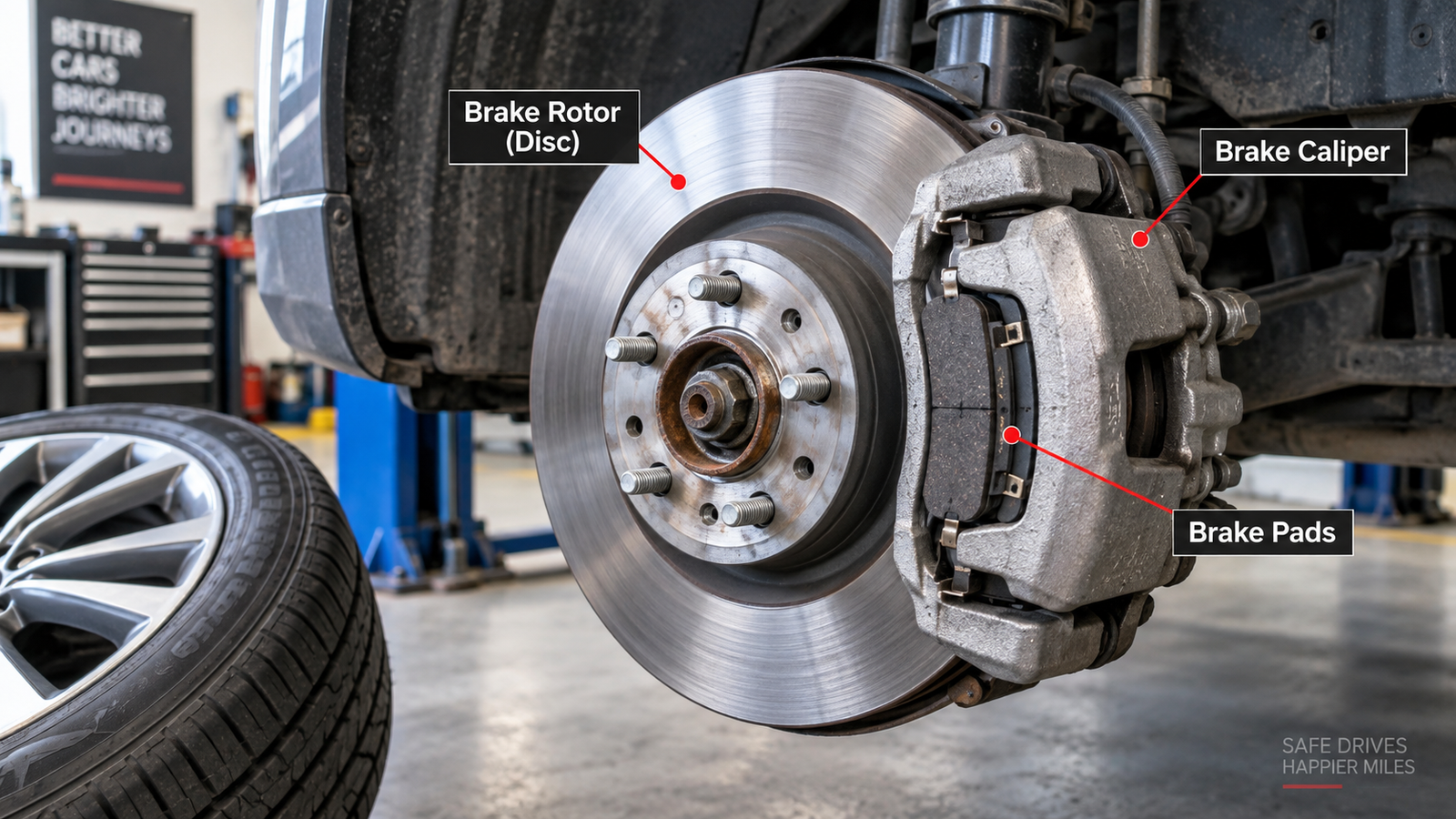
On a vehicle with disc brakes, you can usually see three important parts:
- Brake rotor: A large, round metal disc.
- Brake caliper: A clamp-like component that sits around part of the rotor.
- Brake pads: Flat friction components located inside the caliper.
The rotor is usually the easiest part to recognize. It looks like a shiny or dull metal disc positioned behind the wheel.
The caliper is normally mounted near the edge of the rotor. Depending on the wheel design, it may be easy to see or partly hidden.
The brake pads are harder to see because they sit between the caliper and rotor.
Not every brake component is visible from outside the car. Some parts are behind the rotor, inside the caliper, or inside a drum assembly.
What Does a Disc Brake Look Like?
A disc brake has a round metal rotor that turns with the wheel. The rotor may have a smooth, flat surface or openings between its sections if it is a vented design.
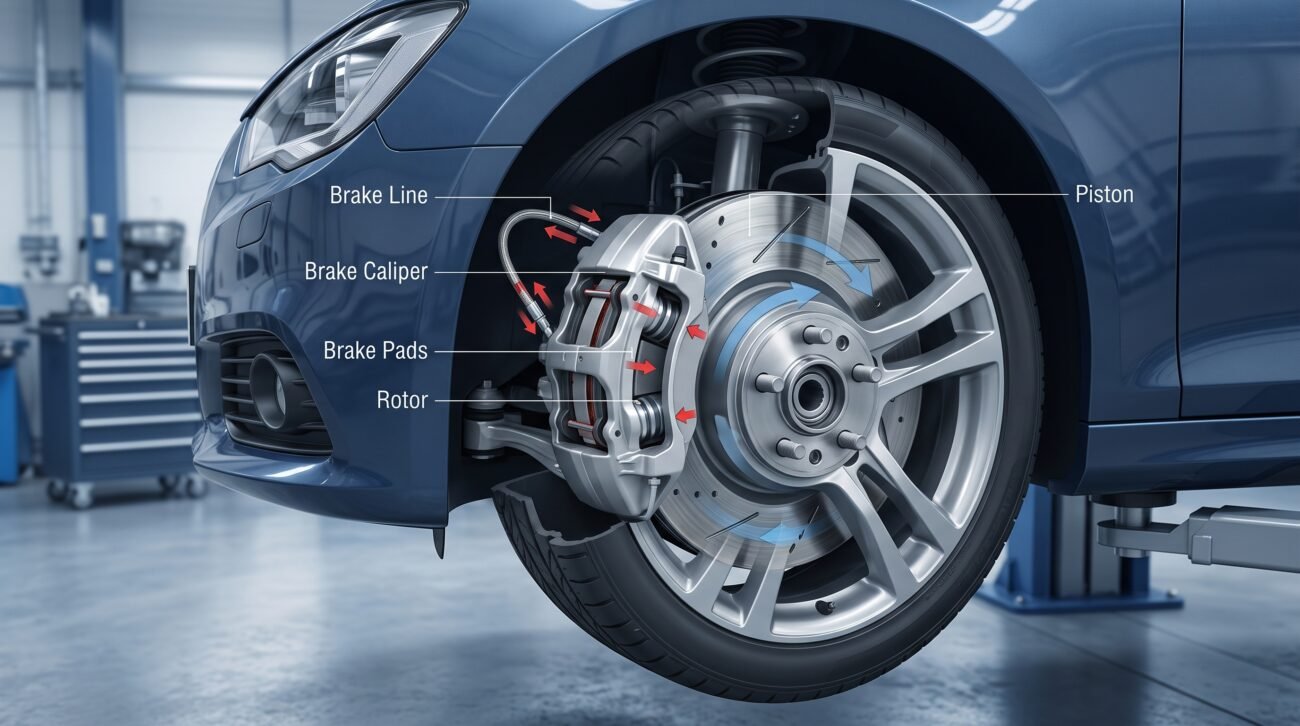
Around one section of the rotor is the brake caliper. Think of the caliper as a clamp that holds the brake pads in the correct position.
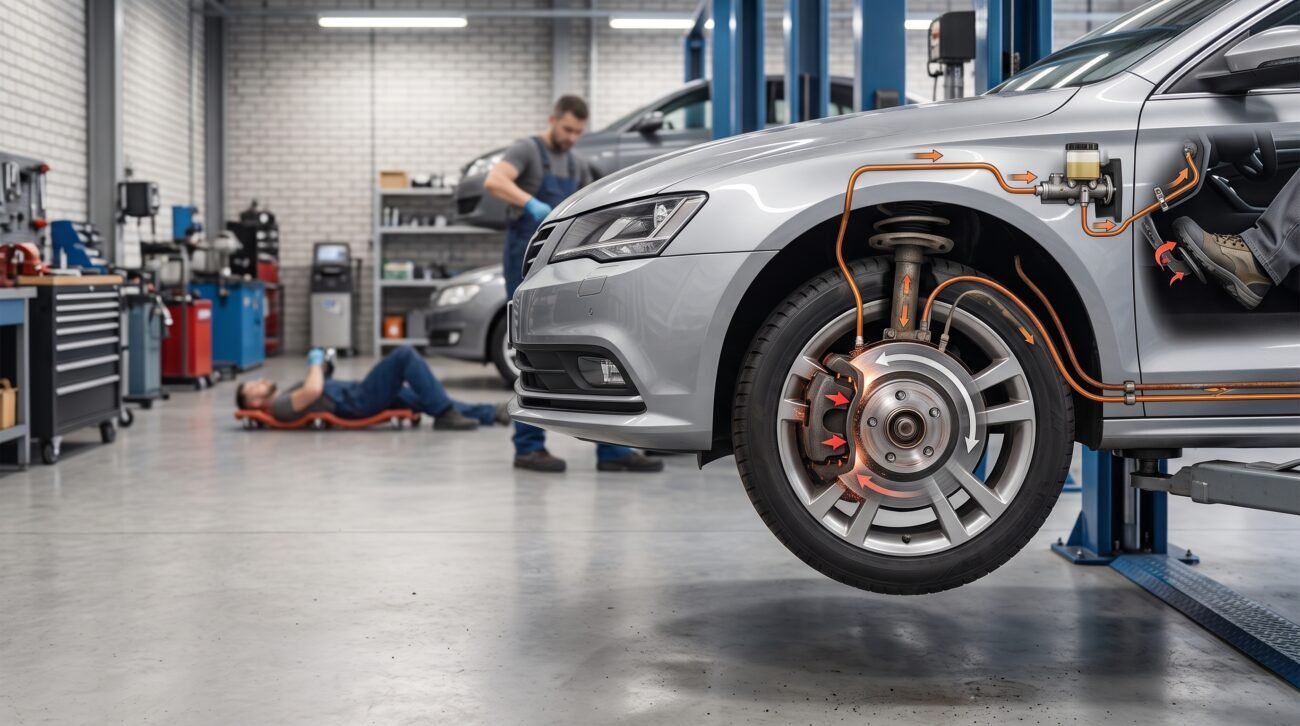
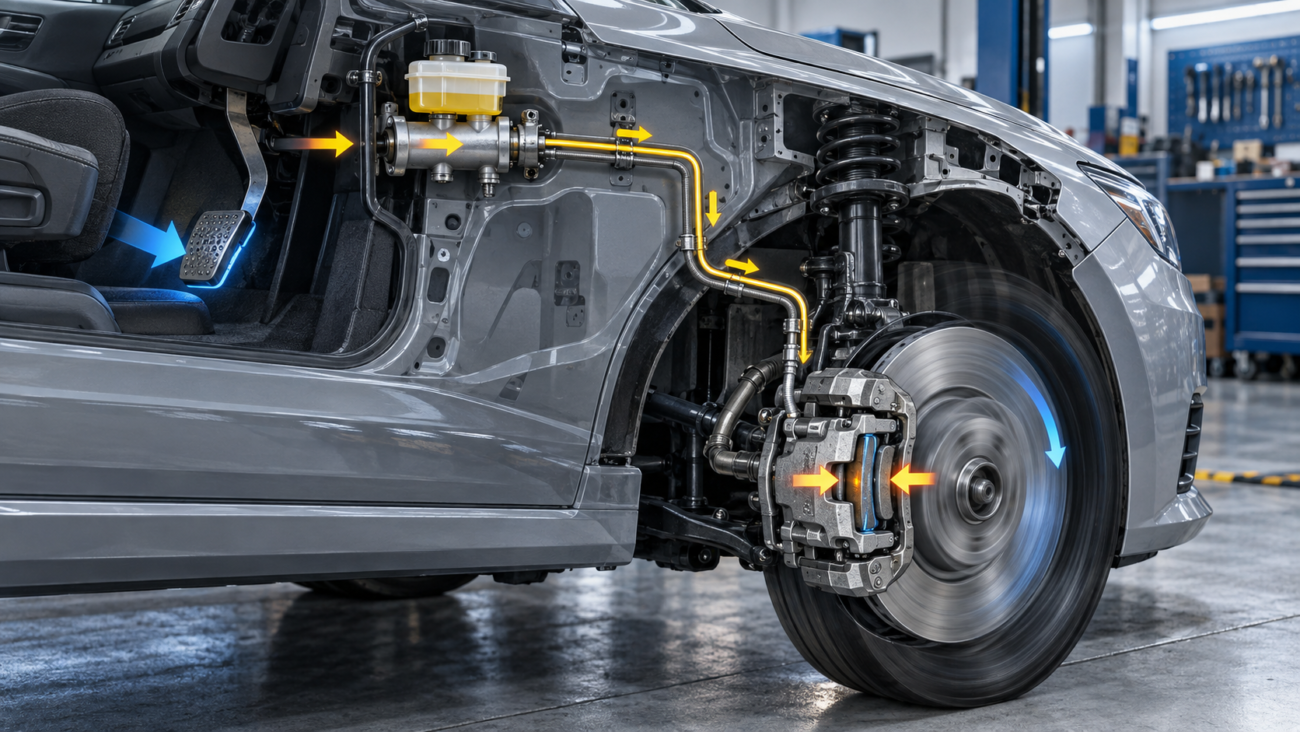
When you press the brake pedal, the brake system causes the pads to press against the rotating rotor. This creates friction and slows the wheel.
From outside the vehicle, a disc brake can look something like this:
Wheel → Rotor → Caliper around rotor → Brake pads inside caliper
The exact design varies between vehicles. Performance cars, trucks, family cars, and small cars may all use different-looking brake components.
What Does a Drum Brake Look Like?
A drum brake has a large round metal drum rather than an exposed rotor.
The drum surrounds most of the working brake components. Inside it are parts such as the brake shoes and other hardware that helps operate the brake.
From outside the vehicle, you generally see the outside of the drum rather than the brake shoes themselves.
This gives drum brakes a more enclosed appearance compared with disc brakes.
A simple way to remember the difference is:
- Disc brake: Flat metal rotor with a caliper around it.
- Drum brake: Enclosed round drum containing brake shoes and other components.
What Are the Main Parts of a Car Brake?
Understanding the main components makes it much easier to recognize what you are seeing behind a wheel.
Brake Rotor
The brake rotor, also called a brake disc, is a round metal component.
It is attached to the wheel hub and rotates with the wheel. When you press the brake pedal, the brake pads press against the rotor.
A typical rotor may have:
- A flat circular friction surface
- A center section connected to the hub
- Ventilation passages on some designs
- Machined surfaces where the brake pads make contact
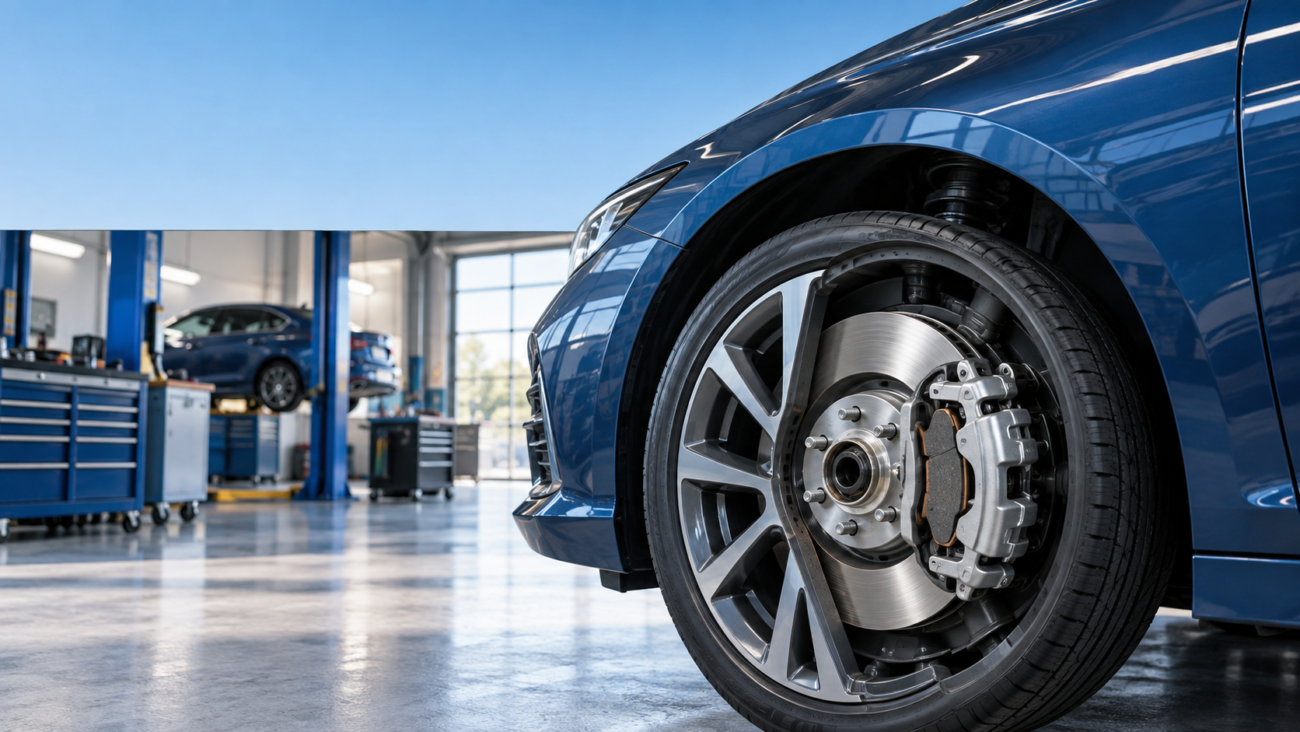
The rotor is usually visible through the openings in an alloy wheel.
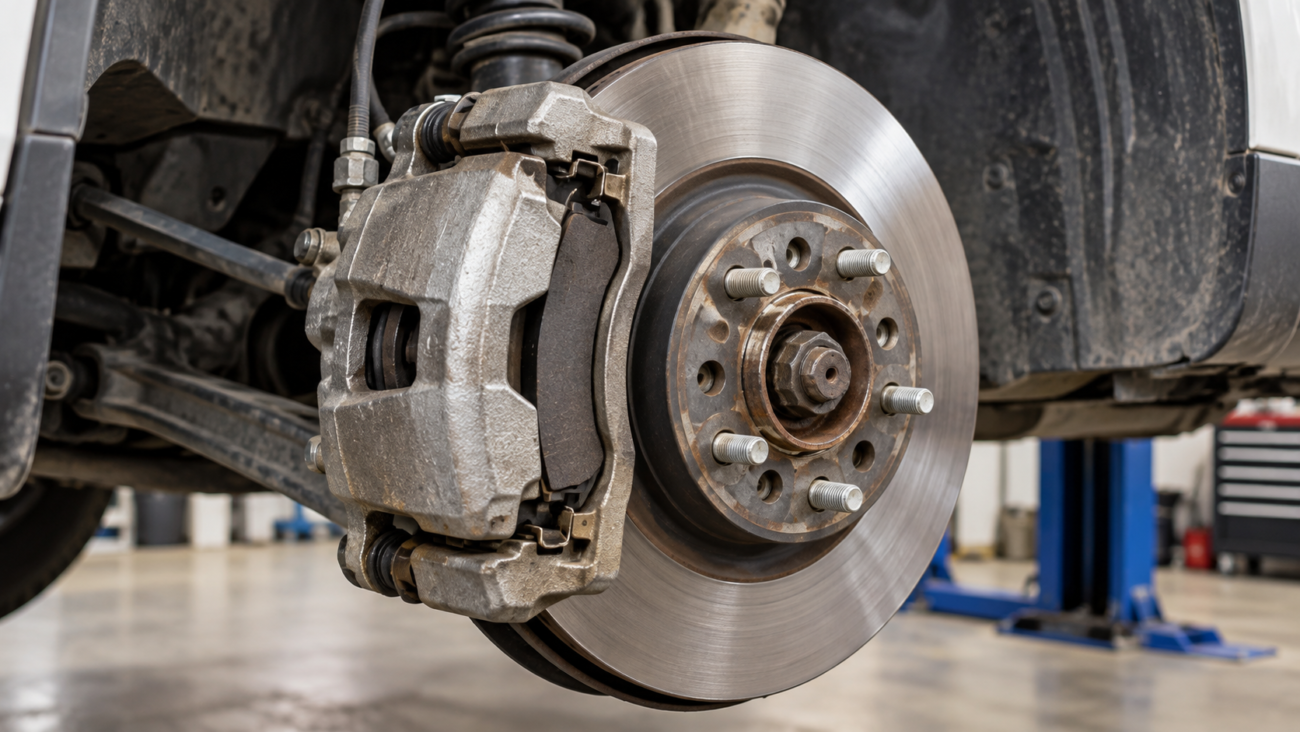
Rotors can have different finishes. A newer rotor may have a clean metallic appearance. A rotor that has been exposed to moisture may develop a thin layer of surface rust, especially after the vehicle has been parked.
Surface appearance alone does not always tell you whether a rotor needs replacement.
Brake Caliper
The brake caliper is the component that holds the brake pads around the rotor.
It is normally positioned near the outer edge of the rotor. From the side of the vehicle, the caliper often looks like a thick metal clamp or housing.
Some calipers are small and compact. Others are larger, depending on the vehicle and braking system.
Inside the caliper are components that help move the brake pads toward the rotor when braking.
Some vehicles have calipers that are highly visible through the wheel. Others are mostly hidden by the wheel design.
Brake Pads
Brake pads are small, flat components containing friction material.
They sit on either side of the rotor in a disc-brake system. When braking, the friction material contacts the rotor.
Brake pads generally have a metal backing plate with friction material attached to it.
They are much smaller than the rotor, so they can be difficult to see without removing the wheel.
Brake pads gradually wear because their friction material is used whenever the brakes are applied.
How quickly they wear depends on factors such as driving conditions, vehicle weight, brake design, traffic, and driving habits.
Brake Drum and Brake Shoes
A brake drum is a round metal housing that rotates with the wheel.
Inside the drum are brake shoes. When the brakes are applied, the shoes move outward and press against the inside surface of the drum.
This creates friction and slows the wheel.
Unlike disc brakes, most of the working parts of a drum brake are enclosed.
That means you generally cannot see the brake shoes simply by looking through the wheel.
The biggest visual difference is easy to remember:
Disc brakes have an exposed rotor and caliper, while drum brakes have an enclosed drum.
What Does a Brake Look Like Behind the Wheel?
The appearance of a brake can change depending on the type of wheel fitted to the vehicle.
Alloy wheels often have larger openings. This can make the brake rotor and caliper easy to see.
Steel wheels may have smaller openings or decorative covers, making the brake assembly harder to see.
If your car has disc brakes, you may see a large circular rotor behind the wheel. The caliper may appear as a thick metal component near the outside edge.
If the vehicle uses a drum brake at that wheel, you may instead see a round metal drum.
Remember that front and rear brakes may not use the same design. A vehicle can have disc brakes at one axle and drum brakes at the other.
What You Can See Through Alloy Wheels
Alloy wheels often have several large openings between their spokes.
These openings may give you a good view of the brake assembly.
Depending on the vehicle, you might see:
- The brake rotor
- Part of the brake caliper
- The outer edge of the brake pads
- The wheel hub area
A large alloy wheel with thin spokes can make the brakes especially easy to see.
However, visibility varies greatly between wheel designs.
Some alloy wheels have thick spokes that block much of the brake assembly.
What You Can See Through Steel Wheels
Steel wheels can make brake components more difficult to see.
The wheel may have smaller openings, and a wheel cover or hubcap may cover additional areas.
You may only see a small portion of the rotor or drum.
If you cannot clearly identify your brakes through the wheel, that does not necessarily mean anything is wrong.
You may simply need to look from a different angle, use a flashlight safely, or refer to the vehicle’s owner’s manual.
Do not put your hands near moving or hot brake components.
Disc Brakes vs. Drum Brakes: What Do They Look Like?
| Feature | Disc Brake | Drum Brake |
|---|---|---|
| Main visible part | Rotor | Drum |
| Shape | Flat, round disc | Enclosed round drum |
| Caliper | Usually visible | Not externally visible |
| Brake pads/shoes | Pads | Shoes |
| Common location | Front and rear | Often rear on some vehicles |
Disc and drum brakes both perform the same basic job: they help slow and stop the vehicle.
However, their physical appearance and internal design are different.
A disc brake has a rotor that is exposed around its braking surfaces. The caliper grips the rotor with brake pads.
A drum brake uses shoes that press against the inside of a rotating drum.
Many modern vehicles use disc brakes on both axles, while some vehicles use disc brakes at the front and drum brakes at the rear. The exact setup depends on the vehicle.
What Does a Brake Rotor Look Like?
A brake rotor is usually one of the easiest brake components to recognize.
It is a round metal disc located behind the wheel.
The center of the rotor connects to the wheel hub, while the outer portion provides the surface against which the brake pads press.
What Does a New Brake Rotor Look Like?
A new brake rotor usually has a clean metal appearance.
Its braking surface is generally smooth and evenly machined. Depending on the design, it may have ventilation channels or openings between two friction surfaces.
There are two common broad rotor designs:
Solid rotors: These are made from a single solid disc.
Vented rotors: These have internal air spaces between the friction surfaces to help manage heat.
A rotor may also have drilled holes or slots in certain applications. These features are design choices and should not automatically be interpreted as signs of better or worse brakes.
The exact rotor design depends on the vehicle and braking system.
What Does a Worn Brake Rotor Look Like?
A used brake rotor may show signs of normal wear.
You might notice:
- Circular wear marks
- A slight ridge near the outer edge
- Surface discoloration
- Light surface rust after exposure to moisture
- Grooves or scoring
Some surface changes can be normal. Others can indicate a problem.
For example, deep grooves, significant scoring, cracks, severe corrosion, or unusual discoloration deserve professional inspection.
It is important not to judge a rotor only by looking at it.
A mechanic may measure rotor thickness, inspect its condition, and compare it with the vehicle manufacturer’s specifications.
What Does a Brake Caliper Look Like?
A brake caliper usually looks like a thick metal housing or clamp positioned around one section of the brake rotor.
Its shape varies from one vehicle to another.
A small passenger car may have a relatively compact caliper. A larger vehicle may have a bigger brake assembly.
Some calipers are painted or finished in noticeable colors, while many are simply bare metal or dark-colored.
The caliper contains or works with components that push the brake pads against the rotor.
When you look through an alloy wheel, the caliper is often the chunky component sitting beside the rotor.
One important point is that the caliper does not rotate with the wheel. The rotor rotates, while the caliper remains mounted in place.
This allows the brake pads to apply friction to the rotating rotor.
What Do Brake Pads Look Like?
Brake pads are much smaller than brake rotors.
A typical disc-brake pad has a metal backing plate with a layer of friction material attached to it.
The friction material is the part that contacts the rotor during braking.
Brake pads are often roughly rectangular, although their exact shape depends on the brake design.
If you look at a brake assembly from outside the wheel, you may see only the edge of a brake pad.
The friction material gradually becomes thinner as the brakes are used.
For this reason, brake pads are considered normal wear components.
When a mechanic inspects brake pads, they look at the remaining friction material and also check for uneven wear or other problems.
What Does a Bad or Worn Brake Look Like?
There is no single appearance that proves a brake is bad.
However, certain visible changes can be warning signs.
These can include:
- Deep grooves in the rotor
- Uneven rotor wear
- Excessive corrosion
- Unusual discoloration
- Very thin brake-pad friction material
- Cracks or other obvious damage
- Uneven pad wear
Some brake problems are not visible at all.
For example, a brake may have a hydraulic problem, a sticking component, or another issue that cannot be confirmed simply by looking at the wheel.
That is why appearance should be treated as one clue rather than a complete diagnosis.
Signs of Worn Brake Pads
Worn brake pads may have very little friction material remaining.
Depending on the wheel design, you might be able to compare the visible pad material with the metal backing plate.
Other possible signs of brake-pad wear can include:
- A brake warning indicator
- Unusual noises during braking
- A change in brake feel
- The vehicle taking longer to stop
Not every noise means the brake pads are worn, and not every worn pad produces an obvious sound.
A proper inspection is the safest way to determine the condition of the pads.
Signs of a Damaged Brake Rotor
A damaged or severely worn rotor may show visible grooves, scoring, cracks, or unusual heat-related discoloration.
A rotor can also have thickness variation or other problems that are not easy to see.
If the steering wheel or vehicle vibrates during braking, there may be several possible causes. The brake system should be inspected rather than assuming the rotor is automatically the cause.
Rotor condition should be assessed against the specifications for that particular vehicle.
Signs of Brake Problems That Need Attention
Some signs should not be ignored.
These include:
- A brake warning light
- A major change in pedal feel
- Unusual grinding or scraping noises
- The vehicle pulling to one side while braking
- Noticeably reduced braking performance
- A burning smell associated with braking
- Visible damage around the brake assembly
If braking performance changes significantly, have the vehicle inspected by a qualified mechanic.
Brakes are a critical safety system, so it is better to investigate an unusual symptom than to rely on appearance alone.
How to Identify Your Car’s Brake Type
You can often identify the brake type by looking through the wheel.
1. Look Through the Wheel
Find a safe position where you can see through the wheel openings.
Do not touch the brake components, especially after driving, because they can become very hot.
2. Check for a Visible Rotor and Caliper
If you see a large, flat circular metal disc with a thick component around part of its edge, you are probably looking at a disc-brake system.
The large circular part is the rotor.
The clamp-like component is the caliper.
3. Identify an Enclosed Drum
If you see a round enclosed housing without the typical exposed rotor-and-caliper arrangement, the wheel may use a drum brake.
The brake shoes and most internal hardware are inside the drum.
4. Consult the Vehicle Owner’s Manual if Unsure
The owner’s manual or vehicle service information can provide details about the braking system.
You can also ask a qualified mechanic to identify the brake setup during a routine inspection.
Keep in mind that a vehicle may have different brake types at the front and rear.
Why Does Knowing What the Brake Looks Like Matter?
Knowing basic brake components can be useful even if you never plan to repair your own vehicle.
It Helps You Understand Basic Vehicle Maintenance
If someone tells you that your brake pads or rotors need inspection, knowing what these parts look like makes the conversation easier to understand.
Instead of hearing unfamiliar terms, you can connect them with actual parts on the vehicle.
It Makes It Easier to Communicate With a Mechanic
Suppose a mechanic tells you that the front brake rotors have deep scoring.
If you know what a rotor is, you will have a better idea of which component they are discussing.
This does not mean you should diagnose complex brake problems yourself. It simply gives you a better understanding of the work being discussed.
It Helps Identify Obvious Signs of Wear
A basic visual inspection can sometimes reveal something unusual.
For example, you may notice significant corrosion, an obviously damaged component, or a brake pad that appears extremely thin.
Visual checks cannot replace a professional brake inspection, but they can help you notice when something deserves attention.
It Builds Basic Car-Maintenance Knowledge
Understanding your car’s major systems can make vehicle ownership less confusing.
Knowing the difference between a rotor, caliper, pad, drum, and shoe is a useful starting point.
Frequently Asked Questions
What does the brake look like on a car?
A car brake can look different depending on its design. A disc brake usually has a round metal rotor with a caliper around its edge and brake pads inside the caliper. A drum brake has an enclosed round drum with brake shoes inside.
What does a brake disc look like?
A brake disc, or rotor, looks like a large, flat, round metal disc. It sits behind the wheel and rotates with the wheel. The brake pads press against its surfaces when the brakes are applied.
What does a brake caliper look like?
A brake caliper generally looks like a thick metal clamp or housing positioned around part of the brake rotor. It holds or operates with the brake pads and stays fixed while the rotor turns.
What does a brake pad look like?
A brake pad is usually a relatively small, flat component with a metal backing plate and friction material attached to it. It sits on either side of a disc-brake rotor.
Can you see the brakes through the wheel?
Often, yes. If the vehicle has disc brakes and the wheel has large openings, you may be able to see the rotor and part of the caliper. Some wheel designs block the view, and drum brakes hide most of their working parts inside the drum.
Do all cars have disc brakes?
No. Vehicles can use disc brakes, drum brakes, or a combination of both. Some vehicles have disc brakes at the front and drum brakes at the rear, while others use disc brakes at both ends.
What does a worn brake look like?
A worn brake may show things such as thin brake-pad material, deep rotor grooves, uneven wear, heavy corrosion, or unusual discoloration. However, appearance alone cannot reliably diagnose every brake problem. A proper inspection may be needed.
Final Thoughts
So, what does the brake look like?
The answer depends on the type of brake. A disc brake usually looks like a large, round metal rotor with a caliper around part of its edge and brake pads inside the caliper. A drum brake looks like a round enclosed metal drum with its working shoes and hardware hidden inside.
When looking through a wheel, the rotor is usually the large circular component you notice first. The caliper is the thicker component near its edge, while the brake pads are smaller parts positioned inside the caliper.
Some brake wear can be visible, but you should not rely on appearance alone to decide whether a brake is safe. If you notice unusual noise, vibration, warning lights, visible damage, or a change in braking performance, have the vehicle checked by a qualified mechanic.
Understanding the basic appearance of your brakes is a useful first step toward understanding how your car’s braking system works.