

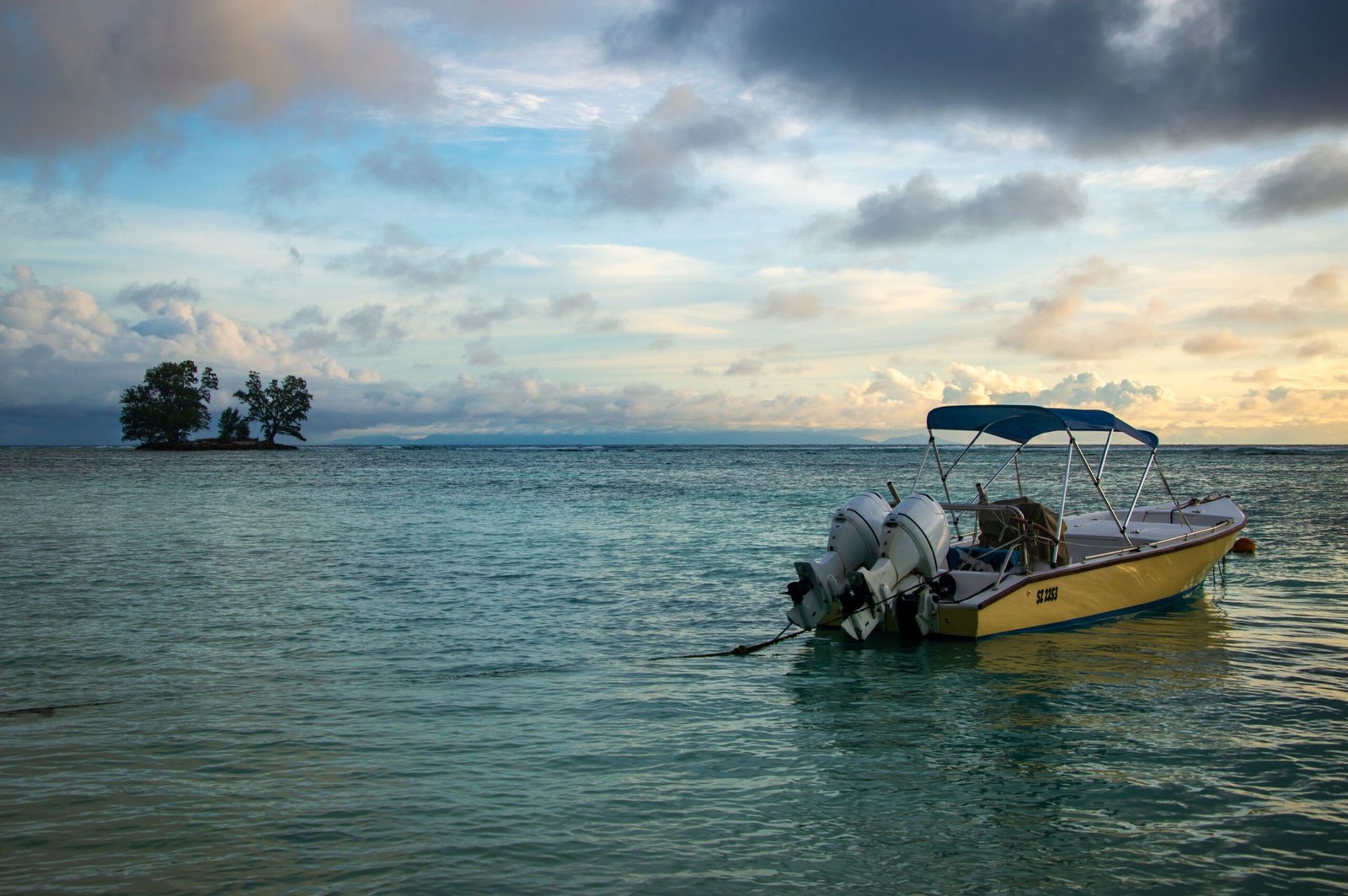
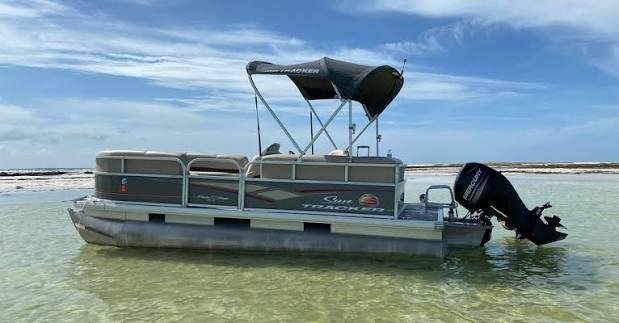
If you are new to boating, you may have heard people talk about an “outboard” and wondered exactly what they mean. You might also have seen a motor attached to the back of a boat and noticed that the entire engine seems to sit outside the hull. That is an outboard motor.
So, what is an outboard on a boat? In simple terms, an outboard is a complete boat propulsion system that is mounted on the outside of the boat, usually at the stern. It contains an engine, gearbox, propeller, steering system, and other important components that work together to move the boat through the water.
Outboard motors are extremely popular because they offer a practical combination of power, maneuverability, accessibility, and convenience. They can be found on small fishing boats, family runabouts, pontoons, inflatable boats, aluminum boats, bass boats, and many larger recreational vessels.
Modern outboards are available in many sizes and technologies. Some use gasoline engines, while newer options include electric propulsion. Horsepower can range from small portable motors designed for lightweight boats to powerful engines designed to move much larger vessels.
Understanding how an outboard works can make boating much easier to understand. Whether you are thinking about buying your first boat, learning basic marine terminology, or simply want to understand the motor hanging off the back of a boat, this guide will explain everything you need to know.
What Is an Outboard on a Boat?
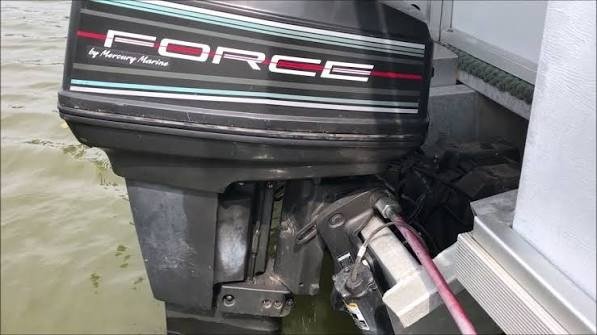
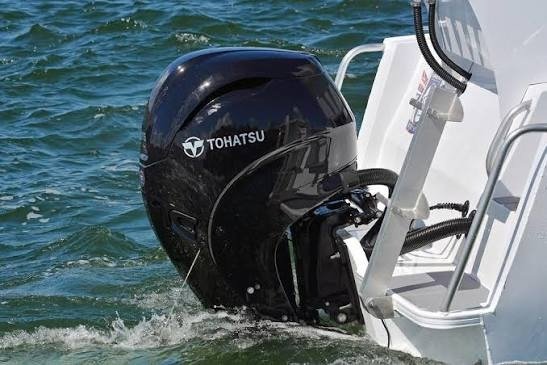
An outboard is a boat motor designed to be installed on the outside of a boat’s hull, normally at the transom. Unlike an inboard engine, which is installed inside the boat, an outboard combines the engine and propulsion components into one compact unit.
The motor is attached to the transom using a mounting system. The upper section generally contains the engine and related components. Below that is the lower unit, which contains the drivetrain, gears, and propeller.
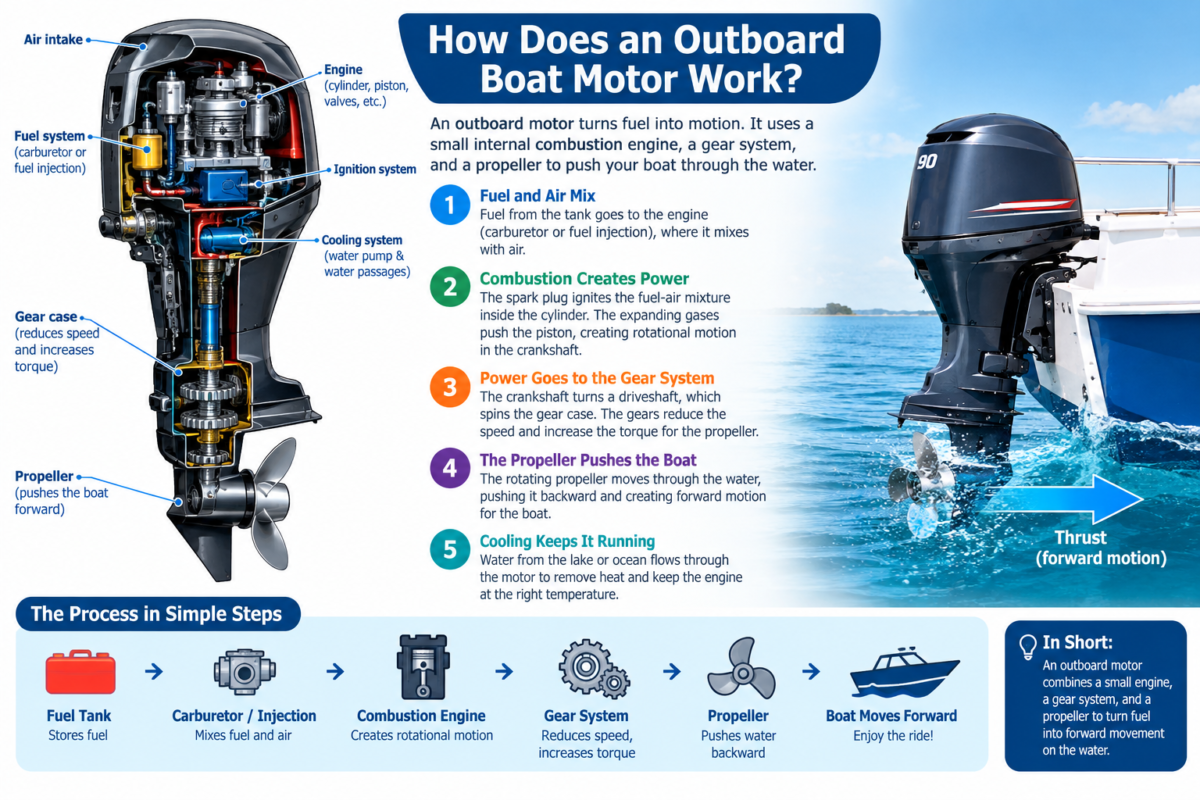
When the engine is running, it produces mechanical power. That power travels through the driveshaft and gear system to the propeller. The spinning propeller pushes water backward, creating thrust that moves the boat forward.
An outboard can also be steered from side to side. This allows the direction of the thrust to change, helping the boat turn. Many modern outboards also include power trim and tilt systems that allow the motor’s angle to be adjusted.
This combination makes an outboard much more than just an engine. It is an integrated propulsion, steering, and maneuvering system.
Where Is an Outboard Motor Located?
An outboard motor is normally mounted at the stern, which is the rear section of the boat.
The motor is attached to a strong structural area called the transom. The transom must be designed to support the weight and thrust produced by the motor.
The exact position and mounting height are important. If an outboard is mounted incorrectly, the boat may not perform properly. It can affect handling, efficiency, acceleration, and propeller performance.
That is why boat owners should follow the boat manufacturer’s recommendations when selecting and installing an outboard motor.
On smaller boats, you may see a single outboard mounted directly in the center of the transom. Larger boats may use two, three, or even more outboard motors depending on the vessel’s design and power requirements.
How Does an Outboard Motor Work?
The basic operating principle of an outboard is easier to understand than it may initially appear.
The engine creates rotational power. That power is transferred down through the motor’s driveshaft. Gears in the lower unit transfer the rotation to the propeller.
The propeller then rotates in the water.
As the propeller moves water, it creates thrust. That thrust pushes the boat in the opposite direction, allowing the vessel to move through the water.
Steering changes the direction in which the propeller’s thrust is aimed. This is one reason outboard-powered boats can be highly maneuverable.
Modern outboards also use systems that control fuel delivery, ignition, cooling, lubrication, and emissions. Electronic controls and sensors have made many newer motors easier to start and operate.
The Engine Produces Power
In a gasoline outboard, the engine burns a mixture of fuel and air to produce mechanical energy.
The combustion process moves internal engine components, which ultimately turn the driveshaft.
Different engines use different designs and technologies. Four-stroke engines, for example, complete the combustion cycle through four piston strokes.
Electric outboards work differently. Instead of combustion, an electric motor produces rotational force using electrical energy supplied by a battery system.
The Driveshaft Transfers Power
The driveshaft is an important component inside the motor’s midsection.
It transfers rotational power from the engine to the gears in the lower unit.
This allows the engine to be located above the water while the propeller operates below the waterline.
The Gearcase Changes and Transfers Rotation
The lower unit contains gears that transfer engine power to the propeller.
The gear system also makes forward and reverse operation possible.
When the operator selects forward, the gears drive the propeller in the appropriate direction. Reverse changes the direction of thrust so the boat can move backward.
The Propeller Creates Thrust
The propeller is one of the most visible parts of an outboard motor.
It has specially shaped blades that push water when they rotate. The interaction between the blades and water produces thrust.
Propellers come in different sizes, materials, and designs. Choosing the correct propeller is important because it can affect acceleration, cruising performance, engine operating speed, and overall efficiency.
What Are the Main Parts of an Outboard Motor?
An outboard may look like a single machine, but it contains many separate components.
Understanding the major parts can help boat owners recognize how the system works.
Engine
The engine is the power-producing part of a traditional gasoline outboard.
It contains components such as pistons, cylinders, valves, crankshafts, and other parts required to convert fuel energy into mechanical power.
Cowling
The cowling is the protective outer cover around the upper engine.
It helps protect internal components from water, dirt, and other environmental conditions. It also contributes to noise control and gives the motor its recognizable appearance.
Midsection
The midsection connects the upper engine assembly to the lower unit.
It contains important components such as the driveshaft and exhaust passages.
Lower Unit
The lower unit is the submerged portion of the motor.
It contains the gearcase, gears, propeller shaft, and other components involved in transferring power to the propeller.
Propeller
The propeller converts rotational power into thrust.
It is one of the most important performance-related components on an outboard.
Steering System
The steering system allows the operator to control the direction of the boat.
Some boats use mechanical steering, while larger or more advanced setups may use hydraulic or electronic steering systems.
Trim and Tilt System
Many modern outboards have a trim and tilt mechanism.
Tilt allows the motor to be raised out of the water. Trim changes the motor’s operating angle while the boat is moving.
Proper trim can help optimize the boat’s attitude and performance under different conditions.
What Are the Different Types of Outboard Motors?
Outboard motors are available in several different forms. The best choice depends on the boat, intended use, power requirements, budget, and personal preferences.
Two-Stroke Outboard Motors
Two-stroke outboards have historically been popular because of their relatively simple mechanical design and strong power-to-weight characteristics.
Older two-stroke engines can be lightweight and mechanically straightforward.
However, traditional carbureted two-stroke engines can have higher emissions and fuel-consumption characteristics than many modern alternatives.
Some newer two-stroke technologies have addressed several of these limitations, but four-stroke and electric options are also increasingly common.
Four-Stroke Outboard Motors
Four-stroke outboards are widely used in modern recreational boating.
They operate on a four-stroke combustion cycle and typically offer smooth operation, good fuel economy, and relatively quiet performance compared with many older two-stroke designs.
They are available in a wide range of horsepower ratings.
Four-stroke motors can be an excellent option for fishing, cruising, family boating, and many other recreational activities.
Electric Outboard Motors
Electric outboards use an electric motor instead of a traditional gasoline combustion engine.
They can offer quiet operation and reduced local exhaust emissions during use.
Electric motors are particularly interesting for smaller boats and short-distance applications.
However, range and battery capacity are important considerations. The right electric setup depends heavily on the boat, motor power, battery system, speed, and operating conditions.
Why Are Outboard Motors So Popular?
There are several reasons outboards have become one of the most common propulsion systems for recreational boats.
One major advantage is their compact design.
Because the motor is mounted outside the hull, valuable interior space can remain available for passengers, fishing equipment, storage, or other uses.
Another advantage is accessibility.
Many major components can be reached without having to enter the interior of the boat. This can make routine inspection and servicing more convenient.
Outboards are also highly maneuverable.
Because the motor itself can usually rotate for steering, the thrust direction changes along with the motor. This can provide excellent control, particularly at low speeds.
The wide variety of horsepower options is another major advantage. Boat owners can select an engine appropriate for a small fishing boat or choose a high-powered configuration for a larger recreational vessel.
What Are the Benefits of an Outboard on a Boat?
Excellent Maneuverability
Outboard motors can provide impressive maneuverability.
Because the motor directs the propeller’s thrust, the boat can respond effectively to steering inputs.
This can be especially useful when navigating tight spaces such as marinas, docks, and narrow waterways.
Easy Access
The motor is positioned outside the boat, making it relatively accessible for inspection and maintenance.
A mechanic can often reach many components without removing interior panels or working in a cramped engine compartment.
More Interior Space
Since the propulsion system is mounted outside the hull, the boat can retain more usable interior space.
This can be valuable on smaller boats where every bit of space matters.
Convenient Tilting
Many outboards can be tilted upward.
This can be useful when launching, loading, transporting, storing, or operating in shallow water when appropriate for the specific boat and conditions.
Wide Range of Power
Outboards are available in many horsepower ratings.
That gives boat manufacturers and owners considerable flexibility when matching an engine to a particular vessel.
Easier Replacement
Because the motor is a separate unit, replacing an outboard can sometimes be more straightforward than replacing an integrated inboard propulsion system.
However, compatibility, transom capacity, shaft length, controls, steering, electrical systems, and manufacturer requirements must all be considered.
Outboard vs. Inboard Boat Motors
One of the easiest ways to understand an outboard is to compare it with an inboard engine.
An inboard engine is installed inside the boat. Its propulsion system uses components that transfer power from the engine to a propeller or another propulsion device.
An outboard, by contrast, combines the engine and propulsion components into a unit mounted outside the hull.
Outboard Advantages
Outboards are often appreciated for their accessibility, maneuverability, compact installation, and flexibility.
They can also be easier to replace as a complete propulsion unit.
Inboard Advantages
Inboard systems can be suitable for boats where the engine is designed to be integrated into the hull.
They are common in certain types of recreational boats and commercial vessels.
Neither system is automatically better for every boat. The ideal choice depends on the boat’s design and intended use.
How Do You Choose the Right Outboard for a Boat?
Choosing an outboard is an important decision.
The largest motor you can physically attach to a boat is not necessarily the correct motor.
The boat manufacturer normally specifies a maximum horsepower rating and other requirements. These recommendations should always be respected.
Consider Boat Size
A larger, heavier boat generally requires more power than a small lightweight boat.
The boat’s length, width, weight, hull design, and intended use all affect the appropriate engine size.
Check the Maximum Horsepower Rating
Always check the boat’s capacity plate, manufacturer’s documentation, or other official specifications.
Operating a boat with an engine beyond its approved power rating can create serious safety and handling problems.
Consider the Boat’s Weight
Weight affects how much power is needed to achieve a desired level of performance.
Remember to consider passengers, fuel, batteries, equipment, and cargo rather than looking only at the empty boat weight.
Think About Your Boating Activities
A person using a boat for slow fishing trips may have different requirements from someone who regularly carries several passengers or uses the boat for watersports.
Think about how the boat will actually be used before choosing an engine.
Consider Fuel Economy
Fuel consumption can vary significantly depending on engine size, boat design, speed, load, weather, water conditions, and operating habits.
A larger engine does not automatically mean better efficiency.
The goal is to choose a suitable engine and operate it appropriately for the boat.
What Does Horsepower Mean on an Outboard?
Horsepower is a measurement of engine power.
Outboard motors are commonly described by their horsepower rating, such as 5 HP, 20 HP, 50 HP, 100 HP, 150 HP, or higher.
A higher horsepower rating generally means the motor has greater power potential.
However, horsepower should always be considered alongside the boat’s design.
For example, a small lightweight boat may not be designed to safely handle a very powerful engine.
Boat manufacturers establish recommended and maximum power levels for a reason. These specifications help ensure the hull, transom, steering system, and other components are suitable for the motor.
What Is Shaft Length and Why Does It Matter?
Shaft length refers to the distance between the mounting area and the lower unit or propeller location.
Outboards are available with different shaft lengths.
The correct shaft length depends on the boat’s transom dimensions and design.
If the motor is mounted too high, the propeller may not operate correctly in the water. If it is mounted too low, it can create unnecessary drag and potentially affect performance.
Because of this, shaft length should be selected according to the boat manufacturer’s recommendations.
What Is Trim and Tilt on an Outboard?
Trim and tilt are important features on many modern outboards.
Tilt allows the motor to move upward or downward through a larger range, including raising the motor out of the water.
Trim adjusts the running angle of the motor while the boat is operating.
Changing the trim angle can influence how the boat rides on the water.
The correct setting depends on conditions such as speed, load, water state, and boat design.
Learning to use trim properly can help a boat operator achieve better handling and performance.
How to Maintain an Outboard Motor
Regular maintenance is one of the best ways to keep an outboard operating reliably.
Maintenance requirements vary by engine model, so the manufacturer’s service manual should always be the primary reference.
Check Engine Oil
Four-stroke outboards use engine oil that needs to be checked and changed according to the manufacturer’s maintenance schedule.
Correct oil level and specification are important for engine lubrication.
Inspect the Propeller
The propeller should be checked regularly for damage.
Fishing line, rope, debris, rocks, and underwater obstacles can damage a propeller or affect its performance.
A damaged propeller can also cause vibration.
Check the Cooling System
Most gasoline outboards use water for engine cooling.
The cooling system should be maintained according to the manufacturer’s instructions.
A restricted cooling-water flow can cause overheating.
Inspect Fuel Components
Fuel systems should be inspected for leaks, deterioration, and other problems.
Fuel should be stored and handled according to the manufacturer’s recommendations and applicable safety rules.
Follow the Service Schedule
Routine servicing is important.
Depending on the motor, maintenance may include oil changes, filter replacement, gearcase lubricant service, spark plug inspection or replacement, anode inspection, and other checks.
Following the manufacturer’s service intervals is much better than waiting for a problem to appear.
What Is an Outboard on a Boat?
An outboard is a complete boat propulsion system that is mounted on the outside of the boat, usually at the stern. It contains an engine, gearbox, propeller, steering system, and other important components that work together to move the boat through the water. Yamaha Motor’s official marine engine information also explains how outboard motors are categorized among common marine propulsion systems.
Common Outboard Motor Problems
Even a well-maintained outboard can sometimes develop problems.
Recognizing common symptoms can help boat owners understand when professional service may be needed.
The Engine Does Not Start
Starting problems can have many causes.
Potential issues may involve fuel, battery power, electrical connections, ignition components, controls, or other systems.
Instead of repeatedly attempting to start the motor, check the manufacturer’s troubleshooting procedure.
Overheating
Overheating may be related to restricted cooling-water flow or other cooling-system problems.
If an engine is overheating, it should not simply be continued under heavy load.
Follow the manufacturer’s instructions and have the motor inspected if the problem persists.
Poor Acceleration
Poor acceleration can result from several issues.
Possible causes include a damaged propeller, incorrect propeller selection, fuel problems, engine issues, excessive boat loading, or other mechanical concerns.
Excessive Vibration
Unusual vibration should not be ignored.
A damaged or bent propeller is one possible cause, but other mechanical problems can also create vibration.
Gear-Shifting Problems
Difficulty shifting between forward, neutral, and reverse can involve controls, cables, linkage, or internal components.
If shifting becomes abnormal, professional inspection may be appropriate.
How Long Does an Outboard Motor Last?
There is no single number that applies to every outboard motor.
Engine lifespan depends on many factors.
Maintenance is one of the biggest factors. A motor that receives regular servicing and proper care can generally have a much longer useful life than one that is neglected.
Operating conditions also matter.
Saltwater environments can be especially demanding because corrosion can affect metal components and electrical connections.
Proper flushing, corrosion protection, storage, and routine inspection are therefore important for many saltwater boaters.
How frequently the engine is used also matters. Both heavy use and long periods of improper storage can create problems.
The best way to maximize an outboard’s useful life is to follow the manufacturer’s maintenance schedule and address problems early.
Can an Outboard Be Used in Saltwater?
Yes, many outboard motors are designed for saltwater use.
However, saltwater requires additional attention to maintenance and corrosion prevention.
After saltwater operation, many manufacturers recommend flushing the engine with fresh water using the appropriate procedure.
External components should also be inspected regularly.
Owners should pay attention to corrosion, electrical connections, fasteners, sacrificial anodes, and other exposed components.
Always follow the specific manufacturer’s instructions because flushing and maintenance procedures vary between engines.
Are Outboard Motors Good for Fishing Boats?
Outboards are extremely common on fishing boats.
One reason is their maneuverability.
Another is the amount of usable space they leave inside the boat.
Anglers may need room for fishing equipment, coolers, batteries, tackle, and other gear. Keeping the propulsion system outside the main hull can help preserve that space.
Outboards also provide a wide range of power options, allowing manufacturers to design fishing boats for different sizes and purposes.
Are Outboards Good for Beginners?
An outboard can be an excellent propulsion system for someone learning about boating.
However, beginners should learn more than simply how to start the engine.
Safe boating requires understanding steering, throttle control, docking, navigation, weather awareness, emergency procedures, and local boating laws.
A beginner should also become familiar with the specific controls and features of their boat before operating it in challenging conditions.
If the boat has trim and tilt, learning how those systems work is also important.
Reading the owner’s manual is a simple but valuable first step.
How Is an Outboard Different From an Outdrive?
An outboard and an outdrive are not exactly the same type of propulsion system.
An outboard is a complete engine-and-propulsion unit mounted externally on the boat.
An outdrive, often associated with sterndrive systems, uses an engine installed inside the boat while the drive unit extends through the transom.
The two systems have different layouts and maintenance requirements.
Understanding the difference is useful when researching boat engines because advertisements and boat specifications may use these terms differently.
What Is an Outboard Motor’s Lower Unit?
The lower unit is the lower portion of an outboard.
It sits in the water during normal operation and contains important drivetrain components.
The gearcase houses gears that transfer engine power to the propeller.
The lower unit also includes the propeller shaft and other components required for propulsion.
Because it operates in the water, the lower unit is exposed to impacts, debris, corrosion, and other environmental factors.
That makes regular inspection particularly important.
Why Is the Propeller So Important?
The propeller is directly responsible for turning engine power into thrust.
Even if an engine is operating perfectly, an unsuitable or damaged propeller can reduce performance.
Propeller selection involves several factors, including diameter, pitch, number of blades, material, and the specific boat and engine combination.
Propeller pitch is especially important because it influences how far the propeller theoretically moves through the water with each revolution.
Choosing the correct propeller should be based on the engine manufacturer’s recommendations and the boat’s actual operating characteristics.
What Happens If an Outboard Is Too Powerful?
Installing an engine that exceeds the boat’s approved horsepower rating can be dangerous.
A boat is engineered around specific limits.
The transom, hull, steering system, and other components must be capable of handling the forces produced by the engine.
An excessively powerful motor can also make a boat difficult to control.
For that reason, boat owners should never assume that more horsepower is always better.
The correct approach is to use an engine that falls within the boat manufacturer’s specifications.
What Happens If an Outboard Is Too Small?
An undersized motor can also create problems.
A motor with insufficient power may struggle to move a heavily loaded boat efficiently.
Acceleration can be poor, and the engine may need to work harder than expected.
However, a smaller engine can be perfectly suitable when matched to a lightweight boat and the owner’s intended use.
The key is proper matching rather than simply choosing the biggest or smallest available motor.
How Much Does an Outboard Motor Cost?
Outboard prices can vary dramatically.
Small portable motors may cost far less than high-horsepower engines.
Price is affected by horsepower, engine technology, brand, controls, shaft length, features, and whether the motor is new or used.
Installation can also add to the total cost.
Depending on the setup, owners may need steering components, controls, wiring, batteries, rigging, propellers, fuel-system equipment, and other accessories.
When comparing prices, it is therefore important to consider the complete installation rather than looking only at the advertised engine price.
New vs. Used Outboard Motors
Buying a new outboard provides several advantages.
A new motor generally comes with manufacturer support and warranty coverage according to the applicable terms.
It also allows the buyer to choose the exact specifications and features needed.
A used outboard can be less expensive, but its condition becomes extremely important.
When considering a used motor, buyers should investigate its maintenance history and inspect important components.
A professional marine technician can provide valuable assistance when evaluating an unfamiliar used engine.
How Can You Make an Outboard Last Longer?
Good maintenance habits can make a significant difference.
Always follow the manufacturer’s maintenance schedule.
Avoid ignoring unusual sounds, vibrations, warning indicators, or changes in engine performance.
Inspect the propeller regularly.
Keep the engine clean and follow the recommended flushing procedure when required.
Store the motor correctly when the boat will not be used for an extended period.
Protect the engine from corrosion where appropriate.
Most importantly, use the engine according to its intended operating conditions.
Small maintenance tasks performed consistently can help prevent larger and more expensive problems later.
Outboard Motor Safety Tips
Operating an outboard safely requires attention to the entire boat, not just the engine.
Before leaving the dock, make sure the engine and steering system are functioning properly.
Check that required safety equipment is onboard.
Make sure passengers are seated appropriately and that the boat is not overloaded.
Pay attention to weather and water conditions.
Always follow applicable local boating regulations.
Keep clear of the propeller whenever the engine is operating or capable of starting. A propeller can cause severe injuries, so passengers should never be allowed near it during operation.
If you are new to boating, consider taking an approved boating-safety course.
FAQs
What is an outboard on a boat?
An outboard is a complete propulsion unit mounted outside a boat, usually at the stern. It contains an engine or electric motor, drivetrain, lower unit, propeller, and steering-related components.
What does an outboard motor do?
An outboard produces thrust that moves the boat through the water. It can also provide steering by changing the direction of the propeller’s thrust.
Is an outboard the same as a boat engine?
An outboard is a type of boat engine and propulsion system. Unlike an inboard engine, an outboard is mounted externally on the boat.
Is an outboard better than an inboard?
Neither is automatically better. Outboards are valued for maneuverability, accessibility, and compact installation, while inboards can be well suited to boats designed around an internal engine installation.
How does an outboard move a boat?
The engine turns a driveshaft, which transfers power through gears to the propeller. The rotating propeller pushes water and creates thrust, moving the boat.
What is the lower unit on an outboard?
The lower unit is the submerged lower section of the motor. It contains the gearcase, gears, propeller shaft, and other components used to transfer power to the propeller.
What is the difference between two-stroke and four-stroke outboards?
They use different engine operating cycles. Traditional two-stroke engines are known for simple, lightweight designs, while four-stroke engines are widely used today for smooth operation, fuel economy, and emissions performance.
Are electric outboards worth considering?
Electric outboards can be attractive for certain applications because they are quiet and produce no local exhaust emissions during operation. However, battery capacity, range, charging, boat size, and intended use must be considered.
How often should an outboard be serviced?
Service intervals vary by manufacturer and engine model. The owner’s manual and official maintenance schedule should be used to determine when servicing is required.
Can an outboard be used in saltwater?
Many outboards are designed for saltwater use, but saltwater operation requires careful maintenance and corrosion protection. Follow the manufacturer’s specific recommendations.
How do I know what size outboard I need?
Start with the boat manufacturer’s specifications. Check the maximum horsepower rating, boat weight, transom requirements, and intended use before selecting an engine.
Can I put a larger outboard on my boat?
You should not exceed the boat manufacturer’s maximum horsepower rating. The hull and transom are designed around specific performance and structural limits.
Why does my outboard vibrate?
Possible causes include a damaged propeller, debris, improper propeller installation, or mechanical problems. Unusual or persistent vibration should be investigated rather than ignored.
Final Thoughts
Understanding what is an outboard on a boat is an important first step for anyone interested in boating. An outboard is much more than a simple engine hanging from the back of a vessel. It is an integrated propulsion system that combines power, gearing, steering, and often trim and tilt functions into one compact package.
Outboards have become extremely popular because they offer excellent maneuverability, convenient access, flexible horsepower choices, and efficient use of interior boat space. They are available in many configurations, from small portable engines for lightweight boats to powerful motors designed for larger recreational vessels.
Choosing the right outboard is all about matching the motor to the boat. The boat’s size, weight, transom design, maximum horsepower rating, intended use, and operating environment should all be considered before making a decision.
Maintenance is equally important. Regular inspections, proper servicing, propeller checks, cooling-system care, and appropriate storage can help keep an outboard reliable for many years.
Whether you are buying your first fishing boat or simply trying to understand marine engines, learning how an outboard works gives you a stronger foundation for becoming a more confident and knowledgeable boat owner. With the right motor, proper maintenance, and responsible operation, an outboard can provide an enjoyable and dependable boating experience.

One thought on “What Is an Outboard on a Boat? Discover the Powerful Benefits, Amazing Features & Complete Beginner’s Guide”