
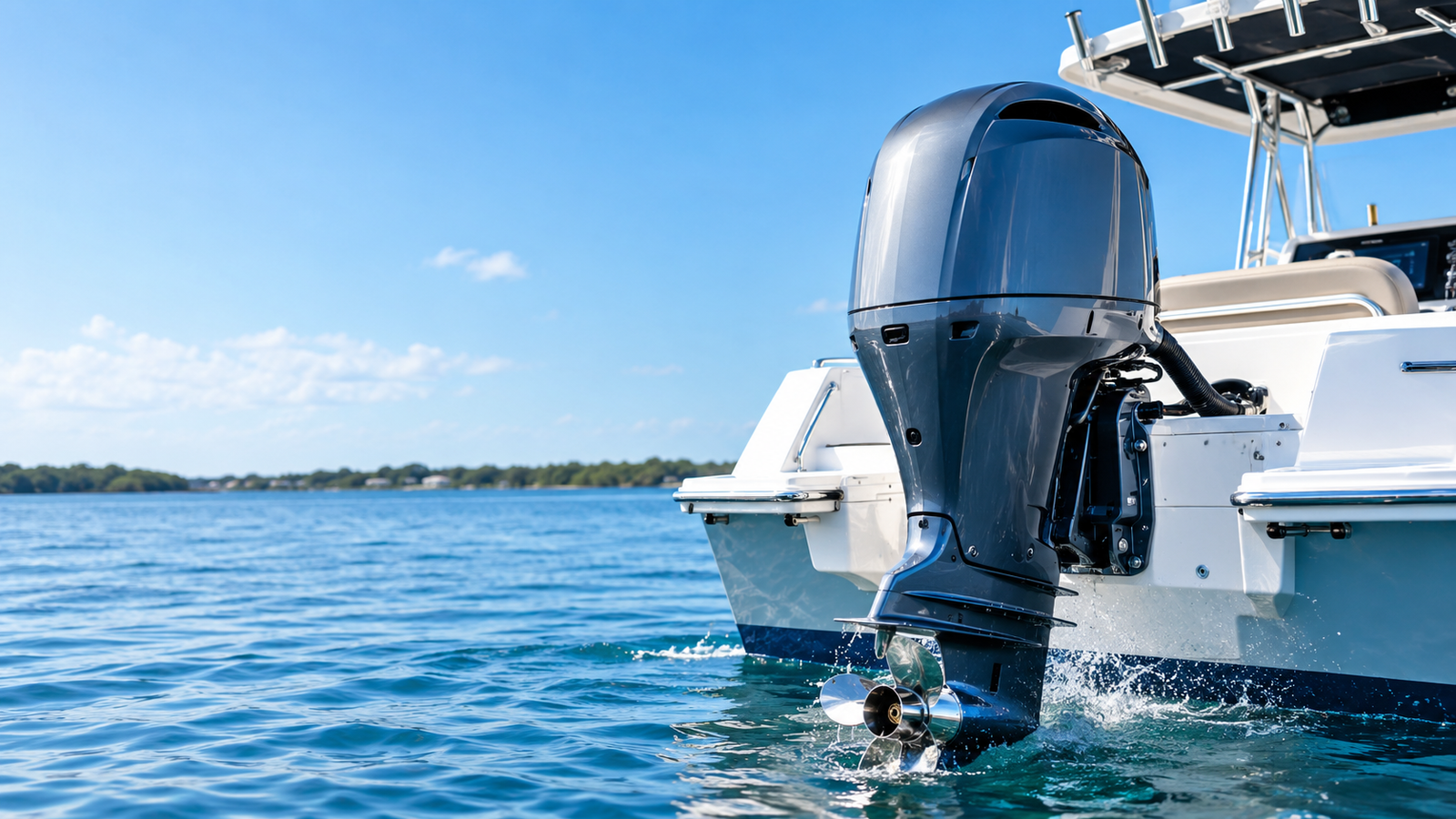
Buying a new outboard motor can feel like a bigger decision than buying the boat itself. There are dozens of models, different horsepower ratings, multiple brands, and a wide range of features to consider. If you have recently started shopping for an engine, one question probably comes first: how much is a new outboard motor?
The answer is not as simple as one fixed price. A small portable outboard for a lightweight fishing boat can cost far less than a powerful engine designed for a large recreational boat. Horsepower, technology, brand, fuel efficiency, controls, installation requirements, and included equipment can all change the final price.
For many boat owners, the goal is not simply to find the cheapest engine available. The better goal is to find an outboard that delivers the right balance of power, reliability, efficiency, and long-term value. Spending a little more on the right engine can sometimes save money and frustration over years of ownership.
In this guide, we will explore new outboard motor prices, what affects those prices, additional expenses you should expect, and how to choose an engine that makes sense for your boat and your budget.
How Much Is a New Outboard Motor?
So, how much is a new outboard motor? New outboard motors can range from roughly $1,000 for small portable engines to well over $30,000 for large, high-performance models. Some premium engines and multi-engine setups can push the overall investment even higher.
The biggest factor is usually horsepower. A compact 2.5-horsepower engine is designed for a completely different job than a 300-horsepower or 450-horsepower engine. Naturally, the larger engine requires more materials, more sophisticated engineering, and more advanced components.
A small outboard may be ideal for a tender, inflatable boat, small jon boat, or lightweight fishing boat. A medium-sized motor may be designed for a family fishing boat or recreational runabout. Large outboards are generally intended for bigger boats that require substantial thrust and higher cruising performance.
The brand also matters. Established manufacturers often charge more because their engines may offer extensive dealer networks, strong warranties, proven technology, and established resale value.
It is also important to remember that the advertised engine price may not represent the complete cost of getting the boat on the water. Controls, gauges, rigging, propellers, batteries, installation, and other accessories may be additional.
New Outboard Motor Prices by Horsepower
Horsepower is one of the easiest ways to understand the outboard motor market. While exact prices vary by manufacturer and model, looking at horsepower categories gives you a useful starting point.
2.5 to 6 HP Outboard Motors
Small portable outboards are often among the most affordable new engines. Depending on the brand and model, you might see prices around the low thousands or below that range for basic models.
These engines are popular because they are lightweight and relatively easy to transport. A person who owns a small fishing boat does not necessarily need a large engine. For a lightweight hull, a compact motor can provide enough thrust for relaxed cruising, fishing, or moving around calm water.
One major advantage is portability. Many small outboards can be lifted and stored without specialized equipment.
However, these engines are not designed to provide the same speed or acceleration as larger motors. If your boat regularly carries several passengers or heavy equipment, you should carefully check the manufacturer’s horsepower recommendations.
8 to 20 HP Outboard Motors
The 8-to-20-horsepower category provides more performance while remaining relatively manageable for many small boats.
Prices can vary considerably depending on whether you choose a basic model, a four-stroke engine, an electric motor, or a model with additional features.
These engines can be attractive for anglers and recreational boaters who want a practical combination of portability and performance.
Fuel economy can also be an important consideration in this category. A modern engine designed for efficient operation can help reduce fuel consumption during regular use.
25 to 60 HP Outboard Motors
Once you move into the 25-to-60-horsepower range, the price generally increases noticeably.
These motors are commonly used on fishing boats, aluminum boats, small center consoles, pontoons, and recreational boats.
A 40- or 50-horsepower engine may offer a useful middle ground for boat owners who need more speed and carrying capability without moving into the very large-engine category.
At this level, features such as electronic fuel injection, digital controls, improved steering systems, and advanced monitoring technology can affect the final price.
75 to 150 HP Outboard Motors
The 75-to-150-horsepower category is where outboard motors become serious pieces of equipment.
These engines can provide strong acceleration and cruising performance for larger recreational boats, fishing boats, and pontoons.
Depending on the manufacturer, model, shaft length, controls, and technology, prices can reach several thousand dollars and may move well into five figures.
At this level, you should think beyond the purchase price. Fuel consumption, maintenance, installation, propeller selection, and the boat’s overall setup become increasingly important.
175 HP and Above
Large outboard motors are designed for boats that need substantial power. Engines in this category can cost many thousands of dollars, with premium models potentially exceeding $30,000.
Large engines may feature sophisticated electronic systems, advanced fuel management, digital steering, high-performance gearcases, and other technologies.
For some boats, one large engine is appropriate. Other boats may use multiple engines. In a twin-engine setup, the total engine investment can obviously become much higher.
What Determines the Price of a New Outboard Motor?
If two engines have similar horsepower but very different prices, you may wonder why. The answer usually comes down to engineering, features, brand, materials, and intended use.
Horsepower
Horsepower is the most obvious pricing factor.
Generally speaking, larger horsepower means a larger and more expensive engine. However, horsepower should never be the only factor you consider.
Putting an oversized engine on a boat can create safety, handling, and manufacturer-compliance concerns. Your boat’s capacity plate and manufacturer recommendations should always be considered.
Engine Technology
Modern outboards can include advanced fuel injection, electronic engine management, digital instrumentation, integrated diagnostic systems, and other technology.
These features can increase the initial price, but they may also improve usability and efficiency.
Brand
Brand reputation plays an important role in pricing.
Manufacturers such as Yamaha, Mercury, Honda, Suzuki, and Tohatsu have established themselves in the marine engine market. Different brands offer different model ranges, features, dealer networks, and warranty policies.
A less expensive engine may look attractive initially, but local service availability can be just as important as the sticker price.
Four-Stroke Design
Four-stroke outboards have become extremely popular because they combined performance, efficiency, and relatively quiet operation.
They can cost more than some basic alternatives, but many boat owners appreciate their fuel economy and modern design.
Electric Technology
Electric outboards are becoming increasingly interesting for small boats and certain recreational applications.
The total system cost depends on more than the motor itself. Batteries, chargers, controls, and installation can all contribute to the investment.
For some users, the lower operating complexity and quiet operation may be especially attractive.
New Outboard Motor Cost by Engine Type
Choosing the engine type is another important part of understanding the overall price.
Four-Stroke Outboard Motors
Four-stroke engines are common across many horsepower categories.
They use a modern engine design that can deliver smooth operation and good fuel efficiency. They are often popular among boat owners who use their boats regularly.
One reason people choose four-stroke engines is the balance between performance and everyday usability.
However, the engine itself can be heavier than some older designs, so weight should be considered when matching an engine to a boat.
Two-Stroke Outboard Motors
Traditional two-stroke engines have historically been popular because of their simple design and strong power-to-weight characteristics.
However, modern marine markets increasingly emphasize cleaner and more efficient technologies, so availability varies by region and manufacturer.
If you are considering any older two-stroke technology, make sure you understand local regulations, emissions requirements, maintenance needs, and fuel considerations.
Electric Outboard Motors
Electric propulsion is an exciting area of marine technology.
Electric motors can be very quiet, making them appealing for fishing and peaceful cruising. They also eliminate some of the mechanical complexity associated with traditional gasoline engines.
The challenge is battery capacity. The cost of a complete electric setup depends heavily on the battery system and how far you want to travel.
For small boats and short trips, electric power can be an excellent option. For long-distance or high-speed boating, gasoline outboards may still provide advantages depending on the application.
High-Performance Outboard Motors
High-performance engines are designed for boaters who want serious speed and acceleration.
These engines often include advanced engineering, sophisticated controls, strong cooling systems, and performance-focused components.
They can be significantly more expensive than ordinary recreational outboards.
If you do not actually need high performance, buying a large performance engine may not provide the best value. Matching the motor to your actual boating habits is usually smarter.
How Much Does a Small New Outboard Motor Cost?
A small new outboard motor can be one of the most accessible ways to add propulsion to a boat.
Small engines may cost approximately $1,000 to several thousand dollars depending on horsepower, manufacturer, technology, and equipment.
For example, a basic portable engine may be appropriate for a small inflatable boat. A slightly larger engine may be better suited to a lightweight aluminum fishing boat.
The biggest advantage is simplicity.
Small engines are easier to transport, store, and install in many applications. They also tend to consume less fuel than larger engines.
However, you should not choose an engine based purely on price. Always check the boat’s recommended horsepower range and maximum capacity.
How Much Does a Mid-Size Outboard Motor Cost?
Mid-size outboard motors can cover a wide range of boats and boating activities.
Depending on horsepower and features, prices may range from several thousand dollars to well above $10,000.
At this level, you are likely to encounter more advanced features and greater performance.
A mid-size motor can be an excellent choice for boat owners who fish, cruise, tow recreational equipment where permitted, or regularly carry multiple passengers.
Before buying, compare fuel efficiency, weight, shaft length, controls, warranty coverage, and service availability.
How Much Does a Large New Outboard Motor Cost?
Large new outboard motors can represent a major investment.
Engines producing well over 150 horsepower can cost many thousands of dollars. Premium high-horsepower engines may reach or exceed the $30,000 range.
The price increases because these engines require larger components and more sophisticated engineering.
Large outboards also create additional installation considerations. Your boat may require stronger mounting arrangements, compatible controls, appropriate steering equipment, and a propeller selected for the specific application.
If you are replacing an existing large outboard, it is worth getting a complete installation quote rather than looking at the engine price alone.
Popular Outboard Motor Brands and Pricing
Several major manufacturers compete in the outboard motor market.
Mercury
Mercury is one of the best-known names in marine propulsion. Its lineup includes small portable engines as well as very large high-performance outboards.
Mercury engines are available across many horsepower classes, making the brand relevant to both small-boat owners and larger recreational boaters.
Yamaha
Yamaha has a broad range of marine engines and is widely recognized for its outboard technology.
Its lineup covers small portable motors through high-horsepower engines.
When considering a Yamaha outboard, compare the exact model, horsepower, included equipment, and dealer support rather than assuming every model has the same pricing structure.
Honda
Honda marine engines are known for using four-stroke technology.
The brand offers engines for different boat sizes and applications. Buyers may be particularly interested in smooth operation and fuel efficiency.
Suzuki
Suzuki offers a broad range of four-stroke outboard motors.
Its engines are used in recreational boating, fishing, and many other applications.
As with any manufacturer, pricing varies by horsepower and model features.
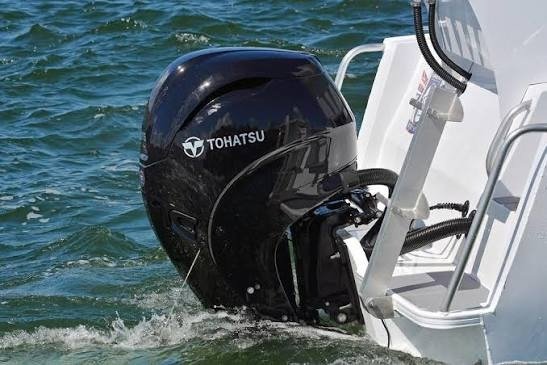
Tohatsu
Tohatsu is another established marine engine manufacturer.
The company produces compact portable engines as well as larger models.
For buyers shopping in the smaller horsepower categories, comparing Tohatsu with other established brands can be worthwhile.
What Is Included in the Price of a New Outboard Motor?
One common mistake is assuming the engine price includes everything needed to operate the boat.
That is not always the case.
Depending on the model and package, you may need to purchase additional components.
These can include:
- Propeller
- Remote controls
- Steering components
- Engine gauges
- Digital displays
- Wiring harnesses
- Batteries
- Fuel system components
- Mounting equipment
- Rigging
- Installation labor
Some dealers sell complete packages, while others quote the engine separately.
Always ask for an itemized quote before making a final decision.
Additional Costs When Buying a New Outboard Motor
The engine is only part of the ownership equation.
Installation Costs
Installation costs vary depending on the boat and engine.
Replacing an existing engine with a compatible model may be relatively straightforward. A new installation requiring steering, controls, electrical work, or other modifications can cost more.
Controls and Rigging
Remote-control engines need compatible control systems and rigging.
These components connect the engine to the boat’s steering and control systems.
A modern digital setup can provide a cleaner and more sophisticated experience but may increase the total cost.
Propeller
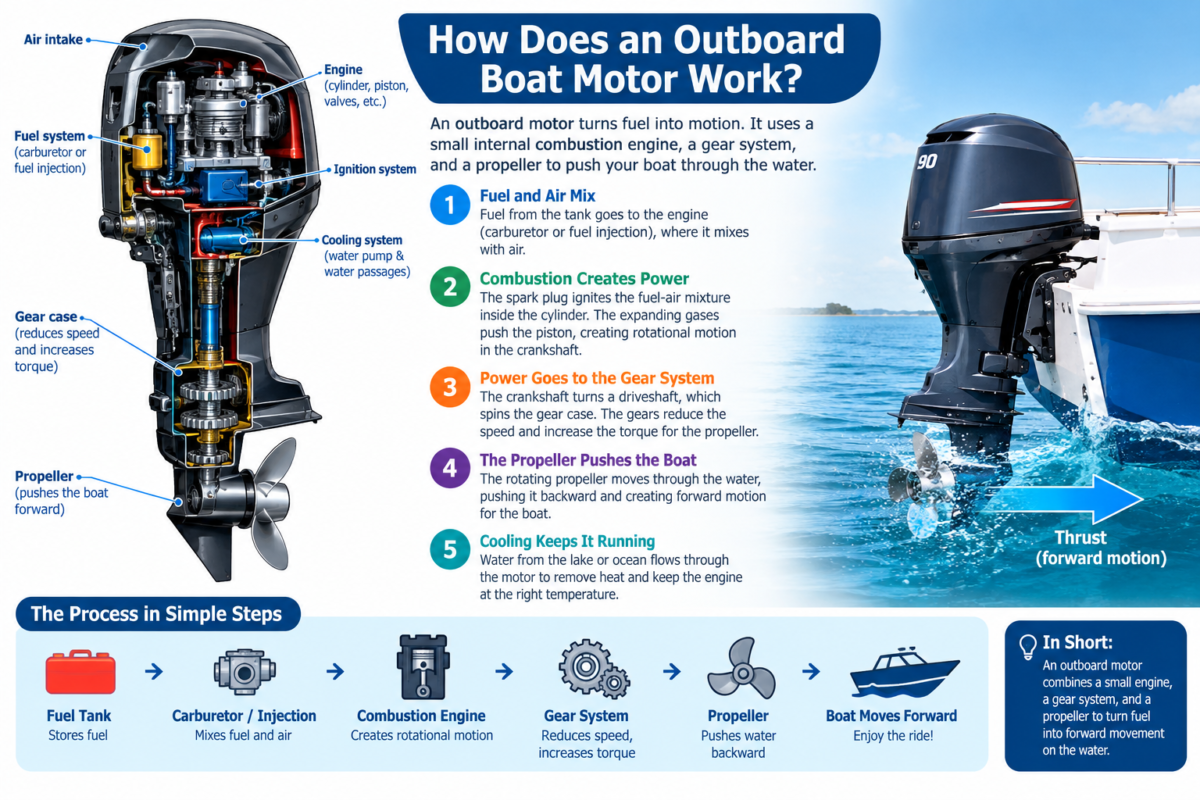
The propeller is extremely important because it transfers engine power into the water.
The right propeller depends on the engine, boat, load, and intended use.
Buying the engine and then selecting the cheapest propeller is not always a smart approach. Proper propeller selection can make a noticeable difference in performance.
Battery and Electrical Equipment
Many modern boats require batteries for starting and electrical accessories.
Some engines may also require additional electrical components depending on the boat’s setup.
Maintenance
Every gasoline outboard requires routine maintenance.
Depending on the engine, this can include oil changes, filter replacement, spark plug inspection, gearcase service, cooling-system checks, and other periodic work.
Maintenance is part of the long-term cost of ownership.
New Outboard Motor vs. Used Outboard Motor
A used outboard can be cheaper upfront, but a new engine offers several advantages.
A new motor generally comes with current technology and manufacturer warranty coverage.
You also know the engine’s history from day one.
With a used engine, you need to consider its maintenance history, operating hours, previous storage conditions, corrosion, repairs, and overall condition.
A well-maintained used engine can be a good value, but hidden problems can turn a cheap purchase into an expensive project.
For someone who wants predictable ownership and does not want to inherit another person’s maintenance history, buying new can be appealing.
Is Buying a New Outboard Motor Worth It?
For many boat owners, yes.
A new outboard can provide peace of mind, modern features, warranty protection, and predictable performance.
However, whether it is worth the investment depends on how often you use the boat and what you expect from the engine.
If you only use your boat a few times each year, spending heavily on a premium engine may not make sense.
If you use your boat frequently, reliability and fuel efficiency become much more important.
The best purchase is the one that matches your actual needs rather than simply choosing the biggest engine you can afford.
How to Choose the Right New Outboard Motor
Choosing an outboard should begin with the boat, not the engine showroom.
Check Your Boat’s Horsepower Rating
Every boat has a recommended or maximum horsepower rating.
Do not exceed the manufacturer’s limits.
The correct horsepower range is a starting point for choosing an engine that is appropriate for the hull.
Honda Marine also offers a broad selection of outboard motors, including portable, mid-range, and high-power models. Its official Honda Marine outboard lineup shows models ranging from small 2.3 HP engines to high-power 350 HP options, making it useful for comparing different engine categories.
Consider Boat Weight
Think about the total weight of the boat, passengers, fuel, fishing equipment, safety equipment, and other gear.
A boat carrying heavy loads may require more power than a lightly loaded boat.
Think About Your Main Activity
Are you fishing?
Cruising?
Exploring?
Using the boat for family outings?
Your answer can help determine the appropriate engine size.
A fishing boat may prioritize quiet operation and fuel economy. A performance-oriented boat may prioritize acceleration and speed.
Consider Fuel Economy
A powerful engine can provide impressive performance, but it may consume more fuel.
If you spend many hours on the water every week, fuel economy can have a major impact on your long-term budget.
Look at Local Service Availability
This is one of the most overlooked factors.
An engine is only useful if you can get it serviced when necessary.
Before buying, check whether qualified technicians and replacement parts are available in your area.
How to Save Money on a New Outboard Motor
You do not necessarily need to buy the most expensive engine to get a good boating experience.
Compare Several Models
Look at several brands before making a decision.
Compare horsepower, weight, fuel consumption, warranty, controls, maintenance requirements, and dealer support.
Get Complete Quotes
Do not compare one dealer’s engine-only price with another dealer’s fully rigged package.
Ask each dealer for a complete estimate.
Consider Seasonal Promotions
Marine dealers may offer special pricing during certain periods of the year.
Shopping strategically can sometimes reduce the overall purchase cost.
Avoid Unnecessary Features
Modern outboards can come with impressive technology.
Some features may be genuinely useful, while others may not matter for your boating style.
Focus on features that improve your experience rather than paying for technology you will rarely use.
Think About Long-Term Value
The cheapest engine is not always the least expensive engine to own.
An engine with good fuel efficiency, dependable service support, and strong resale value may offer better value over time.
Questions to Ask Before Buying a New Outboard Motor
Before signing the paperwork, ask the dealer several practical questions.
What exactly is included in the quoted price?
Does the price include a propeller?
Are controls included?
Is installation included?
What does the warranty cover?
Where can the engine be serviced?
How often does the engine require routine maintenance?
What fuel does the manufacturer recommend?
Are replacement parts readily available?
What is the estimated total cost after rigging and installation?
Getting clear answers can prevent unexpected expenses later.
Common Mistakes to Avoid
Buying an outboard is exciting, but rushing the decision can be costly.
One common mistake is choosing too much horsepower simply because a larger engine sounds better.
Another is focusing only on the sticker price.
Some buyers also forget to account for rigging, installation, controls, and maintenance.
Ignoring engine weight can also create problems. The motor needs to be appropriate for the boat’s transom and overall design.
Finally, do not overlook after-sales support.
A slightly more expensive engine from a manufacturer with strong local dealer support may be a smarter investment than a cheaper engine that is difficult to service.
How Long Does a New Outboard Motor Last?
The lifespan of an outboard motor depends heavily on maintenance, operating conditions, storage, and usage.
A well-maintained engine can provide many years of service.
Saltwater environments can be particularly demanding because corrosion can affect metal components and electrical connections.
Freshwater use can also create maintenance needs, especially if the engine is not properly stored and serviced.
Regular maintenance is one of the best ways to protect your investment.
Following the manufacturer’s service schedule, using appropriate lubricants and filters, and storing the engine correctly can all contribute to long-term reliability.
Should You Buy a Bigger Outboard Motor?
Bigger is not automatically better.
The ideal engine is the one that provides appropriate performance without unnecessarily increasing cost, weight, and fuel consumption.
A larger engine may be useful if your boat frequently carries heavy loads or requires stronger acceleration.
However, if your boat is small and your boating style is relaxed, a smaller engine may be more practical.
Always follow the boat manufacturer’s recommendations.
Understanding Total Cost of Ownership
When asking how much a new outboard motor costs, it is useful to think beyond the initial purchase.
The total cost of ownership can include:
- Purchase price
- Installation
- Propeller
- Controls
- Rigging
- Fuel
- Oil and maintenance
- Replacement parts
- Battery expenses
- Winterization or storage
- Repairs
- Insurance-related considerations
A motor with a slightly higher purchase price could potentially be cheaper to own over several years if it offers strong efficiency and dependable performance.
That is why smart buyers compare value rather than just price.
How to Get the Best Value From Your New Outboard
The best value comes from choosing an engine that fits your boat and your lifestyle.
Start by identifying your required horsepower range.
Then compare several manufacturers.
After that, look closely at fuel efficiency, weight, warranty, controls, maintenance, and service support.
Ask for complete installed pricing.
Finally, think about how you will use the boat over the next several years.
If you plan to keep the boat for a long time, investing in an engine that meets your needs today and remains useful in the future can make a lot of sense.
FAQs
How much is a new outboard motor?
A new outboard motor can cost roughly $1,000 for some small portable models and more than $30,000 for large premium engines. The exact price depends on horsepower, brand, technology, and included equipment.
What is the cheapest new outboard motor?
Small portable outboards are generally the least expensive new options. Prices vary by manufacturer, horsepower, location, and current dealer pricing.
How much does a 50 HP new outboard motor cost?
A new 50-horsepower outboard can cost several thousand dollars, with the final price depending on the manufacturer, model, controls, propeller, and other equipment.
How much does a 100 HP outboard motor cost?
A 100-horsepower outboard can cost substantially more than a small portable engine. Depending on the brand and configuration, prices can reach well into the five-figure range.
Are new outboard motors worth the money?
For many boat owners, a new outboard can be worth the investment because it offers modern technology, warranty coverage, predictable history, and reliable performance.
Which outboard motor brand is best?
There is no single best brand for every boat. Mercury, Yamaha, Honda, Suzuki, and Tohatsu all offer different models and technologies. The best choice depends on your boat, budget, horsepower requirements, and local service availability.
How long can a new outboard motor last?
A properly maintained outboard can provide many years of service. Actual lifespan depends on maintenance, operating conditions, storage, corrosion protection, and how frequently the engine is used.
What horsepower outboard motor do I need?
The appropriate horsepower depends on the boat’s size, weight, hull design, capacity, and intended use. Always follow the boat manufacturer’s recommended horsepower range and maximum rating.
Is a four-stroke outboard better than a two-stroke?
Modern four-stroke engines are popular because of their efficiency, smooth operation, and emissions characteristics. However, the right choice depends on the specific application, availability, regulations, and owner’s priorities.
Does a new outboard motor come with a propeller?
It depends on the manufacturer, model, dealer, and package. Always confirm exactly what is included before comparing prices.
What other costs should I budget for?
In addition to the engine, you may need to budget for installation, controls, rigging, propeller, battery, fuel-system components, maintenance, and other equipment.
Final Thoughts
Buying a new outboard motor is a significant investment, but it can also transform the way you enjoy your boat. The answer to “how much is a new outboard motor?” depends on much more than horsepower alone. Engine size, brand, technology, fuel efficiency, controls, installation, and long-term maintenance can all influence the final cost.
A small portable outboard may be a practical choice for a lightweight boat, while a larger vessel may require a powerful engine with advanced features. The key is to match the motor to your boat instead of automatically choosing the biggest or most expensive option.
Before buying, compare several models and request complete pricing that includes the equipment and installation you actually need. Pay attention to warranty coverage and local service availability, because dependable support can be extremely valuable after the purchase.
Most importantly, think about how you really use your boat. A reliable, appropriately powered engine can deliver years of enjoyable trips, smoother cruising, and greater confidence on the water. When you focus on total value rather than the lowest sticker price, finding the right new outboard motor becomes a much easier and more rewarding decision.

One thought on “How Much Is a New Outboard Motor? The Amazing Price Guide Every Boat Owner Should Know”