
Learning to drive comes with many small questions, and one of the most common questions for a new driver is, what side of the car is the brake on? It may seem like an obvious thing once you have been driving for a while, but when you first sit behind the wheel, understanding the position of every pedal is extremely important. Knowing where the brake pedal is located helps you become more comfortable and confident before the vehicle starts moving.
In a typical car, the brake pedal is positioned to the left of the accelerator pedal. In an automatic vehicle, you will normally see two main pedals: the brake on the left and the accelerator on the right. Both are generally operated with the right foot. In a manual-transmission car, the arrangement is different because there is also a clutch pedal on the far left.
Understanding pedal placement is not simply about memorizing which pedal is where. It is also about developing good driving habits and becoming familiar with the vehicle you are operating. Every car can feel slightly different, and the size, spacing, height, and resistance of the pedals can vary.
This guide explains the position of the brake pedal, the difference between the brake and accelerator, how automatic and manual cars differ, and what beginners should know before driving. The goal is to make the subject simple and easy to understand so you can approach the driver’s seat with greater awareness.
What Side of the Car Is the Brake On?
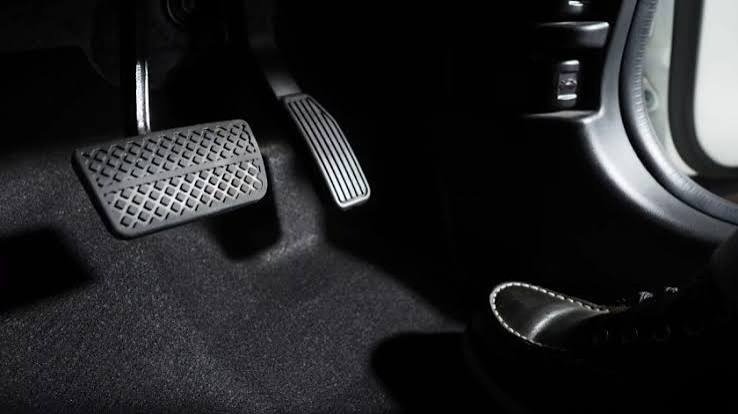
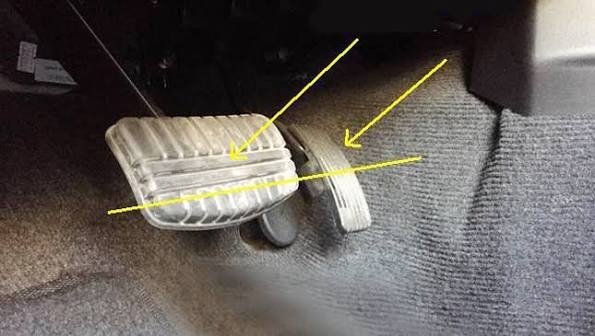
In most conventional cars, the brake pedal is located to the left of the accelerator. When you sit in the driver’s seat and look down toward the footwell, an automatic car normally has two pedals. The pedal on the left is the brake, while the pedal on the right is the accelerator.
The brake pedal is usually wider than the accelerator pedal. This design makes it easier for the driver to identify and press it when slowing or stopping the vehicle. However, you should not rely only on pedal size because different vehicle manufacturers use different pedal designs.
The brake is used to slow the vehicle or bring it to a stop. The accelerator, sometimes called the gas pedal, controls the power being delivered to the vehicle and allows it to increase speed. Because these pedals perform opposite jobs, knowing their positions is one of the first things a new driver should learn.
The arrangement is designed to make operation straightforward. When driving a conventional automatic vehicle, the driver’s right foot can move between the accelerator and brake as needed. This allows the driver to control speed while keeping the other foot available for comfort and stability.
If you are sitting in a vehicle you have never driven before, take a moment to identify the pedals before starting. Look at the controls, adjust your seating position, and make sure you understand which pedal performs each function.
Where Is the Brake Pedal in an Automatic Car?
An automatic car normally has two pedals: the brake and accelerator. The brake is on the left, and the accelerator is on the right.
The brake pedal is often larger and wider because it is an important control used frequently during normal driving. The accelerator tends to be narrower and positioned slightly farther to the right.
When you sit in the driver’s seat, you should be able to comfortably reach both pedals with your right foot. You should not have to stretch your leg or twist your body to operate them.
Why Is the Brake on the Left of the Accelerator?
The placement of the brake to the left of the accelerator is part of the conventional pedal arrangement used in many vehicles. It gives the driver a predictable control layout and allows the right foot to move between acceleration and braking.
This consistency is useful because drivers may operate different vehicles throughout their lives. A familiar arrangement means they do not have to completely relearn the location of the primary pedals each time they get into another conventional automatic car.
The exact shape and spacing can still vary from one vehicle to another. A compact car may have a different pedal feel from an SUV, pickup truck, or sports car. That is why it is always sensible to familiarize yourself with the controls before driving an unfamiliar vehicle.
Which Pedal Is the Brake in a Car?
The brake pedal is normally the pedal positioned immediately to the left of the accelerator in an automatic car.
If you are looking down at the pedals, the wider pedal on the left is generally the brake. The narrower pedal on the right is generally the accelerator.
However, identifying the pedals by appearance should only be part of your understanding. Before operating a vehicle, you should know its controls and follow the manufacturer’s instructions.
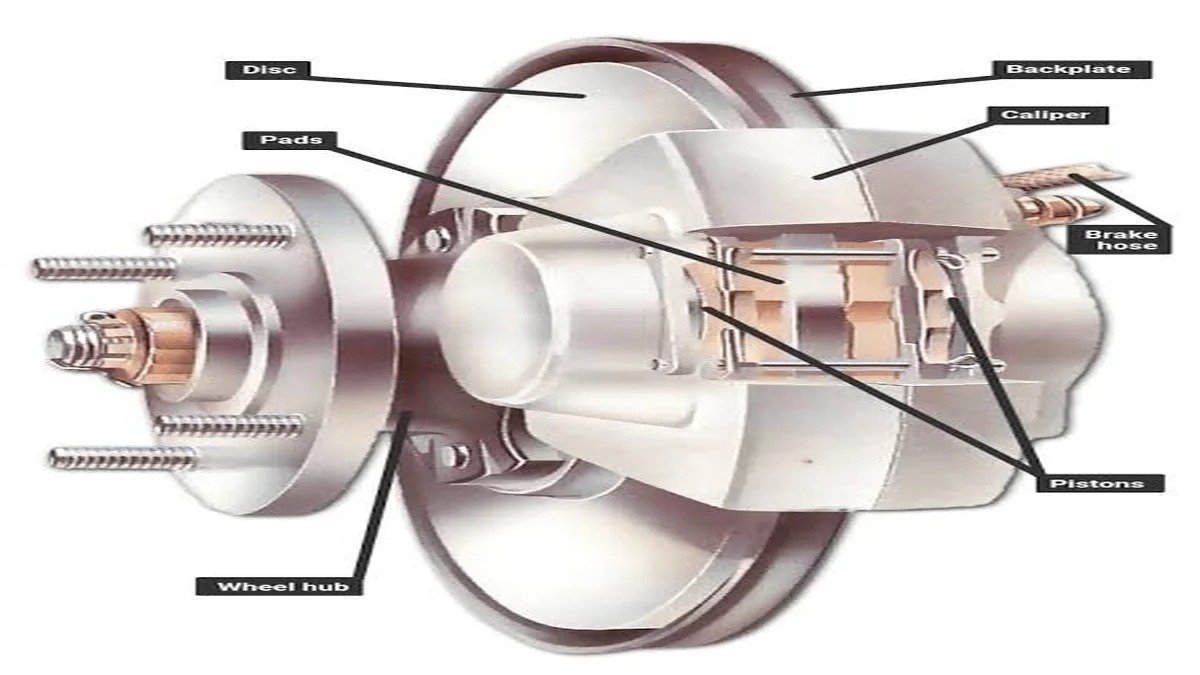
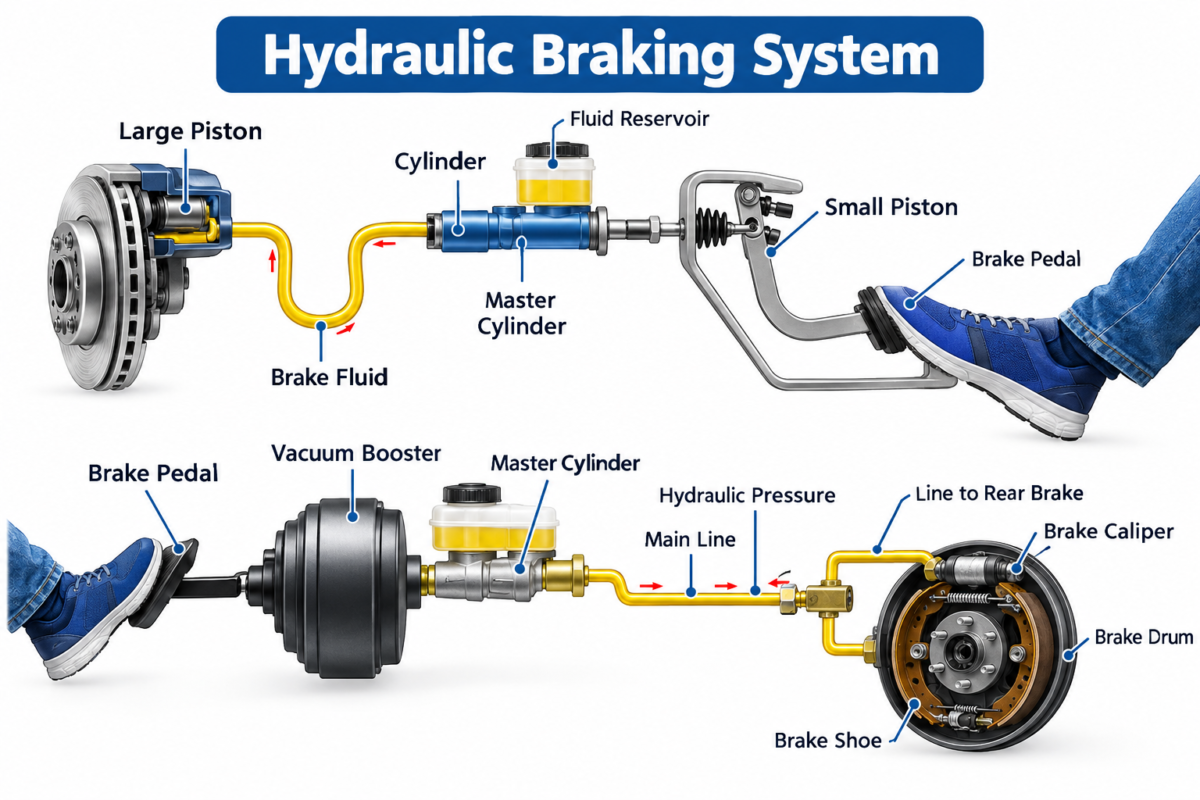
The brake pedal is connected to the vehicle’s braking system. When you press it, the braking system creates the force necessary to slow the wheels. Modern braking systems use components such as brake fluid, calipers, brake pads, rotors, drums in some applications, and other related parts.
The accelerator performs a completely different function. Pressing it generally increases the engine or motor’s power output, depending on the vehicle’s design.
This simple difference is worth remembering: the brake helps slow or stop the vehicle, while the accelerator helps the vehicle move faster.
What Side Is the Brake on in a Manual Car?
Manual cars have three pedals rather than two. From left to right, the typical arrangement is the clutch, brake, and accelerator.
The clutch is on the far left. The brake is in the middle. The accelerator is on the far right.
This means the brake is still located to the left of the accelerator, but there is another pedal positioned farther to the left of the brake.
The clutch is used to help connect and disconnect the engine from the transmission during gear changes. The brake is used to slow or stop the vehicle, while the accelerator controls power and speed.
Understanding the Three-Pedal Arrangement
The three pedals may look confusing to someone who has only driven an automatic car, but their basic positions are consistent in conventional manual vehicles.
The far-left pedal is the clutch. The middle pedal is the brake. The far-right pedal is the accelerator.
Manual driving requires coordination between these controls. The driver normally uses the left foot for the clutch and the right foot for the brake and accelerator.
Because manual cars require more coordination, beginners should learn pedal operation under the guidance of a qualified driving instructor or another appropriate adult according to local driving rules.
What Is the Difference Between the Brake and Accelerator?
The brake and accelerator are two of the most important pedals in a vehicle, but they have completely different purposes.
The brake pedal is used to reduce speed or stop the vehicle. When the driver applies the brake, the braking system creates resistance at the wheels, converting the vehicle’s motion into other forms of energy, primarily heat through friction in conventional friction brakes.
The accelerator pedal controls the vehicle’s power request. In a traditional gasoline-powered vehicle, pressing the accelerator generally causes the engine to provide more power. In electric vehicles, it controls the amount of electric motor power requested.
The pedals can also feel different. A brake pedal generally offers noticeable resistance as it is pressed, while an accelerator is designed for controlled movement and power adjustment.
Understanding these differences makes it easier to recognize the pedals without confusion.
How Can You Identify the Brake Pedal Easily?
One of the easiest ways to identify the brake pedal is to look at its position. In a typical automatic car, it is the pedal on the left.
You can also look at the size and shape of the pedal. Brake pedals are often wider than accelerator pedals, although designs vary.
Another useful step is checking the vehicle’s owner’s manual. The manual contains information specific to that vehicle and can help you understand the controls before you drive.
If you are learning to drive, take time to become familiar with the pedals while the vehicle is safely parked. Adjust your seat so that you can reach the controls comfortably. You should be able to press the brake without having to stretch or change your body position.
Never try to figure out unfamiliar controls while the vehicle is moving. A few moments of preparation can make the driving experience much more comfortable.
What Foot Should You Use for the Brake?
In a conventional automatic car, drivers normally use the right foot to operate both the brake and accelerator.
The right foot moves between the two pedals depending on whether the driver needs to accelerate or slow down. This is the standard technique taught to most drivers.
Using one foot for these two pedals can help maintain a consistent driving position and reduce unnecessary foot movement.
Manual vehicles also generally use the right foot for the brake and accelerator, while the left foot operates the clutch.
A qualified driving instructor can help a learner develop appropriate pedal technique. Learning good habits early can make driving more predictable and comfortable.
Is the Brake Always on the Same Side?
Most conventional vehicles follow a familiar pedal arrangement, but you should not assume that every vehicle has identical controls.
Vehicle modifications, specialized equipment, adapted controls, and unusual designs can change pedal placement. Some vehicles may also have hand-operated controls or other adaptations for drivers with specific needs.
For a normal unmodified automatic car, however, the brake is generally to the left of the accelerator.
Whenever you enter a different vehicle, especially one you have never driven before, take a moment to inspect the controls. Familiarity is more important than simply relying on memory.
Where Is the Brake in an Electric Car?
Electric vehicles generally still have a brake pedal and an accelerator pedal in the conventional positions. The brake is typically on the left of the accelerator.
However, electric cars can feel different because they may use regenerative braking. Regenerative braking allows the electric motor to help slow the vehicle and recover some energy for the battery.
Some electric vehicles offer strong one-pedal driving behavior, where releasing the accelerator causes substantial deceleration. Even with these systems, the physical brake pedal remains an important control.
The exact driving characteristics depend on the vehicle model and the settings selected by the manufacturer.
For anyone learning to drive an electric vehicle, it is important to read the owner’s manual and understand how its acceleration and braking systems behave.
Where Is the Brake in a Hybrid Car?
Hybrid cars also normally have the brake pedal on the left of the accelerator.
A hybrid combines different power systems, commonly an internal-combustion engine and an electric motor. Because of this combination, the braking experience may differ somewhat from a conventional gasoline vehicle.
Regenerative braking can contribute to slowing the car, especially at lower speeds or when the driver releases the accelerator. Conventional friction brakes are also available when additional braking force is needed.
Even though the technology may be more sophisticated, the driver’s basic understanding remains simple: the brake pedal is used when you need to slow or stop the vehicle.
Why Is Knowing the Brake Pedal Important for New Drivers?
Knowing the location of the brake pedal is one of the basic skills every driver should develop before driving independently.
A new driver needs to become familiar with the vehicle’s controls, including the steering wheel, indicators, mirrors, gear selector or transmission, accelerator, brake, parking brake, and other important controls.
The pedals deserve special attention because they directly influence the vehicle’s movement.
If a driver does not know which pedal is which, they should not begin driving until they have received proper instruction and become familiar with the controls.
Good preparation creates confidence. Instead of guessing while driving, a learner can enter the vehicle already knowing where each control is located.
Common Mistakes New Drivers Make With the Brake
New drivers sometimes become confused when they first sit in a vehicle. One common mistake is mixing up the brake and accelerator.
Another mistake is looking down at the pedals while the vehicle is moving. Drivers should keep their attention focused on the road and surroundings rather than trying to identify pedals after the vehicle has started moving.
Some beginners may also place their foot incorrectly or use inconsistent foot movements. Proper instruction and supervised practice can help build better habits.
Another common issue occurs when someone switches from one type of vehicle to another. An automatic car and a manual car have different pedal arrangements, and an unfamiliar vehicle may have different pedal spacing or feel.
The best approach is simple: learn the controls before moving the vehicle.
Learning proper pedal control is an important part of becoming a confident driver. Organizations such as AAA Driver Education provide driver-training resources designed to help new drivers develop safe driving habits and practical skills. Before driving on public roads, learners should follow their local licensing requirements and practice with appropriate supervision.
How to Get Comfortable With the Brake Pedal
Becoming comfortable with the brake pedal takes practice. You do not need to rush the process.
Start by sitting correctly in the driver’s seat. Adjust the seat so your legs can comfortably reach the pedals. Your back should be supported, and you should have a clear view through the windshield and mirrors.
With the vehicle safely parked and under appropriate supervision, become familiar with the location of the pedals. Learn which pedal is the brake and which is the accelerator.
As you receive driving instruction, pay attention to how much pressure is required for normal braking. Smooth braking is an important skill because sudden or inconsistent pedal input can make the ride uncomfortable.
Practice should always take place in an appropriate legal and controlled environment with proper supervision.
What Happens When You Press the Brake Pedal?
When you press the brake pedal, the vehicle’s braking system responds by creating braking force at the wheels.
In many conventional hydraulic braking systems, pressing the brake pedal causes a master cylinder to pressurize brake fluid. That pressure travels through brake lines toward the wheel brakes.
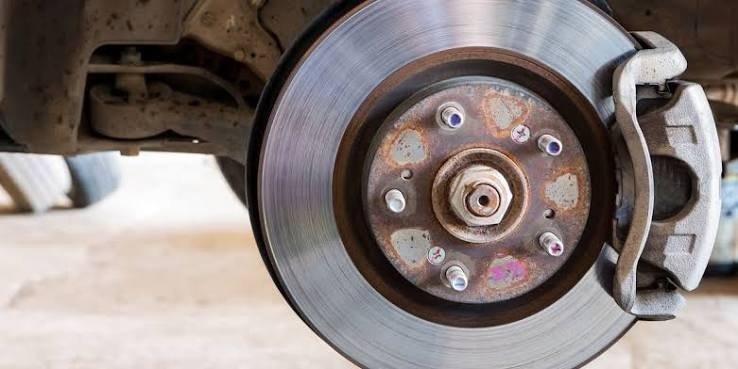
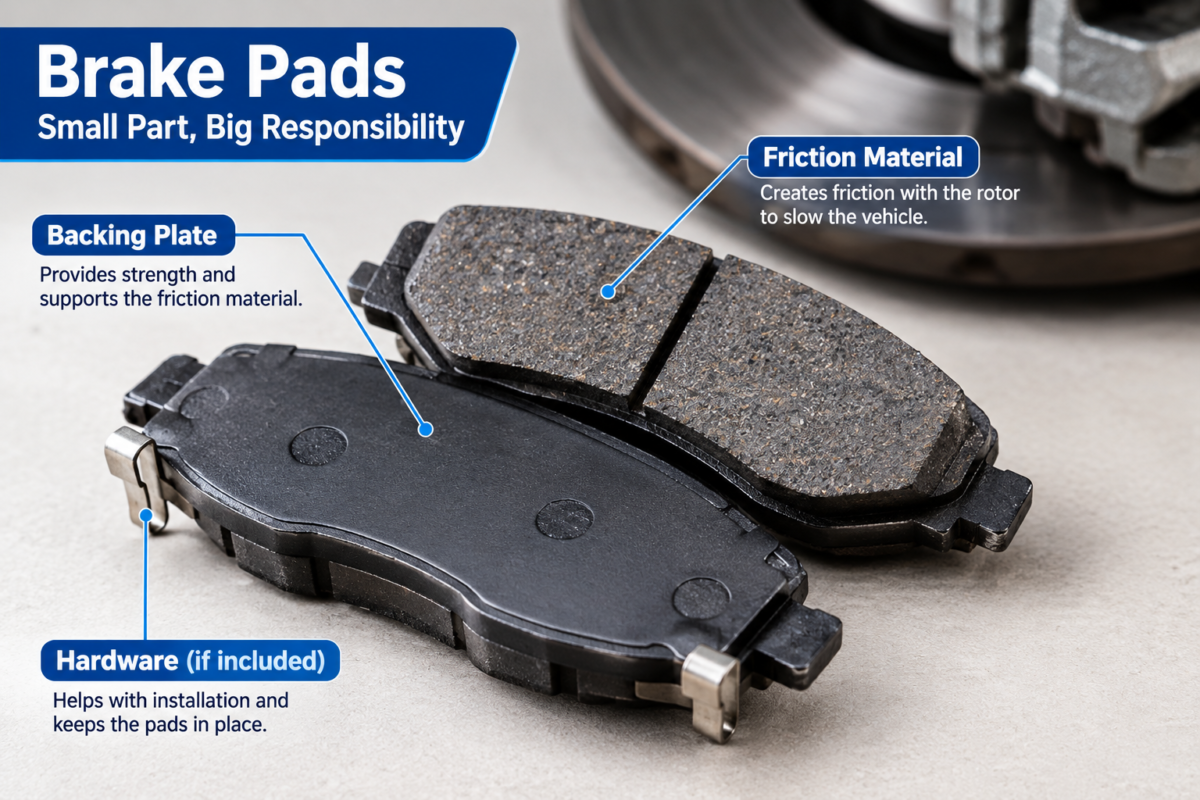
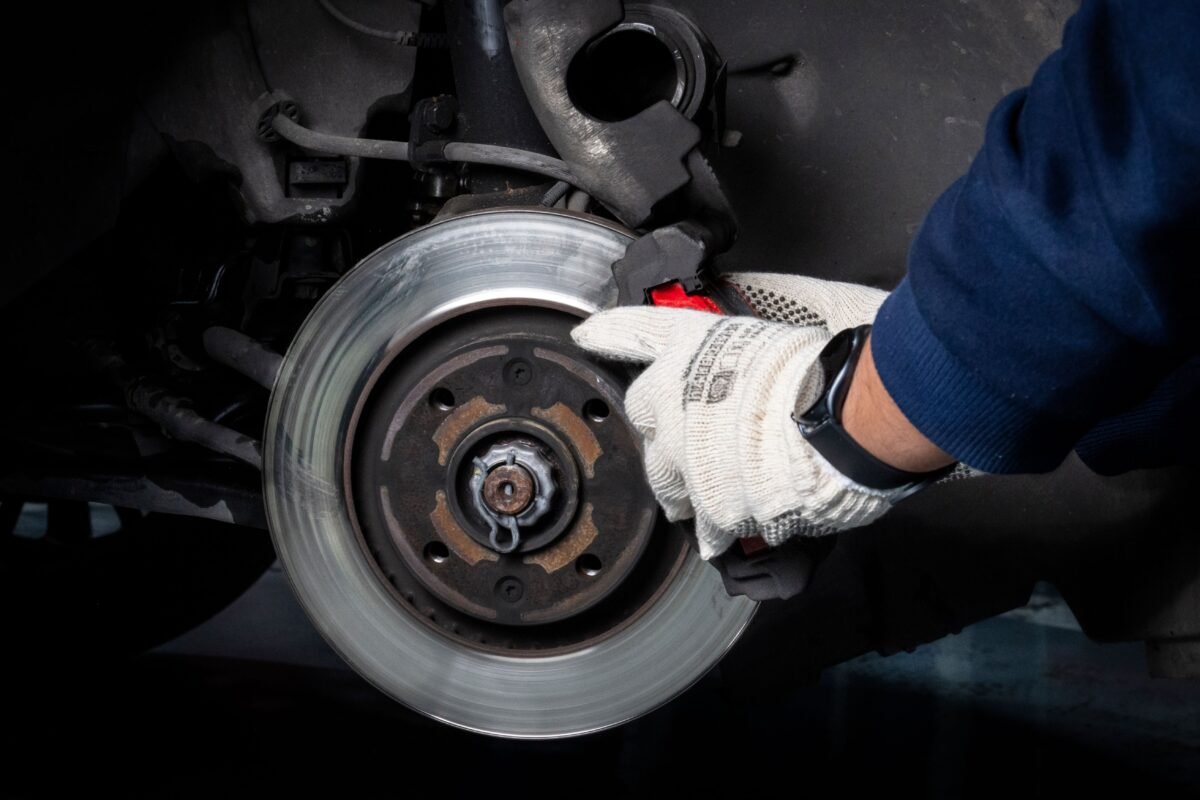
At the wheels, brake calipers can press brake pads against rotating brake discs, also called rotors. The resulting friction slows the rotation of the wheels.
Some vehicles use drum brakes on certain wheels instead of disc brakes. Modern vehicles can also include electronic systems that help manage braking performance.
Anti-lock braking systems, commonly known as ABS, can help prevent wheel lock during hard braking by rapidly adjusting brake pressure.
The entire system works together so that the driver’s input at the pedal can produce controlled deceleration.
Brake Pedal vs. Clutch vs. Accelerator
Understanding the three pedals in a manual vehicle is essential for anyone learning to drive one.
The clutch pedal is on the far left. It helps disconnect the engine from the transmission so the driver can change gears smoothly.
The brake pedal is in the middle. It slows or stops the vehicle.
The accelerator pedal is on the far right. It controls the vehicle’s power request and helps increase speed.
In an automatic car, the clutch pedal is absent, leaving the brake on the left and accelerator on the right.
Knowing this arrangement makes it much easier to answer the question, “What side of the car is the brake on?” In a standard automatic, look for the pedal immediately to the left of the accelerator. In a standard manual, look for the middle pedal.
Does the Brake Pedal Have to Be on the Left?
For conventional vehicles, the familiar arrangement places the brake to the left of the accelerator. This is the layout most drivers will encounter.
However, specially adapted vehicles may use different controls. A vehicle modified for a driver with mobility limitations can have alternative control arrangements.
Therefore, the safest approach is to identify the controls in the particular vehicle you are driving rather than assuming every vehicle is identical.
If you are using a standard car without special modifications, the conventional arrangement should be easy to recognize.
Why Is the Brake Pedal Usually Wider?
The brake pedal is commonly wider than the accelerator because braking is an essential driving action and the pedal needs to be easy to locate and operate.
A wider pedal can provide a larger target for the driver’s foot. It also helps distinguish the brake from the narrower accelerator.
Still, pedal dimensions are not universal. Some vehicles have unique pedal designs, and performance cars may use different shapes or spacing.
For that reason, pedal width should be treated as a helpful visual clue rather than the only method of identification.
Can the Brake and Accelerator Be Pressed at the Same Time?
Drivers should not intentionally press both pedals at the same time during ordinary driving unless a vehicle manufacturer specifically describes a particular procedure.
The accelerator is used to request power, while the brake is used to slow or stop. Pressing both can produce unexpected vehicle behavior depending on the vehicle’s electronic systems.
Modern vehicles may have systems designed to manage conflicting pedal inputs, but drivers should not rely on those systems as a substitute for correct pedal technique.
Learning to keep the right foot appropriately positioned between the brake and accelerator is an important part of safe driving.
How Should a Beginner Prepare Before Driving?
Before moving a vehicle, a beginner should become familiar with the driver’s controls.
First, adjust the seat and steering wheel so you can comfortably reach the pedals and maintain a good view.
Next, identify the brake and accelerator. If the car has a manual transmission, identify the clutch as well.
Check the mirrors and understand the gear selector. Make sure you know how the parking brake works and understand the vehicle’s basic controls.
A learner should also receive appropriate instruction and follow local licensing requirements. Driving is a practical skill, and professional instruction can provide valuable guidance that a written article cannot replace.
The purpose of preparation is not to make driving complicated. It is to make the basic controls familiar before the vehicle begins moving.
What Side of the Car Is the Brake On for Left-Hand-Drive Cars?
In a typical left-hand-drive vehicle, where the steering wheel is on the left side of the car, the pedal arrangement generally remains the same: the brake is to the left of the accelerator in an automatic vehicle.
The location of the steering wheel does not normally change the basic relationship between the brake and accelerator.
This can be helpful for drivers who travel between countries with different road-driving conventions. However, they should still become familiar with the specific vehicle before driving.
What Side of the Car Is the Brake On for Right-Hand-Drive Cars?
Right-hand-drive vehicles also generally keep the same basic pedal relationship.
In a conventional automatic right-hand-drive vehicle, the brake is still normally positioned to the left of the accelerator. The steering wheel being on the opposite side of the vehicle does not generally reverse the pedal arrangement.
This distinction is useful because some people assume that moving the steering wheel to the opposite side also moves the pedals around. In standard vehicles, that is generally not the case.
How Does Brake Pedal Position Help With Driving Confidence?
Knowing the answer to a simple question such as what side of the car is the brake on can remove unnecessary uncertainty for a new driver.
Confidence develops when a driver understands the controls and practices using them correctly.
A beginner may initially think about every pedal movement. With proper instruction and practice, these basic controls become much more familiar.
However, confidence should never become overconfidence. Even experienced drivers need to remain attentive, follow traffic laws, maintain a safe following distance, and respond appropriately to changing road conditions.
Understanding the pedals is only one part of becoming a responsible driver, but it is an important starting point.
FAQs
What side is the brake pedal on in an automatic car?
In a conventional automatic car, the brake pedal is normally on the left of the accelerator. There are usually two main pedals, with the brake on the left and the accelerator on the right.
Is the brake on the left or right?
The brake is normally on the left side of the accelerator. In an automatic car, this means the brake is usually the left pedal.
Which pedal is the brake in a car?
In a typical automatic car, the brake is the wider pedal located to the left of the accelerator. In a manual car, it is normally the middle pedal.
Do you use your left or right foot for the brake?
In conventional driving, the right foot is normally used for the brake and accelerator. In a manual vehicle, the left foot is generally used for the clutch.
Where is the brake in a manual car?
In a conventional manual car, the brake is the middle pedal. The clutch is on the far left, the brake is in the middle, and the accelerator is on the far right.
Is the brake pedal bigger than the accelerator?
The brake pedal is commonly wider than the accelerator, but pedal dimensions can vary between vehicles. Always identify the controls in the specific vehicle you are driving.
Are brake pedals always in the same place?
Most conventional vehicles use a familiar pedal arrangement, but modified or specialized vehicles can have different controls. Always check an unfamiliar vehicle before driving.
Is the brake pedal the left pedal in an automatic?
Yes. In a typical automatic car with two pedals, the brake is the left pedal and the accelerator is the right pedal.
Why is the brake next to the accelerator?
The arrangement allows the driver’s right foot to move between braking and acceleration while maintaining a familiar and consistent control layout.
How can I remember which pedal is the brake?
A simple way to remember it is that, in a conventional automatic car, the brake is on the left and the accelerator is on the right. Take a moment to confirm the controls before driving an unfamiliar vehicle.
Final Thoughts
Knowing what side of the car is the brake on is one of the simplest but most important pieces of information for anyone learning to drive. In a typical automatic car, the brake pedal is positioned on the left of the accelerator, and both pedals are normally operated with the right foot. In a manual vehicle, the brake is usually the middle pedal, with the clutch on the far left and accelerator on the far right.
Although this arrangement is common, every driver should take a moment to become familiar with the specific vehicle they are using. Pedal shapes, spacing, and feel can vary, and specially adapted vehicles may use different control arrangements.
Understanding the pedals is only the beginning of becoming a confident driver. Proper seating, good visibility, careful attention, responsible practice, and qualified instruction all contribute to better driving habits. Never try to identify unfamiliar controls while the vehicle is moving.
The good news is that pedal placement becomes very easy to recognize with experience. Once you understand the basic layout and practice under appropriate supervision, the brake, accelerator, and clutch will become much more familiar. A clear understanding of these fundamental controls gives new drivers a strong foundation for learning safe and responsible driving.