

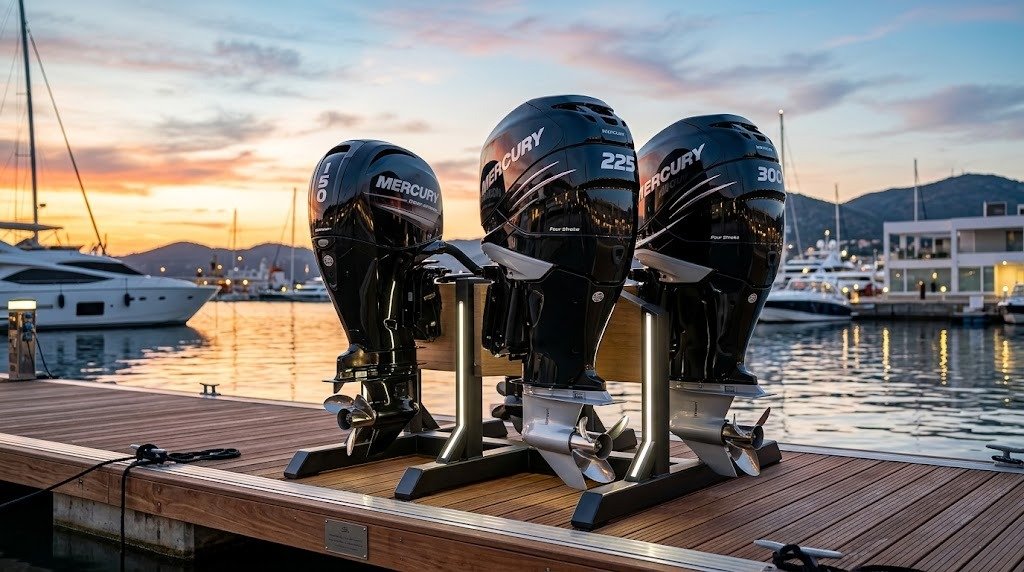
Mercury outboard four stroke engines have become a popular choice for boat owners who want a combination of dependable performance, fuel efficiency, smooth operation, and modern engine technology. Whether you use a boat for fishing, family cruising, water sports, or general recreation, choosing the right outboard engine can make a noticeable difference in how the boat performs on the water.
A four-stroke outboard engine completes its combustion cycle through four separate strokes: intake, compression, power, and exhaust. This design allows the engine to operate efficiently while producing the power needed to move a boat through the water. Mercury Marine offers four-stroke outboards across a broad range of horsepower categories, making them suitable for everything from smaller fishing boats to larger recreational vessels.
One reason boat owners consider Mercury four-stroke engines is their balance between performance and everyday usability. Modern outboards are designed to provide smooth acceleration, reliable starting, efficient fuel consumption, and straightforward maintenance. However, the right engine depends on the size and weight of your boat, how you use it, and the performance you expect.
This guide explains how Mercury outboard four stroke engines work, their main features and benefits, performance characteristics, maintenance requirements, and the factors worth considering before buying one.
What Are Mercury Outboard Four Stroke Engines?
Mercury outboard four stroke engines are marine propulsion systems manufactured by Mercury Marine that use four-stroke internal combustion technology. Unlike an inboard engine, an outboard combines the engine, gearbox, propeller shaft, and propeller into one unit mounted at the stern of the boat.
The four-stroke design uses separate stages for drawing in the air-fuel mixture, compressing it, producing power, and removing exhaust gases. This operating process is different from traditional two-stroke designs, which complete the combustion cycle using fewer piston strokes.
Mercury’s current outboard range includes engines designed for different applications and boat sizes. Smaller engines can be practical for lightweight boats and tenders, while larger four-stroke models can provide substantial power for fishing boats, pontoons, center consoles, and other recreational vessels.
For technical specifications and current model information, boat owners can consult the official Mercury Marine website.
How Does a Four Stroke Outboard Work?
A four-stroke engine operates through four basic piston movements.
During the intake stroke, the piston moves downward while the intake valve allows the air-fuel mixture into the combustion chamber. During compression, the piston moves upward and compresses the mixture.
The power stroke begins when the compressed mixture is ignited. The resulting combustion pushes the piston downward and produces mechanical power. Finally, during the exhaust stroke, the piston moves upward and pushes the burned gases out of the combustion chamber.
This process repeats continuously while the engine is running. The crankshaft transfers the generated power through the drivetrain and ultimately to the propeller.
Why Choose a Four Stroke Design?
Four-stroke outboards are generally known for smooth operation and efficient fuel use. They also avoid the need to mix oil with fuel in the way traditional carbureted two-stroke engines commonly required.
For many recreational boaters, this makes four-stroke technology convenient for regular use. Modern four-stroke engines can also incorporate electronic fuel injection, computerized engine management, and other technologies designed to improve starting, throttle response, and overall operation.
Key Features of Mercury Outboard Four Stroke Engines
Mercury four-stroke outboards vary by model and horsepower, but several features are commonly associated with the modern range.
Fuel-Efficient Engine Design
Fuel economy is an important consideration for boat owners because marine engines can consume significant amounts of fuel during extended trips. A well-matched four-stroke engine can provide efficient operation when the boat is properly loaded and operated at appropriate speeds.
Fuel consumption depends on many factors, including engine horsepower, boat weight, hull design, propeller selection, water conditions, throttle position, and passenger load. Therefore, no single fuel-consumption figure applies to every Mercury four-stroke model or boat.
Smooth and Quiet Operation
One noticeable characteristic of many four-stroke outboards is their smooth operating behavior. A properly maintained engine can provide consistent power without excessive vibration.
Noise levels also depend on the engine model, boat design, mounting arrangement, operating speed, and surrounding conditions. However, modern marine engines are designed with technologies intended to improve the overall boating experience.
This can be particularly useful for anglers who want to reduce unnecessary disturbance while fishing or families who spend several hours cruising on the water.
Reliable Starting
Modern Mercury four-stroke outboards use technologies designed to make starting easier and more consistent. Depending on the model, electronic fuel injection and electronic engine controls can contribute to predictable starting and throttle response.
A reliable starting system is especially important when boating away from shore. Proper battery condition, clean fuel, regular servicing, and correct storage practices are equally important for dependable starting.
Advanced Engine Management
Many modern outboards use electronic control systems to monitor and manage engine operation. Sensors can provide information to the engine management system, allowing it to adjust operation according to changing conditions.
Some Mercury models also offer integrated technologies that allow boaters to monitor engine information through compatible displays and systems.
Corrosion Protection
Marine engines operate in an environment where water, salt, humidity, and temperature changes can contribute to corrosion. Mercury outboards incorporate various protective measures, but no marine engine is completely maintenance-free.
Saltwater users should pay particular attention to flushing, inspection, anodes, and appropriate corrosion protection. Following the manufacturer’s maintenance recommendations is an important part of extending engine service life.
Mercury Four Stroke Outboard Engine Performance
Performance is one of the most important factors when choosing an outboard engine. A Mercury four-stroke engine needs to provide enough power for the boat while remaining appropriate for its intended use.
Acceleration and Throttle Response
Acceleration depends on horsepower, propeller selection, boat weight, hull design, trim position, and load. A correctly matched engine can provide responsive acceleration without requiring the engine to work unnecessarily hard.
Electronic engine controls and modern fuel-injection systems can also contribute to smooth throttle response.
Top-End Performance
Top speed is often one of the first specifications boat owners ask about, but it should not be the only performance measurement.
A boat’s maximum speed depends on much more than engine horsepower. Hull shape, boat length, total weight, propeller pitch, engine mounting height, water conditions, and load all affect the final result.
A larger engine does not automatically mean a proportionally faster boat. The engine should be matched to the boat manufacturer’s recommended horsepower range.
Low-Speed Control
Low-speed control is important for fishing, docking, maneuvering through marinas, and navigating narrow waterways.
A suitable four-stroke outboard should provide predictable throttle control at lower speeds. Smooth power delivery can make slow maneuvering more comfortable and easier to manage.
Mercury Outboard Four Stroke Horsepower Options
Mercury offers four-stroke outboards across a wide range of power levels. Choosing horsepower should always begin with the boat manufacturer’s specifications.
Small Mercury Four Stroke Engines
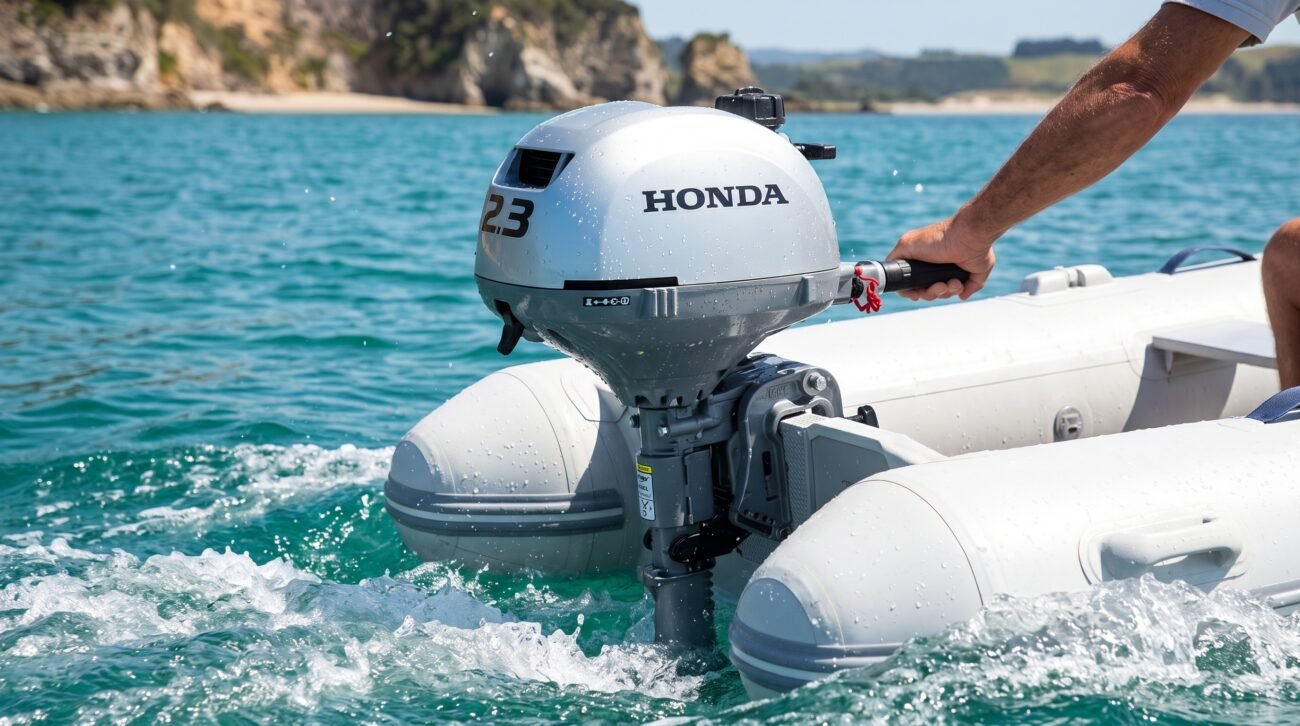
Smaller Mercury four-stroke engines are commonly used on lightweight boats, tenders, inflatables, jon boats, and other small vessels.
Portability can be a major advantage in this category. A compact outboard can be easier to transport, store, and install than a larger engine.
Small engines can also be useful for anglers who prioritize simple operation and lower overall equipment weight.
Mid-Range Mercury Four Stroke Engines
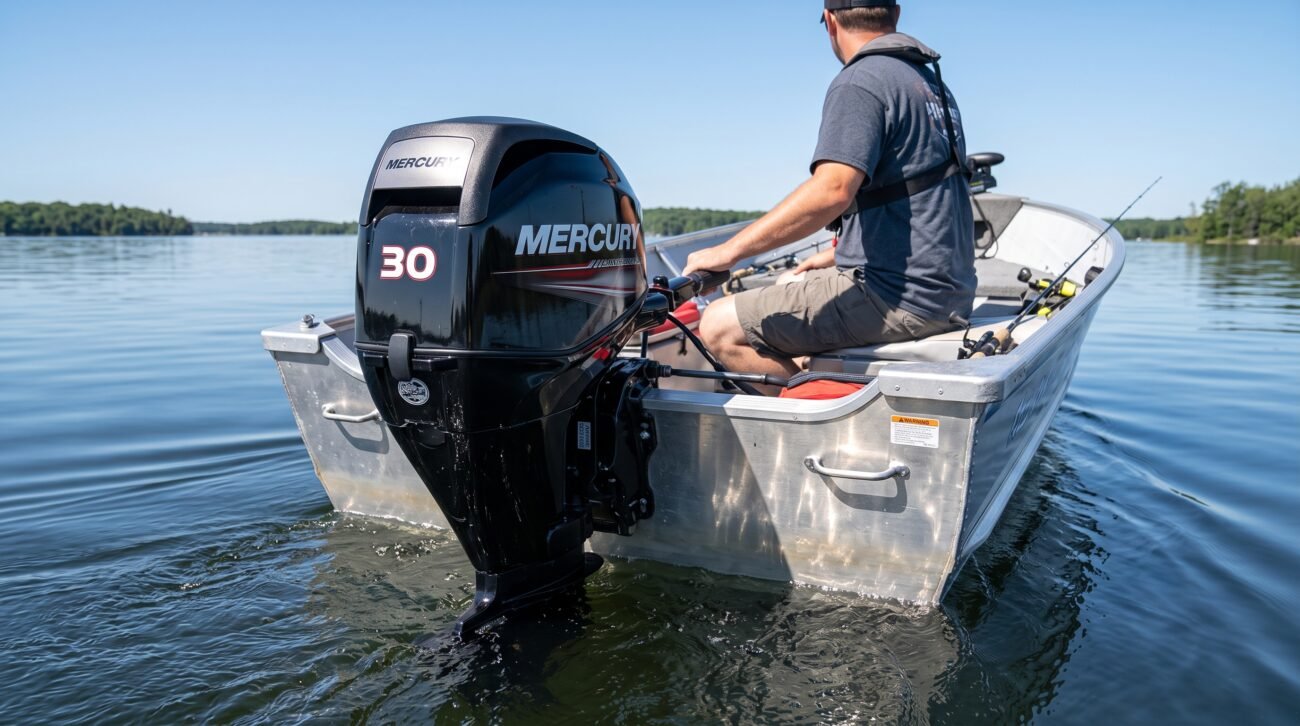
Mid-range engines can provide a balance between portability and performance. They may be suitable for fishing boats, aluminum boats, pontoons, and recreational vessels depending on the specific boat design.
When selecting a mid-range engine, consider the boat’s total operating weight rather than looking only at the hull’s empty weight. Passengers, fuel, batteries, fishing equipment, safety equipment, and other gear all contribute to the load.
High-Output Mercury Four Stroke Engines
Larger Mercury four-stroke engines are intended for boats that require considerably more propulsion. These may include larger center consoles, offshore fishing boats, performance-oriented recreational boats, and other heavier vessels.
High-output engines require appropriate rigging, fuel capacity, battery systems, steering equipment, and transom strength. Installation should follow the boat and engine manufacturer’s requirements.
Fuel Economy of Mercury Four Stroke Engines
Fuel economy is one of the most important reasons boat owners consider four-stroke technology.
A four-stroke engine can use fuel efficiently, but real-world fuel consumption varies considerably. Two boats using the same engine can achieve different results because their hulls, loads, propellers, and operating speeds are different.
What Affects Fuel Consumption?
Several factors can influence fuel economy.
Boat weight is one of the most obvious. A heavily loaded boat generally requires more energy to move through the water.
Hull design also matters. A hull that moves efficiently through the water may require less power at cruising speed than a less efficient design.
Propeller selection is another important factor. An incorrectly selected propeller can prevent the engine from operating within its recommended range and may affect acceleration, efficiency, and overall performance.
Throttle position also has a major impact. Operating at maximum throttle continuously can use considerably more fuel than maintaining an efficient cruising speed.
Why Boat Setup Matters
Even an efficient engine can perform poorly if it is incorrectly installed or matched with the wrong propeller.
Engine mounting height, trim angle, propeller pitch, and boat loading should all be considered when optimizing performance. Professional setup can help ensure that the engine operates appropriately for the boat.
Benefits of Mercury Outboard Four Stroke Engines
Mercury four-stroke outboards offer several potential benefits for boat owners.
Fuel Efficiency
Four-stroke technology is designed to provide efficient combustion and can be economical during normal cruising when properly matched to the boat.
Smooth Operation
The operating characteristics of four-stroke engines can provide smooth power delivery, which is useful for fishing, cruising, and family boating.
Reduced Noise and Vibration
Modern engine designs focus on improving refinement. Lower vibration and controlled noise can make long trips more comfortable.
Reliable Performance
Regular maintenance and proper operation are essential, but a well-maintained outboard can provide dependable service across many boating seasons.
Versatile Applications
Mercury’s range of four-stroke engines allows boat owners to choose from different power levels and configurations for different types of vessels.
Convenient Ownership
Four-stroke engines eliminate the need for the traditional fuel-oil mixing process associated with many older two-stroke engines. Modern lubrication systems make routine operation more convenient.
Mercury Four Stroke vs Two Stroke Outboard Engines
The comparison between four-stroke and two-stroke engines depends heavily on the specific models being compared.
Traditional two-stroke outboards have historically been appreciated for their simple design, strong power-to-weight ratio, and straightforward mechanical construction. Modern four-stroke engines, meanwhile, are often selected for their fuel efficiency, smoothness, and refined operation.
Fuel Economy
Four-stroke engines are generally designed around efficient fuel combustion and can provide strong fuel economy under suitable operating conditions.
Weight
Weight varies by model and horsepower. Some two-stroke designs can be lighter than comparable four-strokes, although modern four-stroke engineering has narrowed the difference in some categories.
Maintenance
Both engine types require regular maintenance. Four-stroke engines have engine oil and associated lubrication-system service requirements, while traditional two-strokes have different lubrication arrangements.
Noise and Vibration
Modern four-stroke engines are often designed to deliver smooth and relatively quiet operation. However, the actual experience depends on the engine, boat, mounting arrangement, and operating speed.
Mercury Outboard Four Stroke Maintenance
Regular maintenance is essential for protecting engine performance and reliability.
A maintenance schedule should follow the specific Mercury engine’s owner’s manual because service requirements vary by model and usage.
Mercury provides maintenance information and technical resources through its official Marine Engine Maintenance resources.
Regular Engine Oil Changes
Four-stroke outboards use engine oil to lubricate internal components. Oil condition should be checked regularly, and oil changes should be completed according to the manufacturer’s recommended service interval.
Using the correct oil specification is important because marine engines operate under conditions that can differ from automotive engines.
Gearcase and Lubricant Checks
The lower unit contains gears and lubrication that require regular inspection. Water contamination or lubricant problems can indicate a potential issue that should be addressed promptly.
Spark Plug Inspection
Spark plugs play an important role in combustion. Worn or fouled plugs can contribute to difficult starting, rough running, or reduced performance.
Inspection and replacement should follow the engine manufacturer’s recommendations.
Cooling System Maintenance
The cooling system helps keep the engine operating within an appropriate temperature range.
Blocked water passages, damaged components, or poor water flow can contribute to overheating. Regular inspection and proper flushing are particularly important after saltwater use.
Fuel System Care
Clean fuel is essential for reliable engine operation. Water or contamination in the fuel system can cause starting and performance problems.
Boat owners should use appropriate marine fuel practices and follow the engine manufacturer’s recommendations for fuel storage and treatment.
Winterization and Long-Term Storage
If the boat will remain unused for an extended period, proper storage preparation can help reduce the risk of fuel-system, corrosion, battery, and engine problems.
The correct winterization procedure depends on the engine model and storage conditions, so the owner’s manual should be consulted.
Common Problems With Mercury Four Stroke Outboard Engines
Even reliable marine engines can experience problems, particularly when maintenance is neglected.
Difficult Starting
A weak battery, old fuel, fuel-system issue, ignition problem, or other mechanical condition can cause difficult starting.
Instead of repeatedly attempting to start an engine that is not operating correctly, inspect the basic systems and consult a qualified marine technician when necessary.
Overheating
Overheating may be associated with restricted water flow, cooling-system problems, or other mechanical issues.
If an engine produces an overheating warning or abnormal temperature indication, continued operation can cause damage. Follow the manufacturer’s safety instructions and investigate the cause.
Poor Acceleration
Poor acceleration can result from incorrect propeller selection, excessive boat loading, fuel problems, engine issues, or incorrect trim.
Before assuming the engine itself is defective, check the basic setup and operating conditions.
Excessive Vibration
Some vibration is normal, but a sudden increase can indicate a propeller problem, mounting issue, drivetrain concern, or another mechanical condition.
A damaged propeller should be inspected because even a relatively small problem can affect performance.
Fuel-Related Problems
Old or contaminated fuel can cause a variety of operating problems. Fuel quality and storage practices are particularly important when a boat sits unused for long periods.
How to Choose the Right Mercury Four Stroke Engine
Choosing an outboard is more than simply selecting the largest horsepower available.
Match Horsepower to the Boat
Always start with the boat manufacturer’s recommended horsepower range. The engine should be appropriate for the boat’s transom and overall design.
Using an engine that is too small can result in poor performance under load, while an engine that exceeds the boat’s rated capacity may create serious safety and compliance concerns.
Consider Your Intended Use
Think about how you actually use the boat.
A fishing boat used on calm inland water may have different requirements from a center console used for offshore trips. A family pontoon may prioritize smooth cruising and comfortable low-speed operation.
Your normal boating environment should influence your engine selection.
Consider Total Boat Weight
Do not look only at the dry weight of the boat.
Add passengers, fuel, batteries, equipment, coolers, fishing gear, and other items that will normally be carried. The total operating load can significantly affect acceleration and fuel consumption.
Think About Fuel Economy
If you regularly travel long distances, fuel efficiency becomes more important. A properly matched engine operated at an efficient cruising speed can help manage fuel consumption.
Consider Maintenance and Service Availability
Before buying an outboard, check whether authorized service and parts are readily available in your area.
Convenient access to qualified technicians can make routine maintenance and unexpected repairs easier to manage.
New vs Used Mercury Four Stroke Outboard Engines
Both new and used engines can be considered depending on budget, condition, and availability.
A new engine generally provides the benefit of known history and current technology. It may also come with applicable manufacturer warranty coverage.
A used engine can cost less initially, but its condition needs careful evaluation.
What to Inspect on a Used Mercury Four Stroke
Check the engine’s service history whenever possible. Look for evidence of regular oil changes, cooling-system maintenance, gearcase service, and proper storage.
Inspect the exterior for corrosion or physical damage. Examine the propeller and lower unit for signs of impact.
It is also useful to check the engine’s operating hours where applicable and have a qualified marine technician inspect the engine before purchasing.
Mercury Four Stroke Outboard Engine Setup Tips
Correct setup can have a significant effect on performance.
Correct Mounting Height
The engine should be mounted according to the boat and engine manufacturer’s specifications. Incorrect mounting height can influence water flow, handling, acceleration, and efficiency.
Propeller Selection
The propeller converts engine power into forward movement. Pitch, diameter, material, and blade design can all affect performance.
The correct propeller should allow the engine to operate within the manufacturer’s recommended operating range under normal load.
Trim and Tilt Adjustment
Proper trim can help optimize boat attitude and performance. Too much or too little trim can affect handling, speed, and efficiency.
Boat owners should learn how their specific boat responds to trim adjustments under different loading and water conditions.
Follow Break-In Requirements
When purchasing a new engine, follow the manufacturer’s break-in procedure carefully. Avoid assuming that every modern outboard has identical break-in requirements.
The owner’s manual provides the appropriate instructions for the specific model.
How Long Can a Mercury Four Stroke Outboard Last?
There is no single lifespan that applies to every Mercury four-stroke engine.
Service life depends on maintenance, operating hours, load, storage conditions, water type, operating habits, and the specific engine model.
An engine that receives regular servicing, proper flushing, appropriate lubrication, and careful storage can potentially provide many years of service.
Saltwater operation deserves additional attention because corrosion can become a significant concern if the engine is not properly maintained.
The most useful way to evaluate an older outboard is to look at its maintenance history and current mechanical condition rather than relying only on its age.
Tips for Getting Better Performance From a Mercury Four Stroke
Good performance starts with proper engine selection and installation.
Keep the boat within its recommended load capacity. Avoid carrying unnecessary weight and make sure the propeller is appropriate for the engine and boat.
Keep the engine maintained according to the manufacturer’s schedule. Replace worn components before they create larger problems.
Pay attention to unusual noises, vibration, warning indicators, changes in starting behavior, or reduced performance. Small changes can sometimes provide an early indication that inspection is needed.
Keeping the hull clean can also help. Marine growth and excessive fouling increase resistance and can make the engine work harder to move the boat.
Mercury Four Stroke Engines for Fishing Boats
Fishing applications often place special demands on an outboard.
Anglers may spend considerable time at low speeds, frequently change direction, carry additional equipment, and travel between fishing locations.
Smooth low-speed control can therefore be valuable. Reliability is also important because engine problems can interrupt a trip far from the launch point.
When choosing an engine for a fishing boat, consider the boat’s fully loaded weight, normal cruising distance, water conditions, and desired maneuverability.
Mercury Four Stroke Engines for Recreational Boating
For recreational users, comfort and predictable performance can be just as important as maximum horsepower.
Families may use their boats for cruising, sightseeing, swimming, or spending time on the water. In these situations, smooth acceleration, manageable noise, fuel economy, and easy operation can all contribute to a better experience.
The right Mercury four-stroke engine should provide enough power for normal use without being unnecessarily oversized for the boat.
FAQs
Are Mercury four stroke outboard engines reliable?
Mercury four-stroke outboards are designed for marine use and regular operation, but reliability depends heavily on proper maintenance, correct installation, fuel quality, operating conditions, and storage.
Are Mercury four stroke engines fuel efficient?
Four-stroke technology is generally designed for efficient fuel use. Actual fuel economy depends on the engine model, boat, propeller, load, water conditions, and operating speed.
How often should a Mercury four stroke engine be serviced?
Service intervals vary by model and operating conditions. The specific owner’s manual should be followed for oil changes, filters, spark plugs, gearcase service, inspections, and other maintenance tasks.
Are Mercury four stroke engines good for fishing boats?
They can be suitable for many fishing boats when the horsepower and configuration are correctly matched to the vessel. Fishing applications often benefit from smooth low-speed control and dependable operation.
What horsepower Mercury four stroke engine do I need?
The correct horsepower depends on the boat’s manufacturer rating, weight, hull design, intended use, and operating conditions. Always stay within the boat manufacturer’s recommended horsepower range.
Can Mercury four stroke outboards be used in saltwater?
Mercury four-stroke outboards can be used in saltwater, but saltwater operation requires appropriate maintenance. Regular flushing, inspection, corrosion protection, and attention to sacrificial anodes are important.
Is a four stroke better than a two stroke outboard?
There is no universal answer for every boat and application. Four-stroke and two-stroke engines have different characteristics involving weight, fuel consumption, maintenance, performance, and design. The best choice depends on the boat and intended use.
Final Thoughts
Mercury outboard four stroke engines provide a practical combination of power, smooth operation, fuel efficiency, and modern marine technology. From compact engines designed for smaller boats to high-output models built for larger recreational and fishing vessels, the Mercury four-stroke range covers many different boating requirements.
Choosing the right engine starts with the boat itself. Horsepower rating, total operating weight, hull design, intended use, cruising conditions, and propeller selection should all be considered before making a purchase. A correctly matched engine can deliver better acceleration, predictable handling, and efficient operation without being unnecessarily oversized.
Maintenance is equally important. Regular oil and gearcase service, clean fuel, cooling-system care, corrosion protection, and proper storage can all contribute to dependable long-term operation. Owners should always follow the service information provided for their specific Mercury model.
Whether you are replacing an older outboard or selecting an engine for a new boat, focus on the complete setup rather than horsepower alone. A Mercury four-stroke can be a strong fit when its specifications, installation, and maintenance requirements match the boat and the way you plan to use it.




One thought on “Mercury Outboard Four Stroke Engines: Performance, Features, Benefits & Buying Guide”