
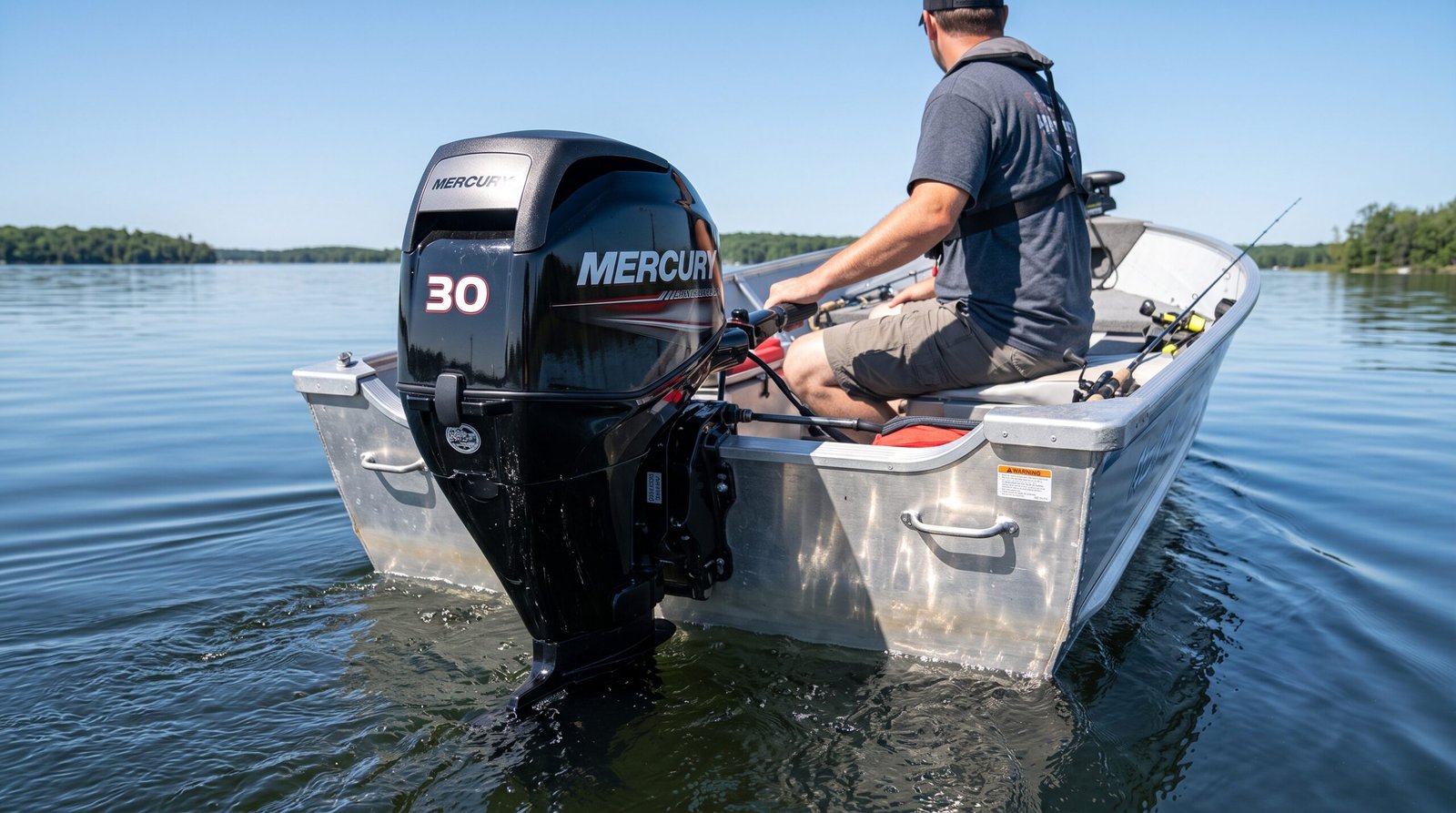
The Mercury 30 HP outboard engine is a practical marine power option for boat owners who need a balance of performance, efficiency, reliability, and manageable operating costs. A 30-horsepower outboard sits in a useful range for many smaller and medium-sized boats, providing enough power for recreational boating, fishing, transportation, and general utility use. Mercury has developed a broad reputation in the marine industry, and its outboard engines are commonly considered by boat owners who want dependable propulsion combined with straightforward operation and maintenance.
Choosing the right outboard engine involves more than looking at horsepower alone. Boat size, hull design, total weight, passenger capacity, intended use, shaft length, propeller selection, operating conditions, and manufacturer specifications all influence how an engine performs. The Mercury 30 HP outboard engine should therefore be considered as part of a complete boat-and-engine combination rather than as an isolated product. Correct matching can improve acceleration, cruising performance, fuel economy, handling, and overall engine life.
What Is a Mercury 30 HP Outboard Engine?
A Mercury 30 HP outboard engine is an external marine propulsion system designed to provide up to 30 horsepower for compatible boats. Unlike an inboard engine, an outboard combines the engine, transmission components, propeller shaft, gearcase, and steering-related systems into a compact unit mounted at the stern of a boat. This design makes an outboard relatively convenient for installation, servicing, replacement, and removal compared with many integrated propulsion systems.
The 30 HP power class is useful because it offers more capability than smaller portable engines while remaining relatively manageable for many boat applications. The actual performance of a Mercury 30 HP outboard engine depends heavily on the boat it powers. A lightweight hull with an efficient design can respond very differently from a heavily loaded boat with a deeper or less efficient hull. For this reason, horsepower should always be evaluated alongside the boat manufacturer’s maximum rated capacity and other technical specifications.
Mercury outboard engines are designed around marine operating requirements, where engines must function under changing loads, water exposure, vibration, temperature variations, and extended periods of operation. Proper installation and regular maintenance are essential for obtaining reliable performance. An engine that is correctly installed and maintained can provide consistent propulsion while reducing the likelihood of avoidable operating problems.
Mercury 30 HP Outboard Engine Performance
Performance is one of the most important factors when selecting a 30 HP outboard engine. Horsepower provides an indication of the engine’s power output, but it does not independently determine boat speed. The final performance depends on the relationship between engine output, propeller characteristics, boat weight, hull shape, water conditions, and load distribution.
A properly matched Mercury 30 HP outboard engine can provide responsive acceleration and useful cruising performance for compatible boats. Acceleration is affected by the amount of weight the engine needs to move, the propeller’s ability to convert engine power into thrust, and the hydrodynamic characteristics of the hull. A well-matched combination allows the engine to operate within its appropriate operating range without being excessively loaded.
Cruising performance is equally important for many boat owners. Running an engine continuously at maximum throttle is generally not the only consideration when evaluating an outboard. Efficient cruising often involves selecting a suitable operating speed that provides the desired balance between speed, fuel consumption, noise, comfort, and engine workload. Proper trim and load distribution can also influence how efficiently the hull moves through the water.
Water conditions can significantly affect perceived performance. Calm water allows the hull and propeller to operate under more predictable conditions, while waves, current, wind, and heavy loading can increase resistance. The Mercury 30 HP outboard engine may therefore deliver different real-world performance depending on where and how it is operated.
Engine Design and Important Features
A modern outboard engine incorporates several systems that work together to produce reliable marine propulsion. The powerhead generates mechanical power, while the gearcase transfers that power to the propeller. The cooling system manages operating temperature, and the fuel and ignition systems support combustion. Steering and control components allow the operator to manage direction and engine speed.
The exact specifications and available configurations of a Mercury 30 HP outboard engine can vary by model year and market. Buyers should always verify the specifications for the specific engine they are considering rather than assuming that every Mercury 30 HP model has identical equipment. Differences can exist in starting systems, shaft lengths, controls, weights, fuel systems, and other configuration details.
Engine weight is another important consideration. A heavier outboard can influence the boat’s balance and stern height, particularly on smaller boats. The boat must be capable of safely supporting the selected engine, and the manufacturer’s recommended power range should be followed. Proper mounting height is also important because an incorrectly positioned outboard can affect propeller efficiency, handling, fuel economy, and water flow around the gearcase.
Fuel Efficiency and Operating Costs
Fuel efficiency is an important consideration for anyone who spends significant time on the water. The amount of fuel consumed by a Mercury 30 HP outboard engine depends on throttle position, engine load, boat design, propeller selection, water conditions, maintenance, and operating habits. There is no single fuel-consumption figure that applies to every boat and operating condition.
A properly maintained engine can operate more efficiently than an engine affected by neglected maintenance or incorrect setup. Dirty or damaged components, unsuitable propeller selection, restricted fuel flow, poor engine condition, and excessive boat loading can all influence fuel consumption. Keeping the engine in good mechanical condition is therefore an important part of controlling long-term operating costs.
The boat itself has a major influence on efficiency. Excessive weight requires additional power to achieve and maintain speed. Poor weight distribution can increase resistance and make the engine work harder. Keeping the boat appropriately loaded and maintaining a sensible cruising speed can help reduce unnecessary fuel consumption.
Fuel quality and storage practices also matter. Fuel should be stored and handled according to applicable manufacturer recommendations and local safety requirements. Problems associated with contaminated or degraded fuel can affect starting, acceleration, idle quality, and overall engine operation.
Mercury 30 HP Outboard Engine Reliability
Reliability is one of the main reasons boat owners pay close attention to engine design, maintenance requirements, and manufacturer support. A reliable outboard should provide predictable starting, stable operation, consistent cooling, and dependable power when properly installed and maintained.
Marine engines operate in an environment where water, salt, humidity, vibration, and temperature changes can contribute to wear. Freshwater and saltwater use can also create different maintenance demands. Saltwater exposure makes corrosion prevention particularly important because salt deposits and moisture can affect exposed metal components and other systems.
Regular inspection helps identify developing problems before they become serious. Checking the propeller, cooling-water flow, lubrication, fuel system, electrical connections, and mounting hardware can help maintain dependable operation. Manufacturer-recommended maintenance intervals should be followed because different engine systems require different service procedures.
Reliability also depends on how the engine is operated. Consistently exceeding recommended operating limits, running with an unsuitable propeller, ignoring overheating warnings, or continuing to operate an engine with unusual noises or vibrations can increase the risk of damage. Proper operation is therefore just as important as mechanical maintenance.
Maintenance Requirements
Routine maintenance is essential for the long-term performance of a Mercury 30 HP outboard engine. Maintenance should be performed according to the manufacturer’s service schedule and the actual operating environment. Engines used frequently, exposed to saltwater, or operated under demanding conditions may require particular attention.
Lubrication is an important part of maintenance. Engine oil, gearcase lubricant, and other specified lubricants must be checked and serviced according to the manufacturer’s requirements. Using the correct lubricant and following the appropriate service procedure helps protect internal components from excessive wear.
The cooling system should also receive regular attention. An outboard engine depends on adequate water flow to manage operating temperature. Restricted water passages, damaged components, or other cooling-system problems can contribute to overheating. The cooling system should therefore be inspected and maintained as specified by Mercury.
The propeller deserves regular inspection because it is directly responsible for converting engine power into thrust. Damage from underwater objects can produce vibration, reduce performance, and place additional stress on the drivetrain. A damaged propeller should not simply be ignored because continued operation may affect other components.
Fuel-system maintenance is equally important. Fuel contamination can create operational problems and may affect starting and engine performance. Appropriate fuel-handling and storage procedures help reduce the risk of fuel-related problems.
Electrical components should also be checked when applicable. Battery connections, wiring, switches, and starting components should remain clean, secure, and protected from unnecessary moisture or corrosion. Electrical problems can sometimes appear as intermittent starting issues, making preventive inspection valuable.
Propeller Selection
Propeller selection has a major effect on how efficiently a Mercury 30 HP outboard engine transfers power to the water. Propellers are available in different sizes and pitches, and the correct selection depends on the boat, engine, load, and intended operating conditions.
Propeller pitch refers broadly to the theoretical distance a propeller would advance during one revolution under ideal conditions. A change in pitch affects engine loading and acceleration characteristics. Selecting a propeller that is not appropriate for the engine and boat can prevent the engine from reaching its intended operating range or create unnecessary strain.
Diameter also contributes to propeller performance. The correct relationship between propeller diameter, pitch, blade design, engine characteristics, and hull requirements is important for achieving effective thrust. Propeller selection should therefore follow Mercury’s specifications and the recommendations appropriate to the particular boat.
A damaged propeller can also reduce performance. Bent blades, cracks, excessive wear, or other damage can create vibration and reduce thrust. Regular inspection is a simple but important part of outboard ownership.
Matching a Mercury 30 HP Outboard Engine to a Boat
Matching the engine to the boat is one of the most important decisions a buyer can make. The boat manufacturer’s recommended horsepower range should always be considered before installing a Mercury 30 HP outboard engine. Installing an engine outside the boat’s approved specifications can create safety, handling, structural, and regulatory concerns.
Boat weight is another major factor. The combined weight of passengers, fuel, equipment, batteries, and other cargo affects performance. A boat operating close to its maximum load may accelerate more slowly and consume more fuel than the same boat operating with a lighter load.
Hull design also matters. Different hull shapes create different levels of resistance and behave differently at various speeds. A 30 HP engine may feel highly responsive on one compatible hull and less responsive on another because the engine is only one part of the overall propulsion system.
Shaft length must also be correct. An outboard that is too short or too long for the boat can create problems with propeller placement and engine performance. Buyers should measure the boat’s transom and follow Mercury’s installation recommendations when selecting the appropriate shaft configuration.
Mercury 30 HP Outboard Engine for Fishing
Fishing boats often benefit from an outboard that offers a practical balance between power and efficiency. A Mercury 30 HP outboard engine can be suitable for compatible fishing boats where the hull and manufacturer specifications support that power level.
Fishing frequently involves variable operating conditions. The engine may be used for cruising between locations, maneuvering at lower speeds, and operating under different passenger or equipment loads. Smooth throttle response and reliable starting can therefore be particularly valuable.
Noise and vibration can also influence the overall boating experience. Proper engine installation, propeller condition, maintenance, and mounting can contribute to smoother operation. Keeping the engine properly serviced helps maintain consistent performance during long periods on the water.
New vs. Used Mercury 30 HP Outboard Engine
Buying a new Mercury 30 HP outboard engine generally provides access to current specifications, manufacturer support, and the condition of a new engine. However, purchasing a used engine can be an alternative for buyers who are focused on initial purchase cost. The condition and service history of a used outboard are extremely important.
A used Mercury 30 HP outboard engine should be inspected carefully before purchase. Buyers should review available service records, examine the exterior for damage or corrosion, inspect the propeller and gearcase, and check for signs of neglected maintenance. The engine’s starting behavior, idle quality, cooling-water flow, and overall operation should also be assessed by a qualified marine technician when possible.
The age of an engine alone does not determine its condition. A properly maintained older engine may have a documented service history, while a newer engine that has been neglected can require substantial attention. Service documentation can therefore provide useful information about how the engine has been treated.
Buyers should also verify that the engine’s configuration is appropriate for the intended boat. Shaft length, controls, steering arrangement, mounting requirements, and electrical compatibility can affect installation costs and practicality.
Common Problems and Troubleshooting
Outboard engines can develop problems for many different reasons, and symptoms should be investigated rather than ignored. Difficult starting may be associated with fuel, electrical, ignition, or other engine systems. A qualified technician can determine the underlying cause when basic checks do not resolve the issue.
Poor acceleration can result from excessive boat load, propeller problems, fuel-system issues, engine condition, or incorrect setup. If the engine is running normally but the boat is not performing as expected, the complete boat-and-propulsion system should be evaluated.
Overheating requires particular attention because continued operation under overheating conditions can result in serious engine damage. Cooling-water flow, intake areas, cooling components, and warning systems should be inspected according to the manufacturer’s procedures.
Excessive vibration may indicate propeller damage, an installation issue, or another mechanical problem. Continuing to operate with significant vibration can place unnecessary stress on components. Investigation and professional inspection are appropriate when the cause is not obvious.
Unusual sounds, smells, warning indicators, or changes in engine behavior should also be treated seriously. Preventive attention can often reduce the chance of a minor problem developing into a major repair.
How to Improve Engine Life
The service life of a Mercury 30 HP outboard engine depends on maintenance, operating conditions, installation, storage, and overall care. Following the manufacturer’s maintenance schedule is one of the most important steps an owner can take.
Proper flushing and cleaning procedures are particularly important after operation in environments where salt or other contaminants may accumulate. The appropriate procedure should follow Mercury’s recommendations for the specific engine.
Storage also requires preparation. An engine that will remain unused for an extended period should be prepared according to the manufacturer’s storage instructions. Fuel, lubrication, battery condition, corrosion protection, and other relevant systems may need attention depending on the duration and conditions of storage.
Keeping the engine clean can also make inspection easier. Dirt, corrosion, damaged components, and leaks are easier to identify when the engine is maintained in a reasonably clean condition. Cleaning should always be performed using methods appropriate for marine equipment and electrical components.
Regular professional servicing can provide another layer of protection. A qualified marine technician can identify wear or problems that may not be obvious during a basic owner inspection.
Safety Considerations
Safe operation should always be a priority when using a Mercury 30 HP outboard engine. Before every trip, the operator should check fuel, steering, controls, propeller condition, mounting security, cooling-water flow, and other essential systems according to the manufacturer’s guidance.
Passenger and cargo distribution also affect safety. Excessive weight or poor weight distribution can change the boat’s balance and handling characteristics. The boat should remain within its rated capacity, and passengers should be positioned safely while underway.
The operator should also understand the engine’s controls and emergency procedures. Safety equipment should be carried according to applicable boating regulations and local requirements. Operators should follow navigation rules and use appropriate personal flotation devices.
Weather and water conditions should also be considered before and during operation. Even a properly maintained engine cannot eliminate the risks created by severe weather, strong currents, heavy waves, or unsafe navigation decisions.
Buying Considerations
When purchasing a Mercury 30 HP outboard engine, buyers should look beyond the headline horsepower figure. The exact model, model year, shaft length, engine weight, starting system, controls, steering arrangement, and manufacturer specifications should all be reviewed.
Compatibility with the boat is essential. The engine should fall within the boat manufacturer’s approved horsepower range and be suitable for the transom configuration. Installation requirements should also be understood before purchase because additional equipment or modifications may affect the overall cost.
Warranty and dealer support can also influence ownership. Availability of qualified technicians, genuine replacement parts, and appropriate service resources can make maintenance more convenient over the life of the engine.
The total cost of ownership should include more than the purchase price. Fuel, routine maintenance, lubrication, propeller replacement, storage, installation, and occasional repairs can all contribute to the long-term cost of operating an outboard engine.
For detailed maintenance information, owners should always refer to the official Mercury Marine Owner’s Manuals for the exact engine model and serial number. Mercury provides operation, maintenance, and installation manuals that contain model-specific information, making the official manual an important resource when servicing or operating a Mercury 30 HP outboard engine.
Mercury 30 HP Outboard Engine and Long-Term Ownership
Long-term ownership is largely influenced by maintenance discipline and operating conditions. An owner who follows service requirements, monitors engine performance, maintains the fuel and cooling systems, and addresses unusual symptoms early can reduce avoidable mechanical problems.
Keeping accurate maintenance records is useful for both current ownership and future resale. Records can show when important services were completed and help identify recurring issues. Documentation may also increase buyer confidence when a used engine is eventually sold.
Storage conditions can also affect long-term condition. Protection from unnecessary moisture, corrosion, contamination, and physical damage helps preserve the engine. Proper storage procedures should always be based on the manufacturer’s recommendations.
Technology and specifications can change over time, so owners should use documentation appropriate to their exact engine model. Manuals, service information, and authorized marine professionals can provide more precise guidance than general information intended for a different model.
Is the Mercury 30 HP Outboard Engine Right for You?
Whether a Mercury 30 HP outboard engine is appropriate depends on the boat, intended use, operating environment, and owner’s requirements. A 30 HP engine can provide a useful level of propulsion for compatible boats, but the correct choice should always be based on the complete system.
Boat owners who value manageable power, practical performance, and a widely recognized marine-engine platform may consider this horsepower class when it matches their boat’s specifications. At the same time, buyers should compare the exact model and configuration rather than relying only on the Mercury name or horsepower rating.
The most important step is confirming compatibility with the boat. The boat’s rated horsepower, transom dimensions, weight capacity, intended operating conditions, and control requirements should all be checked before making a purchase decision.
FAQ
Is a Mercury 30 HP outboard engine suitable for fishing boats?
A Mercury 30 HP outboard engine can be suitable for fishing boats when the boat is designed and rated for that level of power. The hull design, total weight, passenger capacity, and manufacturer’s horsepower recommendations should be checked before installation.
How fast can a Mercury 30 HP outboard engine go?
There is no single speed that applies to every Mercury 30 HP outboard engine installation. Boat speed depends on hull design, total weight, propeller selection, engine setup, water conditions, and load. A properly matched boat and engine combination can provide significantly different results from another configuration with the same horsepower.
How fuel efficient is a Mercury 30 HP outboard engine?
Fuel efficiency depends on engine load, throttle position, propeller selection, boat design, weight, water conditions, and maintenance. Efficient operation requires a properly matched engine and boat along with appropriate maintenance and sensible operating practices.
How often should a Mercury 30 HP outboard engine be serviced?
Service intervals depend on the specific model, usage, operating environment, and manufacturer recommendations. Owners should follow the maintenance schedule provided for their exact Mercury engine rather than relying on a general interval.
What should be checked before buying a used Mercury 30 HP outboard engine?
A used engine should be checked for service history, corrosion, physical damage, propeller condition, gearcase condition, starting behavior, cooling-water flow, electrical operation, and overall mechanical condition. A professional marine inspection can provide additional confidence before purchase.
Does propeller selection affect performance?
Yes. Propeller pitch, diameter, design, and condition influence acceleration, engine loading, cruising performance, and overall efficiency. The propeller should be selected according to the engine and boat manufacturer’s recommendations.
How can a Mercury 30 HP outboard engine last longer?
Regular maintenance, correct lubrication, appropriate fuel practices, proper cooling-system care, suitable propeller selection, correct installation, safe operation, and proper storage can all contribute to long-term engine durability.
Conclusion
The Mercury 30 HP outboard engine represents a useful power category for boat owners who need practical propulsion for compatible recreational, fishing, and utility boats. Its real-world performance depends on much more than horsepower, with boat design, weight, propeller selection, engine setup, water conditions, and maintenance all playing important roles.
Choosing the right engine begins with confirming that the boat is designed for 30 horsepower and that the selected configuration matches the transom, shaft length, controls, and operating requirements. Proper installation is followed by regular maintenance, careful operation, and appropriate storage.
Fuel efficiency and reliability are also closely connected to maintenance and setup. Keeping the cooling system functioning correctly, maintaining the fuel and lubrication systems, inspecting the propeller, and responding quickly to unusual engine behavior can help preserve performance over time.
For buyers considering a Mercury 30 HP outboard engine, the most useful approach is to evaluate the complete ownership picture rather than focusing only on purchase price or horsepower. The exact model specifications, boat compatibility, maintenance requirements, service availability, operating costs, and intended use should all be considered before purchase.
With proper matching, installation, maintenance, and safe operation, a 30 HP outboard can provide practical and dependable propulsion for many compatible boating applications. The manufacturer’s documentation for the exact engine model should remain the primary reference for specifications, maintenance intervals, installation procedures, and operating requirements.