
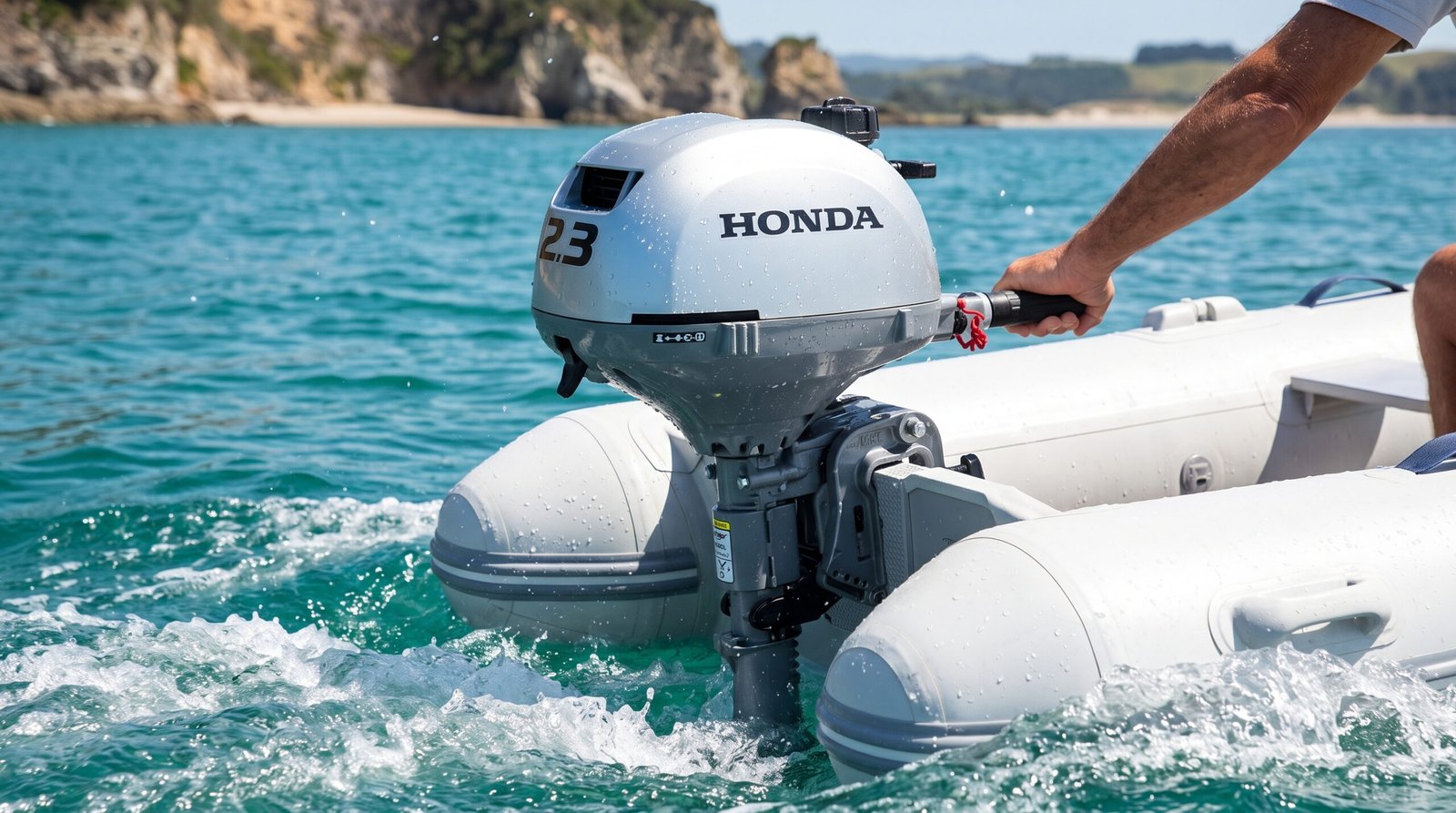
Choosing the right outboard motor is an important decision for anyone who owns a small boat, fishing boat, inflatable boat, dinghy, or lightweight watercraft. The engine needs to provide enough power for the boat while remaining easy to handle, transport, maintain, and operate. A Honda 2 HP outboard engine belongs to the small-engine category and is designed around the needs of lightweight watercraft and users who value portability and simple operation. Small outboard engines can be especially useful when maneuverability, low operating weight, and convenient storage are more important than high-speed performance.
The Honda name is widely associated with engine technology, reliability, and practical engineering. When considering a Honda 2 HP outboard engine, buyers should look beyond horsepower alone and consider the complete package. Engine weight, boat size, hull design, passenger load, water conditions, fuel requirements, maintenance needs, operating habits, and intended use can all affect performance. A small engine can work effectively when it is properly matched with the boat, but it may not be appropriate for every type of watercraft or operating environment.
This guide explains the important factors surrounding a Honda 2 HP outboard engine, including its design, performance, portability, fuel efficiency, maintenance, safety, applications, buying considerations, and limitations. Understanding these factors can help boat owners make a more informed decision and get better long-term value from a small outboard motor.
What Is a Honda 2 HP Outboard Engine?
A Honda 2 HP outboard engine is a compact marine propulsion system designed to provide approximately two horsepower of power to a small watercraft. An outboard engine combines the engine, drivetrain, propeller, steering mechanism, and mounting system into a single external unit that attaches to the transom of a boat. This configuration makes an outboard motor convenient because the propulsion system can be installed, removed, serviced, and stored without requiring a complicated permanent engine installation.
The 2 HP class is primarily associated with lightweight boating applications. These engines are generally intended for situations where moderate propulsion is sufficient and portability is a major consideration. Instead of focusing on maximum speed, a small outboard engine is typically selected for controlled movement, maneuverability, and practical transportation on the water.
The actual performance of any small outboard depends heavily on the boat it is attached to. Hull shape, total weight, water conditions, propeller selection, passenger load, and engine setup can all influence how effectively the available horsepower is converted into forward movement. For this reason, horsepower should always be considered alongside the manufacturer’s recommended boat specifications and operating limitations.
Why Choose a Small Outboard Engine?
Small outboard engines have several characteristics that make them attractive to recreational boat owners. Their compact design generally makes them easier to transport than larger marine engines. A lightweight motor can be carried between a vehicle, storage area, dock, and boat without requiring the equipment needed to move a large outboard.
Portability is particularly valuable for boaters who do not keep their watercraft permanently in the water. A removable engine can be stored securely after each trip, reducing exposure to weather and helping protect the equipment from unnecessary environmental conditions.
Another advantage is straightforward operation. Small outboard motors are generally less complicated to manage than high-powered engines. For users who need controlled propulsion rather than high-speed performance, a compact engine can provide a practical balance between useful power and manageable equipment.
Operating costs can also be an important consideration. A smaller engine generally requires less fuel than a much larger outboard when used under appropriate operating conditions. However, actual fuel consumption varies according to throttle position, boat weight, water conditions, maintenance condition, propeller efficiency, and operating habits.
Honda 2 HP Outboard Engine Design
The design of a small outboard engine focuses heavily on compactness, usability, and efficient power delivery. The engine sits above the water while the lower unit extends downward to transfer power to the propeller. This arrangement allows the motor to push the boat through the water while keeping the main engine components above the waterline.
A properly designed outboard engine must withstand a challenging marine environment. Water exposure, humidity, salt, vibration, temperature changes, and continuous mechanical movement can all affect engine components. Regular inspection and proper maintenance are therefore essential even when the engine is relatively small.
The mounting system is another important part of the design. The motor must be securely attached to the boat’s transom according to the manufacturer’s instructions. Correct mounting helps maintain stability and allows the propeller and lower unit to operate at the intended depth.
The steering arrangement of a small outboard is generally simple and designed to give the operator direct control over the direction of the boat. This is particularly useful when maneuvering in narrow areas, launching from shore, docking, or making controlled turns.
Honda 2 HP Outboard Engine Performance
Performance is one of the most important considerations when evaluating any marine engine. A Honda 2 HP outboard engine is designed for applications where a relatively small amount of propulsion is sufficient. It is not intended to provide the same acceleration or speed capability as larger outboards.
The performance of a 2 HP engine is strongly influenced by the total load of the boat. As passenger weight, equipment, fuel, and other cargo increase, the amount of power required to move the watercraft also increases. A lightweight boat can generally make better use of limited horsepower than a heavy boat.
Water conditions also influence performance. Calm water allows a small engine to operate under more favorable conditions, while strong currents, wind, waves, and rough water can place greater demands on the engine. In challenging conditions, a small outboard may have limited ability to maintain speed or overcome environmental resistance.
Throttle control is another important factor. Operating at a moderate throttle level can provide a balance between propulsion and fuel use, while continuous operation at high throttle settings can increase fuel consumption and mechanical load. Operators should always follow the engine manufacturer’s operating recommendations.
Fuel Efficiency of a Honda 2 HP Outboard Engine
Fuel efficiency is one of the major reasons many boat owners consider small outboard engines. A compact engine does not need to produce the same amount of power as a large motor, so fuel requirements can be relatively modest when the engine is used on a suitable lightweight boat.
Actual fuel consumption cannot be determined from horsepower alone. The boat’s weight, hull design, speed, throttle position, water conditions, engine condition, propeller, and operating technique all influence consumption. Two boats using the same horsepower engine can therefore have noticeably different fuel requirements.
Proper engine maintenance can help maintain efficient operation. A motor that is correctly serviced and operated according to manufacturer recommendations can generally perform more consistently than one that has been neglected. Fuel-system condition, lubrication, cooling, spark-related components, and propeller condition can all influence overall engine performance.
Fuel should also be stored and handled carefully. Marine engines depend on clean and appropriate fuel, and contaminated or improperly stored fuel can cause starting and running problems. Long periods of storage require additional preparation to reduce the possibility of fuel-system deterioration.
Portability of a Honda 2 HP Outboard Engine
Portability is one of the strongest reasons to consider a small outboard engine. A compact motor can be much easier to transport than a larger marine power unit. This makes it practical for boat owners who frequently move their watercraft between different locations.
An engine that can be transported easily can also be stored indoors or in a secure location after use. Keeping the motor protected from unnecessary moisture, extreme weather, and prolonged environmental exposure can help preserve its condition.
Proper handling is important whenever the engine is moved. The motor should be carried and positioned according to the manufacturer’s instructions. Incorrect handling can result in damage to the engine, fuel system, controls, or lower unit.
Storage position is also important. Some outboard engines have specific requirements regarding how they should be transported or stored. Owners should consult the official owner’s documentation rather than assuming that every small outboard can be placed in any position.
Honda 2 HP Outboard Engine for Small Boats
A 2 HP outboard engine is most relevant to lightweight watercraft. The suitability of the engine depends on the boat manufacturer’s recommended horsepower range and the total operating weight.
Small fishing boats can benefit from compact propulsion when the primary requirement is controlled movement rather than high-speed travel. A low-powered motor can make it easier to move between fishing locations while maintaining manageable equipment weight.
Inflatable boats can also be compatible with small outboards when the boat is designed to accept an outboard motor. The transom, maximum horsepower rating, and total load capacity should always be checked before installation.
Dinghies and other lightweight utility boats may also use compact outboard motors. The important factor is not simply whether the motor can physically be mounted but whether the boat and engine combination is properly matched for safe and effective operation.
Understanding Boat Weight and Engine Power
Boat weight is one of the most important factors when selecting an outboard engine. The total operating weight includes the boat itself, passengers, fuel, equipment, batteries where applicable, and other cargo.
A small engine may provide adequate propulsion when the total load is low, but the same engine may struggle when the boat is heavily loaded. This is why manufacturer recommendations should be followed when selecting horsepower.
The hull design also matters. Different hull shapes create different levels of resistance in the water. A lightweight hull designed for efficient movement can respond differently to a small outboard than a heavier hull with greater water resistance.
Operators should avoid exceeding the boat’s capacity simply because a larger engine appears capable of moving the boat. Safe operation requires respecting the boat’s rated passenger, weight, and horsepower limits.
Maintenance Requirements
Regular maintenance is essential for keeping any outboard engine reliable. A small engine may be mechanically simple compared with a large marine motor, but it still contains moving parts and systems that require attention.
Engine oil and lubrication should be maintained according to the manufacturer’s maintenance schedule. Using the correct type and quantity of lubricant helps protect internal components and supports proper engine operation.
The propeller should be inspected regularly. Damage, fishing line, rope, weeds, or other material around the propeller can affect performance and place additional stress on the propulsion system. A damaged propeller may also reduce efficiency and create vibration.
The cooling system should receive appropriate attention because marine engines depend on proper temperature control. Any indication of abnormal overheating, restricted water flow, or unusual engine behavior should be investigated before continued operation.
Fuel-system maintenance is equally important. Old or contaminated fuel can contribute to starting problems, poor running, and internal deposits. Fuel should be stored properly, and the system should be prepared appropriately for extended periods of non-use.
Cleaning a Honda 2 HP Outboard Engine
Cleaning is an important part of marine engine ownership. Water, dirt, mud, vegetation, and other contaminants can accumulate on the motor during normal use. Saltwater operation requires particular attention because salt residue can contribute to corrosion if it is not properly managed.
After operating in saltwater, the engine should be maintained according to the manufacturer’s flushing and cleaning instructions. Freshwater rinsing can be an important part of post-use care when recommended for the specific engine.
The exterior should be inspected for corrosion, loose components, damage, and unusual deposits. Regular cleaning also provides an opportunity to notice small problems before they become more serious.
The engine should not be cleaned in a way that forces water into areas where it could damage electrical or mechanical components. Following the manufacturer’s cleaning procedure is the safest approach.
Honda 2 HP Outboard Engine and Long-Term Storage
Proper storage is especially important when an outboard engine will not be used for an extended period. Leaving a marine engine unused without preparation can contribute to fuel-related problems, corrosion, lubrication issues, and other forms of deterioration.
Before long-term storage, the owner should follow the manufacturer’s recommended storage procedure. This may involve attention to fuel, lubrication, cooling-system procedures, and protection of external components.
The storage environment should ideally be dry, secure, and protected from unnecessary temperature and moisture extremes. The engine should also be positioned according to the manufacturer’s storage requirements.
Before returning the motor to service, the operator should perform the appropriate inspection. Fuel condition, oil level, propeller condition, mounting hardware, and other important components should be checked before starting the engine.
Safety Considerations
Safety should always be more important than engine performance. Even a small 2 HP outboard can create a dangerous propeller hazard and must be treated as powered marine equipment.
The engine should be installed securely before operation. Loose mounting hardware can create serious stability and control problems. The boat should also remain within its rated capacity.
Operators should maintain awareness of people near the boat, particularly when starting, maneuvering, docking, or reversing. The propeller area should be treated as a hazardous zone whenever the engine is running.
Appropriate personal flotation devices should be available and used according to local boating regulations and the circumstances of the trip. Weather and water conditions should also be considered before leaving shore.
Fuel handling requires caution as well. Fuel should be kept away from open flames, sparks, and excessive heat. Refueling should be performed according to the manufacturer’s safety instructions.
Honda 2 HP Outboard Engine for Fishing
Small outboards can be useful for fishing because fishing often involves controlled movement rather than maximum speed. A compact motor can help a lightweight boat move quietly and efficiently between locations when operated appropriately.
Portability can also be valuable for anglers who transport their boat and motor by vehicle. A manageable engine weight makes launching and removal more practical.
However, fishing conditions can vary considerably. Wind, current, waves, equipment weight, and the number of passengers can all influence whether a 2 HP engine provides sufficient propulsion. Anglers should consider the expected environment rather than selecting an engine based only on its compact size.
A reliable starting system and well-maintained propulsion system are particularly important when operating away from shore. Preventive maintenance can reduce the possibility of avoidable mechanical problems during a trip.
Honda 2 HP Outboard Engine for Inflatable Boats
Inflatable boats are often designed with portability in mind, making compact outboard engines an attractive option. Before attaching a motor, however, the inflatable boat must be rated for outboard use and compatible with the motor’s specifications.
The transom must be suitable for the engine mount, and the boat’s maximum horsepower and weight limits should be respected. The total weight of the engine also matters because it affects how the boat sits in the water.
An appropriately matched small engine can provide useful propulsion without adding unnecessary weight. Poor matching, on the other hand, can affect handling and stability.
Inflatable boat users should also inspect the mounting area and surrounding structure regularly. Proper installation and routine inspection are important for maintaining safe operation.
Honda 2 HP Outboard Engine vs Larger Outboard Motors
The main difference between a 2 HP engine and a larger outboard is the amount of available power. Larger engines can move heavier boats and support greater loads, while smaller engines prioritize portability and modest propulsion requirements.
A larger outboard may be necessary for heavier boats, multiple passengers, stronger currents, or situations where greater speed is required. A 2 HP motor is better suited to applications where limited power is sufficient.
Fuel consumption can also differ substantially between engine sizes, although actual consumption depends on operating conditions. A larger engine may consume more fuel when producing higher power, while a small engine can be economical when used within its intended application.
Maintenance and transportation can also differ. Larger engines typically require more physical effort and equipment for installation and transportation. A small outboard can be easier to remove and store.
Advantages of a Honda 2 HP Outboard Engine
One of the main advantages of a small Honda outboard is its suitability for lightweight boating. When the boat and operating conditions match the available horsepower, the engine can provide practical propulsion without adding the weight and complexity associated with larger motors.
Portability is another major advantage. A compact engine can be easier to transport, install, remove, and store. This can be particularly useful for recreational boaters who do not keep their boats permanently in the water.
Simple operation can also make small outboards attractive to users who want straightforward propulsion. The engine can provide controlled movement without requiring the equipment associated with a high-powered marine system.
Fuel efficiency can be another benefit when the engine is operated under appropriate conditions. Lower power requirements generally mean that a small engine does not need to consume fuel at the same rate as a larger motor producing substantially more power.
Limitations of a Honda 2 HP Outboard Engine
A 2 HP outboard engine has clear limitations because horsepower directly affects the amount of propulsion available. It should not be expected to deliver the performance of a larger marine engine.
Heavy boats may require substantially more power. Additional passengers and equipment can also reduce performance. Strong wind, current, and rough water can further limit the effectiveness of a small engine.
Speed expectations should therefore remain realistic. A 2 HP engine is generally selected for practical movement rather than high-speed boating.
Understanding these limitations before purchasing is important. Choosing a motor that is too small for the boat can result in disappointing performance and potentially unsafe operating conditions.
How to Choose the Right Honda 2 HP Outboard Engine
The first consideration should be the boat manufacturer’s horsepower recommendation. The boat should be designed and rated for the selected engine. This information is more important than choosing a motor based solely on personal preference.
The total operating weight should then be considered. Include passengers, equipment, fuel, and other cargo when evaluating the expected load.
Operating environment is another important factor. Calm inland water can place different demands on an engine than coastal water, rivers with strong currents, or areas with frequent wind and waves.
Portability should also be considered. If the engine will frequently be transported, its physical size and weight can have a major impact on everyday convenience.
Maintenance support is equally important. Buyers should consider whether authorized service, replacement parts, technical documentation, and routine maintenance resources are available in their area.
Buying a New Honda 2 HP Outboard Engine
Buying a new engine provides the advantage of receiving equipment in new condition and typically includes manufacturer-supported documentation and warranty terms that depend on the market and seller.
Before purchasing, buyers should verify the exact model, specifications, shaft configuration, included equipment, warranty coverage, and applicable local requirements.
The seller’s reputation is also important. Marine engines should ideally be purchased through legitimate channels where the buyer can receive appropriate documentation and after-sales support.
Pricing should be considered alongside ownership costs. The initial purchase price is only one part of the total cost of ownership. Maintenance, fuel, accessories, transportation, and future servicing can also contribute to long-term expenses.
Buying a Used Honda 2 HP Outboard Engine
A used outboard can sometimes provide a lower purchase cost, but its condition should be evaluated carefully. Age alone does not determine the condition of a marine engine. Maintenance history, storage conditions, operating environment, and previous use can all have significant effects.
Buyers should inspect the exterior for corrosion, damage, cracks, loose components, and signs of poor maintenance. The propeller and lower unit should also be inspected for visible damage.
The engine’s starting behavior and running condition are important indicators, but a basic inspection cannot replace a professional mechanical evaluation when significant money is involved.
Maintenance records can provide valuable information about how the engine has been treated. Documentation is especially useful when verifying service intervals and previous repairs.
Importance of Genuine Parts and Proper Service
Using appropriate replacement parts helps maintain the engine according to its intended design. Marine engines operate in demanding environments, so incorrect components can affect reliability and performance.
Routine service should follow the manufacturer’s maintenance recommendations. Oil changes, inspections, lubrication, fuel-system care, and other scheduled procedures should not be ignored simply because the engine is small.
Professional service may be appropriate when a problem involves internal engine components, electrical systems, fuel-system faults, or other technical issues that require specialized knowledge.
Owners should keep records of maintenance and repairs. A clear maintenance history can make future troubleshooting easier and may also support the resale value of the engine.
Factors That Affect Outboard Engine Life
Maintenance is one of the most important factors affecting engine longevity. Regular service helps identify wear and potential problems before they become major failures.
Operating conditions also influence engine life. Frequent exposure to saltwater, poor storage, contaminated fuel, excessive loading, or improper operation can increase wear.
Correct use is equally important. The engine should be operated within its intended limits and should not be forced to move a boat that exceeds its recommended capacity.
Storage quality can have a major effect as well. An engine kept clean, dry, and properly prepared during periods of inactivity is generally better protected than one left exposed to moisture and environmental contamination.
Improving Honda 2 HP Outboard Engine Performance
Performance begins with proper engine-to-boat matching. Even a well-maintained engine cannot compensate for a boat that is excessively heavy or poorly suited to the available horsepower.
Keeping the propeller in good condition is another important factor. A damaged or obstructed propeller can reduce propulsion efficiency and create unnecessary vibration.
Regular maintenance helps the engine operate as intended. Fuel-system condition, lubrication, cooling, and other maintenance areas should all be addressed according to the recommended schedule.
Operators should also avoid unnecessary overloading. Reducing excess weight can improve the boat’s response and reduce the amount of power required for movement.
Environmental Considerations
Responsible boating involves more than operating the engine correctly. Fuel spills, improper disposal of maintenance materials, and careless handling of waste can negatively affect waterways.
Fuel should be handled carefully to reduce the risk of spills. Used oil and maintenance materials should be disposed of through appropriate waste-management systems rather than being released into the environment.
Boaters should also avoid disturbing sensitive areas and should follow local environmental and navigation regulations. Responsible engine use helps protect waterways while allowing recreational boating to continue safely.
Honda 2 HP Outboard Engine and Everyday Usability
The usefulness of a small outboard engine often comes from its balance of practical power and manageable size. Owners who regularly transport their boats may value a motor that can be handled without heavy lifting equipment.
Everyday usability also depends on starting reliability, simple controls, manageable fuel requirements, and straightforward maintenance. These factors can matter just as much as horsepower for recreational users.
A small engine is most effective when expectations are aligned with its intended purpose. It should be viewed as a compact propulsion solution rather than a replacement for high-powered marine engines.
Before operating or servicing a Honda 2 HP outboard engine, boat owners should consult the official owner’s documentation for the exact model. Honda Marine provides an online collection of Honda Marine Owner’s Manuals where users can search for manuals and technical information for applicable portable outboard models. The correct manual is important because specifications, maintenance intervals, operating procedures, and safety instructions can vary between different Honda outboard models
Final Buying Checklist
Before purchasing a Honda 2 HP outboard engine, confirm that the boat is rated for the engine and that the motor’s specifications match the intended application. Check the total boat weight, passenger capacity, mounting requirements, and operating environment.
Review the engine’s maintenance requirements and make sure appropriate service and replacement parts are available. Consider how the engine will be transported and stored between trips.
If purchasing a used engine, inspect its physical condition, maintenance history, lower unit, propeller, mounting components, and overall running condition. Professional inspection can provide additional confidence before completing a purchase.
Finally, consider the long-term ownership experience rather than focusing only on the purchase price. A properly maintained engine with suitable support can provide greater practical value over its service life.
FAQ
Is a Honda 2 HP outboard engine suitable for small boats?
A Honda 2 HP outboard engine can be suitable for lightweight boats when the boat is designed and rated for that level of horsepower. The total boat weight, passenger load, hull design, and water conditions should all be considered before choosing the engine.
Is a 2 HP outboard engine good for fishing?
A 2 HP outboard can be useful for fishing on suitable lightweight watercraft where controlled movement is more important than high speed. The suitability depends on the boat, load, and expected water conditions.
Is a Honda 2 HP outboard engine fuel efficient?
Small outboard engines can use relatively modest amounts of fuel when operated on an appropriately matched lightweight boat. Actual fuel consumption varies depending on throttle setting, boat weight, water conditions, propeller condition, and engine maintenance.
Can a 2 HP outboard engine move a heavy boat?
A 2 HP engine has limited propulsion capacity and is generally not intended for heavy boats. The boat manufacturer’s horsepower and weight recommendations should always be followed.
How important is maintenance for a small outboard engine?
Maintenance is extremely important even for a small outboard. Regular inspection, proper lubrication, fuel-system care, cooling-system attention, propeller inspection, and correct storage can help maintain reliable operation.
Can a Honda 2 HP outboard engine be used in saltwater?
An outboard designed for marine use can be operated in saltwater when the manufacturer permits it, but saltwater requires careful cleaning and maintenance. Following the manufacturer’s saltwater-use and flushing instructions is important for reducing corrosion and maintaining the engine.
What should I check when buying a used 2 HP outboard?
Check the engine’s overall condition, corrosion, propeller, lower unit, mounting system, fuel system, maintenance history, and running condition. Professional inspection is recommended when the purchase involves significant cost.
How should a 2 HP outboard engine be stored?
Storage should follow the manufacturer’s instructions. The engine should be cleaned appropriately, prepared for extended inactivity, protected from unnecessary moisture, and positioned according to the recommended storage procedure.
Does boat weight affect 2 HP outboard performance?
Yes. Boat weight has a direct effect on how much work the engine needs to perform. Additional passengers, fuel, equipment, and cargo can reduce acceleration and overall performance.
Is a 2 HP engine portable?
Small outboard engines are generally designed with portability in mind, making them easier to transport and store than many larger motors. Exact portability depends on the engine’s physical weight and design.
Conclusion
The Honda 2 HP outboard engine represents the compact end of the outboard motor category and can be a practical choice for lightweight boating applications. Its value comes from the combination of modest propulsion, compact design, portability, and relatively straightforward operation. For boat owners who do not need high-speed performance or the power required by larger watercraft, a small outboard can provide useful and convenient propulsion.
Choosing the correct engine requires more than looking at the horsepower number. Boat size, total weight, hull design, passenger capacity, operating environment, mounting requirements, and intended use all play important roles. A 2 HP motor can perform effectively when it is properly matched with a suitable boat, while an undersized engine may struggle when subjected to excessive weight or demanding water conditions.
Maintenance should also remain a priority throughout the engine’s life. Regular servicing, proper fuel handling, propeller inspection, cleaning, corrosion protection, and correct storage can help maintain performance and reliability. Responsible operation and attention to safety are equally important because even a small outboard contains moving mechanical components and a rotating propeller.
For buyers considering a Honda 2 HP outboard engine, the best approach is to evaluate the complete boating setup rather than focusing on horsepower alone. Understanding the boat’s requirements, expected operating conditions, maintenance needs, and transportation requirements can help ensure that the selected motor is appropriate for its intended purpose. With proper matching, careful operation, and consistent maintenance, a compact outboard engine can be a useful part of a lightweight boating setup.