

Winter can be a challenging season for boat owners because low temperatures, moisture, old fuel, and long periods of inactivity can affect an outboard engine. Proper preparation before storing a boat for the colder months helps protect important engine components and reduces the possibility of expensive maintenance later. Learning how to winterize a outboard boat engine is therefore an important part of responsible boat ownership, especially when the engine will remain unused for an extended period.
Winterization is more than simply covering the boat and leaving it in storage. An outboard engine contains fuel, oil, cooling passages, moving parts, electrical connections, and metal components that can be affected by moisture and temperature changes. If these areas are not prepared correctly, corrosion, contaminated fuel, lubrication problems, and freeze-related damage can develop while the boat is sitting unused.
The exact winterization procedure can vary depending on the engine manufacturer, horsepower, fuel system, and whether the engine is two-stroke or four-stroke. The owner’s manual should always be treated as the primary source for model-specific instructions. However, understanding the general process can help boat owners organize the necessary maintenance and avoid common storage mistakes.
What Does Winterizing an Outboard Boat Engine Mean?
Winterizing an outboard boat engine means preparing the engine and related systems for extended storage during cold weather. The process focuses on protecting the engine from freezing temperatures, corrosion, moisture, deteriorating fuel, contaminated lubricants, and unnecessary wear. A properly winterized engine is placed into storage in a condition that makes its eventual return to service safer and easier.
During normal boating operation, the engine becomes warm and regularly circulates fluids through its systems. When the boat is stored for weeks or months, those systems remain inactive. Moisture can accumulate, fuel can deteriorate, lubricants can become contaminated, and water can remain trapped in areas that may be exposed to freezing temperatures.
Winterization addresses these problems before storage begins. The process generally includes cleaning the engine, flushing the cooling system, servicing the oil and gearcase lubricant, treating the fuel, protecting metal components against corrosion, lubricating appropriate moving parts, inspecting the propeller, and storing the engine correctly.
Proper winterization is especially important when the boat is stored in a region where temperatures can fall below freezing. Even in areas with relatively mild winters, long-term storage can create problems because moisture and fuel deterioration are not limited to extremely cold climates.
Why Should You Winterize an Outboard Boat Engine?
An outboard engine is a complex mechanical system that needs protection when it is not being used for a long period. One of the main reasons for winterization is to reduce the effects of moisture and corrosion. Water, humidity, salt residue, and condensation can gradually affect metal surfaces, electrical connections, fasteners, and other components.
Fuel is another important consideration. Fuel that remains unused for an extended period can deteriorate and may contribute to deposits or fuel-system problems. Using an appropriate fuel stabilizer and following the manufacturer’s storage instructions can help maintain the fuel system during periods of inactivity.
Lubrication is equally important. Used engine oil can contain contaminants produced during normal engine operation. Changing the oil before extended storage allows the engine to remain with clean lubricant during the inactive period. Gearcase lubricant should also be inspected and serviced according to the manufacturer’s maintenance schedule.
Cold temperatures create another potential risk. Water trapped inside parts of the cooling system can freeze and expand. Properly draining the engine and following the manufacturer’s storage procedure helps reduce the risk associated with freezing conditions.
Winterization also allows the owner to inspect the engine before storage. Small issues such as damaged wiring, worn propeller components, leaking seals, corrosion, or deteriorated hoses are easier to address before the boat is stored than after the next boating season has already started.
When Should You Winterize an Outboard Boat Engine?
The best time to winterize an outboard engine depends on local weather conditions and how long the boat will remain unused. Generally, winterization should be completed before the engine is exposed to prolonged freezing conditions. Waiting until temperatures are already extremely low can increase the risk of problems if water remains in the cooling system or other areas.
Boat owners should consider both nighttime and daytime temperatures. A short period of cool weather may not require the same preparation as several months of storage, but an engine that will not be operated for an extended period should still receive appropriate maintenance.
It is also useful to plan winterization around the final boating trip of the season. Completing the maintenance soon after the last use can prevent the engine from sitting for weeks with old fuel, used oil, salt deposits, or moisture.
The owner’s manual should be checked before beginning the process because different manufacturers and models may have different storage requirements. Some engines may have specific procedures for fuel systems, lubrication, fogging, battery storage, or electronic components.
Tools and Supplies Needed for Winterization
Preparing the necessary tools and maintenance products before starting can make the winterization process more organized. Common supplies may include engine oil, an appropriate oil filter, gearcase lubricant, fuel stabilizer, marine grease, corrosion protection products, clean rags, a drain pan, basic hand tools, and equipment needed to flush the cooling system.
The correct fluids are extremely important. Engine oil, gearcase lubricant, grease, and other products should meet the specifications provided by the manufacturer. Using a product simply because it is intended for another type of engine may not provide the protection required by the outboard.
A suitable container should be available for collecting used oil and lubricant. Used fluids should be handled and disposed of according to local environmental requirements. Keeping the work area clean also helps prevent dirt from entering openings or contaminating replacement fluids.
How to Winterize a Outboard Boat Engine Step by Step
Understanding how to winterize a outboard boat engine becomes much easier when the process is divided into individual maintenance stages. Each stage has a specific purpose, and completing them carefully can provide better protection during storage.
Read the Manufacturer’s Manual First
Before beginning any winterization work, read the owner’s manual for the specific outboard engine. Manufacturer instructions can vary considerably between models, and following the wrong procedure may create unnecessary problems.
The manual can provide information about recommended engine oil, gearcase lubricant, fuel treatment, storage position, cooling-system procedures, lubrication points, and corrosion protection. It may also explain whether particular winterization steps apply to the engine.
If the engine has a computerized or electronically controlled system, additional procedures may be required. The manufacturer’s instructions should always take priority over general maintenance advice.
Clean and Inspect the Engine
Cleaning the engine before storage is an important part of winterization. Dirt, salt, mud, and other deposits can hold moisture against metal surfaces and contribute to corrosion. A clean engine is also easier to inspect.
The exterior should be checked for visible corrosion, damaged components, loose connections, cracked hoses, worn wiring, and other signs of deterioration. Pay attention to areas where water, salt, or debris commonly collects.
Cleaning should be performed carefully so that water is not forced into electrical connections or sensitive components. After cleaning, the engine should be allowed to drain and dry according to the manufacturer’s instructions.
Flush the Cooling System
Flushing the cooling system helps remove salt, sediment, and other contaminants that may have accumulated during operation. This is particularly important for engines that have been used in saltwater.
The engine should be flushed using the method specified by the manufacturer. An appropriate water supply must be available whenever the engine is operated during a flushing procedure. An outboard engine should never be run without the required water supply because the water pump and cooling system can be damaged.
After flushing, the engine should be allowed to drain properly. Removing trapped water is especially important before storage in freezing conditions.
Warm the Engine Before Changing Oil
For engines that require an oil change as part of winter maintenance, warming the engine according to the manufacturer’s instructions can help the existing oil drain more effectively. Warm oil generally flows more easily than cold oil.
Safety should remain the priority during this procedure. The engine must have an adequate water supply whenever it is running outside the water. The manufacturer’s instructions should be followed for operating the engine during maintenance.
Once the engine has been properly prepared, the old oil can be drained into an appropriate container. Care should be taken to prevent spills and environmental contamination.
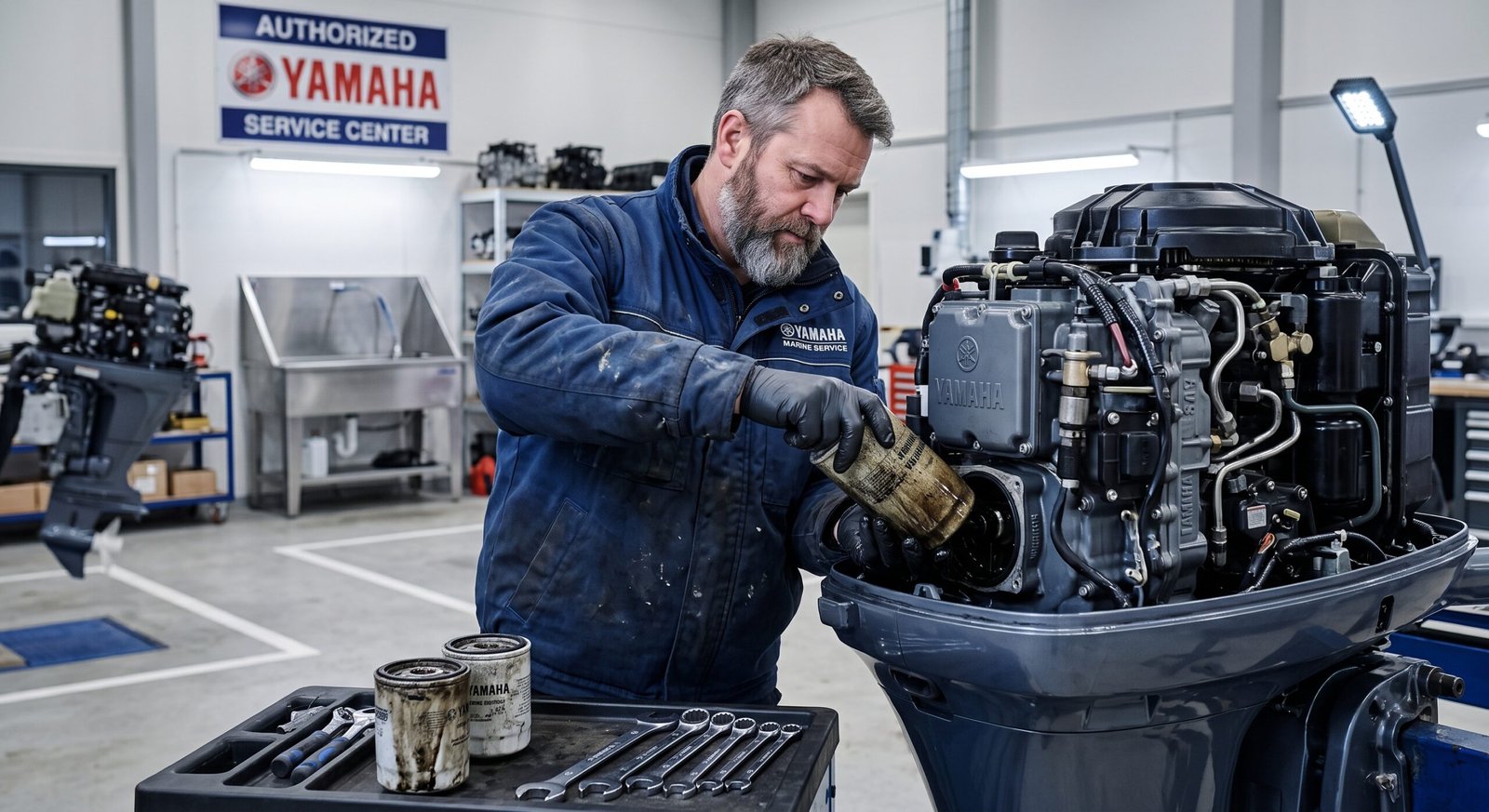
Change the Engine Oil and Filter
Changing the engine oil is an important winterization step for applicable outboard motors. Used oil may contain combustion byproducts, moisture, and other contaminants accumulated during operation.
Fresh oil provides the engine with clean lubrication during storage and prepares it for the next operating season. If the engine uses an oil filter, the filter should generally be replaced according to the manufacturer’s maintenance instructions.
The replacement oil should meet the specification listed in the owner’s manual. After filling the engine, the oil level should be checked carefully and kept within the recommended range.
Overfilling should be avoided because an incorrect oil level can create mechanical problems. The final level should be confirmed using the manufacturer’s recommended checking procedure.
Service the Gearcase Lubricant
The lower unit or gearcase contains lubricant that protects gears and internal components. Before winter storage, the gearcase lubricant should be inspected and serviced according to the manufacturer’s schedule.
When old lubricant is drained, its condition should be observed. Unusual discoloration or signs of water contamination can indicate a problem that should be investigated before the engine is stored for the season.
Fresh gearcase lubricant provides protection for internal components during storage. The appropriate marine lubricant should be used according to the manufacturer’s specifications.
This step is also a useful opportunity to inspect the drain and fill areas for damaged seals or other maintenance concerns. Any unusual condition should be addressed rather than ignored until the following boating season.
Treat the Fuel System
Fuel preparation is one of the most important parts of long-term outboard storage. Fuel can deteriorate when it remains unused for an extended period, and fuel-system deposits can create starting and performance problems later.
An appropriate fuel stabilizer can help maintain fuel quality during storage when used according to the product and engine manufacturer’s instructions. The treated fuel should be circulated through the appropriate parts of the fuel system as specified by the manufacturer.
Fuel tanks should also be maintained according to the engine and boat manufacturer’s storage recommendations. The correct approach can vary depending on the fuel system and tank design.
Fuel-related maintenance should always be performed safely. Keep fuel away from ignition sources, provide adequate ventilation, and follow all applicable safety instructions.
Protect the Engine Against Corrosion
Corrosion protection is another major part of winterization. Moisture can affect exposed metal components, fasteners, electrical connections, and other parts of an outboard engine.
An appropriate marine corrosion-protection product may be applied to the areas specified by the manufacturer. The goal is to reduce exposure to moisture and contaminants without applying products where they are not intended to be used.
Electrical connections should also be inspected. Corrosion around terminals or connectors can create resistance and electrical problems when the engine is returned to service.
Saltwater environments require particular attention because salt residue can accelerate corrosion. Cleaning and protective maintenance should therefore be part of the regular storage routine.
Lubricate Moving Parts
Moving components may require lubrication before long-term storage. Steering components, linkage points, pivot areas, and other manufacturer-specified locations can benefit from appropriate marine grease or lubricant.
Only the correct type of lubricant should be used at each location. Applying the wrong product can attract dirt or fail to provide the intended protection.
Lubrication should be performed according to the manufacturer’s maintenance schedule. Not every component needs to be lubricated, so the owner’s manual should be consulted to identify the appropriate points.
Inspect the Propeller
The propeller should be inspected before the engine goes into storage. Damage, corrosion, fishing line, and other debris can affect the propeller and propeller shaft.
If the manufacturer’s procedure recommends removing the propeller for inspection, the appropriate steps should be followed carefully. Fishing line wrapped around the propeller shaft can cause seal damage and may allow water to enter the gearcase.
The propeller shaft should be inspected for damage and lubricated as specified by the manufacturer. When the propeller is reinstalled, the correct hardware and torque specifications should be used.
Drain Water From the Engine
Water removal is particularly important in regions where freezing temperatures are possible. Water that remains trapped inside cooling passages or other parts of the engine can freeze and expand.
The outboard should be positioned and drained according to the manufacturer’s instructions. The correct storage position can vary between models, so general assumptions should not replace the owner’s manual.
Allowing the engine to drain completely and storing it in the recommended position helps reduce the risk associated with trapped water.
How to Winterize Different Types of Outboard Engines
Different outboard engine designs can require different winterization procedures. Two-stroke and four-stroke engines have different lubrication and fuel-system characteristics, while carbureted and fuel-injected engines may require different approaches to fuel preparation.
Four-stroke outboards generally have a dedicated engine lubrication system that requires periodic oil and filter changes. Two-stroke engines may use a different lubrication arrangement depending on the design and manufacturer.
Fuel-injected engines can have specific requirements for preparing the fuel system for extended storage. Carbureted engines can also require careful attention because fuel left in carburetor passages for long periods can deteriorate.
Because of these differences, boat owners should avoid applying a single universal winterization procedure to every outboard engine. The safest approach is to understand the general maintenance principles while following the specific instructions provided for the engine model.
How to Store an Outboard Boat Engine During Winter
Proper storage conditions can be just as important as the maintenance performed before storage. Whenever possible, the boat and engine should be protected from excessive moisture, direct weather exposure, and unnecessary temperature extremes.
The outboard should be stored in the position recommended by the manufacturer. A suitable cover can help protect the engine from environmental exposure, but ventilation requirements should also be considered.
A storage area should be reasonably clean and dry. Standing water, excessive humidity, and poor ventilation can contribute to corrosion and deterioration.
The boat should also be inspected periodically during a long storage period when practical. Checking the condition of the cover, engine, battery, and surrounding storage area can help identify problems before they become more serious.
Common Outboard Winterization Mistakes to Avoid
One common mistake is storing the boat without treating the fuel system. Fuel that remains unused for an extended period may deteriorate and contribute to problems when the engine is started again.
Another mistake is leaving old engine oil in the motor for long-term storage when the manufacturer’s maintenance schedule recommends changing it. Used oil can contain contaminants that are better removed before extended storage.
Failing to flush the cooling system is another issue. Salt, sediment, and other contaminants can remain inside the cooling passages if the system is not properly flushed.
Some boat owners also overlook the gearcase lubricant. A gearcase that contains contaminated lubricant or has a damaged seal may develop problems during storage. Inspecting the lubricant before storage can reveal potential issues.
Ignoring corrosion protection can also create problems. Even when an engine is not running, moisture can continue affecting exposed metal and electrical components.
Using incorrect maintenance products is another avoidable mistake. Engine oil, gear lubricant, grease, and corrosion-protection products should meet the requirements specified by the manufacturer.
Finally, one of the most important mistakes is failing to consult the owner’s manual. Outboard engines differ in design and maintenance requirements, so model-specific instructions should always be followed.
Can You Winterize an Outboard Boat Engine Yourself?
Many routine winterization tasks can be performed by an owner who has the appropriate tools, maintenance knowledge, and manufacturer’s instructions. Cleaning, inspection, oil servicing, fuel treatment, lubrication, and other routine procedures may be manageable for experienced boat owners.
However, not every maintenance problem should be handled without professional assistance. If an engine has unusual mechanical symptoms, significant corrosion, fuel-system problems, damaged electrical components, or signs of water entering the gearcase, professional inspection may be appropriate.
A professional marine technician can also help when the owner is uncertain about a model-specific winterization procedure. The cost of professional service can vary, but proper maintenance may help prevent more expensive repairs later.
The most important consideration is following the manufacturer’s maintenance requirements rather than rushing through the process. If a procedure is unclear, consulting the engine manufacturer, owner’s manual, or qualified marine technician is a sensible approach.
Proper winterization should always follow the specific requirements of the engine manufacturer. Before starting the maintenance process, boat owners should review the official Mercury Marine Owner’s Manuals and Resources or the documentation provided with their particular outboard. Manufacturer instructions can vary between engine models, so checking the correct manual helps ensure that the recommended fluids, storage position, lubrication points, and fuel-system procedures are followed correctly.
How to Prepare Your Outboard Engine for Spring
Winterization is only one part of seasonal engine care. When the boat is ready to return to the water, the outboard should receive a careful inspection before starting.
Check the engine oil level and inspect the gearcase lubricant as required. Examine the propeller, propeller shaft, wiring, hoses, fuel system, and visible engine components.
The battery should be inspected and charged according to the manufacturer’s instructions. Electrical connections should be clean and secure.
Fuel should also be checked before operation. Any fuel-storage procedure used during winterization should be reviewed, and the manufacturer’s startup instructions should be followed.
The cooling system needs an appropriate water supply before the engine is started. The engine should be operated according to the manufacturer’s recommended startup procedure, and the owner should watch for abnormal noises, warning indicators, leaks, or other unusual conditions.
A careful spring inspection can identify storage-related issues before the boat returns to normal operation.
Outboard Engine Winterization Checklist
A winterization checklist can make the process easier to manage. Start by reviewing the manufacturer’s storage instructions and gathering the correct maintenance supplies. Clean the engine and inspect visible components for corrosion, damage, or wear.
Flush the cooling system using the manufacturer’s recommended procedure and allow the engine to drain properly. Change the engine oil and filter when applicable, and service the gearcase lubricant according to the maintenance schedule.
Prepare the fuel system using the appropriate stabilizer and storage procedure. Protect exposed metal and electrical components from corrosion using suitable marine products.
Lubricate manufacturer-specified moving parts and inspect the propeller, propeller shaft, and related components. Remove fishing line or debris and repair any identified damage.
Finally, position the outboard correctly for storage and protect it from excessive environmental exposure. Keep maintenance records so that important service dates and completed tasks can be tracked.
FAQ
Do you really need to winterize an outboard boat engine?
Winterization is important when an outboard engine will remain unused for an extended period, particularly in cold climates. Proper preparation helps address fuel deterioration, moisture, corrosion, lubrication, and freezing-related risks. The exact maintenance requirements depend on the engine model and storage conditions.
What happens if you don’t winterize an outboard engine?
Failing to prepare an outboard for extended storage can increase the possibility of fuel-system problems, corrosion, contaminated lubricant, moisture-related damage, and freeze-related issues. The severity depends on the engine, climate, storage conditions, and length of inactivity.
How long does it take to winterize a outboard boat engine?
The amount of time required depends on the engine type, maintenance condition, equipment, and winterization procedure. A basic service can take less time than a complete inspection and maintenance session. Following the manufacturer’s procedure carefully is more important than trying to complete the process as quickly as possible.
Should you change the oil before winter storage?
For outboard engines that require periodic oil changes, changing the oil before extended storage is commonly part of seasonal maintenance. Fresh oil removes used lubricant and its accumulated contaminants. The manufacturer’s maintenance schedule should be followed for the specific engine.
Should you use fuel stabilizer when winterizing an outboard?
An appropriate fuel stabilizer may be recommended for extended storage. The product should be compatible with the fuel system and used according to its instructions and the engine manufacturer’s recommendations.
Can an outboard engine freeze?
An outboard engine can be affected by freezing temperatures if water remains trapped in areas where freezing can cause damage. Proper draining and storage according to the manufacturer’s instructions can reduce this risk.
Should an outboard be stored up or down during winter?
The correct storage position depends on the specific outboard and manufacturer instructions. The engine should be positioned according to the owner’s manual so that water can drain appropriately and the engine remains protected during storage.
Can you winterize an outboard boat engine yourself?
Many routine winterization tasks can be completed by an experienced boat owner with suitable tools and instructions. However, complicated mechanical, electrical, fuel-system, or corrosion problems may require professional marine service.
How do you prepare an outboard engine for spring startup?
Spring preparation should include checking oil and lubricant levels, inspecting the fuel system, examining the propeller and electrical connections, checking the battery, inspecting visible components, and following the manufacturer’s startup procedure. The engine must have the appropriate water supply before it is operated outside the water.
Conclusion
Learning how to winterize a outboard boat engine is an important part of maintaining an outboard motor through periods of extended storage. Winterization protects the engine from several common storage-related problems, including deteriorating fuel, moisture, corrosion, contaminated lubricants, and freezing conditions.
A thorough winterization routine should begin with the manufacturer’s instructions and continue with careful cleaning and inspection. The cooling system should be flushed and drained correctly, engine oil and filters should be serviced when required, and the gearcase lubricant should be inspected and replaced according to the maintenance schedule.
Fuel preparation, corrosion protection, lubrication, propeller inspection, and proper storage positioning are also important parts of the process. Each step contributes to keeping the engine in better condition while it remains inactive.
The exact requirements can vary significantly between outboard models, so the owner’s manual should always guide the final procedure. When a mechanical or maintenance issue is beyond the owner’s experience, professional marine service can provide additional support.
Proper preparation before winter storage can make the transition into the next boating season much easier. With consistent maintenance, careful storage, and attention to manufacturer recommendations, boat owners can help protect their outboard engines and keep them ready for future use.


One thought on “How to Winterize a Outboard Boat Engine: Easy & Safe Guide”