

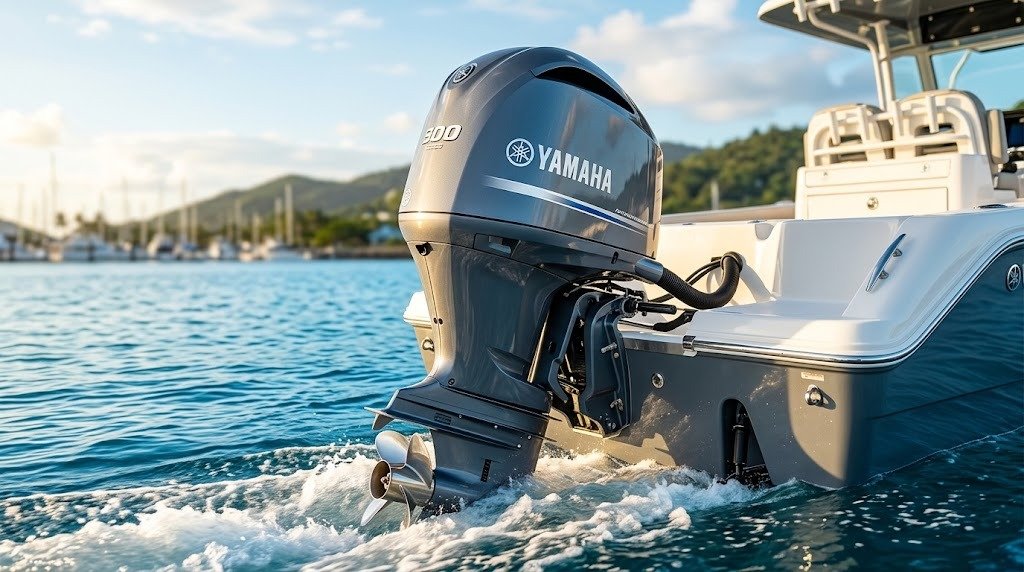
When choosing an engine for a boat, reliability, performance, fuel economy, and maintenance are all important considerations. A good marine engine should provide enough power for the boat without creating unnecessary operating costs. It should also be easy to maintain and capable of handling the conditions in which the boat is normally used. The Yamaha outboard motor boat engine is one option that attracts attention from recreational boaters, anglers, families, and marine professionals because Yamaha offers outboard engines across a broad range of sizes and applications.
An outboard motor is different from an inboard engine because the complete propulsion system is mounted outside the boat. The engine, gearcase, driveshaft, and propeller work together as a compact unit attached to the transom. This arrangement can provide useful space inside the boat while also making the propulsion system relatively accessible for inspection and servicing.
Yamaha offers different outboard configurations designed for various boats and uses. Smaller engines can be appropriate for lightweight boats, tenders, and small fishing vessels, while higher-horsepower models can provide the thrust required by larger recreational and offshore boats. Selecting the right model is therefore less about choosing the biggest engine and more about matching the motor to the boat.
Fuel economy is another major consideration. Marine fuel costs can add up quickly when a boat is used regularly. Although engine technology plays an important role, real-world fuel consumption also depends on boat weight, hull design, propeller selection, cruising speed, water conditions, and the way the engine is operated.
Proper care is equally important. Even a modern outboard motor needs regular servicing, inspection, cleaning, and protection from corrosion. With the right maintenance routine and a suitable setup, a Yamaha outboard motor boat engine can provide dependable propulsion for many different boating activities.
What Is a Yamaha Outboard Motor Boat Engine?
A Yamaha outboard motor boat engine is a marine propulsion system designed to move a boat through the water. Unlike an inboard engine that sits within the hull, an outboard is installed externally, normally on the boat’s transom.
The outboard combines several important components into one assembly. These include the engine or powerhead, cooling system, fuel system, driveshaft, gearcase, propeller, and steering mechanism. Depending on the model and boat setup, the motor can also work with mechanical or electronic throttle and shift controls.
The basic operating principle is straightforward. The engine converts fuel energy into mechanical power. That power turns the driveshaft and gears, which rotate the propeller. The propeller pushes water backward, creating thrust that moves the boat forward.
The design has several practical advantages. Because the engine is mounted outside the hull, there is no need for a large internal engine compartment. The motor can also be raised or tilted on compatible installations, which is useful for certain storage and shallow-water situations.
However, the engine must be correctly matched to the boat. A motor that is too small may struggle with heavy loads, while an engine that exceeds the boat’s specifications can create safety and performance problems.
Why Choose a Yamaha Outboard Motor Boat Engine?
Yamaha offers a broad selection of marine outboards, allowing boat owners to consider different power levels and configurations. The right choice depends on the boat and its intended use.
Wide Range of Engine Sizes
One of the main advantages of Yamaha’s outboard lineup is the variety of available horsepower options. Small portable engines are available for lightweight boats, while larger engines are designed for vessels requiring considerably more power.
This range makes it possible to select an engine according to the boat manufacturer’s recommended horsepower rather than trying to adapt one engine to every type of vessel.
Smooth Power Delivery
A boat engine needs to provide controlled power, particularly when moving between idle, cruising, and higher speeds.
A properly maintained Yamaha outboard can provide smooth acceleration and consistent operation. This is useful when leaving a dock, navigating narrow waterways, cruising with passengers, or changing speed while fishing.
Practical Fuel Consumption
Fuel economy depends on much more than the engine itself. However, modern Yamaha outboards incorporate technologies intended to manage fuel efficiently.
A properly selected engine can help avoid unnecessary fuel use caused by operating an unsuitable engine under excessive load. Boat owners should consider their normal cruising speed and typical passenger load when selecting an engine.
Convenient Access
Because the outboard is mounted externally, many components are easier to access than they would be with an enclosed inboard installation.
Routine checks can include inspecting the propeller, looking for fishing line around the propeller shaft, checking visible components, and examining signs of corrosion.
Yamaha Outboard Motor Types
Yamaha outboards are available in different configurations for different boating requirements. Understanding these categories can help buyers narrow down their options.
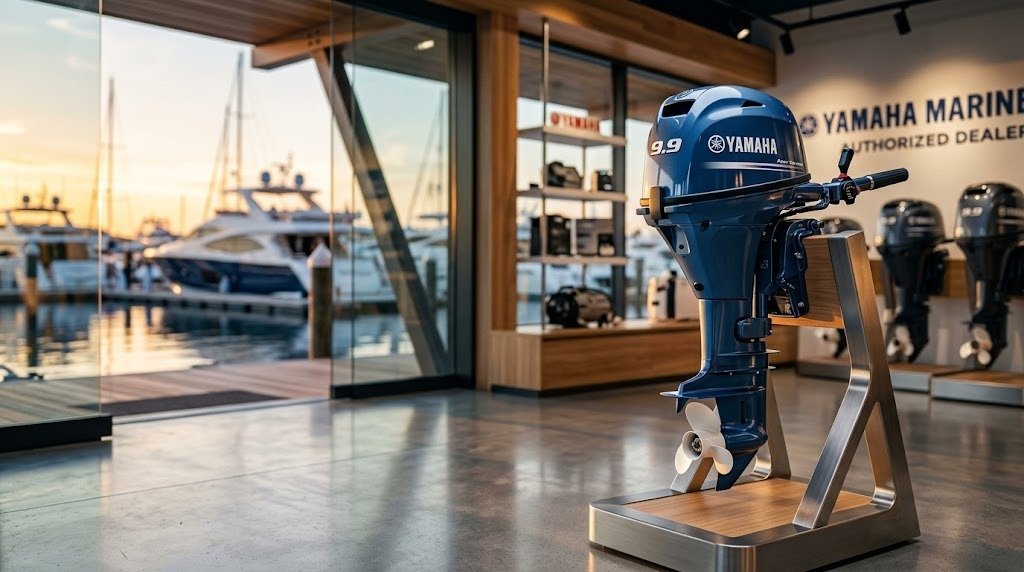
Portable Yamaha Outboard Engines
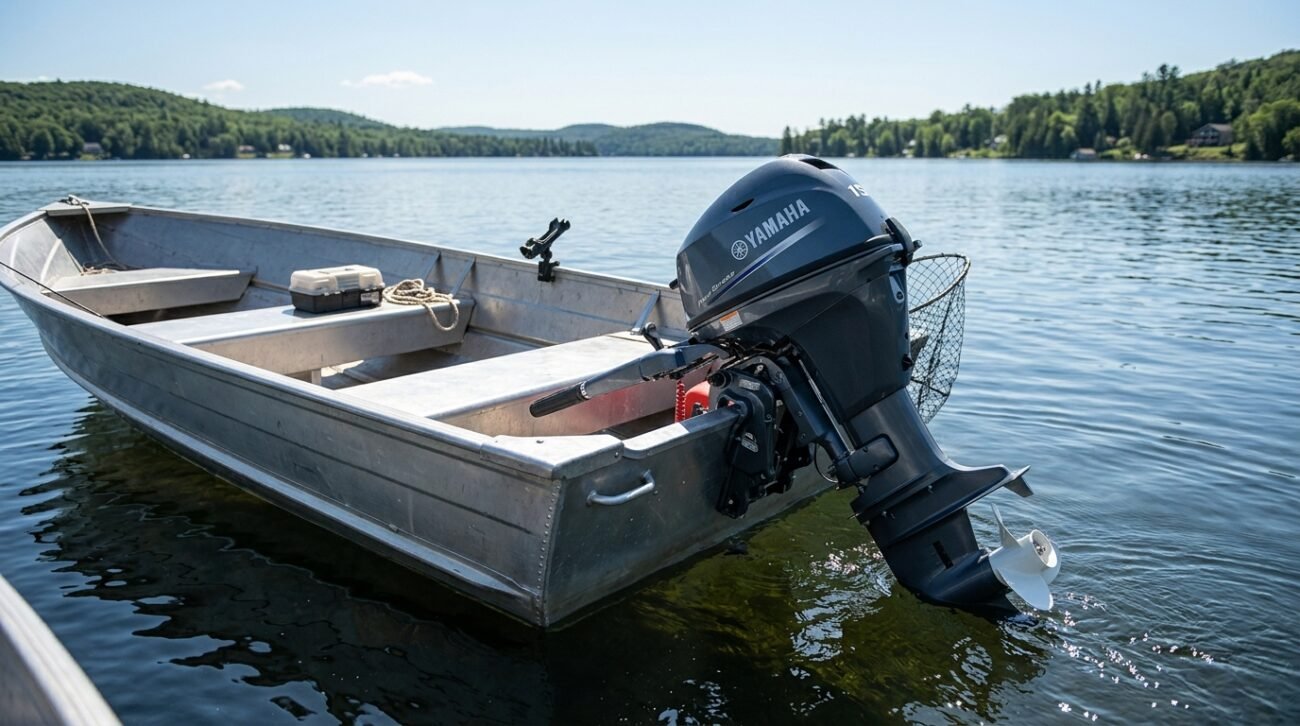
Portable outboards are designed for smaller boats where low weight and compact dimensions are important.
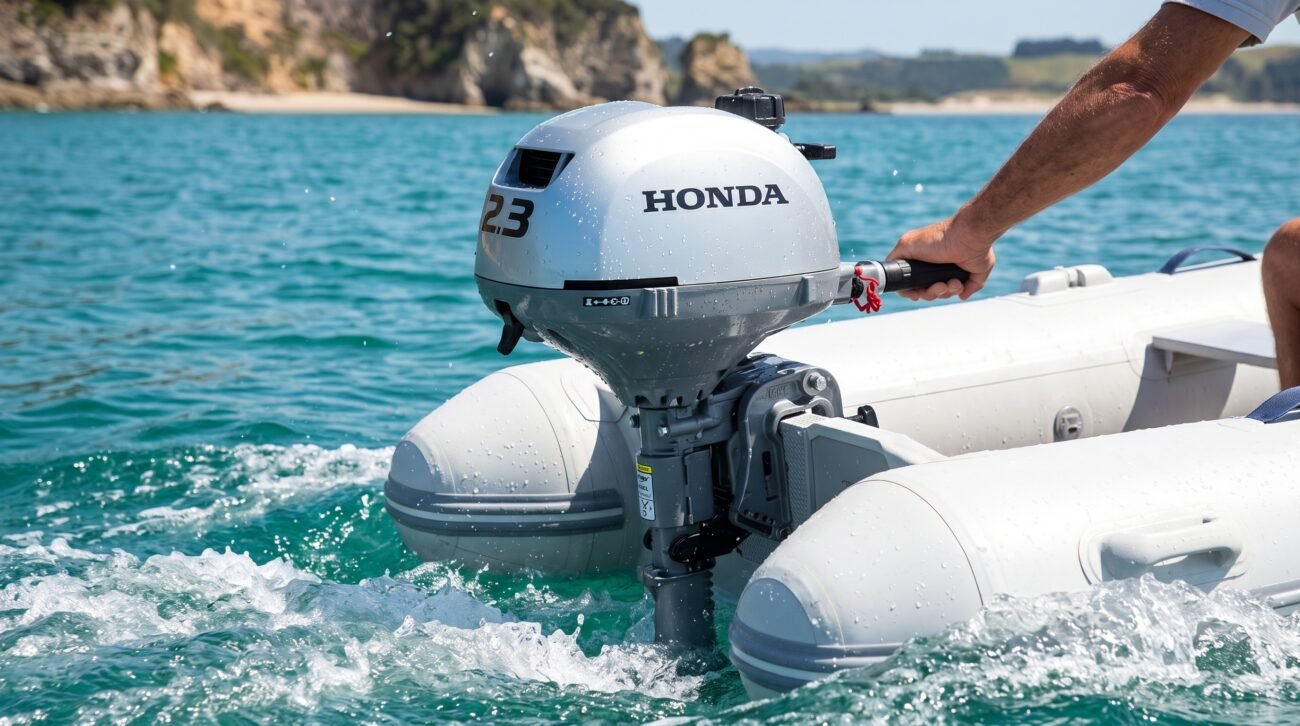
They can be used on tenders, dinghies, small fishing boats, inflatables, and other lightweight vessels when the engine is compatible with the boat.
Portability can make transportation and storage easier. However, the engine still needs to be within the boat’s recommended horsepower and weight limits.
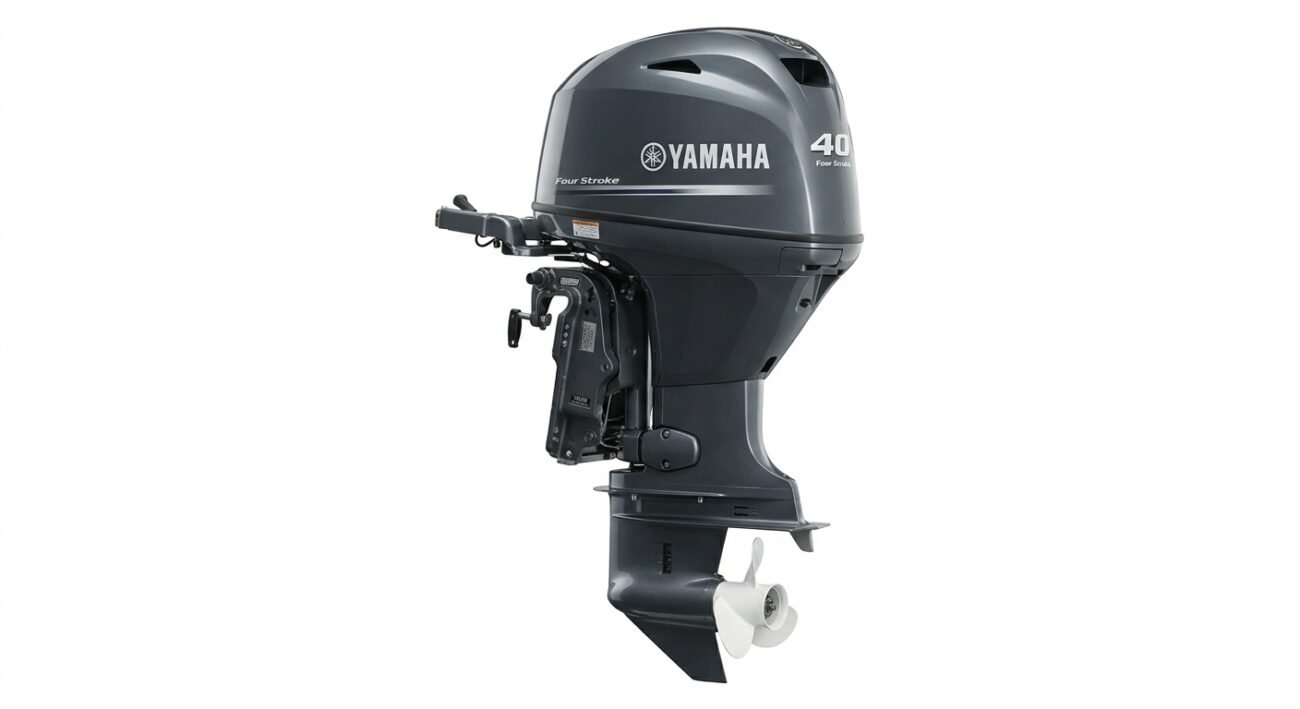
Yamaha Four-Stroke Outboard Engines
Four-stroke outboards are widely used in recreational boating.
A four-stroke engine completes its combustion cycle through intake, compression, power, and exhaust stages. Modern four-stroke marine engines can provide smooth operation and practical fuel economy when properly matched to the boat.
They are available in different power ranges, making them suitable for various recreational and commercial applications.
Yamaha High-Thrust Outboards
High-thrust engines are designed for situations where strong thrust and controlled low-speed operation are important.
They can be useful on heavier boats and applications where maneuverability and pushing power matter more than maximum speed.
High-Horsepower Yamaha Outboards
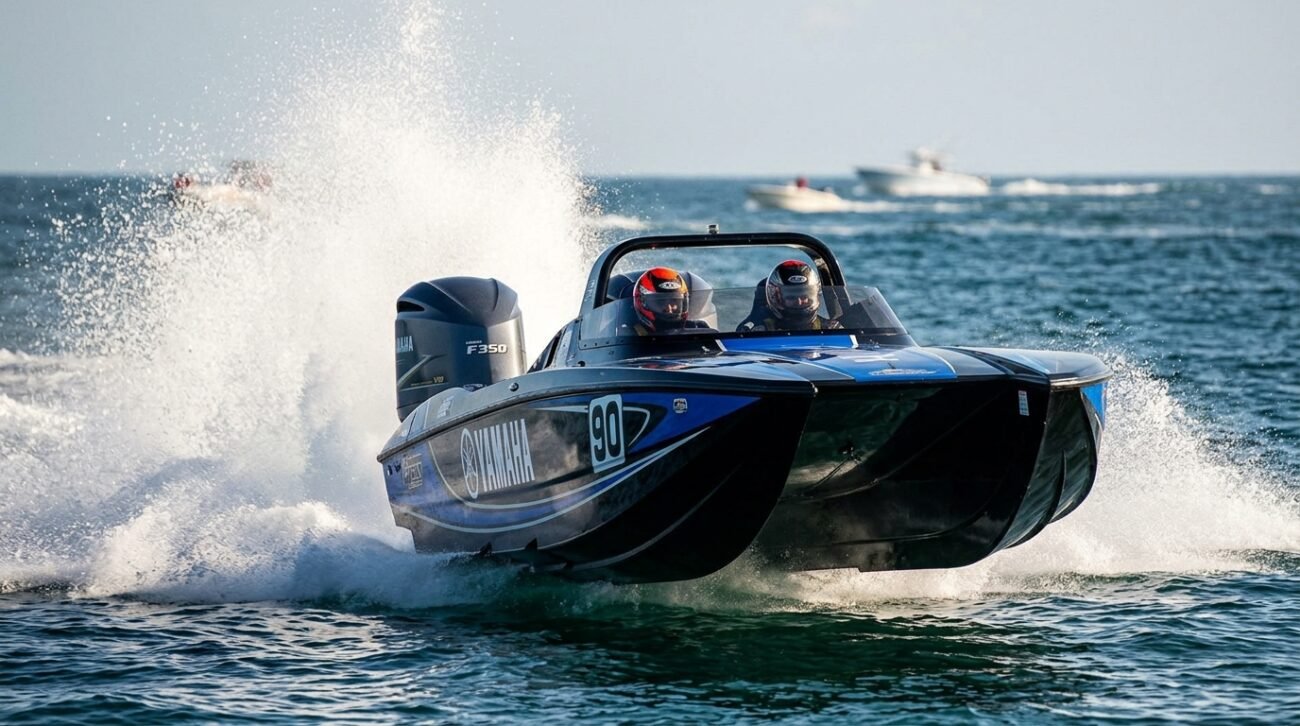
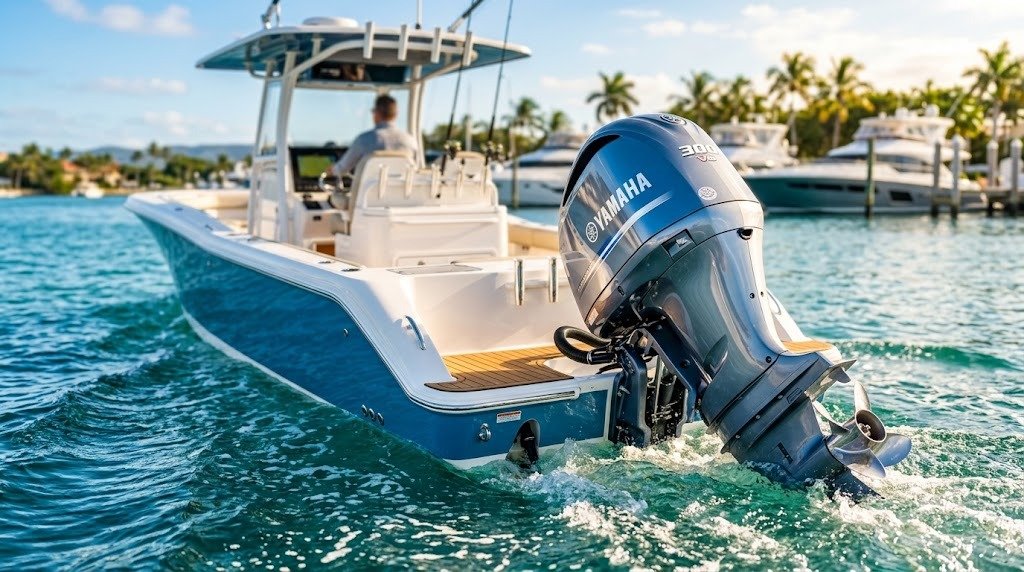
Larger Yamaha outboards are designed for bigger boats requiring more propulsion.
These engines can be suitable for center consoles, offshore fishing boats, larger recreational vessels, and other boats designed to accommodate higher horsepower.
The boat’s transom, steering system, rigging, and fuel system must all be appropriate for the selected engine.
How Does a Yamaha Outboard Motor Work?
The basic operation of an outboard motor involves several connected systems.
Fuel and air enter the engine, where combustion produces energy. The resulting force moves the engine’s internal components and rotates the crankshaft.
The crankshaft transfers rotational power to the driveshaft. The driveshaft extends down through the motor toward the lower unit.
Inside the lower unit, gears transfer power to the propeller. The rotating propeller pushes water backward and produces forward thrust.
The operator controls engine speed using the throttle. The transmission or gear mechanism allows the motor to operate in forward, neutral, or reverse as designed.
The cooling system is another critical part of the engine. Marine engines generate significant heat during operation, so water is used to help control operating temperature.
If the cooling-water intake becomes blocked or another cooling-system problem occurs, overheating can result. For that reason, maintaining proper water flow is essential.
Yamaha Outboard Motor Performance
Performance is often the first thing people consider when choosing an outboard engine. However, horsepower is only one part of the overall equation.
Boat design, weight, propeller selection, engine mounting height, trim position, water conditions, and passenger load can all influence performance.
Acceleration
Acceleration is particularly important when leaving a dock or getting the boat onto plane.
A properly matched engine should provide enough power to accelerate the boat without excessive strain.
If the boat is overloaded, acceleration can become slower regardless of the engine’s advertised horsepower.
Cruising Performance
Most boat owners spend more time cruising than operating at maximum speed.
For that reason, comfortable cruising performance can be more useful than focusing entirely on top speed.
The engine should operate smoothly at the boat’s normal cruising speed while maintaining an appropriate engine speed.
Handling
An outboard engine also contributes to steering and maneuverability.
At low speeds, precise throttle and steering control can be especially valuable when docking or navigating crowded areas.
Power trim and tilt, where available, can also help adjust the motor’s position according to operating conditions.
Top Speed
Top speed varies greatly between boats.
Two boats with identical engines can have different maximum speeds because their hull designs, weights, propellers, and loads are different.
Therefore, published performance figures should be treated as model-specific rather than universal expectations.
Yamaha Outboard Motor Fuel Economy
Fuel economy is one of the biggest concerns for regular boat owners. Marine engines can consume significant amounts of fuel, particularly when operating at high speeds.
A Yamaha outboard’s actual fuel consumption depends on many factors.
Boat Weight
A heavier boat generally requires more power to accelerate and maintain speed.
Passengers, fuel, batteries, fishing equipment, coolers, water, and other gear all add weight.
Reducing unnecessary load can sometimes improve operating efficiency.
Hull Design
The shape and design of the hull have a major effect on resistance through the water.
A boat designed to plane efficiently may behave very differently from a displacement-style vessel.
Therefore, the same engine can produce different fuel consumption figures on different boats.
Cruising Speed
Speed has a significant influence on fuel use.
Running at maximum throttle generally consumes considerably more fuel than operating at a moderate cruising speed.
Finding an efficient cruising range can help balance travel time and fuel consumption.
Propeller Selection
The propeller converts engine power into thrust.
An unsuitable propeller can prevent the engine from operating in its recommended range and can affect acceleration, cruising behavior, and fuel consumption.
For this reason, propeller selection should be treated as part of the complete engine setup.
Features That Can Improve the Boating Experience
Modern Yamaha outboards can include several features intended to improve control, operation, and maintenance.
Electronic Fuel Systems
Electronic fuel delivery can help control the amount of fuel supplied to the engine.
Precise fuel management can contribute to consistent starting and operation under changing conditions.
Power Trim and Tilt
Power trim and tilt allows the operator to adjust the angle of the outboard from the boat.
Trim position can influence the boat’s running attitude, steering behavior, acceleration, and efficiency.
The appropriate trim setting changes according to boat speed, passenger load, water conditions, and hull design.
Engine Monitoring
Depending on the model and rigging setup, Yamaha outboards can work with marine instruments and displays that provide information about engine operation.
Monitoring engine speed, warnings, fuel information, and other available data can help the operator understand how the boat and motor are performing.
Choosing the Right Yamaha Outboard Motor
Buying the right engine requires more consideration than simply selecting a horsepower number.
Check the Boat’s Maximum Horsepower
Always begin with the boat manufacturer’s specifications.
The capacity plate or owner’s documentation may provide maximum horsepower, passenger capacity, and maximum weight information.
Never install an engine that exceeds the boat’s permitted specifications.
Consider Total Boat Weight
Think about the boat as it will actually be used.
If you normally carry several passengers, fishing equipment, fuel, batteries, and other gear, your real operating weight may be considerably higher than the empty boat’s weight.
Think About Your Main Activity
Your intended use should influence the engine selection.
A small fishing boat used on calm inland water may have different requirements from a larger boat used for offshore fishing or watersports.
Consider Shaft Length
Outboards are available with different shaft lengths.
The correct length depends on the boat’s transom and installation requirements. An incorrect shaft length can affect performance and the position of the propeller in the water.
Consider Local Service
Before purchasing, find out whether qualified marine technicians and genuine replacement parts are available in your area.
Local service availability can make routine maintenance and unexpected repairs much easier.
Yamaha Outboard Motor Maintenance
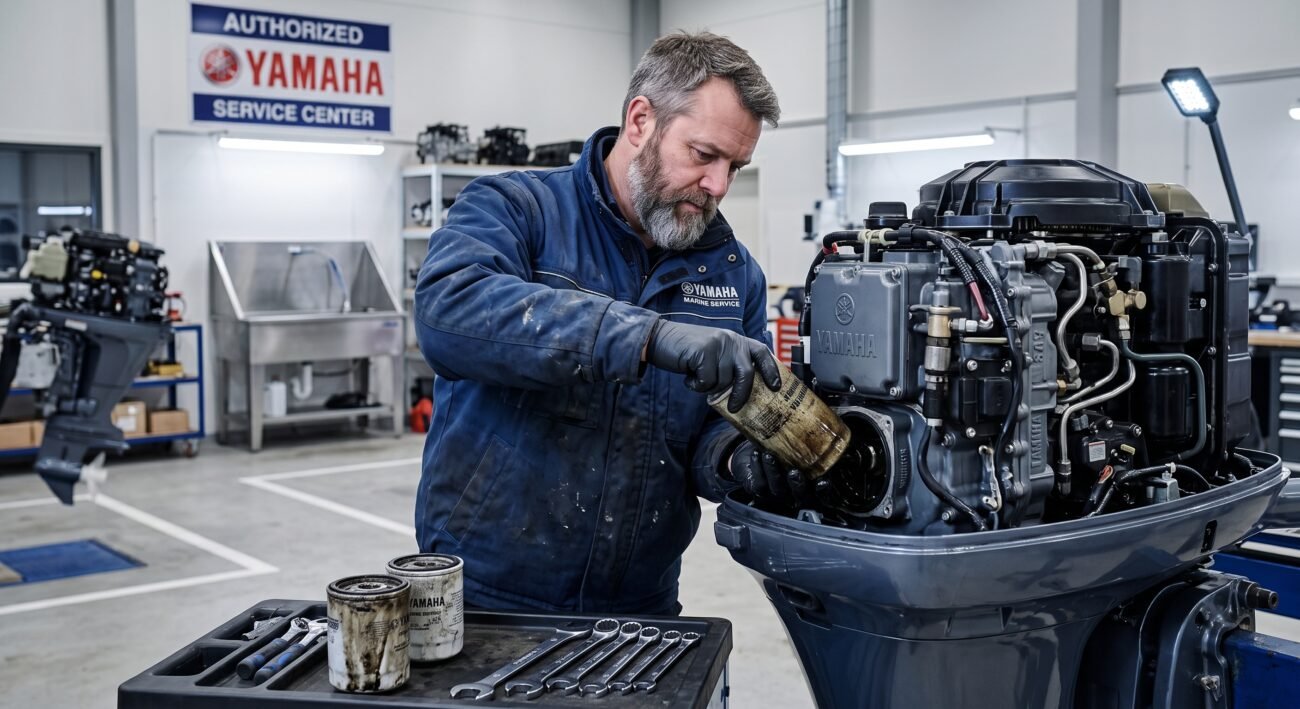
Regular maintenance is one of the most important parts of owning an outboard motor.
A maintenance schedule helps identify small problems before they become more expensive mechanical issues.
Yamaha provides model-specific owner and maintenance information through its official marine resources, so owners should use the documentation for their exact engine rather than relying only on generic advice. Yamaha Outboards official website
Check Engine Oil
Four-stroke outboards use engine oil to lubricate internal components.
The oil level should be checked according to the manufacturer’s instructions, and oil should be replaced at the recommended service intervals.
Using the correct oil specification is important because marine engines operate under different conditions from many automotive engines.
Inspect the Propeller
The propeller should be inspected regularly.
Look for cracks, bends, dents, fishing line, rope, or other debris.
Even minor propeller damage can cause vibration and reduce performance.
If fishing line becomes wrapped around the propeller shaft, it should be removed carefully because it can damage seals and allow water to enter areas where it should not.
Flush the Engine
Saltwater and other contaminants can affect marine engines.
If the outboard is used in saltwater, follow Yamaha’s recommended flushing procedure after use.
Regular flushing can help remove salt and other deposits from the cooling passages.
Check the Cooling System
The cooling system should be kept in good condition.
The water intake must remain clear so that cooling water can circulate properly.
If an engine shows an overheating warning or abnormal cooling behavior, stop operation and investigate the cause according to the manufacturer’s instructions.
Inspect Sacrificial Anodes
Sacrificial anodes help protect certain metal components from galvanic corrosion.
They gradually wear down during normal operation, particularly in marine environments.
They should be inspected periodically and replaced when necessary.
Caring for a Yamaha Outboard in Saltwater
Saltwater can be particularly harsh on marine equipment.
Salt deposits and corrosion can affect metal surfaces, electrical connections, fasteners, and other components if the engine is not properly maintained.
Flush After Operation
Follow the correct flushing procedure after saltwater use.
This helps remove salt and other contaminants from the cooling system.
Rinse External Surfaces
External surfaces can also collect salt.
Rinsing the appropriate areas with fresh water after use can help keep the engine cleaner.
Inspect for Corrosion
Regularly examine visible metal components, fasteners, brackets, cables, and other exposed areas.
Early identification of corrosion can make maintenance easier.
Maintain Anodes
Do not ignore worn sacrificial anodes.
They are part of the corrosion-protection system and should be maintained according to the manufacturer’s recommendations.
Yamaha Outboard Motor Propeller Care
The propeller is often overlooked even though it plays a major role in boat performance.
A propeller must be able to convert the engine’s power into useful thrust.
Why Propeller Condition Matters
A damaged propeller can cause vibration, poor acceleration, reduced efficiency, and changes in engine operating speed.
If the boat suddenly feels different after hitting an underwater object, inspect the propeller before continuing normal operation.
Choosing Propeller Pitch
Propeller pitch affects how the engine and boat work together.
The appropriate pitch depends on the specific engine, boat, load, and intended operation.
Rather than selecting a propeller based only on general recommendations, follow Yamaha and boat manufacturer specifications or consult a qualified marine technician.
Common Yamaha Outboard Motor Problems
Even properly maintained engines can experience mechanical or electrical problems.
Starting Problems
An outboard that fails to start may have a battery problem, fuel issue, electrical fault, safety-switch issue, or another mechanical cause.
Basic checks can identify simple problems, but repeated starting failures should be professionally diagnosed.
Overheating
Overheating is a serious issue.
Blocked water intakes, cooling-system problems, or other faults can reduce cooling performance.
Do not continue operating an engine that is showing an overheating warning without addressing the problem.
Poor Acceleration
Poor acceleration can result from excessive load, incorrect propeller selection, fuel problems, or mechanical issues.
Checking the boat’s load and propeller condition is a reasonable starting point, but persistent problems require proper inspection.
Excessive Vibration
Unusual vibration may indicate propeller damage, installation problems, or another mechanical issue.
Operating with severe vibration can cause additional damage, so the source should be identified promptly.
Yamaha Outboard Motor for Fishing Boats
Fishing boats often require reliable low-speed control and sufficient power for changing loads.
A fishing trip can involve multiple passengers, fuel, batteries, rods, tackle, coolers, and other equipment.
The engine therefore needs to be matched to the boat’s real operating weight.
For anglers who frequently operate at low speeds, smooth throttle response and controlled maneuvering can be particularly useful.
Propeller selection also matters because fishing boats may spend long periods at trolling or moderate cruising speeds.
Yamaha Outboard Motor for Family Boats
Family boats often have changing passenger and equipment loads.
A boat that performs well with two people may behave differently when fully loaded with passengers and equipment.
When selecting a Yamaha outboard, consider the boat’s maximum rated capacity and the situations in which it will normally be used.
The goal should be balanced performance rather than simply maximum horsepower.
New vs Used Yamaha Outboard Motor
Both new and used engines have advantages and disadvantages.
Buying a New Engine
A new Yamaha outboard provides the opportunity to select the exact horsepower and configuration needed for the boat.
It may also include applicable manufacturer warranty coverage.
The downside is the higher initial purchase price.
Buying a Used Engine
A used outboard can reduce the upfront cost.
However, the condition of the individual engine matters much more than the age alone.
Before buying a used Yamaha outboard, examine its maintenance records, operating history, lower unit, propeller, cooling system, electrical components, and visible signs of corrosion.
A professional marine inspection can be particularly valuable for a used engine.
Yamaha Outboard Motor Installation
Correct installation is essential for good performance.
The motor must be mounted at the appropriate height and position for the boat.
Steering, throttle, shift controls, electrical connections, fuel systems, and other rigging components must also be installed correctly.
An incorrectly installed outboard can experience ventilation problems, inefficient operation, poor handling, or other performance issues.
For this reason, installation should follow Yamaha and boat manufacturer specifications.
Yamaha Outboard Motor Storage and Winter Care
If the boat will not be used for an extended period, proper storage can help protect the engine.
The appropriate procedure depends on the Yamaha model and local climate.
Maintenance may include fuel-system preparation, oil service, battery care, cooling-system procedures, and protection from moisture.
Owners should consult the engine’s official documentation before preparing it for long-term storage.
Yamaha Outboard Motor Safety
Boat engine performance should always be combined with responsible operation.
Before leaving shore, inspect the engine and controls.
Check the propeller area, steering system, fuel system, battery, and other important components.
Make sure the boat is not overloaded, and that required safety equipment is available.
Operators should also follow applicable boating regulations and navigation rules.
Avoid operating the engine beyond the manufacturer’s recommended limits.
How to Improve Yamaha Outboard Motor Performance
A few basic practices can help maintain consistent performance.
Keep the Engine Maintained
Routine maintenance helps prevent avoidable performance problems.
Follow the service schedule for the exact Yamaha model.
Use the Correct Propeller
A suitable propeller allows the engine and boat to work together properly.
If the propeller is damaged or incorrectly sized, performance can suffer.
Avoid Unnecessary Weight
Extra weight requires additional power.
Carry only the equipment you actually need and distribute passengers and gear appropriately.
Use Proper Trim
When power trim is available, adjusting the motor’s angle can help optimize the boat’s running position.
The ideal setting varies with speed, load, and water conditions.
FAQs
Is a Yamaha outboard motor good for a boat?
A Yamaha outboard can be suitable for many different types of boats when the engine is correctly matched to the vessel. The appropriate horsepower, shaft length, propeller, and installation configuration should always be considered.
Are Yamaha outboard motors fuel efficient?
Fuel consumption varies by model and operating conditions. Boat weight, hull design, speed, propeller choice, load, and maintenance all affect real-world fuel economy.
How long does a Yamaha outboard motor last?
There is no single lifespan that applies to every Yamaha outboard. Service life depends on maintenance, operating hours, saltwater exposure, storage, load, and general operating conditions.
Can Yamaha outboard motors be used in saltwater?
Yamaha outboards can be used for saltwater boating when the specific engine and boat are appropriate for the application. Regular flushing and corrosion protection are especially important in saltwater environments.
What horsepower Yamaha outboard should I choose?
Start with the boat manufacturer’s recommended horsepower range and maximum rating. Then consider the boat’s weight, typical passenger load, and intended use.
How often should a Yamaha outboard be maintained?
Maintenance intervals vary by model and operating conditions. Always follow the maintenance schedule provided for your specific Yamaha outboard.
Does a propeller affect Yamaha outboard fuel economy?
Yes. Propeller pitch, diameter, design, and condition can affect engine operating speed, acceleration, boat performance, and fuel consumption.
Why is my Yamaha outboard vibrating?
Possible causes include propeller damage, fishing line around the propeller shaft, installation problems, or mechanical issues. If vibration is unusual or severe, the engine should be inspected before continued operation.
Is a four-stroke Yamaha outboard good for recreational boating?
Four-stroke Yamaha outboards are used across many recreational applications. The appropriate model depends on the boat’s size, weight, horsepower requirements, and intended use.
Final Thoughts
A Yamaha outboard motor boat engine can provide a practical propulsion solution for many different types of boats. Yamaha’s broad range of outboard engines means boat owners can consider different horsepower levels, configurations, and features according to their individual requirements. The key is to select an engine that matches the boat rather than choosing based only on maximum power.
Performance and fuel economy are closely connected to the entire boat setup. Hull design, total weight, propeller selection, cruising speed, trim position, and water conditions can all influence how efficiently the engine operates. A properly matched motor and propeller can help deliver smoother acceleration and comfortable cruising without unnecessary strain.
Care is just as important as the original purchase. Regular oil service, propeller inspection, cooling-system checks, flushing after saltwater use, corrosion protection, and appropriate storage can help maintain dependable operation. Problems such as overheating, excessive vibration, or unusual starting behavior should be investigated rather than ignored.
Before purchasing, check the boat manufacturer’s specifications, compare suitable Yamaha models, and consider long-term service requirements. With the correct engine, proper installation, suitable propeller, and consistent maintenance, a Yamaha outboard can be a dependable part of a well-maintained boat for years of recreational and practical use.


One thought on “Yamaha Outboard Motor Boat Engine: Performance, Fuel Economy & Care”