

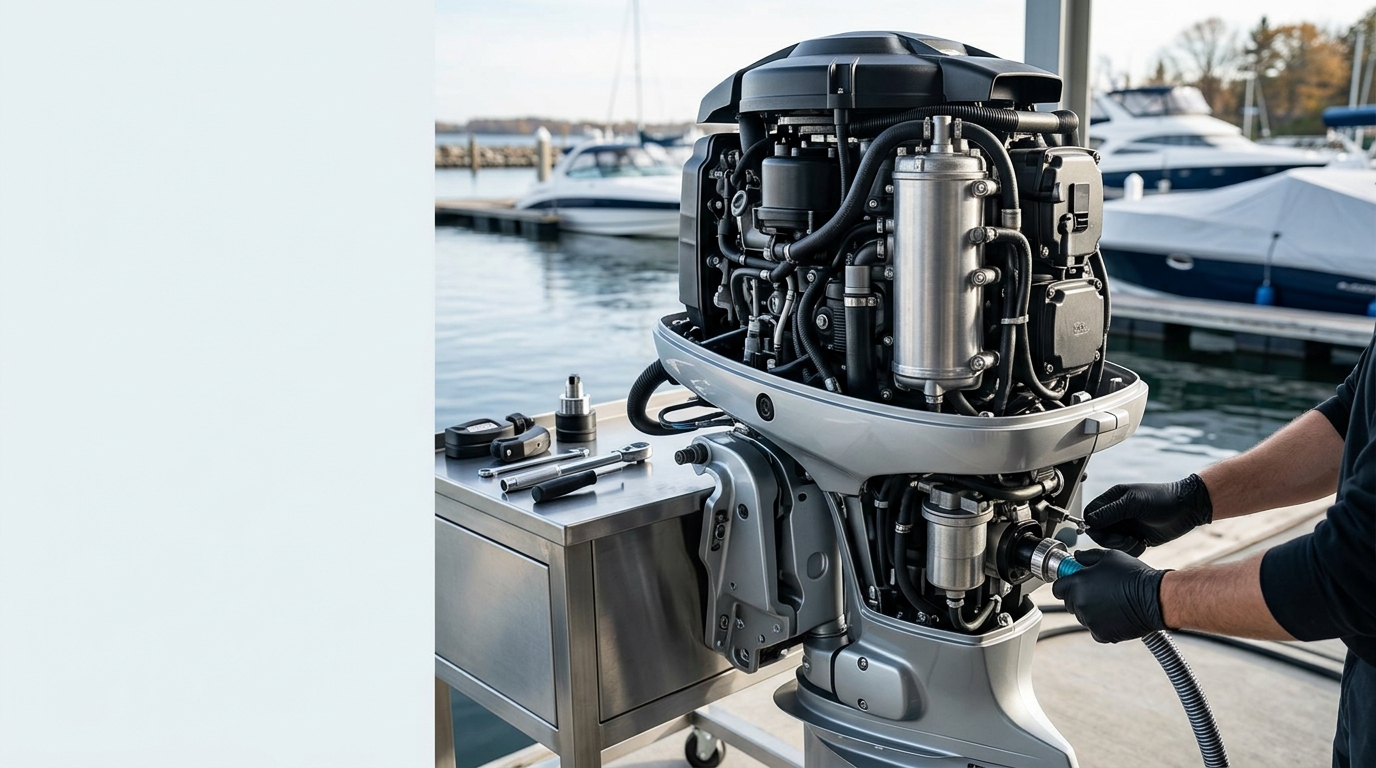
Yes, you should generally winterize an outboard motor when it will be unused for an extended period, especially during seasonal storage. Winterization helps protect the engine and its fuel, cooling, lubrication, and electrical systems while the boat is sitting unused. However, the exact procedure is not identical for every outboard. It depends on the engine type, manufacturer, climate, storage location, and length of storage.
Many boat owners associate winterization only with freezing temperatures, but protecting an outboard involves more than preventing freeze damage. Even in areas where temperatures remain relatively mild, an engine that sits unused for months can experience problems related to fuel deterioration, moisture, corrosion, and inadequate storage preparation.
Fuel can degrade during extended storage, while moisture and condensation can contribute to corrosion in various engine components. Proper preparation can also help reduce the risk of storage-related problems and make it easier to return the boat to service when the next boating season begins.
The procedure can differ considerably between a two-stroke and four-stroke outboard, as well as between different manufacturers and model generations. Some engines may require specific steps involving fuel treatment, engine oil, gearcase lubrication, cooling-system protection, and battery or electrical-system preparation. Following a generic procedure without considering the engine’s requirements may result in unnecessary or incorrect maintenance.
Your owner’s manual should therefore be the primary reference before beginning winterization. Manufacturers provide model-specific recommendations for storage, maintenance products, inspection intervals, and procedures.
Key takeaway: Winterizing an outboard is an important part of seasonal or long-term storage, but the exact procedure depends on the motor and its storage conditions. Proper preparation can help protect the engine from fuel-related issues, corrosion, moisture, and cold-weather damage while it is not being used.
Do You Have to Winterize an Outboard Motor?
In most cases, yes, an outboard motor should be prepared for extended or seasonal storage. Winterization is particularly important when the engine will remain unused for several weeks or months. The level of preparation depends on the climate, storage environment, engine design, and manufacturer’s recommendations.
When Winterization Is Important
Winterization becomes especially important when an outboard is stored during cold weather or for an extended period. It is also worth paying close attention to storage preparation when the boat is:
- Stored outdoors
- Used seasonally
- Kept in a cold climate
- Used regularly in saltwater
- Left unused for several weeks or months
Saltwater use deserves particular attention because salt and moisture can contribute to corrosion if an engine is not properly rinsed, maintained, and stored.
Cold-weather storage presents another concern because water remaining in vulnerable areas can potentially freeze. The risk depends on the engine’s design, how it drains, and the storage conditions.
do you have to winterize an outboard motor
When Winterization May Be Less Critical
Winterization may be less extensive when a boat is used throughout the year and the outboard is not placed into long-term storage. Similarly, owners in climates without freezing temperatures may not need to perform every cold-weather preparation step recommended for northern climates.
A motor stored indoors in a suitable environment may also face fewer environmental stresses than one left outdoors.
However, less critical does not mean unnecessary maintenance. An engine that sits unused for a long period can still experience fuel deterioration, moisture accumulation, corrosion, battery discharge, and lubrication-related problems. Long-term storage should therefore always involve the maintenance steps specified by the manufacturer.
Is Winterization Only About Freezing?
No. The term “winterization” is often associated with freezing temperatures, but seasonal storage preparation has several purposes.
Proper preparation can help protect against:
- Fuel problems: Stored fuel can deteriorate and may contribute to deposits or fuel-system issues.
- Corrosion: Moisture and salt residue can contribute to corrosion.
- Moisture: Condensation and trapped moisture can affect engine components.
- Lubrication issues: Fluids and lubricants may need inspection or replacement before storage.
- Battery discharge: Batteries can gradually lose charge when left unused.
Therefore, winterization is better understood as extended-storage preparation rather than simply freeze protection.
What Happens If You Don’t Winterize an Outboard?
Failing to prepare an outboard for extended storage does not guarantee that the engine will be damaged, but it can increase the risk of storage-related problems. The actual risk depends on the engine, climate, storage environment, fuel condition, and length of inactivity.
Fuel Problems
Fuel can deteriorate when it remains in an engine or fuel system for an extended period. As fuel ages, its properties can change and deposits may develop. These problems can make starting more difficult or contribute to fuel-system issues when the boat is returned to service.
Following the manufacturer’s recommendations for fuel storage and stabilization can help reduce these risks.
Corrosion
Moisture is another major concern. Condensation, humidity, and exposure to saltwater can contribute to corrosion of metal components. Saltwater environments can be particularly demanding because salt residue can accelerate corrosion if the engine is not properly rinsed and maintained.
Freezing Damage
Freezing temperatures create an additional risk. Depending on the engine design and storage conditions, water that remains in areas where it can freeze may expand and potentially damage components. Properly following the manufacturer’s storage procedure is therefore important in cold climates.
Battery Problems
A battery can gradually lose charge while sitting unused. Extended storage can leave a battery discharged or reduce its ability to start the engine when boating season returns. Battery-storage recommendations vary, so owners should follow the engine and battery manufacturer’s instructions.
Lower-Unit Issues
The gearcase, or lower unit, also deserves attention before long-term storage. Checking the gear lubricant can help identify potential problems, including signs of water contamination or abnormal lubricant condition.
The Bottom Line
Skipping winterization does not automatically mean an outboard will fail. However, proper storage preparation can reduce avoidable risks and help preserve the engine during periods of inactivity.
When Should You Winterize an Outboard Motor?
The best time to winterize an outboard is before the engine enters an extended period of storage. For seasonal boaters, this usually means preparing the motor when the boating season ends rather than waiting until the engine has already been sitting unused.
Consider Winterizing When:
- The boating season has ended.
- The motor will sit unused for several weeks or months.
- Freezing weather is approaching.
- The boat is being placed into seasonal storage.
- The engine will remain outdoors during a period of unfavorable weather.
Best Timing
Preparing the motor before extended storage allows the owner to address fuel, lubrication, corrosion, battery, and other maintenance concerns while the engine is still accessible and operating normally.
The exact timing depends heavily on the environment.
Cold climates require particular attention before temperatures can fall below freezing. Owners should follow the manufacturer’s recommendations for protecting the engine from potential freeze damage.
Mild climates may have less concern about freezing, but extended storage can still create fuel, moisture, corrosion, and battery-related problems.
Coastal environments can require additional attention because saltwater exposure increases corrosion concerns.
Indoor storage can provide better protection from weather and humidity, but it does not eliminate the need for appropriate long-term maintenance.
The goal is not simply to perform winterization on a particular calendar date. Instead, prepare the engine before the period when it will be left unused and adjust the procedure according to local conditions and manufacturer instructions.
Does Every Outboard Motor Need to Be Winterized the Same Way?
No. There is no single winterization procedure that applies to every outboard motor. Different engines have different designs, fuel systems, lubrication requirements, cooling systems, electrical systems, and manufacturer-specific storage recommendations.
For example, a two-stroke outboard may require different storage procedures from a modern four-stroke engine. Small portable outboards can also have different requirements from large, high-horsepower engines.
Other differences can include:
- Two-stroke vs. four-stroke engines
- Small vs. large outboards
- Carbureted vs. fuel-injected systems
- Electric vs. conventional starting systems
- Manufacturer-specific engine designs
- Different fuel and lubrication systems
Climate and storage conditions also affect the appropriate procedure. An outboard stored outdoors in a freezing climate may require different preparation from one kept indoors in a mild climate.
The same applies to boats used in freshwater versus saltwater environments. Saltwater exposure can increase corrosion concerns and may require careful rinsing and inspection.
Always Follow the Owner’s Manual
The owner’s manual should be the primary authority for winterization and extended-storage procedures. It can specify the correct fuel treatment, lubrication requirements, flushing procedure, battery preparation, storage position, and other model-specific recommendations.
A generic checklist can provide useful background, but it should not replace the manufacturer’s instructions. If the manual is unavailable or the procedure is unclear, an authorized dealer or qualified marine technician can help identify the appropriate preparation for the specific engine.
How to Winterize an Outboard Motor
Winterizing an outboard is essentially preparing the engine for an extended period of inactivity. The exact procedure varies by manufacturer and model, so the owner’s manual should always take priority over a general checklist. The following steps provide a high-level guide.
Step 1: Read the Owner’s Manual
Start by reviewing the manufacturer’s storage instructions for your exact outboard. Check the recommended fluids, lubricants, fuel-treatment products, storage position, and maintenance intervals. Some engines have specific procedures that should not be replaced with generic advice.
Step 2: Clean the Motor
Remove dirt, mud, plant material, and salt residue from the exterior of the engine. If the motor has been used in saltwater, follow the manufacturer’s instructions for freshwater flushing. Allow the engine to drain appropriately before storage.
Step 3: Inspect the Outboard
Perform a visual inspection before putting the motor away. Check the:
- Fuel lines and connections
- Wiring and electrical connections
- Propeller
- Sacrificial anodes
- Hoses
- Visible corrosion
- Seals and fittings
- Signs of fluid or fuel leaks
Address obvious problems before storage whenever possible.
do you have to winterize an outboard motor
Step 4: Prepare the Fuel System
Fuel preparation is an important part of extended storage. Follow the manufacturer’s recommendations for the specific engine and fuel system. Depending on the model, this may involve using fresh fuel and an approved fuel stabilizer.
Do not automatically assume that every engine should be treated or drained in exactly the same way. Follow the manufacturer’s instructions for fuel storage.
Step 5: Protect the Engine
Some outboards have specific internal storage or lubrication procedures. Depending on the engine, the manufacturer may recommend a particular storage lubricant or procedure for protecting internal components.
Only use products and procedures approved or recommended for your engine. Avoid improvising with unfamiliar products.
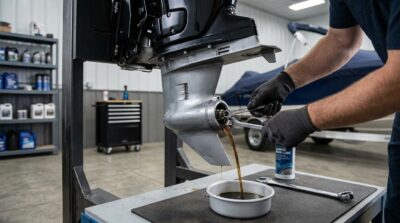
Step 6: Check the Gearcase
Inspect the lower unit and gear lubricant according to the maintenance schedule. Look for unusual lubricant condition or signs that water may have entered the gearcase.
If the lubricant needs servicing, follow the manufacturer’s procedure and use the specified lubricant.
Step 7: Lubricate Required Components
Apply manufacturer-recommended grease or lubricant to the specified lubrication points. Not every outboard has the same lubrication requirements, so use the maintenance schedule for your model rather than lubricating components indiscriminately.
Step 8: Prepare the Battery
Follow the battery manufacturer’s and outboard manufacturer’s storage recommendations. A battery may gradually lose charge while sitting unused. Depending on the battery type and storage arrangement, maintaining an appropriate charge with a suitable maintainer may be recommended.
Step 9: Store the Motor Correctly
Finally, store the outboard according to the manufacturer’s instructions. The recommended position can vary between engines, particularly when the motor is removed from the boat.
Protect the engine from unnecessary exposure to rain, snow, humidity, and other environmental conditions. Outdoor storage may require additional protection, but avoid trapping moisture against the engine.
The goal of winterization is not simply to prepare an outboard for cold weather. It is to reduce the potential for fuel deterioration, corrosion, moisture-related problems, lubrication issues, battery discharge, and storage-related damage. Always use the manufacturer’s manual as the final authority.
Do You Have to Winterize a 2-Stroke Outboard?
Yes, a 2-stroke outboard should be properly prepared for extended storage. Although two-stroke engines have different lubrication and fuel-system designs from four-stroke engines, they can still experience fuel deterioration, corrosion, moisture-related problems, and other storage issues.
Fuel preparation is particularly important. Depending on the specific two-stroke model and fuel system, the manufacturer may provide instructions for fuel stabilization, draining, or other storage procedures. Always follow those instructions rather than assuming that every two-stroke engine should be treated identically.
Lubrication is another important consideration. Two-stroke engines use oil differently from four-stroke engines, and some models may have specific manufacturer-approved procedures for protecting internal engine components during storage. Where applicable, Mercury or another manufacturer may recommend a particular fogging or storage procedure.
The exact requirements can vary according to factors such as:
- Engine model
- Carbureted or fuel-injected design
- Oil-injection system
- Fuel system
- Storage duration
- Climate
- Storage environment
Two-stroke outboards should also be inspected for corrosion, damaged fuel lines, leaks, and other issues before storage.
If the motor has been used in saltwater, appropriate flushing and corrosion-prevention procedures become particularly important.
The main point is that two-stroke engines do need storage preparation, but the correct procedure should come from the engine manufacturer. Do not assume that a procedure designed for one two-stroke model is appropriate for another.
Do You Have to Winterize a 4-Stroke Outboard?
Yes. A 4-stroke outboard should receive appropriate storage preparation when it will remain unused for an extended period. Four-stroke engines have their own lubrication, fuel, cooling, and maintenance requirements, so their winterization procedure may differ from that of a two-stroke engine.
Engine Oil
Engine oil is an important consideration for four-stroke outboards. Follow the manufacturer’s maintenance schedule and storage recommendations for checking or changing the oil and oil filter where applicable.
Fuel System
Fuel can deteriorate during extended storage. Follow the manufacturer’s instructions for fuel stabilization, fuel level, and any other fuel-system preparation required for the particular model.
Gearcase
The lower unit should be inspected and serviced according to the manufacturer’s maintenance schedule. Checking gear lubricant can help identify potential issues before the motor is stored.
Cooling System
Cooling-system preparation depends on the specific engine design. Follow the manufacturer’s flushing and storage instructions rather than assuming that all four-stroke outboards drain in exactly the same way.
Battery
The battery should be prepared according to the battery and engine manufacturer’s recommendations. Maintaining an appropriate charge can help prevent problems when the boat is returned to service.
Corrosion Protection
Inspect the motor for corrosion and salt residue, particularly after saltwater use. Follow the manufacturer’s recommendations for cleaning, rinsing, lubrication, and corrosion protection.
Four-stroke outboards contain more systems and components than a simple engine block and propeller, so proper storage preparation can involve several maintenance areas. The owner’s manual remains the most reliable source for the exact winterization procedure.
Do You Need to Winterize an Outboard in a Warm Climate?
You may not need the same cold-weather winterization steps in a warm climate, but an outboard can still require preparation before extended storage. The important distinction is between winterization for freezing temperatures and long-term storage maintenance.
In a warm climate, freezing water may be less of a concern. However, an engine that sits unused for months can still face problems related to fuel deterioration, moisture, corrosion, battery discharge, and lubrication.
Saltwater environments deserve particular attention. Salt residue and humidity can contribute to corrosion even when temperatures never approach freezing. Proper flushing, cleaning, inspection, and corrosion protection can therefore remain important.
Seasonal maintenance can also be worthwhile in warm regions where boats are used less frequently during certain periods. Preparing the engine before several weeks or months of inactivity can help reduce storage-related problems.
Winterization vs. Long-Term Storage
These terms are sometimes used interchangeably, but they are not exactly the same.
Winterization often refers to preparing an engine for seasonal storage, particularly where freezing temperatures are expected.
Long-term storage preparation is broader. It focuses on protecting the engine from the effects of being unused for an extended period, regardless of whether freezing temperatures are involved.
Therefore, someone living in a warm climate may not need extensive freeze protection but should still follow the manufacturer’s recommendations for fuel, lubrication, corrosion protection, battery care, and other storage requirements.
Always check the owner’s manual for the specific engine rather than assuming that warm weather eliminates the need for storage maintenance.
How to Winterize an Outboard for Freezing Weather
When freezing weather is approaching, storage preparation becomes particularly important. However, not every outboard has the same water-drainage procedure, so owners should follow the manufacturer’s instructions for the exact model.
Start by cleaning and flushing the engine according to the manufacturer’s recommendations. The motor should then be allowed to drain as specified by the manufacturer. Some engines are designed to drain water naturally in particular positions, while others may have model-specific storage requirements.
Proper storage position can therefore be important. Follow the owner’s manual regarding whether the engine should remain mounted, tilted, or positioned in another way during storage.
Fuel and lubrication systems should also be prepared according to the manufacturer’s recommendations. This can include appropriate fuel stabilization and scheduled lubricant service.
Battery care is another consideration. Follow the battery manufacturer’s storage instructions and maintain an appropriate charge if recommended.
Outdoor storage requires additional attention. Protect the motor from rain, snow, ice, and excessive moisture while avoiding covers or arrangements that trap condensation against the engine.
The key objective is to reduce the risk of freeze damage, corrosion, fuel deterioration, and moisture-related problems.
Never assume that because one outboard can be drained in a particular position, every other outboard can be treated the same way. Engine designs differ, and incorrect storage procedures can create unnecessary risks. The owner’s manual should always be the final authority.
Can You Winterize an Outboard Yourself?
Yes, some routine outboard winterization tasks can be completed by an owner who is comfortable performing basic maintenance. However, the work should be limited to procedures the owner understands and can perform safely according to the manufacturer’s instructions.
Tasks that may be suitable for a knowledgeable owner include:
- Cleaning the engine
- Performing a visual inspection
- Checking for obvious leaks or corrosion
- Performing basic lubrication
- Preparing fuel according to manufacturer instructions
- Inspecting the propeller
- Maintaining the battery according to its instructions
The owner’s manual should be available throughout the process so that the correct fluids, lubricants, procedures, and maintenance points are used.
Professional help is a better choice when the engine has:
- Major corrosion
- Fuel-system faults
- Gearcase problems
- Unknown mechanical issues
- Significant leaks
- Damaged wiring
- Problems that require specialized diagnostic equipment
A professional marine technician can also be useful when a motor’s service history is unknown or when the owner is uncertain about a model-specific storage procedure.
DIY maintenance can reduce routine service costs, but incorrect procedures can cause problems. If you are unsure about a particular winterization step, consult an authorized dealer or qualified marine technician rather than guessing.
Common Outboard Winterization Mistakes
Winterization problems often result from overlooking basic maintenance rather than from complicated mechanical failures. Common mistakes include:
Ignoring the Owner’s Manual
Generic instructions cannot account for every engine design. Always check the manufacturer’s specific storage procedure.
Leaving Untreated Fuel for Extended Storage
Fuel can deteriorate during long periods of inactivity. Follow the manufacturer’s recommendations for fuel stabilization and storage.
Forgetting Corrosion Protection
Salt, moisture, and humidity can contribute to corrosion. Clean and protect the engine according to manufacturer instructions.
Ignoring the Gearcase
The lower unit should not be overlooked. Check the gear lubricant and follow the maintenance schedule.
Storing a Wet Motor Improperly
Moisture left on or around an engine can contribute to corrosion. Follow the manufacturer’s flushing and draining instructions.
Neglecting the Battery
A battery can lose charge while sitting unused. Follow the battery manufacturer’s storage recommendations.
Using the Wrong Lubricant
Different components require specific lubricants. Use products recommended for the particular engine.
Skipping Inspections
Inspect fuel lines, wiring, hoses, propeller, anodes, and visible components before storage.
Failing to Check Damaged Fuel Lines
Cracked or deteriorated fuel lines can create problems when the engine is returned to service.
Assuming Warm Climate Means No Maintenance
Freezing may not be a concern in warm regions, but fuel deterioration, corrosion, moisture, and battery discharge can still occur during extended storage.
Good winterization is therefore less about following a generic checklist and more about following the correct manufacturer procedure for the engine and storage environment.
How Much Does Outboard Winterization Cost?
There is no single universal cost for outboard winterization. The total expense depends on the engine size, engine type, required maintenance, local labor rates, storage conditions, parts, fluids, and whether additional problems are discovered during inspection.
A small outboard requiring basic storage preparation may need fewer services than a large, high-horsepower engine with additional maintenance requirements.
DIY Routine Maintenance
Owners who are familiar with basic maintenance may be able to handle some tasks themselves. The potential expenses can include appropriate lubricants, fuel-treatment products, filters, gear lubricant, cleaning supplies, and other manufacturer-recommended materials.
However, DIY work should follow the owner’s manual exactly.
Professional Winterization
A dealer or qualified marine technician may charge for labor in addition to parts and fluids. Professional service can be particularly useful when the engine requires scheduled maintenance at the same time or when the owner is unsure about the correct storage procedure.
Additional repairs can also increase the final bill. For example, a technician may discover corrosion, damaged fuel lines, contaminated lubricant, or another maintenance issue during inspection.
Therefore, rather than relying on one universal price, ask a local authorized dealer for an estimate based on your specific engine model and required services.
Spring Startup After Winter Storage
Proper winterization should be followed by a careful inspection before returning the outboard to normal use. Do not simply start the engine and immediately assume everything is ready for the season.
Begin by inspecting the motor for visible corrosion, damage, loose connections, leaks, or other changes that may have occurred during storage.
Check the Fuel
Inspect the fuel system and fuel condition according to the manufacturer’s recommendations. If the engine has been stored for an extended period, follow the manufacturer’s procedure for preparing the fuel system for operation.
Check Fluids
Inspect engine oil, gear lubricant, and other applicable fluids. Confirm that fluid levels and conditions meet the manufacturer’s specifications.
Inspect the Propeller
Check the propeller for damage, excessive wear, fishing line, or other debris. Make sure it is correctly installed according to the manufacturer’s instructions.
Check the Battery
Inspect the battery and connections and confirm that it has an appropriate charge. Follow the battery manufacturer’s recommendations before starting the engine.
Look for Corrosion and Leaks
Inspect hoses, wiring, fittings, fuel lines, and visible engine components. Look for signs of corrosion, fluid leakage, or damaged parts.
Follow the Manufacturer’s Startup Procedure
The owner’s manual may provide specific instructions for returning the engine to service after storage. Follow those steps rather than relying on a generic startup routine.
After starting, pay attention to the engine’s normal operating behavior. Unusual noises, warning lights, leaks, poor running, overheating indications, or other abnormal behavior should be investigated before normal boating use.
A careful spring inspection allows you to identify storage-related or pre-existing problems before they become more serious on the water.
do you have to winterize an outboard motor
FAQ
Do you have to winterize an outboard motor?
Generally, yes, if the outboard will be unused for an extended period. Winterization is especially important in cold climates where freezing temperatures can create additional risks. However, even in mild climates, long-term storage can contribute to fuel deterioration, corrosion, moisture problems, and battery discharge. The exact procedure depends on the engine, manufacturer, climate, storage environment, and length of storage. Always follow the owner’s manual.
What happens if you don’t winterize an outboard?
Skipping storage preparation does not guarantee that an engine will be damaged, but it can increase the risk of problems. Old fuel can deteriorate and contribute to deposits or fuel-system issues. Moisture and salt residue can contribute to corrosion, while freezing temperatures can create risks if water remains in areas where it can freeze. Batteries can also lose charge during extended inactivity. Checking the gearcase, fuel system, battery, and other components before storage can help reduce these risks.
Do you have to winterize a 4-stroke outboard?
Yes, a four-stroke outboard should receive appropriate preparation when it will be stored for an extended period. Four-stroke engines have specific requirements involving engine oil, fuel, gearcase lubricant, cooling systems, battery care, and corrosion protection. The exact procedure varies between models, so the manufacturer’s maintenance and storage instructions should be followed.
Do you have to winterize a 2-stroke outboard?
Yes. Two-stroke outboards can also require proper preparation before seasonal or long-term storage. Fuel protection and lubrication are particularly important, and some models may have specific manufacturer-approved internal storage or fogging procedures. Because two-stroke designs differ, owners should use the procedure specified for their particular engine rather than applying a generic method.
Do you need to winterize an outboard in Florida or another warm climate?
Cold-weather winterization may be less extensive in Florida and other warm climates because freezing temperatures may not be the primary concern. However, an outboard that will sit unused for weeks or months can still experience fuel deterioration, corrosion, moisture accumulation, and battery-related problems. In coastal areas, saltwater and humidity can make corrosion protection particularly important. In warm climates, think of winterization as long-term storage preparation, not simply freeze protection.
Can you leave an outboard outside in winter?
An outboard can be stored outdoors when the manufacturer’s storage recommendations are followed, but outdoor storage exposes the motor to rain, snow, humidity, freezing temperatures, and other environmental conditions. Follow the manufacturer’s guidance for storage position, draining, cleaning, and protection. Avoid arrangements that trap moisture against the engine, and make sure the motor is stored in the position recommended by its manufacturer.
Should I use fuel stabilizer when storing an outboard?
Fuel stabilizer may be recommended for some storage situations, but owners should follow the fuel-storage instructions for their specific engine. Use only a product and treatment method that is compatible with the engine and approved or recommended by the manufacturer. Proper fuel preparation can help address fuel deterioration during extended storage, but the correct procedure varies between engines.
Should I change the gear oil before winter?
Checking the gearcase before long-term storage is a good maintenance practice. Inspect the gear lubricant for its condition and signs of possible water contamination, and service it according to the manufacturer’s maintenance schedule. Servicing the gearcase before storage can also help ensure that potential problems are identified before the next boating season.
How long can an outboard sit without being winterized?
There is no universal safe time limit. The risk depends on the engine, fuel system, climate, humidity, saltwater exposure, storage location, fuel condition, and length of inactivity. An engine sitting for a short period in suitable conditions may face fewer risks than one left unused for several months. If extended storage is expected, follow the manufacturer’s storage procedure rather than waiting for a specific number of days.
Can I winterize my outboard myself?
Some routine tasks may be suitable for an owner who is familiar with basic maintenance, including cleaning, visual inspection, appropriate lubrication, fuel preparation, and battery care. However, professional service is recommended for major corrosion, fuel-system faults, gearcase problems, unknown mechanical issues, or complicated repairs. When you are uncertain about a model-specific procedure, consult the owner’s manual or an authorized marine technician rather than guessing.
Conclusion
So, do you have to winterize an outboard motor? In most cases, yes—especially when the engine will be stored during cold weather or remain unused for an extended period. Proper winterization is an important part of seasonal boat maintenance and can help reduce the risk of problems when the engine is returned to service.
Winterization is about more than protecting an outboard from freezing temperatures. During extended storage, fuel can deteriorate, moisture can contribute to corrosion, batteries can lose charge, and lubricants or gearcase components may require attention. Preparing the motor properly can help protect the fuel system, engine components, gearcase, electrical system, and other parts while the boat is not being used.
Important storage tasks may include preparing the fuel according to manufacturer recommendations, protecting against corrosion, checking or servicing lubrication, inspecting the gearcase, and maintaining the battery. The appropriate steps can vary significantly depending on the engine’s design and storage environment.
A two-stroke outboard may have different storage requirements from a four-stroke, while an engine stored outdoors in a freezing climate may require different preparation from one kept indoors in a warm region.
For that reason, there is no single winterization procedure that is correct for every outboard. Always use the owner’s manual as the final authority for storage procedures, recommended fluids, fuel treatment, lubrication, battery care, and freeze protection.
Taking the time to prepare an outboard properly before extended storage can help protect the motor and make the transition back to the water easier when the next boating season begins.
