

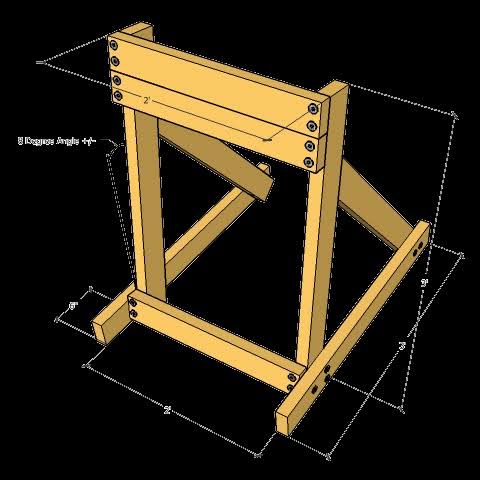
Learning how to build an outboard motor stand can be useful when an outboard engine needs to be stored, inspected, serviced, or moved around a workshop after being removed from a boat. A good stand gives the motor a stable support point and can make routine maintenance much easier. Instead of leaving the engine on the floor or balancing it against an unsuitable surface, a properly designed stand keeps the motor in a controlled position.
However, building an outboard motor stand is not simply a matter of putting a few pieces of wood together. Outboard motors can be surprisingly heavy, and their weight is not always centered directly over the base. The stand therefore needs a strong mounting area, a rigid frame, a sufficiently wide base, and adequate bracing. The design should also match the particular motor because a stand suitable for a small outboard may not be appropriate for a much larger engine.
This guide explains how to build an outboard motor stand with a focus on planning, material selection, construction, stability, mounting, testing, and maintenance. It is written for general workshop use and storage. If you are working with a particularly heavy motor or are uncertain about the structural strength of a homemade design, a professionally manufactured or professionally fabricated stand is the safer choice.
What Is an Outboard Motor Stand?
An outboard motor stand is a support structure designed how to build an outboard motor stand to hold an outboard engine when the engine is not attached to a boat. The basic structure normally has a sturdy base, vertical supports, a mounting surface, and reinforcement that keeps the frame from moving excessively.
The purpose is more than simply keeping the engine off the floor. how to build an outboard motor stand A properly designed stand can keep the motor upright and provide access to areas that may need inspection or maintenance. It can also make workshop storage more organized because the motor has a dedicated support rather than being placed wherever there is available floor space.
The exact design varies according to the motor. A lightweight portable outboard may require a relatively compact stand, while a large engine requires considerably more attention to structural strength and stability. The motor’s weight, mounting arrangement, dimensions, and center of gravity all influence the design.
It is also important to understand the difference between a storage stand and equipment intended to support an engine during major mechanical work. A simple stand may be suitable for holding a motor, but that does not automatically mean it is designed to withstand heavy forces from extensive repairs. If substantial force will be applied to the engine during servicing, a properly rated professional stand may be more appropriate.
Planning Before You Build
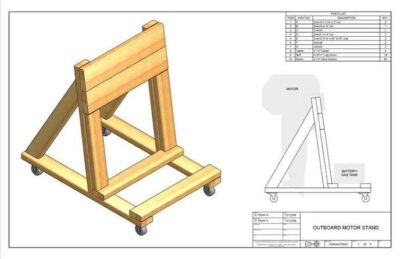
The most important part of learning how to build an outboard motor stand happens before construction begins. Planning allows you to determine how much material is required and, more importantly, whether the proposed design is appropriate for the motor. how to build an outboard motor stand
Start by identifying the exact outboard you intend to support. If possible, find the manufacturer’s specifications for the engine’s dry or listed weight. Also consider whether accessories, controls, fluids, or other attached equipment add additional weight.
The mounting arrangement should then be measured carefully. Look at the width of the mounting bracket and determine where the engine will contact the stand. Measure the approximate overall height and width of the motor as well. These measurements help determine how large the frame needs to be. how to build an outboard motor stand
Think about where the stand will be used. A stand sitting permanently on a level workshop floor has different requirements from one that will be moved frequently. how to build an outboard motor stand If mobility is important, wheels may be added, but wheels also change the stability of the structure.
Before cutting any material, make a simple drawing showing the base, how to build an outboard motor stand vertical supports, mounting board, and braces. Even a basic sketch can reveal whether the motor will sit too far forward or whether the base is too narrow.
Choosing the Right Materials
Material selection has a major effect on the strength and durability of an outboard motor stand. The material needs to handle the expected load without excessive bending, cracking, or deformation.
For some smaller and moderate applications, how to build an outboard motor stand properly selected structural lumber can be a practical choice. Wood is easy to cut and drill, which makes it convenient for a home workshop. It can also be modified relatively easily if the original design needs reinforcement.
Steel is another option and may be appropriate for heavier engines. A properly fabricated steel frame can provide considerable rigidity. However, steel construction usually requires more specialized tools and skills, particularly if welding is involved.
The quality of the material matters regardless of what you choose. Wood with serious cracks, rot, or major warping should not be used for important structural sections. Steel with significant corrosion, severe bends, or damaged weld areas should also be avoided.
Fasteners are equally important. The strongest frame can still have weak points if the connections are made with unsuitable hardware. Major structural joints should use appropriate bolts or structural fasteners rather than relying on small general-purpose screws.
Washers can help distribute the load around bolted connections, while suitable locking hardware can help reduce the chance of fasteners loosening over time.
Designing the Base
The base is one of the most important parts of an outboard motor stand because it transfers the engine’s weight to the floor. A poorly designed base can make an otherwise strong frame unstable.
A wider footprint generally provides how to build an outboard motor stand better resistance to tipping. This is particularly important when the motor sits high above the floor. The higher the center of gravity, the more attention should be given to the size and shape of the base.
The base should also sit flat. If the stand rocks before the engine is installed, that is a problem that should be corrected immediately. Adding a heavy motor how to build an outboard motor stand to an unstable structure does not solve the underlying problem.
For a wooden stand, a rectangular base can provide a straightforward starting point. The exact dimensions should be determined from the motor and frame design rather than copied from a generic plan. how to build an outboard motor stand
The base should be strong enough to support the vertical frame without excessive flexing. The connections between the base and vertical supports also need to be secure because those joints carry a significant portion of the load. how to build an outboard motor stand
Building the Vertical Frame
Once the base design is established, the vertical supports can be planned. These supports transfer the load from the motor’s mounting area down toward the base.
Two strong vertical members can form the basic structure of a simple stand, provided they are appropriately sized and securely connected. how to build an how to build an outboard motor stand. Their position should allow the mounting board to sit firmly between or across them.
The vertical frame should remain as straight and rigid as practical. If the supports can move significantly from side to side before the motor is installed, the frame needs additional reinforcement.
The height should also be considered carefully. A very tall stand may make the motor easier to access, but excessive height can raise the center of gravity and reduce stability. The goal is to provide useful working access without creating an unnecessarily tall structure.
Installing the Mounting Board
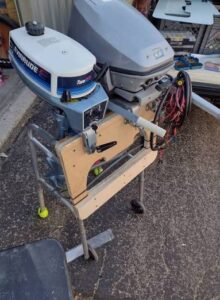
The mounting board is the section that directly supports the motor’s mounting area. It needs to be strong enough to resist bending and securely attached to the vertical frame.
Before drilling holes, carefully measure the mounting arrangement of the specific motor. Do not assume that the dimensions of one outboard will match another.
The mounting board should be positioned so the motor’s weight remains within the stable footprint of the stand. If the engine hangs too far beyond the base, the stand may become more vulnerable to tipping.
The board should also provide enough surface area for a secure connection. The fasteners should pass through strong structural material rather than being installed close to weak edges.
Once the board is installed, check that it is level and firmly connected. If there is noticeable movement at this stage, reinforce the structure before mounting the engine. how to build an outboard motor stand
Adding Diagonal Bracing
Bracing is one of the easiest ways to improve the rigidity of a frame. Without sufficient bracing, a stand may be strong vertically but still move from side to side.
Diagonal braces connect different parts of the frame and reduce unwanted movement. They can be installed between the vertical supports and base or between other suitable structural points. how to build an outboard motor stand
The braces should be firmly attached at both ends. A brace that is securely connected at only one end does little to improve the overall structure.
After installing the braces, gently test the empty stand by applying normal hand pressure. The frame should feel rigid rather than excessively flexible.
This is not a formal structural test, but it can help reveal obvious weakness before the heavy engine is installed.
How to Build an Outboard Motor Stand Step by Step
Measure the Motor
Begin with the motor itself. Record its approximate weight, mounting dimensions, overall width, and height.
The measurements should be how to build an outboard motor stand taken from the actual engine whenever possible. Manufacturer information can also provide useful specifications.
Do not design the stand around an assumed motor size because small differences in mounting position can affect the balance of the entire structure.
Draw the Design
Create a simple drawing showing the base, vertical supports, mounting board, and braces.
The drawing does not need to be professionally drafted. Its purpose is to establish the dimensions and relationships between the major components.
Pay particular attention to the center of gravity and the distance between the motor and the base.
Construct the Base
Build the base so it forms a stable footprint.
Check that the how to build an outboard motor stand corners are secure and that the finished base sits flat on the intended floor.
Do not proceed if the base rocks or twists. how to build an outboard motor stand
Attach the Vertical Supports
Install the vertical supports onto the strongest portions of the base.
Use suitable structural fasteners and make sure the connections are tight.
Check that the supports remain aligned as they are installed.
Install the Mounting Board
Secure the mounting board between or across the vertical supports.
Position it according to the motor’s mounting dimensions.
Check the height and make sure the board is firmly supported.
Install Bracing
Add diagonal braces to reduce side-to-side movement.
Check the frame; how to build an outboard motor stand again after the braces are installed.
Inspect the Complete Structure
Before mounting the motor, inspect every major connection.
Look for gaps, loose hardware, how to build an outboard motor stand splitting, bending, or other signs of weakness.
Making the Stand More Stable
When considering how to build an outboard motor stand, stability should always be treated as a major design requirement rather than an optional feature.
A stable stand needs an appropriate relationship between its height, base width, and motor position. If the base is too narrow or the motor sits too far from the center of the footprint, the structure may become unstable.
A wider base can improve stability, while additional bracing can reduce movement.
Another important consideration is the surface on which the stand will sit. A smooth, level concrete workshop floor provides different conditions from an uneven outdoor surface.
If the stand is intended for use on uneven ground, the design needs to account for that environment. Simply adding height or wheels may actually make stability worse.
Adding Wheels
Wheels can make an outboard motor stand much easier to move around a workshop. However, mobility introduces another consideration: the stand must remain stable while rolling and while stationary.
If casters are used, they should be rated appropriately for the expected load. The total load includes the stand itself and the engine.
Mercury Marine — Outboard Support Bracket
This resource explains why proper support matters when an outboard is being transported and discusses the stresses placed on the engine and boat.
Mercury Marine Support Bracket Guide
Locking casters can help keep the stand from moving when parked. However, wheel locks are not a substitute for a stable frame and sufficiently wide base.
The wheel arrangement should also allow the stand to be controlled safely. A very tall engine on a small wheelbase can be difficult to move and may have a greater tendency to tip.
A sturdy handle can make a mobile stand easier to maneuver. The handle should be firmly attached to the frame and positioned where it does not interfere with the engine.
Mounting the Motor
After the stand has been completed and inspected, how to build an outboard motor stand the engine can be positioned carefully.
The motor should be supported at its intended mounting points. Use appropriate hardware and make sure the connection is secure.
Avoid improvising with weak straps, unsuitable screws, or hardware that does not provide a proper structural connection.
Once the motor is installed, inspect the stand again. Look for excessive movement in the mounting board or frame.
If the structure bends noticeably or the motor shifts more than expected, stop and reassess the design.
Wooden vs. Steel Outboard Motor Stands
A wooden stand and a steel how to build an outboard motor stand can both be useful, but each has different characteristics.
Wood is convenient because it can be cut, drilled, and assembled with common workshop tools. It may be a practical choice for a stationary stand when the material and construction are appropriate for the engine.
Steel can provide excellent rigidity and durability when properly designed and fabricated. It can also be useful for heavier applications.
The disadvantage is that steel construction can require welding and specialized equipment. Poor welding can create a serious structural weakness, so anyone without suitable welding experience should consider professional fabrication.
The choice should therefore be based on the motor, intended use, available tools, and construction skills.
Protecting the Stand
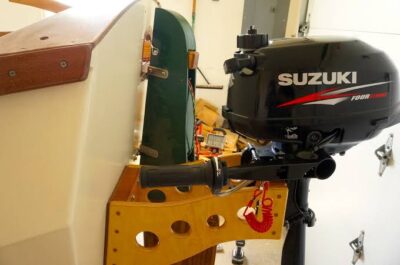
An outboard motor stand may be exposed to moisture, especially in a marine environment.
Wood should be protected how to build an outboard motor stand with an appropriate exterior finish if moisture exposure is expected. Pay particular attention to cut ends and areas around drilled holes.
Steel should be protected against corrosion. A suitable primer and protective coating can help reduce rust.
The protective finish should be inspected periodically. Damage to the coating should be repaired before corrosion or moisture becomes a larger problem.
Common Construction Mistakes
One common mistake is making the base too narrow. The stand may look compact and convenient, but a narrow footprint can reduce stability.
Another mistake is using weak fasteners. Structural joints should not depend on small screws that are not designed for the expected load.
Skipping diagonal bracing is another problem. A frame may appear strong while still having considerable side-to-side movement.
Making the stand excessively tall can also create unnecessary stability issues. The engine should be positioned at a useful working height without raising the center of gravity more than necessary.
Another mistake is how to build an outboard motor stand failing to consider the motor’s actual mounting position. Even if the total weight is known, the location of that weight matters.
Testing the Stand
Testing should begin with the empty stand.
Place it on the intended surface and check whether it rocks or moves unexpectedly. Inspect the major joints and make sure the structure feels rigid.
Before installing a heavy motor, review the design again. Make sure the mounting hardware is appropriate and that there are no obvious weak points.
After mounting the engine, inspect the frame carefully. Do not immediately move a newly loaded mobile stand around the workshop.
If you notice excessive flexing, shifting, cracking, or other concerning behavior, remove the load when it is safe to do so and correct the problem. how to build an outboard motor stand
Maintaining an Outboard Motor Stand
A stand should be inspected periodically, particularly if it is used frequently.
For a wooden stand, look for cracks, splitting, moisture damage, loose joints, and deterioration around fastener holes.
For a steel stand, check for corrosion, bent sections, damaged welds, or loose hardware.
If the stand has wheels, inspect the casters and their mounting points. Make sure the wheels remain securely attached and that locking mechanisms function properly.
Fasteners should also be checked periodically. Vibration and repeated movement can cause some connections to loosen over time.
When a Homemade Stand May Not Be Appropriate
A homemade stand is not automatically suitable for every outboard motor.
If the motor is particularly heavy, a commercially manufactured stand with a clearly specified load rating may be preferable.
Professional fabrication may also be appropriate when a custom steel structure is needed.
If you cannot confidently determine whether the design can support the engine, do not guess. The consequences of a heavy motor falling can include serious property damage and injury.
In such situations, obtaining advice from a qualified fabricator, marine mechanic, or engineer is a sensible option.
FAQ :
Yes, wood can be used for an how to build an outboard motor stand appropriately designed stand. The important factors are the motor’s weight, the quality of the lumber, the strength of the joints, the size of the base, and the overall design.
A wooden stand should not be assumed to be how to build an outboard motor stand safe simply because the wood looks thick. Structural connections and bracing are equally important.
There is no universal dimension because outboard motors differ greatly in size and weight. The base should be wide enough to provide suitable stability for the specific engine.
The motor’s center of gravity and mounting position should also be considered. how to build an outboard motor stand
Yes, wheels can be useful for moving a stand around a workshop. However, the wheels need an appropriate load rating, and the overall design must remain stable.
Locking casters can help prevent unwanted movement while the stand is parked.
Strength can often be improved by using suitable structural materials, reinforcing important joints, adding diagonal bracing, and increasing the stability of the base.
However, adding material randomly does not guarantee a stronger design. Reinforcement should address actual weak points.
A suitable stand can provide access for some inspection and how to build an outboard motor stand maintenance tasks. However, a basic storage stand should not automatically be treated as a professional engine-service stand.
Major repairs can involve forces that the original design was never intended to withstand. how to build an outboard motor stand
A commercial stand can be a good choice when you want a known load capacity and professionally designed construction.
For a heavy or expensive motor, the additional cost may be worthwhile compared with the risks associated with an inadequately designed homemade structure.
Signs of instability include rocking, excessive side-to-side movement, visible bending, shifting of the motor, or a tendency for the stand to lift or tip when moved.
If you notice these problems, do not continue using the stand with the motor loaded until the issue has been addressed.
Inspect the stand before regular use and perform more detailed checks periodically. The inspection frequency should increase if the stand is frequently moved, exposed to moisture, or used with a heavy engine.
Conclusion :
Knowing how to build an outboard motor stand is useful for anyone who needs a practical way to support an outboard motor outside the boat. The basic concept is straightforward, but the design needs to take the engine’s weight, mounting arrangement, center of gravity, and intended use into account.
A good stand starts with careful planning. Measure the engine, determine its approximate weight, and design the base before cutting material. The mounting board should provide a secure connection, while the vertical supports transfer the load toward the base. Diagonal bracing can then help reduce unwanted movement and improve the rigidity of the structure. how to build an outboard motor stand
Material choice also matters. Properly selected structural wood can work for some workshop applications, while a correctly fabricated steel frame may be more suitable for heavier motors. In either case, the fasteners and joints need to be strong enough for the expected load.
Stability should remain the priority throughout construction. A stand that rocks, bends, or feels unstable should not be loaded with a heavy engine. After construction, inspect the stand regularly for loose hardware, cracks, corrosion, damaged welds, or deterioration.
For a particularly heavy outboard, frequent transportation, or demanding repair work, a professionally manufactured or fabricated stand may be the better option. The most important goal is not simply building a stand—it is creating a support system that keeps the motor securely positioned during appropriate storage and workshop use.
