


How to check car suspension system is a useful question for any car owner because the suspension affects comfort, handling, stability, and tire contact with the road. A suspension system has many parts, including springs, shocks or struts, control arms, bushings, ball joints, and other components. When these parts wear or become damaged, you may notice changes in the way your vehicle rides or handles.
Some suspension checks are simple enough to perform as basic observations. You can look for visible damage, unusual ride height, fluid leakage, broken springs, uneven tire wear, or new noises. You can also pay attention to how the vehicle feels during normal driving. However, a basic inspection cannot identify every suspension problem. Before checking individual components, it helps to understand what the suspension does in a car and why the suspension system is important for ride comfort, handling, and tire contact.
In this guide, you will learn how to check car suspension system safely, what warning signs to look for, and how to check common suspension components. We will also cover shocks and struts, springs, bushings, control arms, ball joints, and other parts. Finally, you will learn when a professional inspection is necessary and how often suspension components should be checked.
How to Check Car Suspension System
If you want to learn how to check car suspension system, start with simple visual and observational checks. You do not need to remove suspension components to look for common warning signs. A basic inspection can help you notice something unusual before asking a qualified mechanic for a more detailed diagnosis.
Start With a Visual Inspection
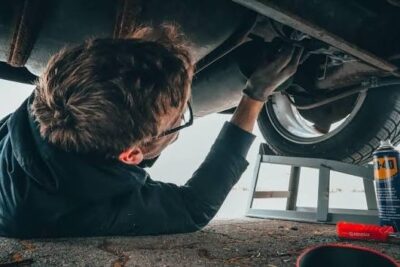
Begin by parking the vehicle on a safe, level surface with the engine off. Make sure the vehicle is secure before walking around it.
Look around the wheels and visible suspension areas for obvious problems. Check for signs of damaged components, broken parts, unusual corrosion, or fluid leakage around shocks and struts.
Also look at the vehicle from several angles. Does one corner appear noticeably lower than the others? Does the car appear to sit differently than it normally does?
Do not touch hot, moving, or potentially dangerous components. A visual inspection should remain just that—a visual inspection.
Check the Vehicle’s Ride Height
The vehicle should generally sit at a consistent height according to its design. Compare the left and right sides and look for a corner that appears noticeably lower.
An unusual ride height can have several possible causes. A damaged or weak spring is one possibility, but tire pressure, load distribution, air-suspension problems, or other issues can also affect how a vehicle sits.
If you notice a major difference in ride height, a professional inspection is a better next step than trying to diagnose the exact cause yourself.
Check the Shocks and Struts
Look at the visible parts of the shocks or struts for signs of physical damage or fluid leakage. A damaged component or significant leakage may indicate that the part needs further inspection. how to check car suspension system
However, not every mark or small amount of residue automatically means that a shock or strut has failed. The condition should be assessed by a qualified technician when there is uncertainty.
Signs Your Car Suspension May Be Bad
Learning the common warning signs is an important part of understanding how to check car suspension system. Suspension problems do not always appear in the same way, and one symptom can have several possible causes.
Excessive Bouncing
A car normally moves when it passes over a bump. However, excessive or repeated bouncing after a bump may indicate a problem with the damping system.
Shock absorbers and struts help control spring movement. If they become worn, the vehicle may have more uncontrolled movement than expected. how to check car suspension system
Do not deliberately drive over bumps to test this. Instead, pay attention to how the vehicle behaves during normal driving. how to check car suspension system
Unusual Noises
New or unusual sounds can be another warning sign. Depending on the problem, you might hear:
- Clunking
- Knocking
- Squeaking
- Rattling
These sounds can come from different suspension or steering components. A noise alone does not identify the exact problem.
For example, a worn bushing, ball joint, mounting component, or stabilizer link may produce unusual sounds. A mechanic can inspect the system to determine the actual cause.
Uneven Tire Wear
Look at the condition of your tires regularly. Uneven wear can sometimes be related to suspension or wheel-alignment problems.
However, suspension is not the only possible cause. Incorrect tire pressure, alignment settings, tire condition, and driving conditions can also contribute to uneven wear.
If you notice unusual wear patterns, have the tires and related systems inspected rather than assuming that one suspension component is responsible.
Vehicle Pulling or Drifting
If the vehicle pulls to one side or feels like it is drifting from its normal path, several systems could be involved.
Suspension components can affect wheel position and handling, but tires, wheel alignment, steering components, and road conditions can also cause pulling.
A sudden or significant change in steering behavior deserves attention, especially if the vehicle feels difficult to control.
Excessive Body Roll
Some body movement during cornering is normal. Excessive leaning during turns, however, may indicate a suspension problem.
The suspension and anti-roll system work together to control body movement. Worn dampers, stabilizer links, or other components may change how the vehicle behaves during corners.
Nose Diving or Rear Squatting
When braking, a vehicle naturally transfers weight toward the front. This can cause the front end to move downward, which is known as brake dive.
During acceleration, weight can shift toward the rear, causing the rear of the vehicle to move downward. This is often called acceleration squat.
Some movement is normal, but unusual or excessive movement may indicate a problem that deserves inspection.
How to Check Shocks and Struts
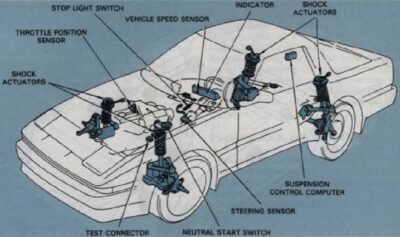
Shocks and struts are important parts of the suspension system because they control spring and wheel movement. If you are learning how to check car suspension system, these components deserve attention.
Look for Fluid Leakage
Start with a visual inspection. Look for obvious fluid leakage around the shock absorber or strut. signs of bad shocks and struts
A significant leak may indicate that the component requires inspection. However, a visible mark does not always prove that the shock has completely failed. Dirt, road contamination, or other fluids can sometimes make diagnosis difficult.
For accurate diagnosis, a qualified technician should inspect the component.
Look for Physical Damage
Look for obvious dents, severe corrosion, damaged mounts, or other visible problems.
Do not remove suspension components or attempt to disassemble a shock or strut as part of a basic inspection. Some suspension parts can store significant mechanical energy and require proper tools and procedures.
Notice Changes While Driving
During normal, legal driving, pay attention to:
- Excessive bouncing
- Increased body movement
- Reduced stability
- Unusual steering response
- New suspension noises
These observations can help you describe the problem to a mechanic.
When Professional Inspection Is Needed
A professional inspection is recommended when you notice serious handling changes, visible component damage, significant leakage, or persistent unusual noises. how to check car suspension system
A mechanic can inspect parts that cannot be safely evaluated through a simple visual check and can determine whether the problem involves the shocks, springs, control arms, bushings, steering components, alignment, or another system. how to check car suspension system
How to Check Suspension Springs
Springs support the vehicle’s weight and allow the suspension to move over uneven roads. Different vehicles use different types of springs. how to check car suspension system
Inspect Coil Springs
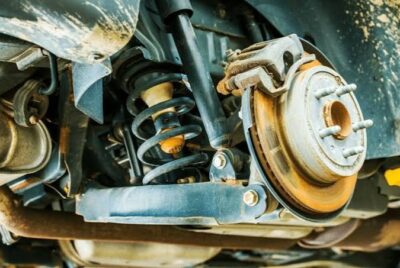
Coil springs are common on passenger vehicles. During a visual inspection, look for an obviously broken or damaged coil.
Also compare the vehicle’s ride height from side to side. A noticeably low corner may be related to a spring problem, although other causes are possible.
Do not attempt to remove or compress a suspension spring without the correct equipment and training. Suspension springs can contain significant stored energy. how to check car suspension system
Check Leaf Springs
Leaf springs are commonly used on certain trucks and other vehicles. how to check car suspension system
If your vehicle uses leaf springs, look for obvious cracks, broken sections, or visible damage. Because leaf-spring assemblies can be heavy and mechanically loaded, suspected damage should be assessed professionally. how to check car suspension system
Air Suspension
Some vehicles use air springs instead of conventional metal springs. An air-suspension problem may cause the vehicle to sit unusually low, sometimes at one corner or across an entire axle. how to check car suspension system
Air suspension can involve compressors, air lines, valves, sensors, and other components. Diagnosing these systems may require specialized equipment, so professional service is often appropriate when an air-suspension problem is suspected. how to check car suspension system
How to Check Suspension Bushings and Control Arms
Bushings and control arms help guide wheel movement while reducing unwanted vibration and allowing controlled suspension movement. how to check car suspension system
Inspect Bushings
Bushings are flexible components commonly used where suspension parts connect to the vehicle. how to check car suspension system
During a basic visual inspection, look for obvious cracking, separation, deterioration, or other visible damage. how to check car suspension system
A worn bushing can sometimes contribute to unusual noises or changes in handling. However, appearance alone may not reveal the full condition of a bushing. how to check car suspension system
Inspect Control Arms
Control arms connect suspension components to the vehicle’s body or chassis and help guide wheel movement. how to check car suspension system
Look for obvious damage, severe corrosion, or other visible problems. Do not attempt to move or remove a control arm yourself during a basic inspection. how to check car suspension system
If you suspect a damaged control arm, ball joint, or mounting point, have the vehicle inspected by a qualified professional. how to check car suspension system
Listen for Unusual Sounds
Worn bushings, joints, and other suspension components can sometimes produce knocking, squeaking, or rattling noises.
The location and timing of a noise can provide useful information to a mechanic, but sound alone cannot confirm which component has failed.
For that reason, avoid replacing parts based only on a noise description. how to check car suspension system
How to Check Ball Joints and Other Suspension Components
Ball joints and related components help connect the suspension and steering systems and allow controlled movement.
Ball Joints
Ball joints allow controlled movement between suspension and steering components. They need to remain secure while allowing the wheel assembly to move as designed. how to check car suspension system
Excessive ball-joint wear can become a safety concern because these components are involved in wheel and steering control.
If you suspect a worn or damaged ball joint, professional inspection is recommended. A proper inspection may require safely lifting the vehicle and checking the component using appropriate procedures and equipment.
Sway Bar Links
Sway bar links connect the anti-roll bar to the suspension. They help transfer forces through the anti-roll system and contribute to controlling body roll. how to check car suspension system
Worn links may sometimes produce clunking or knocking sounds, particularly when driving over uneven surfaces. how to check car suspension system
However, other suspension components can create similar sounds, so professional diagnosis is useful. how to check car suspension system
Steering Knuckle and Wheel Hub Area
The steering knuckle is part of the wheel-end assembly and connects several suspension and steering components. The wheel hub and bearing assembly also plays an important role in supporting the wheel. how to check car suspension system
Visible damage, unusual wheel movement, or unusual noises around the wheel area should be professionally inspected. how to check car suspension system
Do not attempt to diagnose serious wheel-end problems by dismantling components without the correct tools and knowledge.
Can You Check Suspension by Driving the Car?
Yes, you can notice some suspension warning signs during normal driving, but you should never perform aggressive driving maneuvers just to test the suspension.
Pay Attention to Ride Quality
Notice whether the vehicle feels unusually bouncy, harsh, unstable, or different from its normal behavior.
A change in ride quality can provide an early clue that something may need inspection.
Notice Steering Changes
Pay attention to unexpected pulling, wandering, or changes in steering response.
Remember that tires, wheel alignment, steering components, and road conditions can also affect steering behavior.
Listen for Unusual Sounds
Listen for new clunks, knocks, squeaks, or rattles during normal driving.
Try to remember when the sound occurs. For example, does it happen over bumps, during turns, or while braking? This information can help a mechanic diagnose the problem.
Important Safety Reminder
Do not deliberately drive aggressively, speed over bumps, or make sudden turns to test your suspension.
Follow local traffic laws and drive normally. If the vehicle feels unsafe or difficult to control, move to a safe location when possible and arrange a professional inspection.
Suspension Inspection Checklist
Use this checklist for a basic observation of your vehicle:
- Vehicle sits evenly.
- No obvious fluid leakage.
- No visible broken springs.
- No obvious suspension damage.
- No unusual clunking or knocking.
- No excessive bouncing.
- No unusual body roll.
- Tires show no obvious uneven wear.
- Steering feels normal.
- No significant change in ride height.
This checklist can help you notice warning signs, but it does not replace a professional suspension inspection.
Some suspension problems are hidden from view and require the vehicle to be safely raised and inspected with appropriate tools. If you find something unusual, avoid taking apart suspension components yourself unless you have the proper training and equipment. how to check car suspension system
When Should You Have the Suspension Checked by a Mechanic?
You should consider a professional suspension inspection when you notice persistent or significant symptoms.
Examples include:
- Repeated clunking or knocking noises
- Excessive bouncing
- Visible fluid leakage
- A broken or damaged spring
- A vehicle sitting noticeably lower than normal
- Uneven tire wear
- Significant pulling or wandering
- Excessive body roll
- Major changes in ride comfort or handling
A professional can inspect suspension components that are difficult or unsafe for an inexperienced person to check.
This is especially important when the problem may involve ball joints, control arms, wheel hubs, springs, or other components that can affect steering and wheel control. how to check car suspension system
Do not rely only on a home inspection if the vehicle has a serious handling problem. Suspension symptoms can overlap with tire, steering, alignment, and braking problems, so proper diagnosis is important. how to check car suspension system
How Often Should a Car Suspension Be Checked?
There is no single inspection interval that applies to every vehicle. The recommended schedule depends on the vehicle manufacturer’s instructions, the suspension design, mileage, age, road conditions, and how the vehicle is used.
Start by checking your owner’s manual for the manufacturer’s maintenance recommendations.
It is also a good idea to pay attention to changes in the vehicle between scheduled services. If you notice unusual noises, excessive bouncing, uneven tire wear, changes in ride height, or handling problems, have the suspension inspected rather than waiting for the next routine service.
Vehicles that regularly travel over rough roads or carry heavy loads may experience different wear patterns from vehicles used mainly on smooth roads.
FAQ:
You can begin with a safe visual inspection. Look for obvious leaks, broken springs, visible damage, unusual ride height, and uneven tire wear. You can also notice unusual bouncing, noises, or handling changes during normal driving. Avoid lifting the vehicle or removing suspension components unless you have the correct equipment and training.
Common warning signs include excessive bouncing, unusual clunking or knocking, uneven tire wear, excessive body roll, changes in ride height, pulling, or unusual steering behavior. These symptoms can have several causes, so professional inspection may be needed. how to check car suspension system
Look for obvious physical damage or fluid leakage and pay attention to excessive bouncing or increased body movement during normal driving. A visual inspection cannot always determine whether a shock is worn, so a qualified mechanic should perform a detailed inspection when necessary. how to check car suspension system
Suspension problems can contribute to uneven tire wear, but they are not the only possible cause. Incorrect tire pressure, wheel alignment, tire condition, and other factors can also create uneven wear.
Follow the maintenance recommendations in your vehicle owner’s manual. There is no universal inspection interval for every car. Have the suspension checked sooner if you notice unusual noises, bouncing, tire wear, ride-height changes, or handling problems.
It depends on the severity of the problem. A vehicle with significant handling changes, visible damage, broken suspension components, or serious instability should be inspected promptly. If the vehicle feels unsafe or difficult to control, avoid continuing to drive it and arrange professional assistance.
The cost varies depending on the vehicle, location, repair shop, and type of inspection required. Some shops may include a suspension inspection with another service, while a detailed diagnostic inspection may cost more. Contact a qualified repair shop for an accurate local price.
Conclusion:
Knowing how to check car suspension system can help you recognize warning signs before a small issue becomes a bigger problem. Start with simple and safe checks, such as looking for visible damage, checking for unusual ride height, observing possible fluid leakage, and inspecting the tires for unusual wear.
You can also pay attention to excessive bouncing, unusual clunking or knocking sounds, excessive body roll, pulling, or changes in steering response during normal driving.
However, a basic inspection cannot identify every suspension problem. Components such as ball joints, control arms, wheel hubs, and certain suspension mounts may require specialized tools and professional inspection.
If you notice serious handling changes, visible damage, broken springs, significant leaks, or persistent unusual noises, have the vehicle checked by a qualified mechanic. Always follow the vehicle manufacturer’s maintenance recommendations and avoid attempting risky suspension repairs without the proper equipment and training.
A safe suspension check is not about replacing parts yourself. It is about recognizing unusual signs early and knowing when professional help is needed.
