

A car suspension system is a group of components that connect the vehicle’s body to its wheels. It helps the wheels move over bumps and uneven roads while keeping the vehicle stable and controlled. Although many drivers do not think about suspension during everyday driving, it plays an important role in how a car feels, handles, and responds to the road.
If you have ever wondered what does suspension do on a car, the answer goes beyond simply making the ride smoother. The suspension system supports the vehicle’s weight, absorbs bumps and road impacts, controls unwanted body movement, and helps keep the tires in contact with the road. These functions are important for both driving comfort and vehicle control.
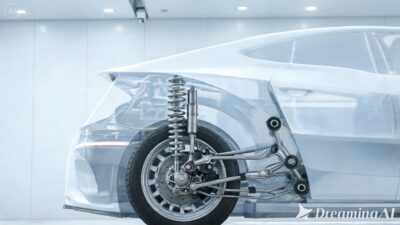
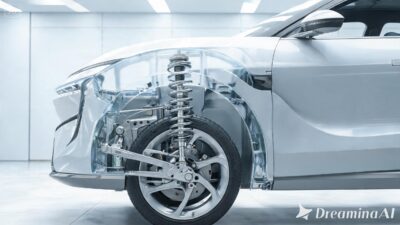
A typical suspension system includes components such as springs, shock absorbers or struts, control arms, ball joints, and bushings. Each part has a specific job, but they work together as one system. When the car travels over a pothole or rough section of road, the suspension allows the wheels to move while helping prevent excessive movement of the vehicle body.
Suspension also has a direct connection to handling and stability. During cornering, braking, and acceleration, the vehicle’s weight shifts. The suspension helps manage these movements so the car remains more predictable. It also helps the tires maintain contact with the road, which is essential because the tires provide the traction needed for steering, braking, and acceleration.
A healthy suspension can improve ride comfort by reducing the impact of bumps and vibrations felt inside the cabin. At the same time, it helps the driver maintain better control of the vehicle. If suspension components become worn or damaged, drivers may notice excessive bouncing, unusual noises, uneven tire wear, poor handling, or changes in ride quality.
Because suspension problems can sometimes resemble issues with tires, steering, or wheel alignment, unusual symptoms should be properly inspected rather than diagnosed by appearance alone.
Understanding what the suspension does can help drivers recognize potential problems early and appreciate why regular vehicle maintenance matters. In the sections that follow, we will explain how car suspension works, examine its main components, discuss common signs of suspension problems, and explain how suspension condition can affect everyday driving safety.
1. What Does Suspension Do on a Car?
The suspension system is one of the most important systems in a vehicle. Its main purpose is to connect the car’s body to the wheels while controlling wheel movement over different road surfaces. If you are wondering what does suspension do on a car, it helps support the vehicle, absorb road impacts, maintain tire contact, and improve stability, handling, and ride comfort.
Keeps the Tires in Contact With the Road
One of the most important jobs of suspension is helping the tires stay in contact with the road. Roads are rarely perfectly smooth. Potholes, bumps, cracks, and uneven surfaces can cause the wheels to move up and down. The suspension allows this movement while helping the tires maintain contact with the road.
Good tire contact is important because the tires provide the traction needed for steering, braking, and acceleration.
Absorbs Bumps and Road Imperfections
The suspension system helps reduce the impact of bumps and rough surfaces. Springs compress and expand as the wheels move over uneven roads. Shock absorbers or struts then control this movement and reduce excessive bouncing.
Without a properly working suspension, every bump could create more movement in the vehicle body, making the ride uncomfortable and harder to control.
Improves Stability and Handling
Suspension also helps keep the vehicle stable during normal driving. When you turn, brake, or accelerate, the vehicle’s weight shifts. The suspension helps manage these movements and limits excessive body roll, bouncing, or pitching.
A properly functioning suspension can make steering feel more predictable and help the vehicle respond smoothly to driver inputs.
Supports the Vehicle’s Weight
Another basic function of suspension is supporting the vehicle’s weight. Springs carry much of the vehicle’s weight while allowing the wheels to move through their normal range.
The suspension must be strong enough to support the vehicle while still allowing controlled wheel movement. Different vehicles use different suspension designs depending on their size, weight, and intended use.
Provides a More Comfortable Ride
Suspension helps make driving more comfortable by reducing the effects of road bumps and vibrations. Springs absorb much of the initial movement, while shocks or struts control the suspension afterward.
However, comfort is only one part of the suspension’s job. The system must balance comfort with stability and handling.
Works With Steering, Brakes, and Tires
The suspension works closely with the steering, braking system, and tires. Steering controls the direction of the wheels, while suspension helps control their movement and position. During braking, suspension helps manage weight transfer. The tires provide contact with the road, while suspension helps them maintain that contact over uneven surfaces.
In short, the suspension system helps your car stay comfortable, stable, controlled, and connected to the road. Because of this, worn or damaged suspension components should be inspected rather than ignored.
what does suspension do on a car
2. How Does a Car Suspension System Work?
A car suspension system works by allowing the wheels to move up and down when they encounter bumps, potholes, and uneven road surfaces while helping the vehicle body remain stable. The system uses several components, including springs, shocks or struts, control arms, ball joints, and bushings. Each part has a different role, but they work together to provide a controlled and comfortable ride.
What Happens When a Car Drives Over a Bump?
When a vehicle drives over a bump, the wheel moves upward as it follows the shape of the road. Instead of transferring all of that movement directly to the vehicle body, the suspension allows the wheel to move through its designed range.
The suspension absorbs and controls this movement so the car does not react too harshly to every change in the road surface. Once the wheel passes over the bump, the suspension helps it return toward its normal position.
This process happens very quickly while driving. The suspension must respond continuously to changes in the road while helping the tires remain connected to the surface.
How Springs Absorb Movement
Springs are responsible for supporting much of the vehicle’s weight and absorbing suspension movement. When a wheel encounters a bump, the spring compresses. When the wheel moves away from the bump, the spring extends again.
This movement allows the wheel to react to the road without transferring the full impact to the vehicle body. Coil springs are common in many passenger cars, while leaf springs are often used on trucks and other vehicles designed to carry heavier loads. Some vehicles use air springs instead of traditional metal springs.
However, springs alone cannot effectively control all suspension movement. After being compressed, a spring naturally wants to return to its original position. Without damping, the vehicle could continue bouncing.
How Shocks and Struts Control Bouncing
Shock absorbers and struts help control the movement created by the springs. They use damping force to slow down excessive suspension movement.
For example, after a car passes over a bump, the spring may compress and then extend. The shock or strut controls how quickly this happens, reducing repeated bouncing and helping the vehicle settle more quickly.
This control is important for both comfort and handling. Excessive bouncing can make the vehicle feel unstable and may make it harder for the tires to maintain consistent contact with the road.
How Suspension Maintains Road Contact
Other suspension components help guide and control the movement of the wheels. Control arms, ball joints, bushings, and related parts allow the wheels to move while maintaining the intended relationship between the wheel and vehicle body.
Maintaining tire contact is critical because the tires provide traction for steering, braking, and acceleration. If the suspension cannot control wheel movement properly, tire contact with the road may become less consistent, especially over rough surfaces.
Overall, a car suspension system works as a coordinated system. Springs absorb movement, shocks and struts control that movement, and other suspension components guide the wheels. Together, they help the vehicle remain comfortable, stable, and connected to the road.
3. Main Components of a Car Suspension
A car’s suspension system is made up of several components that work together to support the vehicle, control wheel movement, absorb road impacts, and maintain stability. Each part has a specific function, and a problem with one component can affect the performance of the entire system. Understanding these main suspension components can also make it easier to recognize possible signs of wear.
Springs
Springs are among the most important suspension components. Their main job is to support the vehicle’s weight while allowing the wheels to move when the car travels over bumps and uneven roads. Springs also help determine the vehicle’s ride height and contribute to ride comfort.
There are several common types of suspension springs:
Coil Springs: Coil springs are made from specially designed spring steel and are widely used in passenger cars. They compress when the wheel moves upward and expand as the suspension returns toward its normal position.
Leaf Springs: Leaf springs are made from layers or sections of flexible spring material. They are commonly found on trucks and some commercial vehicles because they can provide strong support for heavier loads.
Air Springs: Air springs use compressed air instead of traditional metal springs. They are used in some luxury vehicles, heavy-duty vehicles, and suspension systems that allow adjustable ride height.
Regardless of the design, springs help carry the vehicle’s weight and allow controlled suspension movement.
Shock Absorbers
Shock absorbers, often called shocks, control excessive suspension movement. Springs are designed to absorb energy and allow movement, but they can continue bouncing after being compressed.
Shock absorbers use damping to control this movement. After a vehicle travels over a bump, the shocks help reduce repeated bouncing and allow the vehicle to settle more quickly.
Well-functioning shocks can help the tires maintain more consistent contact with the road while also improving ride control.
Struts
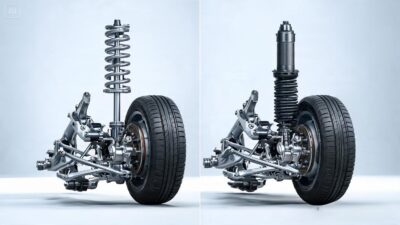
A strut can perform a damping function similar to a shock absorber, but it can also serve as a structural part of the suspension on vehicles designed around a strut-based system.
One key difference is that a traditional shock absorber is primarily a damping component. A strut may combine damping with structural support and can be part of the assembly that helps locate the wheel and connect suspension components.
Because of these differences, shocks and struts should not always be treated as the same component, even though both help control suspension movement.
Control Arms
Control arms connect the wheel assembly to the vehicle’s frame or body. They allow the wheel to move through its intended suspension range while helping maintain proper wheel positioning.
Control arms often work with bushings and ball joints. Together, these components allow controlled movement while limiting unwanted movement that could affect handling or alignment.
Ball Joints
Ball joints are flexible connection points that allow suspension components to move smoothly in multiple directions. This movement is necessary because the wheels need to move up and down while also responding to steering and suspension forces.
A properly functioning ball joint allows controlled movement between connected components. If a ball joint becomes worn or damaged, it can affect steering and suspension performance.
Bushings
Bushings are flexible components that help connect suspension parts while allowing controlled movement. They are designed to reduce vibration, noise, and harshness as the suspension operates.
Over time, bushings can deteriorate due to age, mileage, road conditions, and other factors. Worn bushings may contribute to unusual noises, increased vibration, or changes in handling.
How These Components Work Together
These parts do not operate independently. Springs support the vehicle’s weight, shocks and struts control movement, control arms guide wheel movement, ball joints allow necessary articulation, and bushings help reduce vibration and unwanted movement.
Together, these components allow the wheels to respond to road conditions while helping the vehicle remain stable, comfortable, and controlled.
4. Why Is Suspension Important?
A car’s suspension system is important because it affects much more than ride comfort. It helps the vehicle stay stable, keeps the tires connected to the road, and supports predictable steering and braking. Since suspension components work closely with the tires, steering system, and brakes, their condition can influence how the vehicle performs in everyday driving.
Improves Ride Comfort
One of the most noticeable jobs of suspension is improving ride comfort. Roads often have potholes, bumps, cracks, and uneven surfaces. Springs absorb much of the movement caused by these imperfections, while shocks and struts help control the resulting motion.
A properly functioning suspension can reduce the harsh effects of rough roads and help passengers experience a smoother ride.
Helps Maintain Tire Contact With the Road
Tire contact is one of the most important reasons suspension matters. The tires need to remain connected to the road to provide traction for steering, braking, and acceleration.
The suspension allows the wheels to move as the road changes while helping the tires maintain contact. Worn or damaged suspension components may reduce the system’s ability to control wheel movement, especially over rough surfaces.
Improves Steering Control
Suspension components help control the position and movement of the wheels. This is closely connected to steering performance.
During turns, the suspension helps manage vehicle body movement and keeps the wheels moving through their intended range. If suspension parts are worn, the vehicle may feel less stable or predictable when steering.
Supports Braking Performance
Braking causes the vehicle’s weight to shift forward. The suspension helps manage this movement and supports overall vehicle stability during braking.
A healthy suspension does not replace properly working brakes or tires, but it helps the vehicle respond in a controlled way when the brakes are applied.
Reduces Excessive Body Movement
A vehicle naturally moves when accelerating, braking, and turning. Too much movement can make driving uncomfortable and may affect the driver’s sense of control.
The suspension helps reduce excessive bouncing, body roll during turns, and nose diving during braking. Shocks and struts are especially important for controlling these movements.
Helps Prevent Uneven Tire Wear
Suspension components help keep the wheels properly positioned as they move. When components become worn or damaged, wheel movement and alignment can be affected.
This may contribute to unusual or uneven tire wear. However, uneven tire wear can also result from incorrect tire pressure, wheel alignment problems, or other issues. A proper inspection can help determine the actual cause.
Why Regular Suspension Maintenance Matters
Because suspension affects comfort, handling, tire contact, and vehicle stability, worn components should not be ignored. Regular inspections can help identify problems before they become more serious.
In simple terms, a healthy suspension helps your vehicle ride comfortably, handle predictably, brake steadily, maintain tire contact, and control body movement. These functions make suspension an important part of overall vehicle performance and safety.
5. What Happens If Your Car Has Bad Suspension?
A worn or damaged suspension can affect the way your car rides, handles, and responds to the road. Suspension problems do not always appear suddenly. Some develop slowly as springs, shocks, struts, bushings, control arms, or other components wear over time.
Knowing the common warning signs can help you recognize when your vehicle may need an inspection.
Excessive Bouncing
One of the most common signs of a suspension problem is excessive bouncing. After driving over a bump, a car should settle relatively quickly. If the vehicle continues to bounce or feels unusually soft and uncontrolled, worn shocks or struts may be involved.
However, bouncing can have different causes, so the suspension should be properly inspected before replacing any component.
Vehicle Pulling or Drifting
If your car pulls or drifts to one side while driving, the suspension may be one possible cause. However, tire pressure, wheel alignment, tire condition, and steering components can also create similar symptoms.
A vehicle that consistently pulls to one side should be checked to identify the actual problem.
Uneven Tire Wear
Suspension or related alignment problems can contribute to uneven tire wear. You may notice that one section of a tire is wearing faster than another.
Because tire wear can also be caused by incorrect tire pressure or alignment issues, uneven wear should be evaluated rather than automatically blamed on the suspension.
Nose Diving During Braking
When you apply the brakes, some of the vehicle’s weight shifts toward the front. A small amount of movement is normal, but excessive forward movement, often called nose diving, may indicate a problem with suspension control.
Worn shocks or struts can make body movement during braking more noticeable.
Excessive Body Roll When Turning
Some body movement during a turn is normal. However, excessive leaning or body roll may indicate worn suspension components or problems with the system that controls lateral movement.
Too much body movement can make the vehicle feel less stable and less predictable during cornering.
Unusual Knocking or Clunking Sounds
Hearing new knocking, clunking, rattling, or squeaking sounds from the suspension area can be a warning sign. These noises may come from worn bushings, ball joints, control arms, links, or other components.
The exact source can be difficult to identify without an inspection, especially because several suspension parts are located close together.
Vehicle Sitting Lower on One Side
If one side of the vehicle appears noticeably lower than the other, a damaged or weakened spring could be one possible cause. Other suspension or vehicle-related problems can also affect ride height.
A significant difference in ride height should be inspected to determine the cause.
Poor Ride Quality
A sudden change in ride quality can also indicate suspension wear. The vehicle may feel unusually harsh, floaty, bouncy, or unstable compared with how it normally drives.
Changes in ride quality are worth paying attention to, particularly when they occur along with other suspension symptoms.
Suspension Fluid Leaks
Some shock absorbers and struts contain fluid used for damping. If a shock or strut develops a significant leak, its ability to control suspension movement may be reduced.
Visible fluid around a shock or strut does not automatically identify the entire problem, so professional inspection can help determine whether the component needs repair or replacement.
When Should You Get the Suspension Checked?
A single symptom does not always mean that your suspension is bad. Tires, steering, brakes, alignment, and other components can produce similar signs.
However, excessive bouncing, major handling changes, unusual suspension noises, uneven tire wear, significant fluid leaks, or a vehicle sitting noticeably lower on one side are good reasons to arrange an inspection.
If the vehicle feels difficult to control or develops a serious steering or suspension problem, avoid treating the issue as a minor comfort concern. A qualified technician can inspect the system and determine which component is actually causing the problem.
what does suspension do on a car
6. How to Tell If Your Suspension Needs Attention
Suspension problems can develop slowly, so it is useful to pay attention to changes in how your car looks, feels, and sounds. A basic check can help you notice possible warning signs, although it cannot replace a professional inspection. Since suspension, steering, tires, and wheel alignment can produce similar symptoms, the exact cause should be confirmed before repairs are made.
Start With a Visual Inspection
Begin by looking at the vehicle from the outside. Check whether the car appears to sit at an even height on all sides. A vehicle that suddenly sits lower on one corner or one side may have a problem with a spring or another suspension component.
Also look for obvious signs of damage around the wheels and suspension area. Broken, bent, or visibly damaged parts should be inspected by a qualified technician.
Check for Leaking Shocks or Struts
Some shocks and struts contain hydraulic fluid to provide damping. A noticeable fluid leak around these components can be a sign that they are worn or damaged.
A small amount of dirt or moisture does not always mean a component has failed, so avoid diagnosing a shock or strut based only on appearance. A professional can determine whether the component is functioning properly and whether replacement is necessary.
Look for Uneven Tire Wear
Your tires can provide useful clues about suspension and alignment problems. Check the tread regularly for unusual or uneven wear patterns.
If one part of a tire is wearing much faster than another, the cause could involve suspension, wheel alignment, tire pressure, or another component. Uneven tire wear should therefore be investigated instead of automatically assuming that the suspension is at fault.
Pay Attention to Unusual Noises
Listen for new or unusual sounds while driving over bumps, turning, or braking. Knocking, clunking, squeaking, or rattling noises can sometimes indicate worn suspension components.
Possible causes include worn bushings, ball joints, control arms, links, or other parts. Because many components are located close together, identifying the exact source of a noise can be difficult without an inspection.
Notice Changes in Handling or Ride Comfort
Your driving experience can also reveal potential suspension problems. Pay attention if the vehicle suddenly feels more bouncy, unstable, harsh, or difficult to control.
Other warning signs may include excessive body roll during turns, increased nose diving during braking, or unusual movement after driving over bumps.
A change from the vehicle’s normal behavior is especially important when several symptoms appear at the same time.
When Is a Professional Inspection Necessary?
A professional inspection is recommended when suspension symptoms are persistent, severe, or getting worse. You should also have the vehicle checked if you notice visible damage, significant fluid leakage, unusual handling, uneven tire wear, or loud suspension noises.
It is important not to rely on a single symptom to diagnose a suspension problem. A technician can inspect the suspension, steering, tires, and related components to determine the actual cause.
Regular attention can help identify worn parts before they create larger problems. If your car no longer rides, handles, or sounds the way it normally does, getting the suspension checked is a sensible step.
7. Suspension vs. Shocks vs. Struts
The terms suspension, shocks, and struts are often used together when discussing a car’s ride and handling. However, they do not mean exactly the same thing. Understanding the difference can help you better understand how your vehicle works and what a mechanic may be referring to when discussing suspension repairs.
What Is a Suspension?
The suspension system refers to the complete group of components that connects the vehicle body to the wheels and controls how the wheels move. It includes parts such as springs, shocks or struts, control arms, ball joints, bushings, and other related components.
The suspension system has several important jobs. It supports the vehicle’s weight, absorbs road impacts, controls body movement, helps maintain tire contact with the road, and contributes to stable handling.
In simple terms, suspension is the overall system, not just one individual part.
What Are Shocks?
Shock absorbers, commonly called shocks, are components within the suspension system. Their main purpose is to control the movement created by the springs.
When a car drives over a bump, the springs compress and then extend. Without damping, the vehicle could continue bouncing after the bump. Shocks help slow and control this movement so the vehicle settles more quickly.
Shocks therefore contribute to ride comfort, stability, handling, and consistent tire contact with the road.
What Are Struts?
A strut is another type of suspension component that provides damping, similar to a shock absorber. However, on vehicles designed around strut-based suspension, the strut can also serve as a structural part of the suspension.
This is the main reason a strut should not simply be described as another name for a shock. A traditional shock absorber primarily controls suspension movement, while a strut can also help support and locate other suspension components.
The exact design varies between vehicles, so the construction and role of a strut assembly depend on the vehicle’s suspension layout.
Why Are These Terms Used Interchangeably?
People often use “suspension,” “shocks,” and “struts” interchangeably because all three are closely connected to the way a vehicle rides and handles.
For example, someone may say, “My suspension is bad,” when they actually mean that the shocks or struts need attention. Similarly, a driver may refer to replacing “the suspension” when only specific suspension components are being repaired.
This everyday use can cause confusion. Technically, shocks and struts are components of the overall suspension system, while suspension refers to the complete system and its related components.
The Simple Difference
You can think of the terms this way:
- Suspension: The complete system that supports and controls the vehicle and wheels.
- Shocks: Components that control suspension movement and reduce bouncing.
- Struts: Suspension components that provide damping and, in many designs, also serve a structural role.
Understanding this difference is useful when diagnosing vehicle problems or discussing repairs. If your car has excessive bouncing, unusual noises, poor handling, or other symptoms, the cause may involve shocks, struts, springs, or another suspension component. A proper inspection can identify which part actually needs attention.
8. How Suspension Affects Driving Safety
A car’s suspension system plays an important role in driving safety because it helps control how the wheels and vehicle body respond to the road. Suspension is not responsible for safety by itself, but it works closely with the tires, steering, and brakes to help the vehicle remain stable and predictable.
Tire Contact With the Road
One of the most important safety functions of suspension is helping the tires maintain contact with the road. Tires need consistent contact to provide traction for steering, braking, and acceleration.
When suspension components are worn or damaged, the wheels may not respond to uneven surfaces as effectively. This can affect how consistently the tires stay connected to the road, particularly when driving over bumps or rough pavement.
Steering Stability
The suspension also contributes to steering stability. Components such as control arms, ball joints, bushings, and struts help control wheel movement and maintain the intended position of the wheels.
If these components become worn, the vehicle may feel loose, unstable, or less predictable when steering. However, steering problems can have several causes, so a proper inspection is important before identifying the suspension as the source.
Braking Behavior
Braking causes the vehicle’s weight to shift toward the front. A properly functioning suspension helps control this movement and supports stable vehicle behavior during braking.
Worn shocks or struts may allow excessive body movement, which can make braking feel less controlled. The suspension does not replace the braking system, but it works with the brakes and tires to support overall vehicle control.
Vehicle Control During Turns
When a car turns, its body naturally experiences lateral forces that can cause it to lean. The suspension helps control this body movement and allows the wheels to follow the road.
Excessive body roll, unusual bouncing, or unstable handling during turns can indicate that suspension components need inspection. Good suspension condition helps the vehicle respond more predictably to steering inputs.
Why Maintaining Worn Suspension Components Matters
Suspension components experience continuous movement and can wear over time. Springs, shocks, struts, bushings, ball joints, control arms, and related parts may eventually require inspection, repair, or replacement.
what does suspension do on a car
can allow a relatively small problem to affect other parts of the vehicle. For example, suspension or alignment issues may contribute to uneven tire wear or changes in handling.
Drivers should pay attention to symptoms such as excessive bouncing, unusual knocking or clunking sounds, uneven tire wear, excessive body roll, fluid leaks, or significant changes in ride quality.
If a vehicle develops serious handling problems or visible suspension damage, professional inspection is important. A qualified technician can check the suspension, steering, tires, and related systems to identify the actual cause.
Overall, a healthy suspension helps the vehicle maintain tire contact, support steering stability, manage braking movement, and remain controlled during turns. Keeping suspension components in good condition is therefore an important part of responsible vehicle maintenance.
FAQ
What does suspension do on a car?
A car’s suspension system supports the vehicle’s weight, absorbs bumps, controls body movement, and helps keep the tires in contact with the road. It also contributes to ride comfort, stability, handling, steering control, and predictable braking behavior. The suspension works together with the tires, steering, and brakes to help the vehicle respond properly to different road conditions.
Can you drive a car with bad suspension?
Driving with a suspected suspension problem may be unsafe, depending on the severity and the component involved. Worn or damaged suspension parts can affect handling, tire contact, stability, and braking behavior.
If you notice serious symptoms such as major handling changes, excessive bouncing, unusual suspension noises, visible damage, significant fluid leaks, or the vehicle sitting noticeably lower on one side, the car should be inspected promptly. Avoid assuming that a suspension problem is only a comfort issue, because some suspension components can affect vehicle control.
How do I know if my car suspension is bad?
Common warning signs include excessive bouncing, poor ride quality, unusual knocking or clunking sounds, excessive body roll when turning, nose diving during braking, vehicle pulling or drifting, uneven tire wear, and visible fluid leaks around shocks or struts.
A vehicle that suddenly feels different from normal is also worth checking. However, these symptoms can have causes outside the suspension system, including tires, steering, or wheel alignment. A professional inspection can help identify the actual problem.
What is the difference between suspension and shocks?
Suspension refers to the complete system of components that supports the vehicle and controls wheel movement. It can include springs, shocks or struts, control arms, ball joints, bushings, and other related components.
Shocks, or shock absorbers, are individual components within that suspension system. Their main job is to control suspension movement and reduce bouncing after the springs compress and extend.
In simple terms, suspension is the overall system, while shocks are one part of that system.
How long does car suspension last?
There is no single lifespan that applies to every vehicle or every suspension component. Service life depends on factors such as vehicle design, mileage, road conditions, driving habits, vehicle load, climate, and component quality.
A car driven frequently on rough roads may experience more suspension wear than one driven mostly on smooth roads. Different components can also wear at different rates.
Instead of replacing suspension parts only because a certain number of years or miles has passed, drivers should watch for warning signs and follow the vehicle manufacturer’s maintenance recommendations. A qualified technician can inspect the suspension and determine whether components are still functioning properly or need attention.
Conclusion
Understanding what suspension does on a car helps explain why this system is so important for everyday driving. The suspension is not only responsible for making a vehicle feel more comfortable. It supports the vehicle’s weight, absorbs bumps and road imperfections, controls body movement, and helps the tires maintain contact with the road.
A properly functioning suspension also contributes to stability, handling, steering control, and predictable braking behavior. Springs allow the wheels to respond to changes in the road, while shocks and struts control excessive movement. Other components, including control arms, ball joints, and bushings, help guide wheel movement and reduce unwanted vibration.
Because the suspension works closely with the tires, steering, and brakes, worn or damaged components can affect more than ride quality. Problems such as excessive bouncing, unusual knocking or clunking sounds, uneven tire wear, excessive body roll, nose diving during braking, fluid leaks, or noticeable changes in handling should not be ignored.
It is also important to remember that suspension symptoms can have several possible causes. A tire, alignment, steering, or suspension problem can sometimes produce similar signs. For this reason, a proper inspection is the best way to identify the actual source of a problem.
Regular vehicle inspections and timely attention to unusual symptoms can help maintain a comfortable and controlled driving experience. If your car begins to ride, handle, or respond differently than it normally does, having the suspension and related components checked can help prevent further problems and keep your vehicle performing as intended.
