

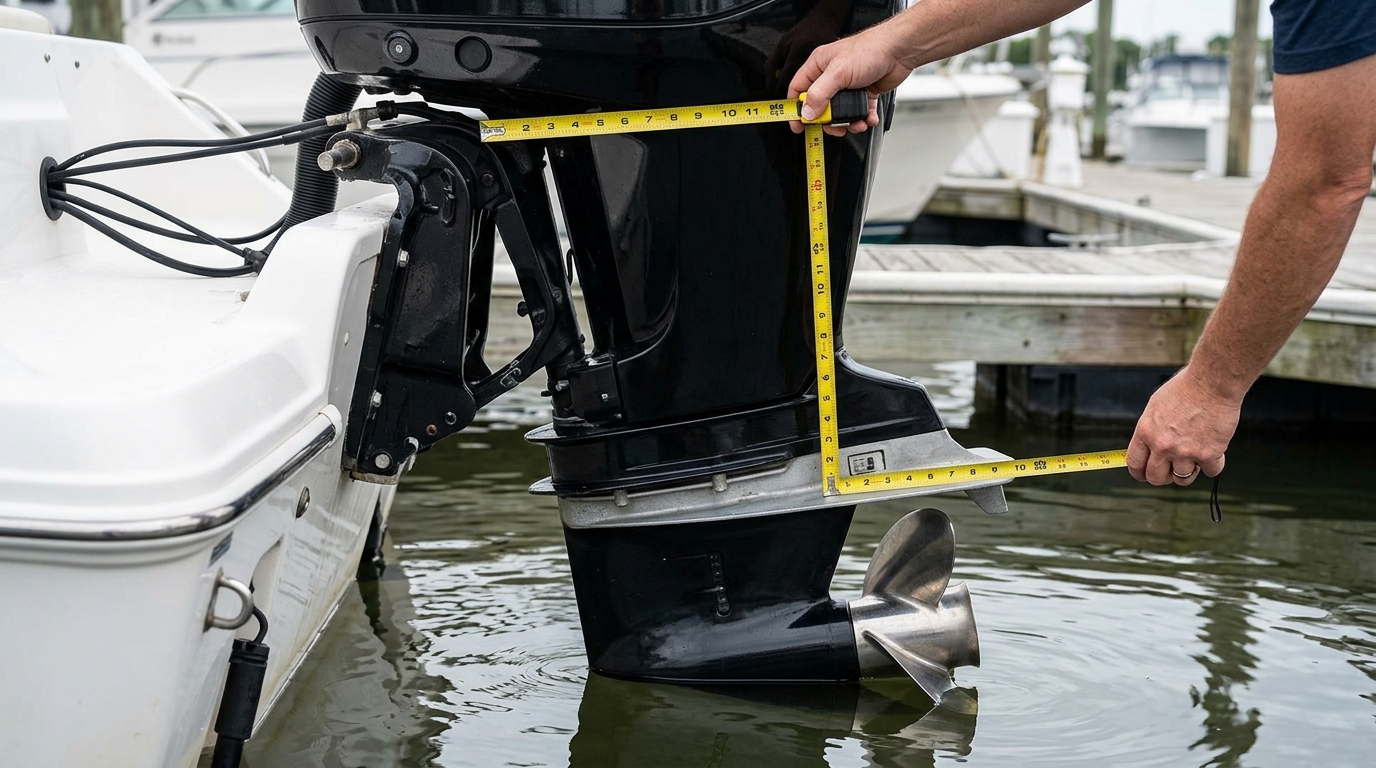
If you are wondering how to measure shaft length on an outboard motor, the basic method is straightforward: measure vertically from the top of the transom mounting surface to the anti-ventilation plate. This measurement helps determine whether an outboard is the right size for your boat and ensures the propeller sits at an appropriate depth in the water.
Correct shaft length is important because the position of the outboard affects several aspects of boat performance. An incorrectly sized shaft can place the propeller too high or too low, which may lead to ventilation, excess drag, reduced thrust, inefficient operation, or handling problems. Choosing the right length also helps the engine operate closer to the height recommended by the manufacturer.
Outboard motors are commonly available in short-shaft, long-shaft, and extra-long-shaft configurations. Typical sizes include approximately 15 inches for short shafts, 20 inches for long shafts, and 25 inches for extra-long shafts. Some applications also use approximately 30-inch very-long shafts. However, these measurements are industry conventions rather than universal rules for every motor.
Before buying or replacing an outboard, measure carefully and compare the result with both the boat manufacturer’s transom-height specifications and the outboard manufacturer’s recommendations. Boat design, mounting arrangements, and motor design can affect the ideal setup.
In the sections below, you’ll learn exactly where to measure, how to measure an installed motor, and how to avoid common mistakes when determining outboard shaft length.
What Is Outboard Shaft Length?
Outboard shaft length refers to the vertical distance between the motor’s transom mounting reference point and the anti-ventilation plate. It helps determine how far the lower unit and propeller extend below the boat when the engine is mounted.
The measurement is not simply the physical length of the visible lower unit. Instead, it is based on specific reference points that relate the motor to the boat’s transom. This distinction is important because measuring from the top of the cowling or another convenient point can produce an incorrect result.
The transom is the rear structural section of the boat where the outboard is mounted. When the motor is installed, the shaft length determines the approximate vertical position of the anti-ventilation plate and propeller relative to the bottom of the hull.
Common Outboard Shaft Length Categories
Outboard manufacturers commonly use several shaft-length categories:
- Short shaft: approximately 15 inches
- Long shaft: approximately 20 inches
- Extra-long shaft: approximately 25 inches
- Very-long shaft: approximately 30 inches on certain applications
These numbers are useful general guidelines, but they should not be treated as universal measurements for every outboard. Different manufacturers and boat configurations may have specific mounting requirements.
For example, a boat designed for a short-shaft motor generally has a lower transom height than one designed for a long-shaft motor. Installing the wrong shaft length can change the position of the propeller in the water and affect performance.
The most important thing is to compare the motor’s shaft-length specification with the actual transom height and mounting requirements of the boat. The owner’s manual, manufacturer’s specifications, and dealer guidance should take priority over general shaft-length categories.
how do you measure shaft length on an outboard motor
Why Is the Correct Outboard Shaft Length Important?
Selecting the correct outboard shaft length helps place the propeller and lower unit at an appropriate depth beneath the boat. If the motor is too high or too low, the boat may not perform as intended.
If the Shaft Is Too Short
A shaft that is too short can position the propeller too close to the water’s surface. When the boat accelerates or moves through choppy water, the propeller may not remain sufficiently submerged.
Potential problems include:
- Propeller ventilation
- Reduced thrust
- Poor acceleration
- Less effective handling
- Unstable engine performance
- Difficulty maintaining efficient propulsion
When the propeller loses proper water engagement, the engine may run differently without producing the expected forward thrust. This can make the boat feel less responsive.
If the Shaft Is Too Long
A shaft that is too long can place the lower unit and propeller deeper than necessary. This may increase the amount of underwater drag created by the motor.
Potential effects can include:
- Increased drag
- Reduced efficiency
- Changes in handling
- Less efficient operation
- Greater underwater resistance
However, the correct mounting height depends on the specific hull, motor, and manufacturer’s recommendations. A longer shaft is not automatically wrong simply because the propeller sits deeper than another setup.
The Goal: Correct Motor Height
The objective is to position the outboard at the height recommended for the particular boat-and-motor combination. Shaft length and mounting height work together to determine where the propeller operates in relation to the hull.
Because boat designs vary, don’t choose a shaft solely from a general 15-, 20-, or 25-inch chart. Measure the boat and verify the manufacturer’s requirements before purchasing or installing an outboard.
How Do You Measure Shaft Length on an Outboard Motor?
Learning how to measure shaft length on an outboard motor requires only a few basic steps and a suitable measuring tape. The key is using the correct reference points rather than measuring the entire motor.
Step 1: Park the Outboard Safely
Before taking the measurement, make sure the outboard is in a stable position. If the motor is installed on a boat, ensure the boat and motor are secure.
Turn the engine off and keep the propeller and other moving components stationary. If the motor has been recently operated, allow it to cool before working around it.
If the outboard has been removed from the boat, position it securely so that it cannot tip, fall, or move while you measure it. A second person can be helpful when handling a larger motor.
Step 2: Identify the Transom Mounting Surface
Next, find the top of the transom mounting surface. This is the point where the outboard is attached to the boat.
For a clamp-on motor, identify the upper surface of the transom where the motor’s mounting brackets rest. For a bolted installation, use the appropriate transom mounting reference point specified by the manufacturer.
This is the starting point for the measurement.
Do not start the measurement from the top of the engine cowling. The cowling is not the reference point used to determine shaft length.
Step 3: Find the Anti-Ventilation Plate
Look at the lower portion of the outboard and locate the anti-ventilation plate. This is the horizontal plate positioned above the propeller.
The anti-ventilation plate is an important lower reference point for a conventional shaft-length measurement. It sits above the propeller and helps separate the upper water flow around the lower unit from the propeller area.
Make sure you identify the correct plate rather than another part of the lower unit.
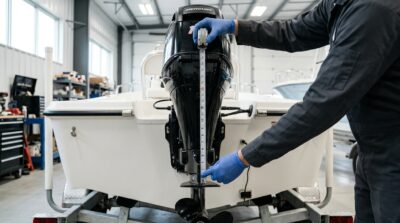
Step 4: Measure Vertically
Place one end of your measuring tape at the top of the transom mounting surface.
Extend the tape straight downward to the anti-ventilation plate. Keep the tape as vertical as possible and avoid following the shape or curve of the motor.
The distance between these two reference points gives you the approximate shaft length.
For example, if the measurement is close to 15 inches, the motor may fall into the short-shaft category. A measurement around 20 inches commonly corresponds to a long shaft, while approximately 25 inches is commonly associated with an extra-long shaft.
Don’t automatically select a motor based only on the nearest category. Always verify the manufacturer’s specifications.
Step 5: Record the Measurement
Write down the measurement in inches or centimeters.
If possible, measure more than once to reduce the chance of a reading error. A difference of even a small amount can matter when comparing a boat’s transom height with a motor’s recommended shaft length.
Once you have the measurement, compare it with the specifications for the particular outboard you are considering.
Step 6: Check the Boat’s Transom Height
The motor measurement is only part of the process. You should also measure the boat’s transom or confirm its specified transom height.
Boat manufacturers may provide a recommended outboard shaft length based on the hull design. Compare this information with the measurement you obtained from the motor.
For example, if the boat is designed for a long-shaft outboard, a short-shaft motor may place the propeller too high. Likewise, installing a substantially longer shaft than required may position the lower unit too deeply.
The boat’s specifications should therefore be considered alongside the motor’s shaft-length measurement.
Step 7: Confirm With the Manufacturer
Finally, verify your measurement using the outboard manufacturer’s documentation and the boat manufacturer’s specifications.
Check the owner’s manual, model-specific technical information, or official installation guidance. If you’re still uncertain, an authorized dealer or qualified marine professional can help confirm the correct shaft length and mounting height.
Remember that shaft length is only one part of correct outboard installation. The motor’s mounting position, hull design, loading, and manufacturer’s recommended setup can also affect the final installation.
how do you measure shaft length on an outboard motor
How to Measure Outboard Shaft Length Without Removing the Motor
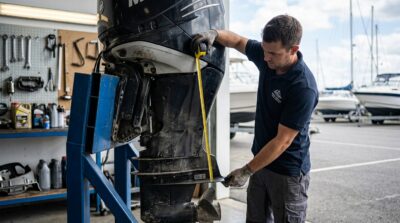
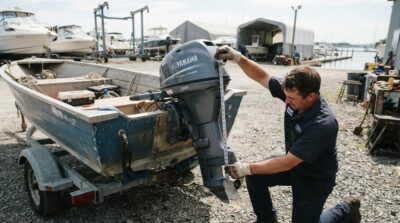
You usually do not need to remove an outboard from the boat just to measure its shaft length. An installed motor can generally be measured by identifying the same two reference points used for a basic shaft-length measurement.
First, make sure the outboard is securely mounted and the boat is stable. The engine should be turned off before you begin.
Locate the top of the transom mounting surface. This is where the measurement starts. Then locate the anti-ventilation plate above the propeller. This provides the lower reference point.
Using a measuring tape, measure vertically between these two points. Keep the tape as straight as possible rather than following the shape of the motor or lower unit.
Avoid starting the measurement at the top of the engine cowling. The overall height of the outboard is not the same thing as shaft length. Similarly, do not measure from the top of the motor all the way to the bottom of the propeller or skeg.
If access is difficult because the motor is mounted tightly against the boat, have another person help hold the tape while you read the measurement. You can also use a straightedge or another suitable reference aid to make it easier to maintain a vertical measurement.
After recording the result, compare it with the boat’s recommended transom height and the manufacturer’s shaft-length specifications.
The most important part of measuring an installed outboard is using the correct reference points. A measurement taken from the wrong location can make a motor appear to have a different shaft length than it actually does. When in doubt, consult the owner’s manual or contact the boat or outboard manufacturer for model-specific guidance.
How to Measure an Outboard Shaft Length Before Buying a Motor
Before buying an outboard motor, measuring your boat’s transom is one of the most important steps you can take. The correct shaft length helps position the motor properly and can prevent performance and installation problems later.
Measure the Boat’s Transom Height
Start by measuring the boat’s transom height. This measurement is different from measuring the outboard shaft itself. With the boat on a level surface, measure from the appropriate top surface of the transom mounting area down to the bottom of the hull at the centerline.
Keep the measuring tape as straight and vertical as possible. Avoid measuring along the shape or angle of the transom because this can produce an inaccurate result.
Record the measurement in inches, since outboard shaft lengths are commonly specified using inch measurements.
Check the Boat Manufacturer’s Recommendation
After measuring the transom, check the boat manufacturer’s specifications. Many boats are designed around a particular outboard shaft length, such as short, long, or extra-long shaft configurations.
Look through the boat owner’s manual, specification sheet, manufacturer’s website, or identification information provided with the boat. The manufacturer’s recommendation should take priority over a general shaft-length chart because different hull designs can have different requirements.
Match the Outboard to the Boat
Once you know the recommended shaft length, compare it with the available configurations of the outboard motor you are considering.
For example, a boat designed for a long-shaft motor may require an outboard with approximately a 20-inch shaft. However, don’t assume that every boat with a similar transom measurement uses exactly the same configuration.
Most importantly, do not choose an outboard based only on horsepower. Horsepower determines the engine’s power output, but shaft length determines how the motor fits vertically on the boat. A motor with the right horsepower can still be unsuitable if it has the wrong shaft length.
Verify Before Purchase
Before completing the purchase, confirm the exact shaft length for the specific outboard model. Don’t rely solely on a product title or a general description, because manufacturers may offer the same engine in multiple shaft-length configurations.
Ask the seller or manufacturer to confirm the model’s shaft length and compare it with your boat’s specifications. If you’re unsure about the measurement, provide the boat’s make, model, year, and transom-height measurement to an authorized dealer.
Taking a few minutes to verify shaft length before buying can help ensure that your new outboard is properly matched to your boat.
What Is the Difference Between Short Shaft and Long Shaft Outboards?
Choosing the correct shaft length is important because the outboard needs to sit at the proper height on the boat’s transom. A shaft that is too short can cause the propeller to sit too high in the water, while one that is too long can place the engine too deep. The most common options include short, long, extra-long, and very long shafts.
| Shaft Type | Typical Length | Common Application |
|---|---|---|
| Short Shaft | ~15 in | Smaller or lower-transom boats |
| Long Shaft | ~20 in | Many standard-transom boats |
| Extra-Long Shaft | ~25 in | Boats with higher transoms |
| Very Long Shaft | ~30 in | Specialized applications |
Short Shaft Outboards
A short shaft is typically around 15 inches long. It is commonly used on smaller boats with relatively low transoms. Dinghies, small fishing boats, and some compact aluminum boats may use this configuration. The shorter shaft helps keep the propeller at an appropriate depth without placing the outboard unnecessarily far below the hull.
Long Shaft Outboards
Long shaft outboards are commonly around 20 inches and are widely used on boats with standard-height transoms. This is one of the most common shaft lengths for many recreational boats. However, the correct choice should always be based on the boat manufacturer’s recommended transom height rather than simply choosing the most common option.
Extra-Long Shaft Outboards
An extra-long shaft is generally around 25 inches. These outboards are designed for boats with higher transoms where a standard 15- or 20-inch shaft would not position the propeller correctly. Larger boats and certain specialized hull designs may require this additional length.
Very Long Shaft Outboards
Very long shaft outboards can be around 30 inches and are intended for specialized applications. They may be used on boats with particularly high transoms or specific hull configurations. These models are less common, so availability depends heavily on the manufacturer and engine model.
How Do You Choose the Right Shaft?
The best way to choose between short and long shaft outboards is to measure your boat’s transom and compare the measurement with the outboard manufacturer’s specifications. The goal is to position the propeller and water intake at the correct depth for efficient and reliable operation.
Keep in mind that actual shaft lengths and available configurations vary by manufacturer, engine model, and boat design. Always check the boat and outboard manufacturer’s recommendations before purchasing.
What Shaft Length Does Your Boat Need?
The correct outboard shaft length depends primarily on the height and design of your boat’s transom. Choosing the right size helps position the outboard at the proper depth so the propeller can operate efficiently. A shaft that is too short or too long can affect performance, handling, and overall engine operation.
Several factors should be considered before choosing an outboard shaft length, including transom height, hull design, boat type, outboard model, manufacturer recommendations, and intended use.
Small Fishing Boats
Small fishing boats may use shorter shaft configurations, particularly when they have relatively low transoms. Some compact boats are designed for short-shaft outboards, while others may require a long shaft. Measuring the transom is more reliable than choosing based only on the boat’s size.
Aluminum Boats
Aluminum boats are available in many different hull and transom designs. Some use short-shaft motors, while others are designed for long-shaft configurations. The intended setup, hull shape, and transom height should all be considered before selecting an engine.
Inflatable Boats
Inflatable boats can have different transom designs depending on their construction and model. Some have low motor-mount transoms, while others are built for longer shafts. Because these designs vary, measuring the actual mounting height is especially important.
Larger Boats
Larger boats often have taller transoms and may require long, extra-long, or other specialized shaft configurations. The appropriate length depends on the specific hull rather than simply the overall size of the boat.
Other Factors to Consider
The outboard model itself also matters because manufacturers may offer specific shaft-length options. Intended use can influence the setup as well, particularly for boats used in different water conditions or with specialized hull designs.
The safest approach is to measure your boat’s transom and compare the measurement with the boat and outboard manufacturer’s recommendations. Do not assume that one shaft length works for every boat in the same category. A proper match between the transom and outboard helps ensure the motor is positioned correctly and performs as designed.
What Happens If an Outboard Shaft Is Too Short?
An outboard shaft that is too short may position the propeller too close to the water’s surface. Because the propeller needs sufficient water around it to produce consistent thrust, an incorrect shaft length can negatively affect how the boat performs.
One common problem is propeller ventilation. Ventilation occurs when the propeller draws in excessive air or aerated water instead of operating fully in solid water. When this happens, the propeller may spin without producing the expected amount of thrust.
A short shaft can therefore reduce propulsion efficiency. The boat may take longer to accelerate, and reaching normal cruising performance can become more difficult. In some situations, the engine may also seem to run normally while the boat fails to respond with the expected thrust.
Handling can also become less predictable. If the propeller is operating too close to the surface, changes in boat trim, waves, passenger weight, or acceleration can make the propeller more susceptible to ventilation.
The underlying issue is that the outboard is not positioned at the depth for which the boat and engine were designed. The anti-ventilation plate and propeller should generally be positioned appropriately relative to the hull according to the manufacturer’s installation guidance.
However, the exact setup varies between boats and outboard models. A shaft that is considered short for one boat may be appropriate for another.
If you suspect that your outboard shaft is too short, check the boat’s transom height and compare it with the engine manufacturer’s shaft-length recommendations. Avoid selecting a replacement motor based solely on horsepower or engine size.
Getting the shaft length right before installation is usually much easier than trying to correct performance problems afterward. When in doubt, consult the boat or outboard manufacturer’s specifications or an authorized dealer.
What Happens If an Outboard Shaft Is Too Long?
An outboard shaft that is too long can position the propeller deeper in the water than intended. While sufficient propeller depth is important, placing the outboard too far below the hull can create an inefficient setup.
One potential issue is increased drag. The lower unit and propeller can operate deeper than the boat’s design requires, increasing the amount of underwater resistance. This may reduce overall performance and prevent the boat from operating as efficiently as intended.
A long shaft on a boat designed for a shorter shaft can also affect how the outboard interacts with the hull. The engine’s position relative to the transom, propeller, and water flow is important for proper operation.
Performance may decrease as a result. Depending on the boat and engine combination, the boat may have difficulty achieving its expected speed or acceleration. Fuel consumption can also be affected if the engine has to work against additional resistance.
The correct shaft length is therefore not simply a matter of choosing the longest option available. The outboard should be matched to the boat’s transom height and hull design.
For example, a boat designed around a short-shaft motor may not perform correctly with a long-shaft engine. Likewise, a taller transom may require a long or extra-long shaft to place the propeller at the appropriate depth.
It is important to remember that shaft-length requirements vary between boat and engine models. Always follow the installation specifications provided by the boat manufacturer and outboard manufacturer.
If you are replacing an existing motor, do not assume that the shaft length of the old engine is automatically correct. Measure the transom and verify the recommended installation height before purchasing the replacement.
A properly matched shaft helps the outboard operate in the position intended by the manufacturer, supporting better efficiency, handling, and overall performance.
Outboard Shaft Length vs. Transom Height
Outboard shaft length and boat transom height are related measurements, but they are not the same thing. Understanding the difference makes it easier to choose an outboard that fits your boat correctly.
What Is Shaft Length?
Shaft length is a specification associated with the outboard motor. It describes the distance used to determine how far the motor extends from its mounting area toward the propeller. Common shaft categories include short, long, and extra-long configurations, although exact measurements and naming conventions can vary between manufacturers.
What Is Transom Height?
Transom height is a measurement associated with the boat. It refers to the vertical distance between the appropriate top surface of the transom and the bottom of the hull at the relevant centerline.
These two measurements need to be compatible. The purpose is to position the outboard so the propeller and anti-ventilation plate are at the appropriate height in relation to the boat’s hull.
Why Do They Need to Match?
If the boat has a transom designed for a long-shaft outboard but you install a short-shaft motor, the propeller may sit too high in the water. This can contribute to ventilation and reduced thrust.
On the other hand, using a shaft that is longer than required can place the lower unit and propeller deeper than intended. This can increase drag and affect performance.
how do you measure shaft length on an outboard motor
Simple Example
Imagine a boat with a transom designed for a long-shaft outboard. Installing a short-shaft motor may leave the propeller too close to the water’s surface. During acceleration or when the boat moves through waves, the propeller may have difficulty maintaining consistent water contact.
The solution is not simply to choose a motor based on horsepower. Instead, measure the boat’s transom, check the recommended shaft length, and compare it with the specifications of the outboard you are considering.
Because transom designs and outboard measurements can vary, always use the manufacturer’s installation instructions as the final reference.
How to Measure Transom Height Correctly
Measuring your boat’s transom height correctly is an important step when selecting an outboard shaft length. A small measurement mistake can lead to choosing a motor that does not match the boat’s mounting requirements.
1. Park the Boat on a Level Surface
Place the boat on a reasonably level surface before measuring. Keeping the boat stable helps reduce errors and makes it easier to take a vertical measurement.
2. Find the Centerline of the Transom
Identify the centerline of the transom where the outboard will be mounted. This provides the appropriate reference area for the measurement.
3. Identify the Top of the Transom
Find the correct top surface of the transom or motor-mounting area. Do not automatically measure from the highest point of the surrounding boat structure if that is not the actual mounting reference.
4. Measure Vertically Toward the Bottom of the Hull
Using a tape measure, measure vertically from the appropriate top reference point toward the bottom of the hull at the centerline. Keep the tape as straight and vertical as possible rather than measuring diagonally.
5. Record the Measurement
Write down the measurement in inches or the unit specified by the outboard manufacturer. Taking the measurement more than once can help confirm that the result is consistent.
6. Compare It With the Manufacturer’s Chart
Once you have the transom measurement, compare it with the motor manufacturer’s shaft-length chart and installation recommendations. This is more reliable than selecting a shaft based only on the boat’s overall size.
Why Transom Design Matters
Not every boat has the same transom configuration. Some boats have straightforward flat transoms, while others have raised sections, different hull shapes, or specialized motor-mount designs. These differences can affect where and how the measurement should be taken.
If you are unsure which points to use, consult the boat manufacturer’s documentation before purchasing an outboard. The outboard manufacturer may also provide installation guidance explaining how its shaft-length measurement relates to the mounting height.
The goal is to select a shaft that places the outboard at the position intended for the boat’s hull. Accurate measurement is therefore an important part of choosing the correct motor.
Common Mistakes When Measuring Outboard Shaft Length
Choosing an outboard shaft length can seem straightforward, but several common measurement mistakes can lead to the wrong motor selection. Taking the time to measure correctly can help prevent installation and performance problems.
Measuring From the Wrong Point
One of the most common mistakes is starting the measurement from an incorrect location. The measurement should follow the boat or engine manufacturer’s specified reference points rather than an arbitrary point on the transom.
Measuring the Entire Outboard
Shaft length should not be confused with the total height of the outboard. Measuring from the top of the engine to the propeller will not give you the shaft-length specification used to match the motor to a boat.
Measuring at an Angle
The transom measurement should generally be taken vertically. Holding the tape diagonally can produce a measurement that is longer than the actual vertical distance.
Confusing Shaft Length With Transom Height
Shaft length is an outboard specification, while transom height is a boat measurement. They are related, but they are not interchangeable.
Ignoring the Anti-Ventilation Plate
The anti-ventilation plate is an important reference when considering outboard installation height. Ignoring its position can make it harder to determine whether the motor will sit correctly relative to the hull.
Assuming Every 20-Inch Motor Is Identical
A nominal shaft category does not mean every outboard is identical. Manufacturers and models can have different installation requirements, so always check the specific engine’s documentation.
Buying Based Only on Horsepower
Horsepower determines the engine’s power rating, not the appropriate shaft length. A motor with the correct horsepower can still have the wrong shaft length for a particular boat.
Ignoring Manufacturer Specifications
Perhaps the biggest mistake is skipping the manufacturer’s recommendations. Boat and engine manufacturers provide specifications for a reason. Use those instructions alongside your measurements before purchasing an outboard.
Does Horsepower Affect Shaft Length?
Horsepower and shaft length are two separate outboard specifications. While both are important when choosing a motor, a higher-horsepower engine does not automatically require a longer shaft.
Shaft length is primarily related to the boat’s transom height and hull design. The purpose of selecting the correct shaft is to position the outboard properly in relation to the hull and water. A small boat with a particular transom height may require a specific shaft length regardless of whether the available engine has relatively low or higher horsepower.
For example, two outboards with different horsepower ratings may be offered with the same shaft-length option. Conversely, the same horsepower rating may be available with different shaft lengths for different boat configurations.
This is why horsepower should not be used as a shortcut for determining shaft length. Start by measuring the boat’s transom and checking the manufacturer’s recommended shaft configuration.
Horsepower does matter in another important way: the engine must be appropriate for the boat’s rated capacity. Installing an engine with more horsepower than the boat is designed to handle can create safety, handling, and compliance concerns.
When choosing an outboard, consider the two specifications separately. First, confirm the boat’s maximum recommended horsepower and other engine requirements. Then determine the appropriate shaft length based on the transom and manufacturer’s installation guidance.
The correct motor is therefore one that matches both the boat’s power requirements and its physical mounting requirements. Checking both specifications before buying can help avoid choosing an engine that has the right horsepower but the wrong shaft length.
How to Choose the Right Outboard Shaft Length
Choosing the right outboard shaft length becomes much easier when you follow a simple measurement and verification process. The goal is to match the motor to the boat’s transom height and follow the installation requirements for the specific engine.
Step 1: Measure the Boat’s Transom
Start by measuring the transom at the appropriate centerline. Measure vertically from the correct top reference point toward the bottom of the hull. Record the measurement accurately.
Step 2: Check the Boat Manufacturer’s Recommendation
Look at the boat owner’s manual, specifications, or manufacturer’s documentation. The manufacturer may provide a recommended shaft length or transom-height range for the boat.
Step 3: Check the Outboard Manufacturer’s Available Shaft Lengths
Once you know the boat’s requirements, check the shaft-length options available for the outboard model you are considering. Do not assume that every engine is available in every shaft configuration.
Step 4: Compare the Measurements
Compare your transom measurement with the outboard manufacturer’s shaft-length chart. Make sure the selected motor is designed for the boat’s mounting height.
Step 5: Confirm the Setup if You Are Unsure
If the measurements do not clearly match an available shaft length, ask an authorized dealer or qualified marine professional for guidance. This is especially useful for boats with unusual transom designs or specialized hulls.
Step 6: Verify Horsepower and Weight Requirements Separately
Finally, confirm that the motor’s horsepower and weight are suitable for the boat. Shaft length does not determine whether an engine is within the boat’s recommended power capacity.
The best approach is to treat shaft length, horsepower, and engine weight as separate specifications that all need to be compatible with the boat.
Avoid choosing an outboard based only on engine horsepower or the shaft length of an existing motor. Measuring the boat and checking the manufacturer’s recommendations first can help you select a motor that is properly matched to the hull and intended for the correct installation position.
FAQ
How do you measure shaft length on an outboard motor?
To measure an outboard shaft, measure from the mounting surface at the top of the motor bracket down to the anti-ventilation plate. The measurement should follow the manufacturer’s specified reference points. Do not measure the entire outboard from the top of the engine to the propeller. Common shaft categories are approximately 15 inches for short shafts, 20 inches for long shafts, 25 inches for extra-long shafts, and 30 inches for very long shafts.
How is outboard shaft length measured?
Outboard shaft length is generally measured vertically from the appropriate mounting reference point on the engine to the anti-ventilation plate. Because designs can vary between manufacturers, always check the specific engine’s measurement instructions before comparing your measurement with a shaft-length chart.
What is the most common outboard shaft length?
A 20-inch shaft is a common configuration for many standard-transom recreational boats. However, it is not automatically the correct choice for every boat. Transom height, hull design, and the manufacturer’s recommendations determine the appropriate shaft length.
How do I know if I need a short or long shaft outboard?
Start by measuring your boat’s transom height. Compare that measurement with the shaft-length recommendations provided by the boat and outboard manufacturers. A lower transom may require a short shaft, while a taller standard transom may require a long shaft.
What is a short-shaft outboard?
A short-shaft outboard is typically in the 15-inch category. It is commonly designed for boats with relatively low transoms, including certain small fishing boats and other compact vessels.
What is a long-shaft outboard?
A long-shaft outboard is typically around 20 inches. This configuration is commonly used on boats with standard-height transoms. Exact specifications can vary by manufacturer and model.
What is an extra-long shaft outboard?
An extra-long shaft is typically around 25 inches. It is intended for boats with taller transoms that require additional length to position the outboard correctly. Some larger or specialized boats may use this configuration.
Can you put a long-shaft outboard on a short transom?
A long-shaft outboard may position the lower unit and propeller deeper than intended on a short transom. This can increase drag and affect performance. Whether a particular setup is acceptable depends on the boat and engine design, so it should be checked against the manufacturer’s installation specifications rather than assumed to be suitable.
Can you put a short-shaft outboard on a long-transom boat?
A short-shaft outboard on a taller transom can leave the propeller too high in the water. This may contribute to ventilation, reduced thrust, poor acceleration, and inconsistent handling. The shaft should be matched to the boat’s transom height.
Does shaft length affect boat performance?
Yes. Incorrect shaft length can affect how deeply the propeller operates in the water. A shaft that is too short can contribute to ventilation and reduced thrust, while an unnecessarily long shaft can increase underwater drag. Either situation can affect acceleration, efficiency, and handling.
Is outboard shaft length the same as transom height?
No. Shaft length is an outboard specification, while transom height is a boat measurement. They are related because the shaft must be appropriate for the boat’s transom height. Measuring the transom and comparing it with the engine manufacturer’s shaft-length recommendations is the best way to determine compatibility.
Conclusion
If you are wondering how do you measure shaft length on an outboard motor, the basic process is straightforward. Measure vertically from the appropriate outboard mounting reference point at the top of the motor bracket down to the anti-ventilation plate. This measurement helps identify whether the motor uses a short, long, extra-long, or another shaft configuration. Always follow the specific measurement method provided by the outboard manufacturer because designs and reference points can vary between models.
Measuring the outboard alone, however, is only part of the process. You should also measure your boat’s transom height. The transom measurement helps determine which shaft length is appropriate for the boat. A motor with the wrong shaft length can position the propeller too high or too low, potentially affecting thrust, ventilation, drag, acceleration, and handling.
Common shaft categories include approximately 15 inches for short-shaft outboards, 20 inches for long-shaft outboards, and 25 inches for extra-long-shaft outboards. Some manufacturers also offer longer configurations for specialized applications. These measurements are general categories, so the exact specifications and available options can vary by manufacturer and engine model.
The goal is to match the outboard shaft to the boat’s transom so the motor is positioned correctly for the intended hull and installation. Do not choose a shaft based only on horsepower or the shaft length of an existing motor. Instead, measure carefully and compare your measurements with the boat and engine manufacturer’s recommendations.
Before purchasing an outboard, confirm the shaft length, mounting requirements, horsepower rating, and other relevant specifications. If the measurements are unclear or the boat has an unusual transom design, an authorized dealer or qualified marine professional can help verify the setup.
