

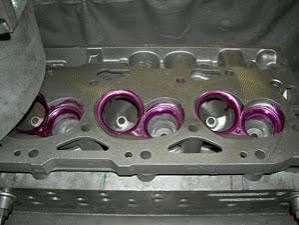
What is a blueprinted engine? In simple terms, it is an engine that has been carefully measured, checked, and assembled to precise specifications. Instead of simply putting together parts that fall within normal manufacturing tolerances, engine blueprinting focuses on knowing the exact dimensions and clearances of individual components and making sure they work together as intended. what is a blueprinted engine
Blueprinting is a precision-focused engine-building process. It can involve inspecting the engine block, measuring the crankshaft, checking pistons and connecting rods, verifying bearing clearances, and carefully setting up the valvetrain. Depending on the engine and its purpose, machining may also be needed to bring components within the desired specifications.
A blueprinted engine is not necessarily a completely different type of engine. It can be based on many of the same components used in a conventional engine. The major difference is the level of measurement, matching, and attention given during the building process.
Blueprinting can be valuable for performance engines, racing applications, classic-car restorations, and custom builds. However, it does not automatically guarantee a specific horsepower increase. The final result also depends on the engine design, parts, tuning, fuel system, and intended use. what is a blueprinted engine
In this guide, you will learn how blueprinting works, which parts are checked, its benefits and disadvantages, how it compares with rebuilding and balancing, what it can cost, and whether it makes sense for your project.
Blueprinted Engine Definition
A blueprinted engine is an engine that has been assembled using detailed measurements and carefully controlled specifications. The goal is to make the engine’s components work together as accurately and consistently as possible.
During a normal production process, engine components are manufactured within acceptable factory tolerances. That means two parts made for the same engine may have small differences in their dimensions while still meeting the manufacturer’s requirements. what is a blueprinted engine
Blueprinting takes a more detailed approach. what is a blueprinted engine
An engine builder may measure individual components rather than simply installing them. The builder can compare those measurements with the specifications selected for the particular engine. If a component does not meet the desired specification, it may need machining, replacement, or adjustment.
For example, the builder may measure a crankshaft journal and then determine the appropriate bearing clearance based on the actual measurements. The same principle can be applied throughout the engine.
The purpose is not simply to make every measurement as small or as large as possible. Each engine has specific requirements. Correct clearances depend on the engine’s design, components, operating temperature, lubrication system, intended RPM range, and other factors.
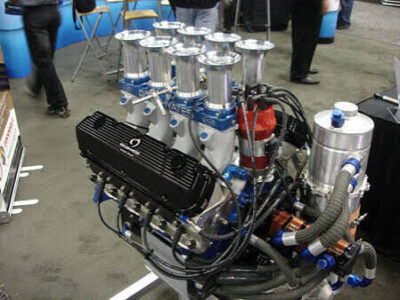
What Does Engine Blueprinting Mean?
The word blueprinting comes from the idea of building an engine according to a detailed “blueprint” of specifications.
Instead of assuming that all parts are identical, an engine builder measures them individually. This allows the builder to identify variations and make informed decisions about component selection, machining, and assembly.
Blueprinting may include checking:
- Cylinder dimensions
- Crankshaft journals
- Bearing clearances
- Piston-to-cylinder clearance
- Piston ring gaps
- Connecting-rod dimensions
- Cylinder-head components
- Valve clearances
- Camshaft timing
- Deck surfaces
The exact process varies from one engine to another.
Is a Blueprinted Engine Hand-Built?
A blueprinted engine is often assembled by a skilled engine builder, but being hand-built does not automatically make an engine blueprinted. what is a blueprinted engine
Hand assembly describes how an engine is put together. Blueprinting describes the precision and measurement process used to build it.
A professional blueprinting process may involve cleaning, inspecting, measuring, machining, matching components, documenting measurements, what is a blueprinted engine and carefully assembling the finished engine.
Engine blueprinting is a detailed process rather than a single operation. The exact steps depend on the engine, its condition, and the builder’s goals.
Inspecting the Engine Components
The process usually starts with inspection.
Important components may include:
- Engine block
- Crankshaft
- Pistons
- Connecting rods
- Bearings
- Cylinder heads
- Camshaft
- Valvetrain
The builder looks for wear, damage, distortion, corrosion, and dimensional problems.
For an existing engine, inspection is especially important because parts may have already experienced years of heat, pressure, and friction.
Measuring Engine Tolerances
An engine tolerance is the acceptable range within which a component or dimension can fall.
For example, a manufacturer may specify a particular dimensional range for a component. A part that falls within that range may be acceptable for normal production.
Blueprinting takes a closer look at the actual measurements.
The builder may record individual dimensions and compare them with the specifications being used for the build. This helps determine whether parts should be reused, machined, replaced, or matched with other components.
Checking Engine Clearances
Clearance is the space between two components that need to move or operate together.
Common examples include:
- Bearing clearance
- Piston-to-cylinder clearance
- Piston-ring gap
- Valve-related clearances
Clearance must be appropriate for the specific engine.
Too much clearance can create unwanted movement, noise, wear, or lubrication concerns. Too little clearance can also cause problems because components expand as temperatures rise.
The correct specification is therefore critical.
Machining and Adjusting Components
Blueprinting may involve machining, but not every blueprinted engine requires every possible machining operation.
Depending on the engine, a machine shop may perform operations such as:
- Boring
- Honing
- Decking
- Surface preparation
- Crankshaft machining
- Cylinder-head machining
The purpose is to bring components into the required condition and dimensions.
Good blueprinting is therefore not about randomly removing material. Every machining operation should have a specific reason and should be based on the engine’s specifications.
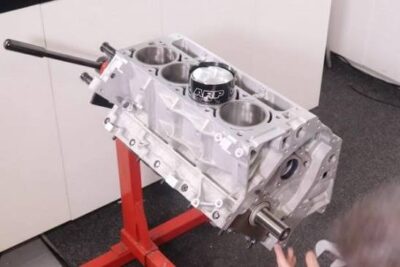
A large part of blueprinting involves inspecting and measuring the major engine components.
Engine Block
The engine block provides the main structure for the cylinders and many internal components.
A builder may check cylinder bore dimensions and condition. The cylinder walls must be suitable for the pistons and rings being used.
The deck surfaces may also be inspected. A properly prepared deck can be important for correct cylinder-head installation and sealing.
Block alignment is another consideration. Depending on the engine, builders may check the relationship between important machining surfaces and bearing locations.
Crankshaft
The crankshaft converts the pistons’ movement into rotational movement that ultimately powers the vehicle.
A builder may measure the crankshaft journals to determine their actual dimensions and condition.
Journal measurements are important because the crankshaft works with bearings. The relationship between the journal and bearing determines the operating clearance.
The crankshaft may also be inspected for damage, wear, or other conditions that could affect the build. what is a blueprinted engine
Pistons
Pistons move inside the engine cylinders and transfer combustion force to the connecting rods. what is a blueprinted engine
Piston dimensions are important because the piston must work correctly with the cylinder. what is a blueprinted engine
The builder may determine piston-to-cylinder clearance based on the piston design and the engine’s intended operating conditions.
Piston selection also matters. A piston designed for one application may not be suitable for another. Factors such as compression ratio, operating temperature, intended RPM, and engine design can influence piston selection.
Connecting Rods
Connecting rods connect the pistons to the crankshaft.
During a precision engine build, rods may be inspected and measured for condition and consistency.
The builder may check dimensions around the rod ends and other important areas.
Consistency matters because the connecting rods operate together as part of the rotating and reciprocating assembly.
Bearings
Bearings help support the crankshaft and connecting rods while allowing controlled movement.
Main bearings support the crankshaft within the engine block, while connecting-rod bearings work between the rods and crankshaft.
Bearing clearance is especially important. what is a blueprinted engine
Proper clearance helps provide the space needed for lubrication while allowing the components to operate correctly. The appropriate clearance depends on the engine’s specifications and design.
Cylinder Heads
Cylinder heads contain important components involved in the combustion and gas-exchange process.
A builder may inspect:
- Valves
- Valve guides
- Valve seats
- Valve springs
- Head surfaces
The condition of these components can affect how efficiently the engine operates.
Cylinder-head work can become particularly important in performance builds, where airflow and valvetrain operation may be carefully optimized.
Camshaft and Valvetrain
The camshaft controls when the valves open and close.
The valvetrain transfers the camshaft’s movement to the valves.
A precision build may involve carefully checking valve-related clearances and camshaft timing. what is a blueprinted engine
Correct timing matters because the valves must operate at the appropriate point in the engine’s cycle. what is a blueprinted engine
Improved Precision
One of the main reasons for blueprinting is improved measurement accuracy.
Instead of assuming that every component is identical, the builder examines the actual parts.
This can help identify differences that may otherwise go unnoticed.
The goal is greater consistency throughout the engine.
Better Control of Clearances
Clearances are fundamental to engine operation.
Bearings, pistons, rings, and other components all require appropriate operating space.
A blueprinted build gives the builder an opportunity to verify those dimensions instead of relying entirely on assumptions.
This can be especially valuable in engines designed for demanding applications.
Consistent Engine Assembly
Documentation can also be useful.
A professional builder may record measurements throughout the build. This creates a reference for understanding how the engine was assembled.
A detailed build sheet can include information about clearances, component dimensions, machining work, and other specifications.
Potential Performance Benefits
Blueprinting can help an engine operate according to its intended specifications.
However, it is important not to confuse precision with a guaranteed horsepower increase.
Blueprinting itself does not automatically add a specific number of horsepower. what is a blueprinted engine
Performance depends on many factors, including:
- Engine design
- Compression ratio
- Camshaft
- Cylinder heads
- Intake system
- Exhaust system
- Fuel system
- Ignition
- Tuning
- Operating conditions
Blueprinting is better understood as a precision-building process that can help the engine’s components work together consistently.
Greater Measurement Accuracy
A major benefit is the opportunity to measure individual components carefully.
Instead of relying only on general production tolerances, the builder can verify actual dimensions.
This can be particularly useful when building a high-performance or specialized engine.
Better Component Matching
Components can be selected and matched based on measured specifications.
For example, piston and cylinder dimensions can be considered together when determining the appropriate clearance.
This attention to matching can contribute to a more consistent build. what is a blueprinted engine
Useful for Performance Builds
Performance engines often operate under more demanding conditions than ordinary commuter vehicles. what is a blueprinted engine
Higher RPM, increased cylinder pressure, modified components, and different operating temperatures can make precision particularly valuable. what is a blueprinted engine
For this reason, blueprinting is often associated with performance engine building.
Helpful for Racing Applications
Racing engines can have very specific requirements.
Builders may need to work within a particular set of dimensions, component specifications, and operating targets.
Consistency can be important when an engine is repeatedly used under demanding conditions.
Potential Reliability Advantages
Properly measured clearances and careful assembly may support dependable engine operation.
However, blueprinting does not guarantee that an engine will last longer.
Reliability also depends on component quality, engine design, tuning, lubrication, cooling, maintenance, and how the engine is used.
Disadvantages of Engine Blueprinting
Higher Cost
Blueprinting requires additional time and labor.
Instead of quickly assembling an engine, the builder may spend significant time measuring and documenting individual components.
Machining may also be required.
As a result, a blueprinted engine can cost considerably more than a basic engine rebuild.
Requires Skilled Work
Blueprinting is a precision process.
The person performing the work needs suitable measuring equipment and a good understanding of engine specifications.
An inexperienced builder may not achieve the intended result simply by measuring parts. what is a blueprinted engine?
For complex builds, an experienced engine builder or qualified machine shop is a better choice. what is a blueprinted engine?
Not Necessary for Every Vehicle
A normal daily driver may not need a fully blueprinted engine.
Modern production engines are designed to provide practical performance, efficiency, durability, and reliability at a reasonable manufacturing cost.
If the goal is simply dependable transportation, a standard replacement or properly rebuilt engine may make more financial sense.
Does Not Solve Every Engine Problem
Blueprinting cannot compensate for poor component selection or incorrect tuning.
Even a precisely assembled engine can experience problems if it is improperly lubricated, overheated, poorly tuned, or maintained incorrectly.
How a Standard Production Engine Is Built
Production engines are manufactured according to engineering specifications and production tolerances.
Manufacturers use carefully controlled manufacturing processes to produce large numbers of engines.
Small dimensional differences can exist between individual components while remaining within acceptable specifications.
This approach makes mass production practical.
How a Blueprinted Engine Is Different
The main difference is the level of individual measurement and control.
With blueprinting, the builder can measure components individually and determine how they should be combined or adjusted.
The builder may also document important measurements during assembly.
This creates a more detailed understanding of the individual engine rather than treating every component as an assumed match.
Is a Blueprinted Engine Always Better?
Not necessarily.
“Better” depends on the purpose.
For normal daily driving, a properly manufactured production engine can be an excellent choice.
Blueprinting can make more sense when the owner wants:
- A performance engine
- A racing engine
- A custom engine
- A restoration engine
- A highly controlled engine build
The additional cost may not provide enough practical value for an ordinary commuter vehicle.
What Is a Rebuilt Engine?
A rebuilt engine is generally an existing engine that has been disassembled, inspected, cleaned, and repaired or machined as needed.
Worn components may be replaced.
Depending on the engine, rebuilding can involve work on:
- Cylinders
- Bearings
- Pistons
- Rings
- Crankshaft
- Cylinder heads
- Valvetrain
The exact process depends on the condition of the engine and the rebuilder’s approach.
What Makes Blueprinting Different?
Blueprinting focuses heavily on precision measurement and specification control.
A rebuild can restore an engine to an appropriate operating condition, while blueprinting involves a more detailed approach to measuring and matching components.
These processes are not mutually exclusive.
An engine can be rebuilt and blueprinted.
For example, a builder might disassemble an old engine, replace worn components, machine the block, measure every important dimension, and then assemble it according to carefully selected specifications.
Which One Should You Choose?
The answer depends on:
- Vehicle use
- Budget
- Performance goals
- Engine condition
- Availability of parts
- Desired originality
For a basic transportation vehicle, a conventional rebuild may be enough.
For a high-performance or custom project, additional blueprinting may be worth considering.
What Is Engine Balancing?
Engine balancing is a process designed to control the relationship between the weights of rotating and reciprocating components.
The crankshaft, pistons, connecting rods, and related components work together at high speed.
Balancing can help manage unwanted vibration caused by differences in component weight and rotating assembly characteristics.
What Is Blueprinting?
Blueprinting focuses more broadly on measurements, dimensions, clearances, tolerances, component matching, and assembly specifications.
It is therefore a broader precision-building approach. what is a blueprinted engine
Can an Engine Be Both Blueprinted and Balanced?
Yes.
Blueprinting and balancing are separate processes, but they can be performed as part of the same performance engine build.
A builder may carefully measure and assemble the engine while also balancing the rotating assembly. what is a blueprinted engine
The combination may be particularly useful for specialized performance applications. what is a blueprinted engine
How Much Does a Blueprinted Engine Cost?
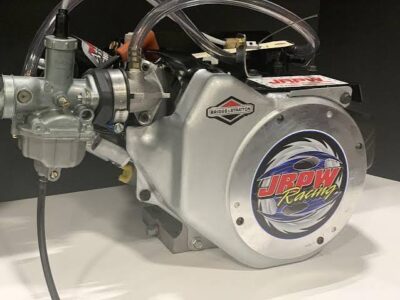
The cost of a blueprinted engine can vary significantly.
There is no single price that applies to every engine.
Important factors include:
- Engine type
- Engine size
- Existing engine condition
- Machine-shop rates
- Parts required
- Machining required
- Labor
- Performance goals
- Availability of replacement components
A basic precision build may require less work than a complete high-performance engine. what is a blueprinted engine
Engine blueprinting focuses on precise measurements, controlled tolerances, and matching components so the engine can be assembled according to its intended specifications. Learn more about engine blueprinting
A complete performance build could involve extensive machining and expensive components, making the total cost much higher.
When requesting a quote, ask the engine builder exactly what is included.
For example, ask whether the price covers:
- Disassembly
- Cleaning
- Inspection
- Measurements
- Machine work
- Parts
- Assembly
- Balancing
- Testing
A written estimate can help prevent misunderstandings.
Performance Enthusiasts
Performance enthusiasts may appreciate the additional attention given to measurements and component matching.
If the engine is being modified for a specific performance target, precision assembly can become more valuable.
Racing Projects
Racing engines often operate under demanding conditions.
Because these engines may be designed around specific operating ranges, careful measurement and assembly can be useful.
Classic Car Restorations
Blueprinting can also be considered during a classic-car engine restoration.
Owners may want to preserve the appearance or character of an original engine while rebuilding it with carefully controlled specifications.
Custom Engine Builds
Custom engines are another potential application.
When an engine is being built around specific components and goals, individual measurement becomes particularly important. what is a blueprinted engine
Daily Drivers
For a normal commuter vehicle, blueprinting may not be necessary. what is a blueprinted engine
The additional cost and labor may not provide enough practical benefit compared with a standard replacement or properly rebuilt engine. what is a blueprinted engine
Look for Relevant Experience
Start by finding a builder who understands your particular engine family.
A builder experienced with performance engines may have different expertise from someone who primarily handles standard passenger-car rebuilds.
Ask about previous projects involving similar engines.
Ask About Measurements
Before approving the work, ask what will actually be measured.
Useful questions include:
- What components will be measured?
- Which clearances will be checked?
- What machining will be performed?
- What specifications will be used?
- Will measurements be documented?
A good builder should be able to explain the process clearly. what is a blueprinted engine
Ask for a Build Sheet
A build sheet can document important measurements and parts used during the build.
This information can be useful for future maintenance or troubleshooting.
Discuss Warranty
Ask about warranty coverage before work begins.
Understand what the warranty covers and whether there are requirements for installation, oil, break-in, maintenance, or other operating conditions.
Clear communication at the beginning can prevent problems later.
Follow the Recommended Maintenance Schedule
Follow the recommendations provided by the engine builder and vehicle manufacturer.
Regular maintenance can include oil changes, filter replacement, inspection, and other service appropriate for the engine.
Use the Correct Oil and Fluids
Use oil and fluids that meet the specifications appropriate for the engine.
Performance engines may have different requirements from standard production engines.
Always follow the specifications provided for the particular build.
Monitor Engine Temperature and Oil Pressure
Engine temperature and oil pressure can provide useful information about engine health.
If readings suddenly change or warning indicators appear, the issue should be investigated.
Do not continue operating an engine normally when serious warning signs appear.
Address Problems Early
Pay attention to changes such as:
- Unusual engine noises
- Oil leaks
- Overheating
- Smoke
- Loss of power
- Warning lights
- Rough operation
Finding a problem early can help prevent a small issue from developing into a larger repair.
FAQ :
A blueprinted engine is an engine that has been carefully measured, inspected, and assembled according to detailed specifications. The process focuses on tolerances, clearances, component matching, machining where needed, and careful assembly. what is a blueprinted engine
Blueprinting does not guarantee a specific horsepower increase. Its primary purpose is precision and consistency. Performance gains depend on the engine’s overall design, components, tuning, and application.
A carefully measured and assembled engine may have advantages in consistency, but blueprinting alone does not guarantee longer engine life. Reliability also depends on parts, lubrication, cooling, tuning, maintenance, and operating conditions. what is a blueprinted engine
No. Rebuilding generally involves inspecting, repairing, machining, and replacing worn components. Blueprinting focuses on precise measurement and specification control. However, an engine can be both rebuilt and blueprinted.
No. Blueprinting and balancing are different processes. Blueprinting focuses on dimensions, tolerances, clearances, and assembly. Balancing focuses on the rotating and reciprocating assembly. what is a blueprinted engine
The cost varies widely depending on the engine, parts, machining, labor, and intended performance. A basic precision build can cost much less than a complete custom performance engine.
Many engines can undergo a precision measurement and assembly process, but the exact procedures depend on the engine design and available specifications. what is a blueprinted engine
It depends on your goals. Blueprinting may be worthwhile for performance, racing, restoration, and custom projects. For a basic daily driver, the additional cost may not be necessary. what is a blueprinted engine
Conclusion
So, what is a blueprinted engine? It is an engine built with a strong focus on precision. Instead of simply assembling components within normal production tolerances, blueprinting involves carefully measuring parts, checking clearances, controlling tolerances, matching components, and performing machining or adjustments when necessary. what is a blueprinted engine
The process can involve the engine block, crankshaft, pistons, connecting rods, bearings, cylinder heads, camshaft, and valvetrain. The exact work depends on the engine and its intended purpose.
A blueprinted engine can be especially useful for performance builds, racing projects, classic-car restorations, and custom engines. However, blueprinting is not a magic performance upgrade. It does not guarantee a specific horsepower increase or automatically make an engine last longer. what is a blueprinted engine
For a normal daily driver, a properly manufactured or professionally rebuilt engine may be more practical. For a specialized project where precision matters, blueprinting can provide a higher level of control over the engine-building process. what is a blueprinted engine
If you are considering blueprinting an engine, work with an experienced engine builder, ask what measurements will be taken, request documentation of the build, and make sure the specifications match your intended use. what is a blueprinted engine
